Links Today, across just half an hour Team GB won legendary gold medals in dressage and boxing and earlier in the morning Regina Spektor was played on the speakers in the Olympic stadium. That's a good day. Here's some links I've collected about other good days.
Frank Cottrell Boyce provides a kind of writers commentary for the opening ceremony.
"Danny's blistering opening unleashed the energy and genius of the revolution – factories rising like fireworks. Suttirat Larlarb's beautiful dove bikes made me – and hopefully you – recall the thrill of first learning to ride, and how like flight that felt. There was a strangely carefree atmosphere. Because it was hard to imagine that this was really going to happen, it was easy to suggest the impossible – floating trees, a parachuting Queen, Voldemort versus Poppins."
‘Hedge Sparrows’, by Dr Richard Price from the British Library, is chosen as the poem to represent Great Britain in the Olympics
"Price has beaten Blake, Wordsworth and Shakespeare to the punch with ‘Hedge Sparrows’. The poem gives voice to a bird that is found almost everywhere in the UK, a representative free of region, gender and ethnicity. 'Hedge Sparrows' depicts a bird twittering in our rapid-fire world of social media, where messages fly around the world in the form of tweets. Described as a prose poem, which fuses elements of prose with the cadences of poetry, here the rapidity of the hedge sparrow’s song is mimicked by its delivery in one long sentence."
BBC Radio Scotland have produced a series of podcasts collecting poems from across the countries.
The British entry is read by Jim Broadbent.
10 stories you may have missed about the Olympics.
"The opening ceremony contained subtle nods to two of the darker moments in Britain’s recent history. The singing of the traditional football hymn Abide With Me featured 96 dancers – one for each person who was killed in the Hillsborough disaster of 1989. And the lighting of the Olympic cauldron featured seven young torch-bearing athletes, who had been nominated by seven Olympic legends – a nod to the 7/7 bombings. Subtle, but beautifully understated."
A giddy Simon Hoggart talks to npr about the opening ceremony.
"Well, I, too. I loved it. I was prepared to be very, very cynical, skeptical, critical, but I thought it was terrific. And I tell you what really made it was four years ago, we had this amazing display in Beijing, but it was a display of a Communist country, you know. Everybody - you could get 10,000 drummers drumming in unison. And ours was more of a democratic display. Things went wrong, not everything was perfect."
Photos of the (almost) deserted Olympic Park.
"A sight that the Olympics organisers hope to never see is an empty Olympic Park, but for me it was too good a chance to miss. [...] I took a gamble which involved getting to a smaller gate on the opposite side from the main entrance that most people would use and if able to get in on the dot of 7am, maybe I could get some photos of the park before the main crowds at the other end reached me? [...] It worked!"

"The Blog North Awards are new for 2012"
About Ooh. Interesting:
"The Blog North Awards are new for 2012. They celebrate the best of Northern England’s independent publishing, and aim to bring some of the great new writing being published online to a wider audience.Here's how to enter a blog. And here are the categories.
Nominations are now open. Enter a blog here, or take a look at our categories and eligibility rules. The 2012 shortlist will be announced at the beginning of September, and winners will be announced at our event on October 17 in Manchester. Find out more about the awards evening here."
"these rare jewels"
Links With the exception of the Saturday night, nothing in the athletics portion of the Olympics so far contradicts my argument that the Olympic sports we're weakest in receive the most publicity whereas something like Triathlon, in which we're apparently masters of the world thanks to the Brownlee brothers is rarely broadcast live so we didn't even know that thanks to the Brownlee brothers we are masters of the world. Anyway to also provide a counterbalance, here are a few non-Olympics related things I've been reading...
Mike Sterling investigates the contents of a storage container and finds pogs, pogs everywhere ...
"This fellow was apparently a distributor and / or manufacturer of cap products during the height of fad, in the early ’90s, and these rare jewels have apparently been resting in storage for nearly two decades since. I haven’t had much of a chance to actually go through the boxes, since mostly we were just hauling them out of the truck and making a giant POG box pyramid in a corner of the shop."
Broken TV runs down the Fifty Most-Watched (and Least-Watched) TV Channels In The UK, 2012
"Channel 4’s decision to make More4 rubbish doesn’t seem to have paid ratings-based dividends. In 2011, the average rating of a top ten show on More4 was 610,000 viewers. For 2012, the endless repeats of Grand Designs and Come Dine With Me are bringing an average of 379,000 viewers per top ten programme. Meanwhile, E4 has held pretty steady, showing that showing nothing but repeats of The Inbetweeners is pretty much as effective as showing nothing but repeats of Friends."
The Bystanders: photographers who didn't step in to help - in pictures
"What's it like to witness a mob attack, a starving child or the aftermath of a bomb, and take a photograph instead of stopping to help? As two journalists are under fire for recording rather than intervening in a sex attack in India, we ask people who know"
So Many Feelings / On Ladyblogs
"Blog empire Gawker Media, like its magazine counterparts Conde Nast and Hearst, asks readers to sort themselves by advertising demographic. One might be interested in sports, and read Deadspin. One might be interested in gadgets, and read Gizmodo. Or one might be interested in being a woman, and read Jezebel. When Jezebel launched in spring 2007, I myself was keenly interested in being a woman. I was 20 years old: being a woman was a relatively recent development, and I was curious about the ways it could be done. And I had always enjoyed reading about being a girl. "
Hey, Everyone — Stop Taking This Picture! (No, I Mean It.)
“If I have to see one more woman posed with her behind in my general direction, looking smouldering-ly over her shoulder, I’m going to punch someone in the face. And you two [my Tor.com officemates] should be worried, since you’re the closest people at hand.”
Mike Sterling investigates the contents of a storage container and finds pogs, pogs everywhere ...
"This fellow was apparently a distributor and / or manufacturer of cap products during the height of fad, in the early ’90s, and these rare jewels have apparently been resting in storage for nearly two decades since. I haven’t had much of a chance to actually go through the boxes, since mostly we were just hauling them out of the truck and making a giant POG box pyramid in a corner of the shop."
Broken TV runs down the Fifty Most-Watched (and Least-Watched) TV Channels In The UK, 2012
"Channel 4’s decision to make More4 rubbish doesn’t seem to have paid ratings-based dividends. In 2011, the average rating of a top ten show on More4 was 610,000 viewers. For 2012, the endless repeats of Grand Designs and Come Dine With Me are bringing an average of 379,000 viewers per top ten programme. Meanwhile, E4 has held pretty steady, showing that showing nothing but repeats of The Inbetweeners is pretty much as effective as showing nothing but repeats of Friends."
The Bystanders: photographers who didn't step in to help - in pictures
"What's it like to witness a mob attack, a starving child or the aftermath of a bomb, and take a photograph instead of stopping to help? As two journalists are under fire for recording rather than intervening in a sex attack in India, we ask people who know"
So Many Feelings / On Ladyblogs
"Blog empire Gawker Media, like its magazine counterparts Conde Nast and Hearst, asks readers to sort themselves by advertising demographic. One might be interested in sports, and read Deadspin. One might be interested in gadgets, and read Gizmodo. Or one might be interested in being a woman, and read Jezebel. When Jezebel launched in spring 2007, I myself was keenly interested in being a woman. I was 20 years old: being a woman was a relatively recent development, and I was curious about the ways it could be done. And I had always enjoyed reading about being a girl. "
Hey, Everyone — Stop Taking This Picture! (No, I Mean It.)
“If I have to see one more woman posed with her behind in my general direction, looking smouldering-ly over her shoulder, I’m going to punch someone in the face. And you two [my Tor.com officemates] should be worried, since you’re the closest people at hand.”
The Sunday Seven.
Joanna Wyld.
Writer of Programme Notes and CD Liner Notes.

As a big fan of classical music but always in need of guidance as to the history of the works, biographies of the composers and what to listen out for. I've often wondered who the writers who provide that guidance might me and here's one of them, Joanna Wyld of Notes Upon Notes.
How did you become a writer?
I’ve always loved writing creatively. As a child I’d doodle “Joanna Wyld: Athor [sic]” in large letters, expressing my ambition despite being unable to spell it. Then for a long time I wanted to be a composer, but the writing simply took over.
I was working as an editor for a record company, and one of our CD note-writers dropped out at the last moment. They called on me to step in, and I managed to produce a surprisingly convincing note on a 1930s jazz outfit called “The Cats and the Fiddle”, of whom I’d never heard. Before long I was combining the editing work with more and more writing, usually about classical music – about which I know considerably more – and the whole thing snowballed. Now I write about music for a number of wonderful artists and record labels.
What was your inspiration for Notes Upon Notes?
I’ve always loved both words and music, so I find the process of writing about music genuinely inspiring. I’ll never tire of it! I always feel an almost childlike excitement whenever I receive a new commission.
The most inspiring thing is imagining my audience – whether they’re children or aficionados – and trying to capture for them the joy of the music they’re going to hear. I aspire to write in such a way that the words themselves give pleasure. To me, really great music writing evokes something of the thrill of the music itself, either through a particularly fascinating quote from the composer, or through a felicitous turn of phrase, or through something musical about the language itself.
What was the trickiest element to achieve?
Notes upon Notes has evolved in a really enjoyable way, so the trickiest moments have been specific challenges, usually involving juggling commitments.
Of everything you've done what have you been most pleased with?
A few years ago I ghost-wrote a book on human trafficking. I worked with an amazing team of people who research and campaign to raise awareness about modern-day slavery. In the space of a month I had to assimilate all these facts, figures and harrowing stories, process them, and then write about them in a way that was both emotive and coherent. It was painful, and I was under a cloud by the end of it, but the book is now used as a resource by the United Nations. To think that my words have contributed, even in a small way, to their fight against injustice, is humbling.
How much research do you need to do for each set of notes?
It depends on the commission and the audience, as some will expect a greater level of detail than others. But I always begin at my local library, get as many books, CDs and scores as I can carry, and then pack in as much information as seems relevant.
Who’s your favourite composer?
Impossible to choose just one! Elliott Carter is astonishing: to be writing music like that at the age of 103 seems almost miraculous. To relax I’d probably choose Sibelius, Richard Strauss or Debussy. I also admire Delia Derbyshire, who created new sonorities with real innovation and imagination.
What stops you from feeling listless?
Playing or listening to music, and hanging out with my daughter. Those things make me feel... listful?
Joanna Wyld writes Notes Upon Notes, which is also available on Facebook.

The Road To Beijing Athlete Update.
Sport Despite beginning well, James Goddard finished 7th in his only race, Men's 200m Individual Medley with 1:59.05 about five seconds behind Lochte and Phelps. But it was stacked heat and he does at least come away with the story of having fnished third behind the two of them in that semi-final.
Larry Godfrey's also out of the Men's Individual archery after losing to Khairul Anuar Mohamad of Malaysia in the quarter finals on a shoot off, not quite getting his arrow into the middle of the target.
Abi begins her j-word this morning in the 100 metre heats which are passing through at the moment, though they're not on Freeview which is showing the same swimming on two channels. So I'll report back soon.
Larry Godfrey's also out of the Men's Individual archery after losing to Khairul Anuar Mohamad of Malaysia in the quarter finals on a shoot off, not quite getting his arrow into the middle of the target.
Abi begins her j-word this morning in the 100 metre heats which are passing through at the moment, though they're not on Freeview which is showing the same swimming on two channels. So I'll report back soon.
The BBC should change the game. Or rather games.
Sport Otherwise it's been an exciting day not just for gold medals but the "entertainment" if that's the words in the women's doubles Badminton championship, this controversy which was the top story on all the news channels this morning. Not having access to the video stream, I was following the drama on Gail Emms's Twitter feed last night, retweeting like mad. She continued into today with television interviews calling for the resignation of the players something which has ultimately occurred.
Questions have been asked as to whether what happened was any different to a runner, rower or swimmer slowing up in a heat to conserve energy or more importantly gain a particular lane designation in a later heat or final, or as is my point the strategies of the cyclists in the road race to help Mark Cavendish to the front. In theory, everyone in the race should be fighting to win, but gamespersonship means it's more about altruistically working against other riders in order to help a designated team member to win.
I don't know. But what I do know is the reason the words "badminton" and "controversy" are appearing in the same sentence is because those in the sports governing body introduced group stages so that their sport would have a much longer championship and therefore visibility as a way of promoting it, the theory being more sessions equals more spectators and longer television time, especially in this Olympics in which thanks to the many streams they've been more accessible than ever, warping the usual run of a championship.
Except they'd only need to do this if Badminton was given a fair crack of the whip in comparison to other sport. If these Olympics have reminded us of anything, it's how dominant the big five or six sports are in the national discourse. We collectively know little to nothing about Badminton and that's because it barely appears on national television between the Olympics and never mentioned in sports news broadcasts, clogged as they are with endless discussions about the implications of a footballer's change in employment.
But this time, and I'm saying this hopefully, there does seem to be a development in the national psyche. Last night more people than ever turned up for the GB women's football at Wembley, about seventy thousand and at the close of business, the epoc change oozed from our television screens as coach, players and supporters alike were in tears, the atmosphere thick with change. The crowds turning up today for the time trials and outside the BBC's commentary box to see Wiggins and his medal have been equally impressive.
The problem is, all of this will be for nought if after the 12th August or later than that the Paralympics, it's business as usual, women's football only appearing on television for the annual FA cup final and minimal coverage of their World Cup and cycling still the minority sport that Wiggins himself admitted it to be in some of his many post race interviews, despite the coverage of the Tour de France. If people can't see archery live on television, they're unlikely to follow it in the same way as the sports they can see.
Here's what needs to happen. The BBC has something of a martyr complex when it comes to sport, desperately hanging on to what they have of the big six or seven shelling out strange amounts of money for highlights. Arguably they're the national broadcaster and that's what they should be doing because there's clearly be ructions if Match of the Day was to go or anything on the protected sport list. Or what's going to be left of it once Murdoch's convinced the relevant people to strip it down to the bare minimum.
Well, forget about it, BBC. You're losing the battle. Instead, why not take the rather liberal step of giving Sky what you can get away with and then, rather like you do with drama and comedy development plough that money into building some of these other Olympic sports from the bottom up, showing live coverage of these Olympic sports with the same quality of presentation you bring to athletics championships, whose qualifying meets you did show us. The BBC should change the game. Or rather games.
I'd start with women's football. I'm not sure who presently has the rights, but how amazing would it be if you could show a club match every Saturday afternoon on BBC's One, Two or BBC Three (with extended viewing hours) through the season with a Match of the Day later offering highlights, treating it with the same consideration as the male game and proper publicity on the other channels. It would be a risk and might take time to build but come a World Cup the audience must surely be there.
From there we move into other sports: shooting, volleyball, cycling, rowing, swimming, sailing even badminton and not just the major annual tournaments but the bits in between show us what happens to Wiggins or rowers Helen Glover and Heather Stanning do next. I had little clue who these Gold medal winners were before the Olympics began and that feels wrong, especially since their achievements are no less incredible than even the runners and throwers who do get some kind of national televisual recognition and don't require internet research to follow.
If all of that's too immense, how about at least a weekly one hour Culture Show style Olympics magazine programme which rounds up how Team GB is doing in its various disciplines between games, with highlights, interviews and a connected website explaining when and where championships are happening. There has been a infrequent slot on BBC News, but this would be on a main channel. A more inclusive Inside Sport in other words with less of a focus on the sports which already get a wide enough coverage.
The result would hopefully be that rather than it being the usual joke that the BBC are following these "minority" sports because they can't afford any others, instead they're showing us our Olympic heroes in their further adventures, building an audience from the ground up and/or continuing the momentum from these games. It'd be a real shame if, at just the moment even I'm interested in watching sport, I won't in the end be able to watch those sports I'm interested in.
Questions have been asked as to whether what happened was any different to a runner, rower or swimmer slowing up in a heat to conserve energy or more importantly gain a particular lane designation in a later heat or final, or as is my point the strategies of the cyclists in the road race to help Mark Cavendish to the front. In theory, everyone in the race should be fighting to win, but gamespersonship means it's more about altruistically working against other riders in order to help a designated team member to win.
I don't know. But what I do know is the reason the words "badminton" and "controversy" are appearing in the same sentence is because those in the sports governing body introduced group stages so that their sport would have a much longer championship and therefore visibility as a way of promoting it, the theory being more sessions equals more spectators and longer television time, especially in this Olympics in which thanks to the many streams they've been more accessible than ever, warping the usual run of a championship.
Except they'd only need to do this if Badminton was given a fair crack of the whip in comparison to other sport. If these Olympics have reminded us of anything, it's how dominant the big five or six sports are in the national discourse. We collectively know little to nothing about Badminton and that's because it barely appears on national television between the Olympics and never mentioned in sports news broadcasts, clogged as they are with endless discussions about the implications of a footballer's change in employment.
But this time, and I'm saying this hopefully, there does seem to be a development in the national psyche. Last night more people than ever turned up for the GB women's football at Wembley, about seventy thousand and at the close of business, the epoc change oozed from our television screens as coach, players and supporters alike were in tears, the atmosphere thick with change. The crowds turning up today for the time trials and outside the BBC's commentary box to see Wiggins and his medal have been equally impressive.
The problem is, all of this will be for nought if after the 12th August or later than that the Paralympics, it's business as usual, women's football only appearing on television for the annual FA cup final and minimal coverage of their World Cup and cycling still the minority sport that Wiggins himself admitted it to be in some of his many post race interviews, despite the coverage of the Tour de France. If people can't see archery live on television, they're unlikely to follow it in the same way as the sports they can see.
Here's what needs to happen. The BBC has something of a martyr complex when it comes to sport, desperately hanging on to what they have of the big six or seven shelling out strange amounts of money for highlights. Arguably they're the national broadcaster and that's what they should be doing because there's clearly be ructions if Match of the Day was to go or anything on the protected sport list. Or what's going to be left of it once Murdoch's convinced the relevant people to strip it down to the bare minimum.
Well, forget about it, BBC. You're losing the battle. Instead, why not take the rather liberal step of giving Sky what you can get away with and then, rather like you do with drama and comedy development plough that money into building some of these other Olympic sports from the bottom up, showing live coverage of these Olympic sports with the same quality of presentation you bring to athletics championships, whose qualifying meets you did show us. The BBC should change the game. Or rather games.
I'd start with women's football. I'm not sure who presently has the rights, but how amazing would it be if you could show a club match every Saturday afternoon on BBC's One, Two or BBC Three (with extended viewing hours) through the season with a Match of the Day later offering highlights, treating it with the same consideration as the male game and proper publicity on the other channels. It would be a risk and might take time to build but come a World Cup the audience must surely be there.
From there we move into other sports: shooting, volleyball, cycling, rowing, swimming, sailing even badminton and not just the major annual tournaments but the bits in between show us what happens to Wiggins or rowers Helen Glover and Heather Stanning do next. I had little clue who these Gold medal winners were before the Olympics began and that feels wrong, especially since their achievements are no less incredible than even the runners and throwers who do get some kind of national televisual recognition and don't require internet research to follow.
If all of that's too immense, how about at least a weekly one hour Culture Show style Olympics magazine programme which rounds up how Team GB is doing in its various disciplines between games, with highlights, interviews and a connected website explaining when and where championships are happening. There has been a infrequent slot on BBC News, but this would be on a main channel. A more inclusive Inside Sport in other words with less of a focus on the sports which already get a wide enough coverage.
The result would hopefully be that rather than it being the usual joke that the BBC are following these "minority" sports because they can't afford any others, instead they're showing us our Olympic heroes in their further adventures, building an audience from the ground up and/or continuing the momentum from these games. It'd be a real shame if, at just the moment even I'm interested in watching sport, I won't in the end be able to watch those sports I'm interested in.
The Road To Beijing Athlete Update.
Sport James Godard has made the final of the Men's 200m Individual Medley having stormed through his semi-final coming in third behind Michael Phelps and Ryan Lochte. At the close of the race he was clearly rather cheesed with his time of 1:58.49, two and half second behind Lochte and seventh in the overall timing across the qualifiers. The experts around the pool suggested he does have the potential to go faster but the field is stacked so we'll probably be simply pleased with being in the final.
In Volleyball news, the British women lost their third match against Italy, taking them to the wire in the opening set, 27-25 before losing it in the second two with the symmetrical 25-12 25-12. They still have two matches though against Dominican Republic on Friday (16:45 BST) and Japan on Sunday (14:45 BST) and a win against either will lead to their progression. Since their win against Algeria there's been a genuine buzz behind them and the Twitter feed's well worth following.
In Volleyball news, the British women lost their third match against Italy, taking them to the wire in the opening set, 27-25 before losing it in the second two with the symmetrical 25-12 25-12. They still have two matches though against Dominican Republic on Friday (16:45 BST) and Japan on Sunday (14:45 BST) and a win against either will lead to their progression. Since their win against Algeria there's been a genuine buzz behind them and the Twitter feed's well worth following.
There are a few changes.
Film Rather spoiling the fun of finding out by reading the magazine, Sight & Sound tonight released their 2012 list of the greatest film of all time and here it is:
1. Vertigo (Hitchcock, 1958)
2. Citizen Kane (Welles, 1941)
3. Tokyo Story (Ozu, 1953)
4. La Regle du jeu (Renoir, 1939)
5. Sunrise: a Song for Two Humans (Murnau, 1927)
6. 2001: A Space Odyssey (Kubrick, 1968)
7. The Searchers (Ford, 1956)
8. Man with a Movie Camera (Dziga Vertov, 1929)
9. The Passion of Joan of Arc (Dreyer, 1927)
10. 8 ½ (Fellini, 1963)
There are a few changes. A new rule which means films have to be treated separately has led to The Godfathers dropping out leaving room for The Searchers, an also ran in 2002 to sneak in and Singing In The Rain is gone with interestingly considering its lack of availability in this country at time of voting (soon out on Eureka), The Passion of Joan of Arc is in.
Vertigo dethroning Citizen Kane after five decades is making headlines but there's been a series of articles in the magazine suggesting essentially that it was time to give another film a chance so it's not really. The backlash was bound to happen eventually. Personally I'd still go for Kane but that might have more to do with a bad experience with Vertigo during my film course at uni.
Here's what happened when I watched it in sequence with the rest of Hitchcock's films. It isn't my favourite, one to be admired intellectually rather then entertained in the purest sense, which is presumably why it topped this poll which is essentially a list of academically significant works. Odd to see Potemkin having dropped out but editing style is still generally covered by the Vertov.
The fringier directors list is understandably more eclectic:
1. Tokyo Story (Ozu, 1953)
=2 2001: A Space Odyssey (Kubrick, 1968)
=2 Citizen Kane (Welles, 1941)
4. 8 ½ (Fellini, 1963)
5. Taxi Driver (Scorsese, 1980)
6. Apocalypse Now (Coppola, 1979)
=7 The Godfather (Coppola, 1972)
=7 Vertigo (Hitchcock, 1958)
9. Mirror (Tarkovsky, 1974)
10. Bicycle Thieves (De Sica, 1948)
Tokyo Story right at the top with Bicycle Thieves which topped the poll when it was first attempted back in 1953 nudging in at the bottom, throwing out half the choices from last time.
Mirror's a bit of surprise; of all Tarkovsky's films that 's perhaps the least accessible, even if it's one of his most beautiful At least The Tree of Life's not there as predicted. It'll be at least twenty years before we know if that has (dinosaur) legs.
Back in April, I posted my own contrarian list:
Citizen Kane (Welles)
Annie Hall (Allen)
The Seventh Seal (Bergman)
Last Year at Marienbad (Resnais)
Hamlet (Branagh)
All The President's Men (Pakula)
Rear Window (Hitchcock)
Blade Runner (Scott)
The Last Temptation of Christ (Scorsese)
Magnolia (Anderson)
1/10. Oh well.
1. Vertigo (Hitchcock, 1958)
2. Citizen Kane (Welles, 1941)
3. Tokyo Story (Ozu, 1953)
4. La Regle du jeu (Renoir, 1939)
5. Sunrise: a Song for Two Humans (Murnau, 1927)
6. 2001: A Space Odyssey (Kubrick, 1968)
7. The Searchers (Ford, 1956)
8. Man with a Movie Camera (Dziga Vertov, 1929)
9. The Passion of Joan of Arc (Dreyer, 1927)
10. 8 ½ (Fellini, 1963)
There are a few changes. A new rule which means films have to be treated separately has led to The Godfathers dropping out leaving room for The Searchers, an also ran in 2002 to sneak in and Singing In The Rain is gone with interestingly considering its lack of availability in this country at time of voting (soon out on Eureka), The Passion of Joan of Arc is in.
Vertigo dethroning Citizen Kane after five decades is making headlines but there's been a series of articles in the magazine suggesting essentially that it was time to give another film a chance so it's not really. The backlash was bound to happen eventually. Personally I'd still go for Kane but that might have more to do with a bad experience with Vertigo during my film course at uni.
Here's what happened when I watched it in sequence with the rest of Hitchcock's films. It isn't my favourite, one to be admired intellectually rather then entertained in the purest sense, which is presumably why it topped this poll which is essentially a list of academically significant works. Odd to see Potemkin having dropped out but editing style is still generally covered by the Vertov.
The fringier directors list is understandably more eclectic:
1. Tokyo Story (Ozu, 1953)
=2 2001: A Space Odyssey (Kubrick, 1968)
=2 Citizen Kane (Welles, 1941)
4. 8 ½ (Fellini, 1963)
5. Taxi Driver (Scorsese, 1980)
6. Apocalypse Now (Coppola, 1979)
=7 The Godfather (Coppola, 1972)
=7 Vertigo (Hitchcock, 1958)
9. Mirror (Tarkovsky, 1974)
10. Bicycle Thieves (De Sica, 1948)
Tokyo Story right at the top with Bicycle Thieves which topped the poll when it was first attempted back in 1953 nudging in at the bottom, throwing out half the choices from last time.
Mirror's a bit of surprise; of all Tarkovsky's films that 's perhaps the least accessible, even if it's one of his most beautiful At least The Tree of Life's not there as predicted. It'll be at least twenty years before we know if that has (dinosaur) legs.
Back in April, I posted my own contrarian list:
Citizen Kane (Welles)
Annie Hall (Allen)
The Seventh Seal (Bergman)
Last Year at Marienbad (Resnais)
Hamlet (Branagh)
All The President's Men (Pakula)
Rear Window (Hitchcock)
Blade Runner (Scott)
The Last Temptation of Christ (Scorsese)
Magnolia (Anderson)
1/10. Oh well.
"not a whit of sympathy"
Music The Arts Desk's Alexandra Coghlan attended the BBC Proms the other night but was only ultimately able to review half a concert because she had to leave in the middle. Now she's revealed why, the intolerant attitude of her fellow audience members:
"I was attending the concert with a university-age girl – her first visit to the Proms. A chronic asthmatic, she had coughed a little during the first half, but infrequently, and had stifled it to the very best of her ability. After the first piece a man turned round and told her off (not a whit of sympathy, concern or even basic politeness to his complaint). We apologised, and moved to some empty seats further away. When the interval arrived three middle-aged men accosted us in the foyer."The resulting incident is shocking, that people would act like that. Even if she'd been using a mobile phone or just talking, that would have been no excuse for this behaviour. Just move. I'd be amazed if this poor girl would ever want to go back now. Shocking.
Mad Dogs and Englishmen.
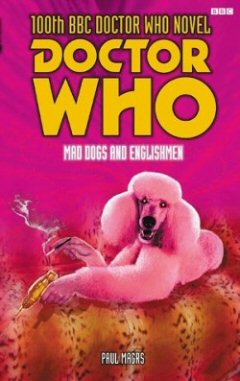 Books Just as The Blue Angel works as a kind of pepto-bismol to Interference, here’s another Paul Magrs novel straight after the indigestible The Adventuress of Henrietta Street to provide a slightly surreal antidote. Like that earlier novel, Mad Dogs and Englishmen features alternate dimensions, anthropomorphism, literary satire, the return of Iris Wydethyme and a commitment to camp which puts the whole Sixth Doctor’s era to shame and I loved, loved, loved it. If The Scarlett Empress is still my favourite of Paul’s novels, Mad Dogs comes pretty close and has the rare benefit in this imprint of knowing when to stop, clocking in at about a hundred and fifty pages with a decent sized font. Spoilers indeed ahead.
A basic synopsis: Prof Reginald Tyler, an affectionate satire on Tolkien spent much of his life writing his unfinished genre epic The True History of Planets as part of The Smudgelings, an affectionate satire on the Inkings, the informal literary discussion group which also included C. S. Lewis. The story should include elves and wizards and things, but at some point the timeline’s disrupted and instead becomes the story of dogworld, a planet populated by poodles with hands and its up to the Doctor and his friends to right what once went wrong by visiting for various reasons The Smudgelings in the 30s, Las Vegas in the 1060s and affectionate satires on Ray Harryhausen and George Lucas in the 70s.
Of course, this being a Magrs novel things are far more complicated than that, as thrown into the mix is the new incarnation of Iris who's an affectionate satire on Shirley Bassey and as the title might indicate Noel Coward, yes, the actual Noel Coward who thanks to a bit of technology is also a time traveller essentially able to Quantum Leap about his own lifetime. Frankly the only reaction to all this is agogness, just as I’m always agog when experiencing Magrs’s work, essentially the intellectual fallout from the moment in Aladdin Time when it becomes apparent the Doctor’s scarf’s become sentient and gained Andrew Sach’s voice, over and over and over again.
All of which could have gone terribly wrong. But in a Whedonesque move, Magrs heads his ideas off at the pass by lashing in layers of rich irony and sarcasm and a genuine affection for his characters even, and probably especially the ones who’re supposed to be on all fours and are instead as the cover suggests on the one hand brandishing lasers and the other cigarettes. Unlike similar animal aliens in nuWho, the author offers an affectionate satire on Pierre Boulle married with some rather pointed questioning on what right we have to keep animals as pets (which oddly prefigures Rise of the Planet of the Apes though there’s a weird psychosexual undercurrent which was one of the few things I couldn’t quite get a grip on).
The novel continues the thematic thread which runs through all of Magrs work about the nature of narrative and how Doctor Who fits within the wider pantheon of fiction. Perhaps because it’s the 100th BBC book, Magrs goes some way to producing a quintessential story at least with the Doctor at his most bouncy and benevolent aiding a revolution, the splitting up of his companions, a bit of romance for one, the other annoyed about how the TARDIS can be accurate when it wants to be and as is the case with the franchise’s meta-narrative, the writing and rewriting of the legend depending on whose in charge. At time of writing Justin Richards, Gary Russell and Alan Barnes had that honour, I suppose.
Actually now that I come to describe everything as “an affectionate satire” some of it is pretty vicious. The reaction of Tyler’s wife on the death of her husband being to publish what he finishes and mint it on selling the film and merchandising rights is a pointed commentary on how estates so rarely treat their properties with much in the way of artistic respect (though when he was writing this in 2001/02 Magrs truly believed The Lord of the Rings was being messed about with). There’s also some post-Phantom Menace byte to the portrayal of the Lucas analogue, John Fuchas (not least in his name), though he’s right to indicate that digital would ultimate supersede physical. Even after ten years, this is novel which is sitll relevant.
If one were to seek a single criticism, it is that apart from the beard, the novel ignores the existence of The Adventuress of Henrietta Street altogether. There’s no mention of his single heart status and the pain he went through, when he meets Iris it’s a revelation to him that he’s not alone despite having invited the Master to his wedding previously (albeit under a pseudonym) and none of the discussion you might expect in relation to such things, the kinds of threads which usually appear in the novels and would be such an obvious influence on the new series. A bit of a paradox given my enmity for Miles’s novel, but in terms of the wider narrative those are things which happened and even Time Flight bothers to mention Adric’s death before piling off a budgetary deep end.
Of course the other unacknowledged nuWho influence is Iris Wyldethyme and Mad Dogs provides a few more useful parallels. There’s a heartbreaking moment towards the end when the Doctor looks Iris in the eyes and thanks to his amnesia doesn’t know her which prefigures, for different reasons the first and last meeting in The Silence in the Library between his later incarnation and River Song. On this occasion Fitz is on hand to give her some moral support, but the timeline’s foggy and there’s a hint that she’s simply playing along knowing that she’s seeing the future of events which haven’t yet happened to her. There’s also the attitude, the moral ambiguity which suggests she has the best of intentions …
But what makes Mad Dogs and Englishmen so special is the characterisation. I’ve spoken before about the often inconsistent versions of the Eighth Doctor which appears in these novels and this is an occasion when he’s entirely in-character or at least character I expect him to be, wry and clever, witty and powerful with that great spirit of adventure, far away from the tragic totem of the previous novel. Anji and Fitz are also back to their City of the Dead best too, the former in her element in the world that Dave dreamt of. Yet, predictably, the best character’s his Noel Coward simply because he’s Noel Coward, exactly how you might expect Noel Coward to be. Except, well, a time traveller. How amazing is that?
The Road To Beijing Athlete Update.
Sport Larry Godfrey's through to the last sixteen in the individual archery. As the BBC describes, "the Bristolian bowman breezed through the first round with a 6-0 victory over Emdadul Haque Milon of Bangladesh, before dispatching Mexico's Juan Rene Serrano 7-1 in the last 32 later in the day."
He'll go again on Friday. I think.
Meanwhile as a fringe event, I was up as late as I could last night (around midnight) watching the British women's volleyball team battling against the African champions Algeria. As has often been the case at these events, in sports I'm less familiar with, it was the commentary which drew me in, as they enthusiastically explained that what we were watching was a historic moment for British women's volleyball.
Never having been in the Olympics before and ranked sixty-nine in the world the commentators became increasingly excited at the prospect of this team winning a set, of that being a massive achievement and I found myself cheering any point and in the event they did take the first set. Algeria pulled back to draw level and then looked guaranteed to win the match.
At that point I went to bed, having seen the team achieve what the commentators said they'd entered the Olympics to do, only to wake up this morning and find that they'd won the match 22-25 25-19 23-25 25-19 15-8, fighting their way back to level scoring in the fourth set before trashing Algeria in the fifth. Part of me wishes I'd struggled to stay awake, but it was a nice start to the day.
These are the kinds of stories which tend be overlooked in the medal rush. In some sports even being in the Olympics is an achievement, or winning a match, or beating an apparently insurmountable opponent, that's the dream. Even if this team can't beat Italy in their next match tomorrow and don't progress, they've already lived some kind of a dream in front of home crowd and we should be pleased for them.
He'll go again on Friday. I think.
Meanwhile as a fringe event, I was up as late as I could last night (around midnight) watching the British women's volleyball team battling against the African champions Algeria. As has often been the case at these events, in sports I'm less familiar with, it was the commentary which drew me in, as they enthusiastically explained that what we were watching was a historic moment for British women's volleyball.
Never having been in the Olympics before and ranked sixty-nine in the world the commentators became increasingly excited at the prospect of this team winning a set, of that being a massive achievement and I found myself cheering any point and in the event they did take the first set. Algeria pulled back to draw level and then looked guaranteed to win the match.
At that point I went to bed, having seen the team achieve what the commentators said they'd entered the Olympics to do, only to wake up this morning and find that they'd won the match 22-25 25-19 23-25 25-19 15-8, fighting their way back to level scoring in the fourth set before trashing Algeria in the fifth. Part of me wishes I'd struggled to stay awake, but it was a nice start to the day.
These are the kinds of stories which tend be overlooked in the medal rush. In some sports even being in the Olympics is an achievement, or winning a match, or beating an apparently insurmountable opponent, that's the dream. Even if this team can't beat Italy in their next match tomorrow and don't progress, they've already lived some kind of a dream in front of home crowd and we should be pleased for them.
The Road To Beijing Athlete Update.
Sport James Goddard's contributed to The Guardian's Olympic Breakfasts series:
"My breakfast is really boring – were you hoping I'd say I was going to have cheeseburgers every day or something like that? Before I race I just want to throw lots of carbohydrates down me, so you are looking at some toast or bread, some cereal and maybe a croissant. I keep it pretty basic really."Currently I'm on Sugapuffs.
The Sunday Seven.
Vicky Duncalf.
DJ.

Also as her Twitter profile explains, "space writer, comedy writer, copywriter. English girl in Vancouver penning astronomy novel."
How did you become a DJ?
I was the bane of local radio presenters in the northwest of England. Teenage Me got so obsessed with hearing my own voice coming through the speakers that I’d dial up and be on every phone-in, no matter how irrelevant:
- So, now we have Vicky on the line – she’s only 13, but she has some choice words for Councillor Cox on the subject of the new waste incinerator in Elton. Vicky, you’re on the air.I got sexually obsessed with the presenters too, and tried everything possible to snog one. Eventually I got my man. He was operating the switchboard on a phone-in show, and although technically speaking, he wasn’t a presenter, it was close enough and we met up for a snog in a bush. He introduced me to the world of volunteer radio, and for many years, I presented shows on community radio.
- Hiyaaa! Oh god, I’d like to say hello to my mum and sister and everyone in class 3H at Frodsham Highschool and can I win a pencil please?
Community radio stations are the perfect way to get into professional radio. They’re underfunded and understaffed, so you can quickly fill up your CV by learning to do everything, from presenting, to reading the news, to making adverts, to selling advertising space.
I also spent ten wonderful years writing radio commercials at Wire FM – a hilarious and quirky career for any writer. You’re paid to be as creative and off-the-wall as possible. Lots of fun and stress-free too.
What is your inspiration for your radio work?
I can’t abide ‘ready salted’ radio, where a dispassionate presenter fakes an orgasm over the latest Rhianna track and only has three minutes to talk between songs. Give me sketches, comedy, characters and saucy bits. Steve Wright on Radio 1 captivated the nation with this style of radio back in the 1990s, and the airwaves are a much poorer place without Mark and Lard.
What are the trickiest elements to achieve?
Pressing the buttons in the right order. I make my shows way too complicated and the payoff would be songs starting in the middle of other songs, and not switching the microphone on.
Of everything you've done what have you been most pleased with?
I did a series of shows with the papier-mache-headed Frank Sidebottom. We had a real comedy chemistry, and would create an incredibly insane and surreal world with every link. Music was a big part of these shows – he’d bring his keyboard and guitar and we’d freestyle our way through three hours of mayhem. Someone commented our relationship was ‘synergistic genius’ which is about as good as it gets.
Tell me about your writing. What is your book about?
My first novel was a comedy book set in a local radio station, but after ten months of trying, I realised the long novel format was too much for me to deal with. I can barely pay attention to a tweet, let alone a complex plot. So my new book is a true-life travel adventure called ‘Diary of an Astronomer Botherer.’ I’ve moved on from pestering presenters for pencils on to the big guns now, and I’m travelling the world to look through telescopes, and jog astronomer’s elbows. God help them.
Who’s your favourite DJ?
I miss Mark and Lard so very very much. Radio is a poorer place without them. It breaks my heart that radio can be the most creative medium, yet it’s so drastically underused. You can create a whole new universe with a few sound effects, but 99.9% of radio is just coffee-fuelled presenters talking about the price of fish, and the dreadful potholes. I’ve stopped listening to radio as a result. It’s a crime against this wonderful medium.
What stops you from feeling listless?
Writing 300 tweets a day. I’m thoroughly addicted and Twitter has changed my life for the better so many times.
Also, Twitter is like broadcasting on my own little radio station, and I especially like the @tinyvox app, where I can record sound clips and broadcast my own creations.
YOU HEAR ME????
Vicky and Frank Sidebottom on Cheshire FM can be heard here and here's Vicky's website.
The Road To Beijing Athlete Update.
Sport After last night's extraordinary opening ceremony which covered all my bases (Ken! Sugababes! TARDIS! Sir Tim Berners-Lee!) and not going to bed until two o'clock, I was still up and almost wide awake this morning to see Larry Godfrey as part of the Men's Archery team in the opening match of the championship at Lords Cricket Ground, where a stadium's been built in the middle of the pitch right across the wickets. In the event, we lost to the Ukraine 223-212 and although that score looks close we were out of contention within the first few arrows, a splattering of tens (which I cheered) balanced out by some sevens.
Rather like watching darts which can kill you, this made for surprisingly exciting television. The coverage included three nested commentaries: the BBC's team, another voice in the background which I think was Hugh Sykes (usually heard covering the revolution in Egypt) talking for the radio and the public address system actually commenting on the athletes performance while they were in earshot which must be a bit distracting. But it did have the added bonus once they'd lost of building their spirits. "They'll be back in their individual events" said the PA as they strolled out of the stadium, "All fired up." Yes!
Updated! Larry has commented on the loss to The Guardian: "It's sad. I came here to win two medals and now one has gone. I thought we did everything right. We prepared right and practised well. Everything has been brilliant, apart from the match …"
Rather like watching darts which can kill you, this made for surprisingly exciting television. The coverage included three nested commentaries: the BBC's team, another voice in the background which I think was Hugh Sykes (usually heard covering the revolution in Egypt) talking for the radio and the public address system actually commenting on the athletes performance while they were in earshot which must be a bit distracting. But it did have the added bonus once they'd lost of building their spirits. "They'll be back in their individual events" said the PA as they strolled out of the stadium, "All fired up." Yes!
Updated! Larry has commented on the loss to The Guardian: "It's sad. I came here to win two medals and now one has gone. I thought we did everything right. We prepared right and practised well. Everything has been brilliant, apart from the match …"
The Road To Beijing Athlete Update.
Sport Yes, I know. But I'm not sure what else to call this so might as well go with the classic. Archer Larry Godfrey says he's 'in the form of his life and proves it by coming fourth in today's ranking ahead of sixty other competitors, with a season's best and personal best.
The score card's here.
It does look like a mountain to shoot over though. The top ranked athlete, Im Dong-Hyun managed a world record today and he's legally blind in one eye.
Meanwhile James Godard has been confirmed as a member of the swimming team.
The score card's here.
It does look like a mountain to shoot over though. The top ranked athlete, Im Dong-Hyun managed a world record today and he's legally blind in one eye.
Meanwhile James Godard has been confirmed as a member of the swimming team.
"because he’s dead in the eyes"

Links Yesterday I attended the fun fair in Sefton Park. After the abject terror of the Sky Rider and being tipped upside down with hundreds of metre below me and thinking the chest bar was loose (my arms still hurt from holding the other bars) I visited the waltzers, which was fine for the first two minutes. Five minutes later motion sickness ensued and the Christmas dinner, or at least my Christmas dinner was postponed for a few hours while I stopped feeling quite so ill.
Meanwhile, Vogue Magazine has news of the Harvey Nicks beauty shop soon to be opening in Liverpool One, the Beauty Bizarre:
"Beauty Bazaar, Harvey Nichols will be the first one-stop destination for all things beauty," Harvey Nichols group concessions and beauty director, Daniela Rinaldi, said today. "This truly unique space, spread across three floors, will house the very best brands in the market, alongside the very latest services that will ensure grooming of the highest level, all within the convenience of a single space. Globally, this will be the first time international and premium brands will be housed within such a luxurious environment, anchored by a fabulous Champagne and Cocktail Bar, to ensure that Beauty Bazaar is an experience like no other."
One of The Guardian's sub-editors writes about her godforsaken job. Is subedited by a colleague who introduces errors into the piece at a late stage. Hilarity ensues in the comments:
"Not Charlotte's fault – I was doing some late editing on this and typed that in a hurry. About the worst crime a sub can commit is introducing errors at a late stage and there, I've gone and done it. Now fixed – thanks."
Amazing scenes this morning at Shakespeare's Globe when it was visited by the olympic torch. The bearer, Ify, is interviewed by their blog:
"It was amazing. I didn’t know there would be so many people in the theatre so I was amazed how much noise everyone made. I thought there would be only a few people in there. (She laughs when we tell her there were several hundred people watching her.) I could see people in the audience who I didn’t even know cheering and crying."
A 6-year-old Guesses What Classic Novels Are All About
"[On The Road] “I think it’s about a car. A car that goes to Mexico, Indonesia and other places. It’s about a car that goes on all sorts of adventures. The guy on the cover is a teen, he likes to drive people places a lot. And he’s French.”"
Maureen Dowd, Cub Reporter
"Six weeks before the AIDS story was published, Dowd had gotten her first byline as a general assignment reporter on the Metro desk. Fairly unremarkable, it's about Columbia University's just-completed Computer Science Building, on which $5.6 million was spent. It's notable mostly for the prediction of Arno Penzias, a vice president of research for Bell Laboratories and a Nobel Laureate in physics. "By 1986, there will be more microprocessors being produced than McDonald's hamburgers," he told Dowd. "The Dick Tracy wrist radio is not that far away."
BBC Archive: Behind the scenes at the 1948 Austerity Games
"These 'Austerity Olympics' were not only the first post-war Games, but also the first Olympics in which British television played a role. This collection of programmes and photographs looks back at the Games, remembering the athletes who took part and revealing the BBC's role in televising events."
Fantastically outspoken interview with Joanna ("Stacey") Page by The Stage on the subject of ITV's Superstar
"“Think about Ramin [Karimloo]. He was in a rock band and he is amazing. He would even look like Jesus. But you have Andrew Lloyd Webber saying about a U2 song Rory sang - which was performed with no facial expression because he’s dead in the eyes - that he did not know any musical theatre star who could sing like that. What about Ramin? He just played the Phantom for you. How insulting. It’s disgusting.”"
Fantastically outspoken interview with Julie ("Celine") Delpy by The Village Voice on the subject of her career:
"My agent called, and he was like, 'What are you doing?' And I'm like, 'Well, I'm writing a screenplay with Ethan and Richard for a sequel.'
"And he was like, 'Why are you doing that?'
"And then he called me back an hour later, and he's like, 'Well, we had a meeting, and you know, we think you're not focusing enough on your acting career.' I mean, he asked me to play a sexy Latina in Rush Hour 3 or whatever." The agent, she says, would send her to read for parts that were already cast, just to keep her busy."
Sex, violence and swearing on film: 100 years of the BBFC
"Probably the nearest we get these days to getting out the protractor is on language." They have reluctantly concluded there is no substitute for counting the swear words in a film. "It doesn't mean that's the only thing we look at – particularly with the f-word and the c-word – we'll look at whether they're comically mitigated, or aggressively aggravated, for instance. But if you don't count, you discover there's no stable boundary. So the rule of thumb is four fucks maximum at 12A."
I have a few years of my Tweets accessible in my Facebook timeline, but it's not ideal. Now Twitter itself is moving towards a facility for viewing archives and downloading:
"Users have been expecting and demanding this function for quite some time, and the great demand was also reflected in the creation of sites such as oldtweets, which allows users to search through some posts from Twitter's first year. While there are many, many boring tweets from that time, oldtweets still came with something Twitter did not offer."
Wait Until Dark: Audrey Hepburn's Non-Hitchcock Hitchcock Film
"Wait Until Dark (1967) is the best Hitchcock movie that Alfred Hitchcock didn’t direct. With a cast led by a cool brunette—Suzy Hendrix, played by Audrey Hepburn, who’d been tapped by Hitch to play just that type eight years earlier for his ill-fated No Bail for the Judge—the film is often mistakenly attributed to Hitch. Projecting his own pompousness on the director, critic Rex Reed huffed and puffed that “If Hitchcock could only laugh at himself, this is the movie he’d make.” It’s easy to see why."
Subscribe to:
Posts (Atom)