Film Bohemain Rhapsody is not a good film. The reasons have been rehearsed elsewhere and indeed the key weakness, the editing, for which the usually otherwise very good John Ottman received an Oscar, are covered in this video essay:
BoRhap's Oscar buzz remains a mystery. There were better performances this year and certainly better editing. But I pause at the Sound Editing and Sound Mixing. Ironically, A Quiet Place feels like the more worthy winner, but I appreciate why this might have been chosen.
Much of the time, the prefered option with any musical biopic is to have the actor also do the singing, lipsincing is rarely convincing, especially when a voice is so distinctive that if it emerges from another actor's mouth it just doesn't look right.
That's certainly true of BoRhap, but I can see why the members of the Academy thought the intergration of Freddy's voice into the footage deserved recognition. Frequently, it appears in the background of scenes or in unexpected moments which feel spontaneous.
But the tour de force is the closing Live Aid sequence when Malek et al, helped by some extraordinary production design, recreate one of the most famous concerts in history, right down to Smith and Jones's introduction thrumbing in the background the band's stage entry.
The following video demonstrates the extent of the performance, directing (whoever that was)and sound technical achievements by comparing the film's version (with interpolations from a BD extra) and the original Live Aid footage. You could argue that the world didn't need a hi-definition remount of Live Aid in letterbox but one exists now and its mesmerising.
Admittedly, the sequence also reminds us of how the film's meta-editing choices fudge one of the film's narrative through lines. One of the important moments earlier in the film is about the adoption of Radio Ga Ga as an anthem and how as well as showing Queen's collaboration it offers a chance for the audience to become involved.
Including that section of Live Aid as seen above would have provided the emotional apotheosis of that, but for some inexplicable reason we get Hammer to Fall instead, which is a fine song but doesn't have the same resonance within the film's narrative arc (such as it is).
But notice how Malek's imitation of Mercury is near perfect, down to gesture
and facial expression almost the entire way through and how well synced
they are throughout each song, from air punches to the business with
the microphone stand.
Even if the actors playing the rest of the band
aren't always in the "right" place on the stage, Malek is, almost to the
inch. Even the video's thumbnail shows the attention detail, right doan to how the singer holds his microphone.
Except of course, all this also does is to demonstrate just how magnetic a personality the real Freddie Mercury was on stage and so how much else in the film does a disservice to him and his story. But I'll give them the Live Aid sequence, even if the wrong bits are in the film.

Showing posts with label scene unseen. Show all posts
Showing posts with label scene unseen. Show all posts
Scene Unseen:
Pizza Pizza - Ein Stück vom Himmel.
 Film Mystic Pizza is one my favourite films from the 80s, the kind of diaspora based romantic drama which simply isn't being made or distributed by major studios now unless it has the words big, fat, Greek or wedding in the title.
 But for years I watched the dvd of the film entirely unaware of the secret hidden on the German audio track until I fumbled onto the wrong button on the remote one night and realised that the music underneath was completely different to what I was used to.
The mix of standards and folksy guitar music, has been replaced with a range of fairly anonymous soft rock and a new title track by Hot Chocolate. Exactly why this is I haven't been able to uncover. Either the songs couldn't be licensed in Germany or the local distributor decided to turn out their own soundtrack cd which would necessitate messing about the music in the film.
International versions of soundtrack cds aren't unknown. Spider-Man 2 had numerous local versions and the English language dub of Crouching Tiger Hidden Dragon even has the theme song rerecorded to match. Perhaps there are more German Hollywood releases from the 80s which have had this done to. I'll keep an eye out.
In the mean time, let's look at the differences between the two. I'll offer this in the form of a rough synopsis of the film, scene by scene, not too much detail. Plus I'm focusing on the musical changes. I'll only point out the alternative foley work if it's especially notable.
Opening Titles
English track: opens with what must be some of composer David McHugh score, a flute over guitar in a mediterranean setting the audience up for the cultural diaspora in which the film is set, across family and childhood shots of the three sisters (some more convincing than others).
German track: the soft rock has already begun across the Samuel Goldwyn logo. It's Julian Steinberg's Never Give Your Love Away. Steinberg has had a few of his tracks uploaded to YouTube, but it's not a uncommon enough name to actually find any biographical details for him.
Frankly I have no idea what this is supposed to achieve. Whoever created this soundtrack has just thrown on some generic rock, and not very well since unlike the English track which ends just in time for the wedding march, this crashes right into it and the ensuing opera singer, who is singing in Italian here with his own voice.
Church ceremony
The opera singer and wedding march are identical. The echo on the German dub, voices and foley work are recreations.
Pizza Parlour
English track: Perry Como's Don't Let The Stars Get In Your Eyes fills the restaurant
German track: What About You by Hot Chocolate which is key enough as a track that it's mentioned on the cover of the German soundtrack album. It doesn't seem to be on YouTube, but it is on Amazon Music (incorrectly listed as "various artists"
Street
English track: While Jojo and Bill hash out their differences on the there's nothing until McHugh's guitar plays in again.
German track: Hot Chocolate can still be heard underneath right up until the end of the scene. Oh and there's a ludicrous amount of traffic which really doesn't match the kind of street they're on.
Pizza Parlour
English track: Saxophone musak
German track: Disco musak which sounds a bit like Human League. Perhaps one of the ungooglable tracks from the album?
Street to docks to babysitting job
English track: Kat's moped pulls away to some orchestral spot music
German track: Haven't a clue. Begins acapella, man singing in a Jamaican accent, something about "smells so good" and "international neighbourhood" Gives way in time for the dialogue. The song begins again while Kat rides off to her babysitting job. Although oddly the folk music and score from the English track appears briefly before being submerged in whatever this song is. The song disappears abruptly when Kat reaches the door. It's a mess.
Bar #1
English track: The English subtitle has a fit of the production notes and tells us its Steve Tyrell's Serious on the jukebox.
German track: Sideway Look's Taming The Blade. Replacing some rock music with even less appropriate rock music which apart from anything else works against the scene which looks to have been edited against the Tyrell track.
Eclectically, Sideway Look is a British indie rock band from Edinburgh, but they seem to have had their greatest following in Germany. They don't seem to have an English Wikipedia entry but the German counterpart is fulsome.
Bar #2
English track: The subtitles helpfully tell us the next track is Is It Hot in Here by Rene Geyer with its big sax moves.
German track: Melanie's Racing Heart which is another inferior replacement. No one in the Mystic's bar would put this on the jukebox. Ruby Tuesday or Beautiful People, perhaps but not this.
Plus the scene is edited and punctuates Geyer's lyrics as Daisy draws Charlie into her pool playing.
Restoration house
English track: Spot music, synthesiser piano over Kat falling for her employer.
German track: The same. The original soundtrack emerges for the first time. I'm shook.
Dockside walk
English track: Piano theme
German track: The same. Again. So whoever prepared this did have access to the original audio (I was wondering) but has chosen not to use it.
Daisey's date
English track: Big sax across synthesiser rhythms.
German track: What About You by Hot Chocolate reprises (they're really getting their money's worth) and it's not entirely incongruous, rhythmically the two are quite similar, although because it's been dropped in it clashes into McHugh's score once they're in the restaurant.
Babysitting
No change between the two tracks. Same classical music.
There's then a long stretch without music until Kat's back in work.
Restaurant
English track: Louis Prima's Ain't Got Nobody which is peerless.
German track: Lian Ross's Feel So Good which is just sad and again doesn't fit the scene at all. Sub-S/A/W noodling.
Lian Ross looks to have had a long career across Europe. Feels so Good was released as a single in 1989.
Daisy's date
English track: Jazz piano.
German track: Something which sounds like Hans Zimmer circa Green Card or some kind of erotic thriller. Which then has to fade out abruptly in time for the bed scene.
Kat and the telescope
English track: String quartet
German track: Spanish guitar which sounds plausibly like it could be on the English track apart from being an utter cliche in relation to this scene.
No music for the ensuing JoJo and Bill falling out scenes then...
Bar
English track: Something rock which doesn't seem to be listed on the soundtrack.
German track: Your Love Is A Punch by Jacqui (which is about the only audible lyric since most of the song happens inside the bar.
Car Scene
English track: Aretha Franklin's Respect. Of course. Notice Annabeth Gish in the scene - entirely in character she's keeping her eye on the road more than singing along.
German track: Aretha Franklin's Respect. Boxed into a corner, the German producers have to include a song from the English track. Not only that they use the voices of the original actors, though full marks for continuing Franklin underneath the ensuing German dub without missing a beat.
JoJo and Bill again
English track: A reprise of the lovely flute themes from earlier in the film.
German track: A reprise of Julian Steinberg's Never Give Your Love Away from the beginning of the film which fades out when JoJo reaches the jetty.
Pizza Parlour
The German audience finally hears a snatch of the guitar piece from the opening credits on the English track, which plays on both.
Kat and her employer
English track: No music.
German track: The cliche Spanish guitar music from the telescope scene.
Pizza Parlour
English track: Accordion musak.
German track: Something sub-Madonna which doesn't seem to be on this list. Plays while Daisy's outside the parlour with Charlie.
Kat and her employer
The same Mozart string quartet across both.
Pizza Parlour
English track: While Kat and Daisy are in a fight, something like Cole Porter in the background.
German track: Jill Colucci's These Are The Times To Remember which will eventually play over the credits. Given the temperature between the sisters, these are definitely not the times to remember. At all.
JoJo babysitting.
German track has Lili Taylor singing. It's beautiful.
Kat's date with her employer.
English track: Nothing until it gives way to some romantic score music in a minor key.
German track: The usual Spanish guitarist who seems to follow them around and considering how this storyline plays out feels really inappropriate.
Then the score music is the same across tracks.
Pizza Parlour.
English track: Frank Sinatra's I Got You Under My Skin.
German track: Frank Sinatra's I Got You Under My Skin. Because you can't replace Frank.
Daisy's dinner with Charlie's family.
Same dinner party musak across both. Oh look, it's teenaged Matt Damon in his first screen role.
Pizza Parlour.
Some of the big sax from earlier across both tracks. Until the sodding Spanish guitar appears for a final time on the German track replacing the film's piano theme on the English track. Which then cuts out with a bit of uncertainty when the review of the restaurant emerges on the television.
Wedding Scene.
The wedding music is identical across both.
Final scene & Credits.
English track: Soundtrack music giving way to Jill Colucci's These Are The Times To Remember.
German track: What About You by Hot Chocolate crashes in just as JoJo puts her champagne bottle down completely ruining the mood. The credits then include a listing of all the songs on the English track few of which the German audience have actually heard if they've been listening to the dubbed version.
Conclusion.
I'm not sure what you can draw from this other than that the filmmakers original intent should always have paramount. Although it's fair to say that even while watching the German dub with subtitles and the wrong music, I found myself becoming involved in the story. I'll let you know if I see any others.
My Favourite Film of 2000.
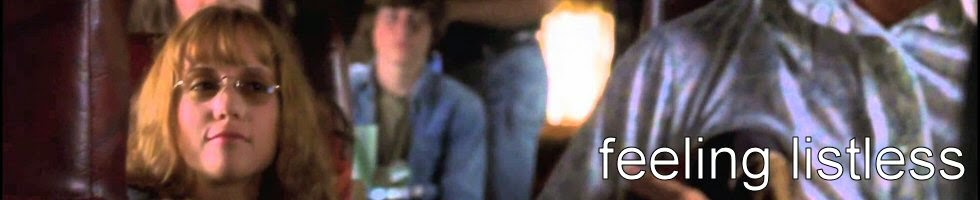
Film Some films are impossible to return to in their theatrical cuts once you've visited their director's cuts or extended versions and Untitled, the longer version of Cameron Crowe's Almost Famous is one of them. As The AV Club identifies in adding forty minutes, Crowe doesn't really make substantial changes to the story, "much of it in the form of short conversations and anecdotal fragments depicting life on the road. But those small additions make a huge difference, fleshing out the hero’s unrequited attraction to super-groupie Penny Lane (played by Kate Hudson), and showing more clearly how his evolving relationships with the people he was supposed to be covering wound up compromising his objectivity."
After seeing Almost Famous originally at The Filmworks in Manchester, I've since bought the film three times. Firstly the theatrical, full price mind you, from the old Music Zone in Liverpool's Williamson Square (the company which is now essentially trading as That's Entertainment), then Untitled in Region One with the cardboard cover and additional Stillwater EP via playusa.com when that was thing and then again in R2 in an HMV sale (and I can't remember which one). The blu-ray's a confusing animal with its extended version on disc, but no extras and the artwork featuring Penny Lane from the theatrical version. Such are the vagaries of film publishing. Of all of them, the R1's clearly the most beautiful, with its sepia set images plastered across the interior and some effort made to make the Stillwater cd look like a re-release of some old album.
One of the cornerstones of the Untitled's extras is an epic deleted scene of William Miller (Fugit) convincing his mother to let him go on the trip by playing her Zepplin's Stairway to Heaven as a way of demonstrating that rock music is an artform, has depth. As an addition to the film itself this would have been incredibly brave; having the audience sit and listen to all seven minutes of a record in this way isn't something you'd usually see in a relatively commercial film. In the event we didn't have to, the band denied them the usage. As the wikipedia explains:
"Crowe took a copy of the film to London for a special screening with Led Zeppelin members Jimmy Page and Robert Plant. After the screening, Led Zeppelin granted Crowe the right to use one of their songs on the soundtrack — the first time they had ever consented to this since allowing Crowe to use "Kashmir" in Fast Times at Ridgemont High — and also gave him rights to four of their other songs in the movie itself, although they did not grant him the rights to "Stairway to Heaven"."And so the scene appears without sound, and a direction so that viewers can begin listening to the song at the correct moment. Now, fifteen years later, someone has cheekily uploaded the scene to YouTube with the song added for speed:
If nothing else this is a reminder to me that perhaps I don't listen to enough music or rather I don't listen to enough music whilst not attempting something else at the same time even if it's simply trying to get to work. But long ago I made peace with films demanding my sitting time, that I'm more likely to spend ninety-odd minutes in the company of pictures and sound and a narrative. Which isn't to say I haven't had a similar reaction to Frances McDormand in this scene when faced with something of such inarguable majesty.
Scene Unseen:
All The President's Men

Film During my post graduate film studies course, we were asked to write a short piece unpacking the mise-en-scene of a famous film shot. I'd just recently watched All The President's Men and was fascinated by the Library of Congress scene in which the two reporters are photographed from above. Fortuitously it was also shot that many other people were fascinated with and within a few hours I was able to pull together enough research to knock something together. Here it is:

Mise-en-scene:
All The President’s Men
All The President’s Men (1976) portrays the true story of how Bob Woodward and Carl Bernstein, reporters from the Washington Post newspaper investigated the circumstances surrounding the burglary at the Watergate Building in Washington and how their journalism led to the eventual resignation of President Nixon. The subject of this essay is the “famous” Library of Congress reading room scene in which the reporters are attempting to ascertain, by checking every slip for items requested over a two year period, whether a White House aide has been looking for material related to Nixon’s presidential rival Ted Kennedy as part of an alleged smear campaign, The following will describe how the mise-en-scene underlines the difficulties the reporters faced and also their determination to succeed.
It is the first scene within the film without dialogue and that does not specifically give direct information pertinent to the plot, instead presenting themes on an entirely visual basis. Storytelling overall in the script is extraordinarily dense, and although screenwriter William Goldman is able to mask much of the exposition in excellent characterisation, cinematographer Gordon Willis would later admit, ‘if you went out to the restroom during the movie and came back, you would have missed something important.’ (Schaefer and Salvato, 1984: 296).

This long shot begins with a high angle close up of the hands of Woodward and Bernstein as they rhythmically sift through the requests. Relatively quickly the camera pulls backwards to reveal the journalists are heads down, deep in concentration. Surprisingly the shot does not end here; in a virtuoso move, the camera continues to pan backwards revealing the whole work table, then after a dissolve, the larger area surrounding them and after a further dissolve an extreme long shot of the entire floor of the reading room.
In a film that largely happens in close-ups and mid-shots, the audience attention is suddenly struck by a visual and technical spectacle and the effect is startling. The scene is reported to have cost $90,000 (Ehrlich, 2004: 114). As Willis describes, a crane could not be used so ‘a winch and a cable (were placed) in the top of the Library of Congress, and that winch actually pulled the camera up. It was done with an Airflex and some stabilizers to keep it from shaking […] My assistant built a radio-controlled focus system.’ (Lobrutto, 1999: 28).

The scene symbolically represents the story of the film, that of two men against an entire administration. It expresses the immensity of the task that lay ahead for the reporters, not just in searching through library cards, but in revealing the truth behind the misdeeds of the administration. Willis explains: ‘The idea was, Woodward and Bernstein were looking for “a needle in a haystack.”’(Lobrutto, 1999: 28) This was originally one slow continuous take (Lobrutto, 1999: 27) but the two dissolves and the speed of camera movement shorten the time between close up and extreme long shot emphasising the scale of the building as the protagonists becoming mere specks dwarfed by the larger space. If they do not entirely disappear from frame they become lost, ‘trapped in maze-like configurations whose spaces are perceptible only from a bird’s-eye view.’ (Cook, 2000: 366). The ’concentric circles’ (Lindamood, 1999) resemble the wheels of power they are attempting to puncture.

The lighting within the shot runs in opposition to the approach taken throughout the rest of film. The scenes within Washington Post offices are bathed in an oppressive ‘hard and unpleasant’ fluorescences, creating scenes in which absolutely everything is visible (Schaefer and Salvato, 1984: 297). Everywhere else in Washington is often ‘shrouded in darkness’ giving a ‘nourish tone’ (Ehrlich, 1984: 114), underlining the frustration that Woodward and Bernstein often express in the dialogue about their inability to see the whole picture, that patterns are there but that they cannot see them. That in this key scene, fill light is being used inside a large public building suggests that on this occasion the journalists are clear of a way forward, that they know the purpose of these particular actions and what they will prove or disprove.

There is a gentle antagonism existing between the two reporters throughout the opening of the film, but this scene is the first to demonstrate that they can work together and are presenting a united front. They appear almost symmetrically within the shot. The angle of framing is from above and they are looking downward and although their faces are not shown their stance with their jackets are off and their shirt sleeves rolled up, is one of concentration. The colour of the shirts, blue and white, is traditionally symbolic of power and authority. Their bodies are rigid in their seat, and although they make mistakes as they check the cards these are quickly remedied. This is the presentation of a single unit is an image repeated throughout the film as the pair stand together in doorways and close to each other in diners.

Director Alan J Pakula ‘needed to show that the materials Woodward and Bernstein used – typewriters, pencils, pads, and library cards – served as important weapons that could bring down some of the most powerful men in the country.’ (Toplin, 1996: 187) In this scene this focus is achieved through diagetic sound design. Even as the camera moves away from them, the synchronous sound of the flicking paper continues at full volume in the sound mix right up until the end of the shot, still audible over the music. In later scenes, a similar technique would be used in the newsroom as the only sound which can be heard are the reporter’s typewriters.
This scene generally suggests that Woodward and Bernstein are facing an impossible task as they appear lost in the immensity of the library’s reading room. But it also presents them as a united front, full of dogged determination. In the following scene it is revealed that the search through the records was in vain, with both reporters wondering if some slips had been pulled or names changed or if they’d missed a card. But in the next breath they suggest another possibility and so the investigation continues.

Bibliography
Cook, David A. 2000. Lost Illusions: American Cinema in the Shadow of Watergate and Vietnam, 1970-1979. University of California Press Ltd., London.
Ehrlich, Matthew C. 2004. Journalism in the Movies. University of Illinois Press, Illinois.
Goldman, Willian. 1975. All The President’s Men screenplay: May 10, 1975 draft. Wildwood Enterprises, Inc.
Lindamood, Brian. 1999. Cub Reporters. In Columbus Alive. http://www.columbusalive.com/1999/19991202/film1.html (link now broken)
Lobrutto, Vincent. 1999. Principal Photography: Interviews with Feature Film Cinematographers. Praeger/Greenwood, Westport.
Schaefer, Dennis and Larry Salvato. 1984. Masters of Light: Conversations With Contemporary Cinematographers. University of California Press Ltd., London.
Toplin, Robert Brent. 1996. History by Hollywood: The Use and Abuse of the American Past. University of Illinois Press, Illinois.
Filmography
All The President’s Men. 1976. 133 mins. Production: Warner Brothers, Los Angeles. Directed by Alan J. Pakula.

Scene Unseen:
The Breakfast Club

Film The article I linked yesterday about Ally Sheedy reminds me of an essay I wrote during my post-graduate film course about The Breakfast Club for a "Research Methods" module. The question was ...
Select a short scene from a film and analyse how gender and sexuality are portrayed …
... and we were tasked (in under a thousand words) with finding a scene which best expressed such things as Laura Mulvey's gaze and how films are approached by female spectators. The ideal choice, selected by two of my other classmates is the moment from Vertigo when Jimmy Stewart's Scottie sees Kim Novak for the first time, which Mulvey mentions directly in her essay Visual Pleasure and Narrative Cinema.
Instead I chose, well you'll read. I later had to repeat a similar exercise for Amelia and Luc Besson's films Nikita and Taxi. I somehow managed 60% for all three even though I didn't really know what I was doing.
----
The Breakfast Club (1985) is amongst a sequence of films written and sometimes directed by John Hughes exploring the subject of teen angst and a crisis of identity. It is Saturday morning detention in a high school for five students, characterised by an opening voiceover as ‘a brain, an athlete, a basket case, a princess and a criminal’. The film takes place over an eight hour period largely spent in the library as the students argue, then slowly bond over common ground, realising that they are all the same in their own ways. The narrative culminates in a pygmalionesque moment during which Claire (the princess) takes tomboy Allison (the basket case) to one-side, ties her hair back, applies different make up and then sends her out again to be greeted by first Brian (the brain) and Andrew (the athlete). She becomes the subject of their gaze. Although the scene is inter cut with an intimate moment between Claire and Bender (the criminal) in a closet, this essay will concentrate on demonstrating how the audience’s reaction to the reveal is governed by the gaze, the implications of Allison’s transformation and how masculinity is portrayed through Andrew and Brian.
After a brief shot of Brian writing a detention essay, the frame focuses on Andrew’s reaction to the ‘new’ Allison and because the spectator sees her through his point of view during the final reveal, their surprise is heightened. The scene initially conforms completely to Laura Mulvey’s explanation of the gaze: ‘The male is the active “bearer of the look,” where the female in the passive object of the look.’ (Walker, 1981:83) ‘In a world ordered by sexual imbalance, pleasure in looking has been split between active male and passive/female.’ (Mulvey, 1975:11) The reveal does not initially hold on Allison’s form. Andrew looks upwards, almost in slow motion. There is a brief shot of a nervous Allison, there is a quick cut back to Andrew, before returning to Allison tentatively walking forward. The fill light which has pervaded the film, which had once disappeared into the character’s dark clothes and hair, now illuminates her white blouse and angelic face, making her form leap out of the frame. The spectator’s point of view is split; they are in the position of both gazing upon Allison and sympathising with her nerves at how others will react to her change. They are diverted because she is not passive and has an active story of her own.
Jonathan Bernstein argues that the emergence of the feminine Allison is problematic. She becomes ‘just another simpering, pretty high school girl with the hots for a jock’ were once ‘she was a unique and unnerving character’ (Bernstein, 1997: 67), although evidence would point to the effect being temporary. In the closing moments of the film, when Andrew rewards her change of look with a kiss, she rips the team badge from his shirt indicating that her rebelliousness is still in force. Mary Anne Doane would characterise this as a state in which ‘womanliness is a mask which can be worn or removed’ (Doane, 1991: 765). In previous scenes, Allison would work hard to make herself the centre of attention, making loud noises and telling wild stories about her sexual encounters which she would later laugh off saying ‘I'm not a nymphomaniac...I'm a compulsive liar…’ Here, she is unsure of the power her new femininity has, even asking Andrew if it is a ‘good or bad’ thing when he remarks that he can see her face. He says it is good she smiles broadly – she has simply found another, more visual away of keep the attention of others. As Shary indicates Allison ‘diminishes her previous rebel status and (provides) simply another false façade behind which she can hide her anxieties’ (Shary, 2002: 52).
The scene also provides interesting contrasts in the presentation of masculinity. Andrew is presented initially, muscles taut, waiting for action. When Allison enters he leaps off wooden handrail he’s been sitting on and steps forward in what appears to be another example of the character asserting his manliness, something which happens throughout the film, generally against the other alpha-male Bender. During the film he has taken some time to understand Allison and why she seems to close herself off from everyone emotionally, perhaps because he feels himself in his jock status doing the same. ‘Andy is the jock as conflicted masculinity, determined to maintain his physical power but desiring to explore his more emotional – if not intellectual – dimensions.’ (Shary, 2002: 73) Somehow the presence of Allison, especially in this scene, allows him to be softer. He actually appears smaller in the frame and when commenting that he can see her face, he gestures around his chin a way which is quite feminine.
Brian, by contrast, largely accepts his less masculine status in the group. He ‘is indeed ostracized, ridiculed, physically and socially inept, and desexualised, but his yearning for a transformation from his nerd status to a more acceptable or dramatic personality is minimal.’ (Shary, 2002: 35) As the other male presenting the gaze in the scene, his eyes only fix on Allison long enough to gape and offer her his recognition before returning to the essay. He is not standing. He is shot from above, from her point of view, beneath her, placing him in a less prominent masculine position. The final shot of the scenes sees him finish is writing. He punches himself in the arm celebrating his success but it seems to be an almost ironic gesture – when Brian does try and assert his masculinity it is largely in a knowing way.
In the closing moments of the film the opening voiceover is repeated but this time, each character reads their own description and the implication has changed. ‘What we found out is that each one of us is a brain, an athlete, a basket case, a princess and a criminal’ In effect they have discovered that they each share those traits both masculine and feminine and they will effect their near future to varying degrees.
Bibliography:
Bernstein, Jonathan. 1997. Pretty In Pink: The Golden Age of Teenage Movies. St. Martin’s Griffin, New York.
Doane, Mary Anne. 1991. Film and the Maqueade: Theorising the Female Spectator. In. Film theory and criticism : introductory readings. 5th ed. 1999. Edited by Leo Braudy and Marshall Cohen. Oxford University Press, Oxford.
Mulvey, Laura. 1975. Visual Pleasure and Narrative Cinema. In Screen 16, 3:6-18
Shary, Timothy. 2002. Generation Multiplex: The Image of Youth in Contemporary American Cinema. University of Texas Press, Texas.
Walker, Janet. 1981. Psychoanalysis and Feminist Film Theory: The Problem of Sexual Difference and Identity. In. Multiple Voices in Feminist Film Criticism. Edited by Diane Carson et al. 1994. University of Minnesota Press, Minnesota.
Filmography:
The Breakfast Club. 1985. Production: Universal Studios. Directed by John Hughes.
"before we figured out what the algorithm was"
Film The few of you who've been reading this for a while may remember the old Scene Unseen series from back in 2004 and this short piece about the entertainingly confrontational audio commentary on Steven Soderbergh's film The Limey. Now on the eve of his retirement, Soderbergh explains to The AV Club the film's editing process which turned a film that didn't work into something which I think we can all agree is something of a classic:
"It was shot and cut chronologically. It was written that way, and it was done that way, and it didn’t work. I’m not saying that’s the script’s fault. I’m just saying it didn’t work. It had to be rethought from frame one. And before we figured out what the algorithm was, I thought we were in trouble. I remember the day—God, this would be January 1999 — Out of Sight had just won the National Society Of Film Critics awards for picture, director, and screenplay, and I got a call from Stacey Sher, one of the producers, going, “I’ve got great news, it was just announced that blah blah blah.” And I remember thinking, “I really don’t care. I would trade that for one edit that would work.”Later in the interview he talks about poor reception for The Good German, which, with its mimicing of ancient film artifice is probably an interesting film to revisit in the wake of The Artist.
Review 2010: The Opinion Engine: 22/31: Heat (suggested by @linkmachinego)
Scene Unseen

"I say what I mean, and I do what I say."
Film At twenty-two minutes and twelve seconds into Michael Mann’s Heat, there’s one of the most interesting cuts in the film. We’ve just witnessed an argument between Val Kilmer and Ashley Judd’s husband and wife over the inconsistency of their life and how, because of his gambling and well, being a crook, she’s left looking after their child. Angrily, Kilmer speeds away from their house through the suburbs at speed and then the cut happens – to the interior of Al Pacino’s car, as his cop character, Vincent takes a call from his department with disappointing news of an evidential dead end.
This disorientating cut is curious because it breaks most of the rules of classic Hollywood continuity editing in which an establishing shot leads to the subject of the scene. Mann’s motive seems to be to fix the idea in the viewer’s head that Kilmer and Pacino are one in the same person, although not in the literal way that some directors, Lynch for example, might suggest that Kilmer has somehow transmogrified into Pacino. This is reinforced in the next shot which is another tracking shot of a car, this time Pacino is heading along the freeway at a similar speed to Kilmer, though with perhaps less anger.
The next scene has Pacino ferreting through the kitchen area of his apartment. He selects a cold chicken leg and bottle of Jack Daniels and as he settles at the kitchen table, his wife Justine, played by Diana Venora with a Audrey Hepburn hairstyle (see above), hammers down the stairs and the two have a passive/aggressive discussion about yes, Pacino’s inconsistency, his lateness in coming home, the inconsistency of their life and how, because of his being a detective, she’s left looking after their child (well, his step child). Their exchange lacks the anger of Kilmer and Judd’s and ends with a measure of understanding, if frustration.
In the next few scenes, we’re shown the genesis of one of these relationships as Robert De Nero’s robber baron bonds with Amy Brenneman over books in a bar, and though it’s a fairly typical meet cute, there’s a discordant note, not just in the music but in the fact that the whole thing is built on a lie; De Nero offers a false name and occupation and as the scenes continue onto the balcony of her apartment and into her bedroom, for all the tenderness of the mood, there is an ever present sense of dread as we know that even though some of his barriers are down, the central lie within their relationship will see its end..
In the midst of what’s ostensibly a heist picture, Mann’s showing us the progression of a bad relationship in reverse; the destruction of Kilmer and Judd’s coupling, the acrimony of Pacino and Venora and the tender beginnings of De Nero and Brenneman. Which demonstrates the brilliance of Heat. Despite selecting this section because of today’s date, basically at random, I’ve stumbled upon three scenes that exemplify Mann’s big theme, that in his cops and robbers world no one can have a “normal life” and that unlike the citizens the cops protect and the bodies which impede the robbers, some of whom they’re married to, there’s no such thing as a work life balance and relationships rarely work.
Read LinkMachineGo here.

"I say what I mean, and I do what I say."
Film At twenty-two minutes and twelve seconds into Michael Mann’s Heat, there’s one of the most interesting cuts in the film. We’ve just witnessed an argument between Val Kilmer and Ashley Judd’s husband and wife over the inconsistency of their life and how, because of his gambling and well, being a crook, she’s left looking after their child. Angrily, Kilmer speeds away from their house through the suburbs at speed and then the cut happens – to the interior of Al Pacino’s car, as his cop character, Vincent takes a call from his department with disappointing news of an evidential dead end.
This disorientating cut is curious because it breaks most of the rules of classic Hollywood continuity editing in which an establishing shot leads to the subject of the scene. Mann’s motive seems to be to fix the idea in the viewer’s head that Kilmer and Pacino are one in the same person, although not in the literal way that some directors, Lynch for example, might suggest that Kilmer has somehow transmogrified into Pacino. This is reinforced in the next shot which is another tracking shot of a car, this time Pacino is heading along the freeway at a similar speed to Kilmer, though with perhaps less anger.
The next scene has Pacino ferreting through the kitchen area of his apartment. He selects a cold chicken leg and bottle of Jack Daniels and as he settles at the kitchen table, his wife Justine, played by Diana Venora with a Audrey Hepburn hairstyle (see above), hammers down the stairs and the two have a passive/aggressive discussion about yes, Pacino’s inconsistency, his lateness in coming home, the inconsistency of their life and how, because of his being a detective, she’s left looking after their child (well, his step child). Their exchange lacks the anger of Kilmer and Judd’s and ends with a measure of understanding, if frustration.
In the next few scenes, we’re shown the genesis of one of these relationships as Robert De Nero’s robber baron bonds with Amy Brenneman over books in a bar, and though it’s a fairly typical meet cute, there’s a discordant note, not just in the music but in the fact that the whole thing is built on a lie; De Nero offers a false name and occupation and as the scenes continue onto the balcony of her apartment and into her bedroom, for all the tenderness of the mood, there is an ever present sense of dread as we know that even though some of his barriers are down, the central lie within their relationship will see its end..
In the midst of what’s ostensibly a heist picture, Mann’s showing us the progression of a bad relationship in reverse; the destruction of Kilmer and Judd’s coupling, the acrimony of Pacino and Venora and the tender beginnings of De Nero and Brenneman. Which demonstrates the brilliance of Heat. Despite selecting this section because of today’s date, basically at random, I’ve stumbled upon three scenes that exemplify Mann’s big theme, that in his cops and robbers world no one can have a “normal life” and that unlike the citizens the cops protect and the bodies which impede the robbers, some of whom they’re married to, there’s no such thing as a work life balance and relationships rarely work.
Read LinkMachineGo here.
Scene Unseen
Elsewhere To go with the competition, I've resurrected Scene Unseen for one night only to talk about the opening scenes of Olivier's Henry V.
Forgotten Films meets Scene Unseen:
Memento: The Beginning of the End

As soon as Christopher Nolan's Memento was released with its back to front yet still complete forward pointing plotting some audience members (well at least this audience member) wondered what the film would look like if all of the footage were to be edited into the correct chronological order. On the special edition version of the dvd that wish is answered in this special 'hidden' extra which, and this is why I'm listing it as a 'forgotten film', works perfectly well as a movie in and of itself. Well, alright, a crazy mixed up quasi-art house piece that breaks all the rules of classical narrative filmmaking and plays like dollop of video art straight from Tate Britain's white cube spaces, nut a movie nonetheless.
For those who don't know the story, the shorthand synopsis would be that a man who cannot form new memories is trying to discover and kill the man who was responsible for murdering his wife and giving him his condition. In order to mimic that condition, the film-maker presents the story in reverse, with the apparent end of the story at the beginning then works his way backwards, still somehow retaining all of the usual rules of storytelling and tropes of the neo-noir genre, with a revelatory scene at the end that explains everything that just happened.
In this version, after the end credits roll up the screen backwards, all of the black and white moments that litter the original cut providing a breather from the main story and signaling when Leonard lost his memory, are necessarily dropped in at the front, meaning that the sad tale of Sammy Jenkis, a man who apparently had a similar illness, is narrated altogether, broken only by the drawing of a tattoo. This gives the reveal that he shouldn't take any calls an even greater significance since it hasn't really been explained to us exactly who he's been talking to on that phone.
Such incidents which were of less importance in the theatrical version litter the film - the first colour moments occur when he's remembering his wife and the swapping of the hotel rooms and the fact that he never seems to sleep in the same bed twice becomes clearer. The overall effect is to underline the manipulation that Leonard actually experiences day-to-day, because of his condition from the hotel clerk, Teddy and particularly Natalie who quickly realizes the nature of his condition, that he isn't aware of what he's done and uses him for her own ends. Both she and Teddy are liars, and it's painful to notice that for all Lenny's insistence that he needs to look into people's eyes so that he can tell if people are being sincere, it simply doesn't work.
But despite his deceptions Teddy becomes rather a tragic figure in this direction as the film works towards his inevitable death, which is still signposted for various reasons in the opening moments. He is probably the best friend Lenny has, since, when he pops into a situation he generally doesn't give an indication that the amnesiac is missing anything important, that he hasn't done anything wrong, which is one of his primary fears. Indeed, e's usually nudging him to leave his quest either through hinting or suggestion. His only mistake is to have some fun at Lenny's expense and it's that which probably causes his death in the end (which in case you're wondering doesn't give anything away since it happens at the beginning of the 'real' version).
I've tried not to give away spoilers for either version but I wonder what someone would make of Memento if the only version they've seen is The Beginning of the End. Rather like someone's who's watching the Star Wars for the first time starting with the prequels -- only they could decide whether the release of exposition in a different order actually works. For the rest of us this is a good version of a great film that deepens our appreciation of director Christopher Nolan's achievement. It's available on different special editions of the dvd; in the uk that means the one with 3 discs that's perennially in the sale at HMV. Go to the second disc, push down until the thin blue line intersects 'biographies', push right so that the line drops to the bottom of the screen and press play ...
Scene Unseen:

Uexpected Visitors

:format(jpeg):mode_rgb():quality(40)/discogs-images/R-3544897-1475963179-1624.jpeg.jpg)
Tony Scott's Enemy of the State is one of the few action films of the late 90s that has improved with age. Whilst some of the chase scenes look a bit tired, all of the performances are brilliantly entertaining from a dream cast, and the themes regarding surveillance and just how much privacy a human being is allowed in the modern world has turned out to be quite prescient. Watching chapter three of the dvd in particular will make you shudder though as lawyer Robert Dean's wife Carla harangues the television during a fictional episode of Larry King Live in which a Congressman Sam Albert is talking about the Privacy Bill at the centre of the film.
Carla and Bobby's arguments seem to mirror the general view of the subject throughout the world now - some of us saying that we should really watch out because surveillance is beginning to control out lives whereas some simply don't seem to care too much and just want to get on with our lives (just as Bobby keeps blending). The Congressman introduces a further interest that surveillance is necessary to catch the terrorists who (and remember this was 1998) are living in our borders, hate us and want to blow up our buildings. Enemy of the State is filled with these, what were then thematic mcguffins, now political hot potatoes, in a script that I would argue simply could not been written or made in the post 9/11 Hollywood. Now that I've used the single figure-slash-double figure, here it is again on Jon Voight's character Thomas Reynolds's photo id. It's his date of birth.

Shivers.
Carla:Then we hear on the television ?
Baby .. listen to this fascist gas bag?
Bobby:
Uh oh.
Congressman Sam Albert:Back to the TV ...
Freedom always existed in a very precarious balance. When buildings start blowing up, people's priorities start to change.
Bobby:
He's got a point there sweety.
Carla:
Bobby?
Bobby:
I mean who is this idiot?
Carla:
He is talking about ending personal privacy. Do you want your phone tapped?
Bobby:
I'm not planning on blowing up the country.
Carla:
(sarcastic) Well how do we know until we've heard all your dirty little secrets?
Bobby:
You're just gonna have to trust me.
Carla:
Oh I know, we'll just tap the criminals. We won't suspend the rights of the good citizens.
Bobby:
Right.
Carla:
Then who decides which is which?
Bobby:
I think you should.
Carla:
Y'know Bobby, you should take this more seriously.
Bobby:
Honey, I think you're taking it seriously enough for the both of us. And half the people on the block.
Congressman Sam Albert:Shivers.
Tens of millions of foreign nationals living within our borders and many of these people consider the united states their enemy and they see acts of terrorism as ...
Carla and Bobby's arguments seem to mirror the general view of the subject throughout the world now - some of us saying that we should really watch out because surveillance is beginning to control out lives whereas some simply don't seem to care too much and just want to get on with our lives (just as Bobby keeps blending). The Congressman introduces a further interest that surveillance is necessary to catch the terrorists who (and remember this was 1998) are living in our borders, hate us and want to blow up our buildings. Enemy of the State is filled with these, what were then thematic mcguffins, now political hot potatoes, in a script that I would argue simply could not been written or made in the post 9/11 Hollywood. Now that I've used the single figure-slash-double figure, here it is again on Jon Voight's character Thomas Reynolds's photo id. It's his date of birth.

Shivers.
Scene Unseen:
Head Shot
TV Last night, BBC Four broadcast an excellent documentary about the casting process in Hollywood, Behind the Couch: Casting in Hollywood which largely followed the work of Zora DeHorter who was looking for an actor to essay the role of Jonah Robertson for indie filmmaker Jennifer Phang's new film Half-Life. One of the best sections of the film considered the effects of headshots and the process that DeHorter went through in selecting the man for the job.
An over the shoulder shot presented the casting director flicking through a pile of these photographs, sent to her by agents, eyes looking hopefully out from the glossy finish, selecting which could immediately go to the next stage and those she would want to screen first. As face after unfamiliar face flashed pass, sifted from pile to pile, DeHorter paused briefly on this headshot ...

... it's Dule Hill, who played Presidential aid, Charlie in The West Wing. The character was conspicuous by his absence from most of that last series; evidently Hill's agent was getting his actor's face out there. It's just odd that someone who is apparently so familar still has to go through the headshotting process. Notice that the moustache he was sporting in the final few episodes is already in evidence. Luckily, Zora sent him straight to the next stage. Sadly we didn't get to see him going through the casting process, presumably because he didn't get the job. But don't feel too bad -- Dule has a new show running in which he plays the partner of a cop who is pretending to be psychic...
An over the shoulder shot presented the casting director flicking through a pile of these photographs, sent to her by agents, eyes looking hopefully out from the glossy finish, selecting which could immediately go to the next stage and those she would want to screen first. As face after unfamiliar face flashed pass, sifted from pile to pile, DeHorter paused briefly on this headshot ...

... it's Dule Hill, who played Presidential aid, Charlie in The West Wing. The character was conspicuous by his absence from most of that last series; evidently Hill's agent was getting his actor's face out there. It's just odd that someone who is apparently so familar still has to go through the headshotting process. Notice that the moustache he was sporting in the final few episodes is already in evidence. Luckily, Zora sent him straight to the next stage. Sadly we didn't get to see him going through the casting process, presumably because he didn't get the job. But don't feel too bad -- Dule has a new show running in which he plays the partner of a cop who is pretending to be psychic...
Scene Unseen:
Some Whole Films.
In the weeks I've been working on this column there have been movies which I've wanted to cover but haven't been able to find an angle. They're maintream pieces which for one reason or another have generally gone unnoticed either because they sound difficult, strange or in one case bonkers. All of them are worth digging up if you're in the mood ...
The Mod Squad
Unfairly unheralded when it was released in the UK by virtue of being an adaption of a tv series no one had seen, The Mod Squad is epitomy of cool. It plays like a homage to the seventies exploitation genre done in the style of the French New Wave. The main reasons to watch are Claire Danes, Giovanni Ribisi and Omar Epps slink their way through the proceedings, their mesmerisingly understated performances recalling early Clint Eastwood, that kind of slow burn charisma.
Duets
A sports road movie about karoke, Duets is deeply unconventional, irrational but ludicrously enjoyable. It's one of those moments when a series of characters, stories and ideas which shouldn't be together in the same 112 minutes collide and somehow work. If nothing else, it's a chance to see people like Paul (American Splendor) Giamatti, Maria (The Cooler) Bello and Gwyneth (for goodness sake) Paltrow command a room with their vocal stylings.
U-Turn
Bonkers. From the retina-searing cinematography to the larger than life performances U-Turn is classic film making from another reality. It's difficult to eventually put your finger on why it all finally works although I personally put it down to cameo performance which appears about halfway through -- it doesn't last long; it doesn't contribute anything to the film overall but its mere presence elevates everything...
Blue Crush
Stop sniggering. This is the film you think you'll abore until you see it. From the opening moments your eyes will be glued to the screen as wave after massive wave sloshes across the screen attacked by these tiny creatures, mini-Everests forming and reforming, each a new adventure. Even those who are less forgiving of the standard romantic subplot must agree that the performances likeable, the photography stunning, and the action heartstopping.
Last Party 2000
Phillip Seymour Hoffman investigates the 2000 Presidential Election as it happens drawing out the issues and presenting an even more horrific view of American politics than Michael Moore has four years later. The Democrats eventually come across as the lesser of the two evils, my favourite moment being when at their conference Hoffman asks a member what they stand for and after she offers the list tells her it's exactly what he heard at the Republican conference. You should come to the UK...
The Mod Squad
Unfairly unheralded when it was released in the UK by virtue of being an adaption of a tv series no one had seen, The Mod Squad is epitomy of cool. It plays like a homage to the seventies exploitation genre done in the style of the French New Wave. The main reasons to watch are Claire Danes, Giovanni Ribisi and Omar Epps slink their way through the proceedings, their mesmerisingly understated performances recalling early Clint Eastwood, that kind of slow burn charisma.
Duets
A sports road movie about karoke, Duets is deeply unconventional, irrational but ludicrously enjoyable. It's one of those moments when a series of characters, stories and ideas which shouldn't be together in the same 112 minutes collide and somehow work. If nothing else, it's a chance to see people like Paul (American Splendor) Giamatti, Maria (The Cooler) Bello and Gwyneth (for goodness sake) Paltrow command a room with their vocal stylings.
U-Turn
Bonkers. From the retina-searing cinematography to the larger than life performances U-Turn is classic film making from another reality. It's difficult to eventually put your finger on why it all finally works although I personally put it down to cameo performance which appears about halfway through -- it doesn't last long; it doesn't contribute anything to the film overall but its mere presence elevates everything...
Blue Crush
Stop sniggering. This is the film you think you'll abore until you see it. From the opening moments your eyes will be glued to the screen as wave after massive wave sloshes across the screen attacked by these tiny creatures, mini-Everests forming and reforming, each a new adventure. Even those who are less forgiving of the standard romantic subplot must agree that the performances likeable, the photography stunning, and the action heartstopping.
Last Party 2000
Phillip Seymour Hoffman investigates the 2000 Presidential Election as it happens drawing out the issues and presenting an even more horrific view of American politics than Michael Moore has four years later. The Democrats eventually come across as the lesser of the two evils, my favourite moment being when at their conference Hoffman asks a member what they stand for and after she offers the list tells her it's exactly what he heard at the Republican conference. You should come to the UK...
Scene Unseen: Jerry Maguire: Homage

Cameron Crowe: This is a homage to My So-Called Life which is one of my favourite TV shows. I love the feeling of it. And I later met Claire Danes and said: "Did you see Jerry Maguire?" And she said: "Yeah..." And I said: "You know there's a homage to My So-Called Life in there." And she's like: "Uh - yeah..."
[Everyone laughs]
Tom Cruise: Is that true?
Cameron Crowe: That's me doing a bad imitation .. She caught it! She caught it!
-- From the video commentary track for the dvd featuring Crowe, Cruise and Renee Zellweger

Scene Unseen:
Ferris Bueller's Day Off

Film The other day on the prompting of another weblog I downloaded a parody of Star Wars and the Mike Judge film Office Space. The expectantly titled Office Space Wars is a fairly funny addition to the ongoing list of fan films which bring the props of the Lucas universe to another film (the best of these is TROOPS following a couple of Imperial Stormtroopers as they play clear up to the mess Luke Skywalker is leaving on Tattoine in the style of reality show COPS). These Wars moments are nothing new and unusually, it's the professional film makers who began this trend. Since A New Hope made its debut, references have appeared all over. Mel Brook's Spaceballs is one long skit. But for me, it's the subtler moments which work the best - the verbal reference (see Kevin Smith's entire career) or props which appear long enough to register and is gone. How unexpected was it to see a Star Wars party in the middle of Woody Allen's Celebrity?
This moment from Ferris Bueller's Day Off is my favourite. Bueller, having talked his best friend Cameron to cut school and to lend him his father's car ('1958 Ferrari 250 GTS California. Less than a hundred were made') for a spin in the city with his girlfriend Sloan. Understanding that such an automobile will slow them down in the big city, and completely against Cameron's better judgment, they drop the car at a midtown garage for the duration of the visit. We can tell something is up because of the sheer politeness of the attendant. This borne out as the friends walk away, completely missing the attendants leaving the garage at high speed behind, cheering as they go. It's a hilarious moment and unusually for a comedy moment has serious consequences for the ending of the film. Laugh made, plot point gained.
But the sheer genius of the film means that things aren't left hanging. Later as Mr Rooney, Bueller's headteacher attempts to break into his student's house to get to the bottom of his absence, we cut away . . . and the opening bars of John William's Star Wars score fill the speakers as the underside of the Ferrari engulfs the screen, much like the star destroyer at the beginning of A New Hope. It's in slow motion and like that tool of the Imperial forces seems to go on forever. Cut to the attendants utter joy painted across their faces as they take it for the leap it was meant for; back then to the original shot at the car speeds at light speed into the distance, the score winding down as they become a spot on the horizon.
The reason that's its one of the best references is that is works on more than one level. The problem with something like Spaceballs is that you generally have to know the trilogy fairly well to find it amusing. Here the moment is hilarious even if you missed A New Hope, but there are other resonances if Lucas has touched you. For non-fans, as well as the flying car, there is the look on the faces of the attendants doing what any car or even non-car person I'm sure would love to do; but there is also the thought of Cameron's reaction when he finds out what's been happening to his dad's car in his absence and how Ferris is going to weazle himself out of this one. The positioning of that opening shot will impress fans of the trilogy (quick question if Doctor Who fans are 'Whovians' and Star Trek fans are 'Trekkers' or 'Trekkies', what are Star Wars fans?). There is also a retro-cool for cineastes in seeing one of film's genuine character men Richard Edson (who three years before was the lead in classic Jim Jarmusch indie film Stranger Than Paradise) in such a small but significant role in one of the classic films of the 1980s. Name me another Star Wars reference in a movie which has all of that...
Scene Unseen:
Amelie: Gnome

Film This week I'm going to assume you've seen the film. If you haven't the following won't mean a thing and I suggest you go and watch it before coming back because it spoils the film a little bit. For people who are still here, this letter appeared in the 'You say' section of the Liverpool Echo last night. It's life immitating art for sure -- but is it by accident or a French movie reference?
Gnome truthsIsn't that perfect?
A PERSON or persons unknown stole a gnome from our front garden. They then sent me three picture postcards from France, with silly messages on them - supposedly from the gnome. Eventually it turned up on our doorstep with a small bottle of duty-free Jack Daniels tied to it and its face and hands had been painted a deep tan colour. I gave the whiskey away and scrubbed him clean.
If the person or persons concerned would like to take Mr Gnome on holiday again, will they please ask my permission first (as he may need a passport!) and please send him home with about 200 duty-free fags instead of whiskey.
Rosemary, Waterloo (Full Name & Address Supplied
Scene Unseen: The Matrix Revisited: The Woman In The Red Dress

Film Simon Pegg the creator of Spaced said recently: "You've got to hand it to the Wachowski brothers, because it took George Lucas twenty years to kill his baby and they did theirs in three and that's good going." I mention that quote because (a) it's very funny and (b) it's very true and underlines the sense of disappointment we all felt at the end of this trilogy. The problem with having the two average sequels is that it means we'll never again look at the first film in quite the same way. One of the strengths of that first time was the anticipation what Neo would do next. Now that anticipation has dissipated, we're left with the sad sense that in fact yes, it was only a movie.
And DVD. Or rather many dvds. Apart from the films, there's been The Animatrix (which I'll cover some other time) and The Matrix Revisited, a cheeky way of selling what should have been a bonus disc with the first film as a separate entity. The main documentary is actually really very good. It lacks the editorialising of something like The Hampster Factor (which considers the making of Twelve Monkeys) or Hearts of Darkess: A Film maker's Apocalypse (Apocalypse Now) and does have an irritating issue with inter-titles appearing every few minutes. But it's entertaining - I don't think I've ever seen producer Joel Silver so passionate about anything and there is the added bonus of letting you ponder again as to whether the rumours about the brothers are true.
There is also a fascinating easter egg. From the Main Menu, select Go Further. Pressing Right on your remote control should reveal The Woman In Red on the right-hand side of the screen. Pressing Enter and a short featurette appears in which Kym Barrett, the film's costume designer, describes the day the actress playing The Woman In The Red Dress visited the set and the effects she had on the men. It's extra-ordinarily funny and in an odd way a real world equivalent of what happens during her scene in the film. And to be honest I can't imagine a male crew member being able to tell the story in quite the same way . . .
Scene Unseen: The Limey's Audio Commentary
Film In keeping with the scattershot nature of the editing of The Limey the audio commentary begins, not with the usual 'Hello my name is Steven Soderbergh' 'And I'm Lem Dobbs' but with outtakes from the commentary sessions and other isolated moments of speech mixed with the sound of technical difficulties (with some luscious profanity). It's quite a shock but at the same time it makes an utter change that the film makers care as much about the presentation of their ideas on the dvd as the film itself.
What follows is one of the most entertaining, freewheeling and experimental commentaries you're likely to hear. Its as much about itself as the film its essaying. Example: Fifteen minutes in and we approach the introduction of Peter Fonda's character and as the explanation for approach begins, the sound cuts out then returns, it jumps and echos, speeds up and slows down the sounds and words overlapping and complementing one another the director and writers opinions running up against each other. Certainly makes a change from hearing Rob Reiner get caught up in watching his own film (see When Harry Met Sally).
The other clear distinction is the need to communicate about the making of the film. One of the real issues which continues with commentaries is the seeming need of those involved to say how good everyone was to the point that every scene has a background of someone saying -- I love what he did, she did, they did without actually mentioning why they did it. Here all of that is a given. Except that there also seems to be a certain animosity between Soderbergh and Dobbs -- at times its amazingly terse and confrontational. Time and again the same discussion/argument develops and generally follows the same pattern:
Dobbs: I did this in the script. But you didn't like it and took it out.
Soderbergh: I didn't like it. I'm the director.
Dobbs: Screenwriters never get their own way.
Soderbergh: Well direct your own film.
But it's the perfect way to understand the differences between a film and a screenplay and the process which the text goes through. There is a moment in the film where The Limey explores the house of his nemesis and at the top of some stairs he finds a photo of his daughter. It sits in isolation. The writer said that he'd envisaged a wall full of pictures with this one in the middle, but because he didn't write that and set people follow scripts literally, instead we have the picture -- he's really not happy because it gives the picture more romance than he thinks is logical. Dobbs also points out all the scenes that Soderbergh wrote that he doesn't like ('I could certainly do without that scene which I didn't write did I?'), and it's a measure of both men that they can continue to remain friends and colleagues and not like each other's stuff. There is bags full of ego involved, but also an understanding that they can have their own opinions, not agree, but still create art.
What follows is one of the most entertaining, freewheeling and experimental commentaries you're likely to hear. Its as much about itself as the film its essaying. Example: Fifteen minutes in and we approach the introduction of Peter Fonda's character and as the explanation for approach begins, the sound cuts out then returns, it jumps and echos, speeds up and slows down the sounds and words overlapping and complementing one another the director and writers opinions running up against each other. Certainly makes a change from hearing Rob Reiner get caught up in watching his own film (see When Harry Met Sally).
The other clear distinction is the need to communicate about the making of the film. One of the real issues which continues with commentaries is the seeming need of those involved to say how good everyone was to the point that every scene has a background of someone saying -- I love what he did, she did, they did without actually mentioning why they did it. Here all of that is a given. Except that there also seems to be a certain animosity between Soderbergh and Dobbs -- at times its amazingly terse and confrontational. Time and again the same discussion/argument develops and generally follows the same pattern:
Dobbs: I did this in the script. But you didn't like it and took it out.
Soderbergh: I didn't like it. I'm the director.
Dobbs: Screenwriters never get their own way.
Soderbergh: Well direct your own film.
But it's the perfect way to understand the differences between a film and a screenplay and the process which the text goes through. There is a moment in the film where The Limey explores the house of his nemesis and at the top of some stairs he finds a photo of his daughter. It sits in isolation. The writer said that he'd envisaged a wall full of pictures with this one in the middle, but because he didn't write that and set people follow scripts literally, instead we have the picture -- he's really not happy because it gives the picture more romance than he thinks is logical. Dobbs also points out all the scenes that Soderbergh wrote that he doesn't like ('I could certainly do without that scene which I didn't write did I?'), and it's a measure of both men that they can continue to remain friends and colleagues and not like each other's stuff. There is bags full of ego involved, but also an understanding that they can have their own opinions, not agree, but still create art.
Scene Unseen:
Election: A Life Mistake

Film One of my dvd watching habits is to pause the film during moments when a newspaper or magazine passes by to see how good the prop department were -- or rather to see if the copy on the page follows the plot, basically says nothing or is something which has been thrown in on the day of shooting because they were rushed for time. Every so often creativity really abounds and you find out something which adds imeasurably to the story. Then there are times like these, when the film makers are really having fun.
Alexander Payne, the director of Election, a sort of high school political comedy, says on his audio commentary that he hates it when there are films which have dummy instead of real stories, so he sat down and wrote everything in print in the film. During his description he invites us to pause and read gus work and so in crystal clarity we find out the details of the aftermath of what happened between Jim McAllister (Matthew Broderick) and Tracy Flick (Reece Witherspoon). But there in the middle, surely as a joke is the following...
"If you've paused the film in order to read this entire article, your time could be better spent renting "Citizen Ruth" from your local video store.I'm sure you have. And I'm surprised this kind of thing doesn't happen more often. Its all very well for companies to shell out for product placement in films (which seems to be more subtle than it used to be but I'm sure its still there) but why don't film makers put in more subliminal advertising for their other work (and I'm not just talking about George Lucas putting THX on anything that moves). Seems like a perfectly reasonable way to talk up the films people have been less exposed to. If anyone's noticed anything like this happening in Payne's next movie, About Schmidt, let me know.
Do you know how hard and unthankful a task it is to write thise fake few stories for newspaper movie props? I've got better things to do."
Scene Unseen:
Harry Potter and the Philosopher's Stone: Harry and Hagrid

Film I never caught the crest of the Harry Potter wave. I don't read a lot of fiction and I've found the films to be a bit meandering, lacking strong plotting, which is fine for kids but as an adult I was a bit fidgety both times. Which is why I was amazed to find what is a really strong deleted scene on the dvd for The Philosopher's Stone. Once you've fought your way through the utterly incomprehensible game which passes for the menu system and seems designed to stop anybody from seeing them.
Something which both films do really well is the conflict between reality and magic. This is an old fashioned boarding school with all the petty rivalries and discipline but they teach wizardry. What I would have liked to have seen more of is the places in which the real world and this magic realm interact. Like the moment when Potter household fills up with letters from Hogwarts or when Harry argues with the station clerk about the existence of Platform 9 3/4.
So it's utterly surprising to find this deleted moment in which Harry and Hagrid sit hunched in a standard London Tube on their way to the station. Hagrid looks utterly incongruous in the space and including it would have underlined how different this place Potter is going to will be. It's an appealing image and one I would have like to have seen more of. We'll see what happens in the new film out this weekend -- it is directed by T Tu Mama Tambien's Alfonso Curzon -- which is a really appealing prospect.
[other photos from the deleted scenes can be found here]
Scene Unseen:
Broadcast News: Time Off

"I'll meet you at the place near the thing where we went that time."
Film When was the last time you watched a film and as well as thinking 'Great dialogue' you thought 'And that's how human beings talk'. It's an exceedingly difficult tightrope, because for most of us, the things that we say are generally rather banal -- its the message which is interesting not the way that its presented. In a film, both need to be serviced otherwise the audience will become a bit twitchy by the second act. So the writer and director are generally left with a choice -- produce something hyper-stylised (see Kevin Smith and Quentin Tarantino) or so called hyper-real (think Dogme 95 or Mike Leigh) or something in between (see everything else). The trouble with both approaches is that no one talks like that and those of us who do generally get stared at.
Broadcast News is one of a handful of films which I've come across which somehow manages to have interesting dialogue and sound like real people talking. This quote is one of many in James L Brooks' script which is something we might say every day. How often have you asked a friend, 'Do you want to go for a coffee later?' and both known when and where that engagement will take place? The real magic here is that the information being passed isn't about location it's about character. In other words, the easy option might have been "Do you want to meet at the Starbucks on Fifth Avenue' or whatever. Instead we don't really find out where the place is, what the thing was or when it happened. What we get instead is another titbit about the friendship or relationship which has developed between these two characters. But it also gets the people together for an important conversation.
But the film as a whole is littered with moments which feel utterly real, a startling thought in story which concerns itself with the packaging of news for a local station in the US. When Holly Hunter finally goes out on a date with William Hurt she breaks off for a while to go and visit her best friend Albert Brooks at home to find out how his first shot at reading the weekend news went. Now we might do this in the toilet on a mobile phone, but it still feels like something that might happen in the real world -- if only because no dates ever go perfectly. There is a great moment in that same scene when Holly and Albert have a row then after a few seconds become quite reasonable so that they can discuss something else. This is something I've seen happen with my parents quite a lot -- and me if I'm being honest. You'll be arguing about something but break off briefly to decide what to have for tea. In another film, Julia Roberts would have walked out on Hugh Grant and the tension would have gone unresolved. But real life isn't like that. Or is it?
Subscribe to:
Posts (Atom)