Showing posts with label at the bbc. Show all posts

Alistair Cooke's Letter From America: A Chronology.


Radio  Letter From America was a weekly series on Radio 4 which ran from the mid-1940 to the mid-2000s in which the broadcaster and journalist Alistair Cooke commented on the week's news from the United States in a fifteen minute essay.  Documenting the history of the country over the past five decades, every episode of filled with contemporary details often glossed over in hindsight.

Across its 58 year history, 2869 episodes were broadcast of which about 1,550 survive, 900 in the BBC's own archives and another 650 previously thought lost until they were revealed by two listeners who'd been diligently recording ever episode for decades.  Home taping might have been killing music but it was saving this precious speech radio.  

Every extant episode is now available on the BBC website.  Unfortunately, like In Our Time, they're locked into a programme page format which isn't easily navigable when that many episodes are involved and so I decided to create the following chronology to make them more accessible and create the ability to easily skip to a particular year and re-experience that history through the words of Alistair Cooke.

To that end, I've also augmented the radio episodes with transcripts of lost episodes from elsewhere as well as Cooke's US-related journalism from other outlets, notably The Guardian where he was a foreign correspondent from 1947 to 1972 and which led him to be on the ground during these historic moments, like the Montgomery bus boycott and RFK's assassination.  Those entries will be marked with their source and in italics.  Enjoy.


Cataloguing BBC Radio 4's In Our Time using Dewey Decimal Classification.

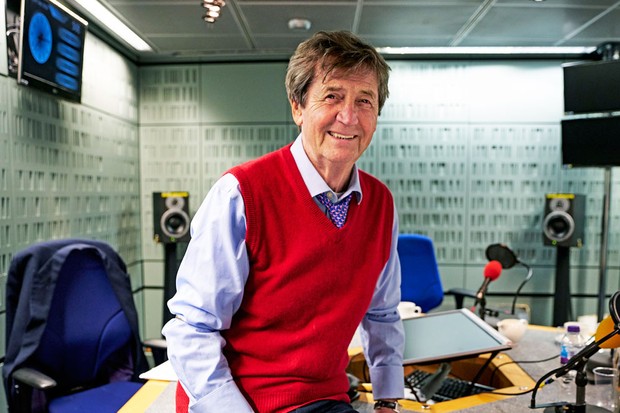
Radio  In Our Time is a weekly live BBC radio discussion programme in which the broadcaster Melvyn Bragg and several academics elucidate a topic of a  philosophical, historical, cultural or scientific nature.  It's been on air since October 1998 and its format has changed little in that time, a moment in the week to listen to a group of very clever people saying some very clever things for forty-five minutes.

The series has clocked up nearly a thousand episodes and its inevitable with an archive that rich that a listener is more likely to catch-up on instalments which cover subjects with which they might casually be interested or being studying at school or university.  Except the website only sorts the episodes into very broad topics, culture, history, philosophy, religion and science so someone wanting to hear about mathematics or theatre has to wade through many pages of other topics.

Which is why, with my librarian's brain, I hit upon the idea of sorting the episodes using a library classification system and after the comparing a few decided Dewey Decimal Classification system (DDC) would suit the purpose because it's less complicated to work through than others and will be most familiar to readers due to its prevalence in public libraries.  Also Library of Congress can be astonishingly obtuse with all of its letters AND numbers.

Find below the results of my free time this past week and a half.  As you can see it's pretty logically ordered, a combination of following an abridged copy of DDC designed for small libraries originally published in 1979, Classify (an experimental classification site which aggregates the choices of thousands of librarians across the planet) and this Wikipedia page which has the most recent names for class names and hierarchical divisions.

Classification is automatically a compromise.  You're applying a numerical label to an object which it wasn't really designed for, so on some occasions, especially with something like In Our Time which revels in obtuse topics, there isn't a perfect place for the episode to go.  Also I've only used the a heading when it pertains to an episode which is why it looks like there are gaps in the sequence.  Melvyn and the gang haven't covered every sub-division in the DDC.

Every title below links to the episode's page on the Radio 4 website.  

You'll notice that if you're on a PC and you hover over many of the links have what would be the original shelf number which was part of the initial iteration to show I'd done the work.  But it became too fiddly to update since so I've left them out and some of the items have moved around since then too.  There are too many of them to remove so we're stuck with them, but this paragraph was by way of explanation.

You might also like to hear, Melvyn talk to Mishal Husain on the Today programme to mark the 1000th episode.

Anyway, I hope this is of some use to you and if it is, please consider leaving a Ko-Fi donation.  The most recent episodes are here and I'll try to keep this list updated as much as possible.


New BBC Archive pages launch.

TV The BBC have officially launched their relaunch of their archive pages with a long press release stressing the thousands of clips, many transposed from their Twitter feed and Facebook:
"The launch date coincides with the 50th anniversary of Nationwide, the early evening precursor to the One Show that featured quirky stories from around the UK between 1969 and 1983. Many of these delightful characters and oddball reports are finding a fresh worldwide audience online. The website brings together the best of these in an easy-to-use way that viewers can explore at their leisure."
It is of course and incredible resource but I still have a couple of suggestions:

(1)  Tags.  It would be really handy if the clips and their pages had clickable tags on them, for programme titles or key content.  That way the user could click on a programme title and find all the clips which appeared on the programme (hopefully with the additional option of sorting by date).  Or everything featuring William Shakespeare.  That sort of thing.

(2) Better organisation and linkage with elsewhere on the BBC website. This Face to Face with Anthony Burgess doesn't also appear on The Late Show page even as a clip and there isn't a link through to that page which would be very useful.  The BBC website also already contains a trove of clips on those programme pages which go unseen, so it seems right that there should be more cross-pollination.

(3)  Why aren't the whole programmes featured here as "clips" also on the iPlayer?  Is it the upload quality of the streams or money?  I bet it's money.

(4)  The links through to the BBC Genome are helpful, but it would be equally useful if a reciprocal link appeared there too.  This also needs to be more consistent.  There are loads of programmes which don't have this useful information on their BBC Archive page.

But all in all this is a fabulous time hole, and don't forget the clips page is in backwards chronological order so you can keep an eye out for new clips as they're added.  Hopefully there'll eventually be a workflow which causes clips added to the Twitter feed to automatically be cross posted here.

The BBC and World War Two.

History The History of the BBC pages have been updated with a huge archive of material from World War II in which corporation staff and others describe their experiences of the war and what it was like to work under those conditions, attempting to inform the public despite the pressures from government and the resources available.

Here's a page about celebrity during the period, with audio of General Charles De Gaulle broadcasting in French to his people from BBC Forces Radio:
"France had fallen, and the military commander had just arrived in London post-haste from Bordeaux. Now, in exile, he entered the BBC’s studios and sat before the microphone to broadcast to his fellow countrymen and women a fierce repudiation of Pétain’s armistice agreement with Nazi Germany.‘As the irrevocable words flew out upon their way’, he recalled, I felt within myself a life coming to an end’. Broadcasting, he said, had provided him with ‘a powerful means of war’.De Gaulle would broadcast from the BBC studios on several more occasions. But for him, the people of France, and for the BBC, this first broadcast represented a dramatic and vivid moment in the war."
There's a mountain of material here and I can't wait to set aside a day to work my way through it all.

Do you like our owl?

TV The BBC's Computer Literacy Project wasn't something which really effected me at school. Although I would have been just in the right place chronologically for it, my Junior school didn't even own a computer, I don't think, and although the secondary school did have a BBC Micro in the physics lab, our computer room was first filled with Research Machines 380Z and when it finally had an upgrade and dozen Acorn Achemedes.

But at home, I didn't miss a programme, especially Micro Live which I remember vividly seeing amongst Play Chess and various Open University programmes (which I barely understood but liked the colours of the science experiments). It's Fred Harris voice which resonates now as he calmly explained how easy it was to use a computer and how we shouldn't be scared of them. Thinking back now, it's possible it was my interest in these which led my parents to give me an Acorn Electron, my first computer.

Now, as part of the Taster series, the BBC have uploaded an entire archive of programmes and related documents from across the projects ten year history, including the whole of Micro Live, Micro File and their earlier iterations. They've also included an emulated archive of the hundred and sixty on BBC Micro programmes featured across the programmes, which is something even viewers wouldn't have had easy access to thirty years ago. Yes, thirty years. My god.

Here's a very long press release explaining how the project happened and why its being resurrected and here's a blog post about designing the website. Hopefully it'll be online longer than the three month window its currently been given.

Here are some of my highlights:

Douglas Adams interview about the game version of Hitchhikers from Micro Live.

A visit to the EPCOT Centre.

John Humphries takes a word processing challenge.

Motion Control in Hollywood movies with behind the scenes material for 2010 and The Last Starfighter.  Features bonus Leslie Judd.

Brian Jacks reveals which micro he bought for himself and his family.

Paul Daniels explains his experiences with home computers and at programming.

Some software:

This animated Owl which was the symbol of the project. Few people remember just how difficult it was to do this kind of moving imagine on a machine with less memory than it takes to power one pixel on a smart phone.

Snapper which I was the first game I became addicted to, but not as much as my Dad who would be regularly up until two in the evening playing this and Chuckie Egg. Included with a box of titles in the original release of the Electron.

A really ambitious version of Space Invaders, with fast moving graphics and a steep difficultly curve.


Extracting the Genome:
Shakespeare at the BBC:
Play of the Month.

TV Usually when considering Shakespeare on the BBC in the 70s, we look towards the BBC Television Shakespeare series. Certainly it's this which has been merchandised most over the years through the dvd boxed set and at the BBC Store.  But as I've discovered recently, in the late 60s and early 70s, the Play of the Month strand, which ran in prime time BBC One for many years carried numerous productions of his plays in amongst other pieces of the theatre canon.

Produced by Cedric Messina, who would go on to be the "showrunner" on the later Shakespeare series and very much in the style that he'd utilise there until passing the baton to Jonathan Miller (and all the gossip of that change readable in Susan Willis's book), these were cut down versions of the texts running through a two hours passage, presenting them in a speedy, accessible manner with prominent actors from stage and screen and mostly exceedingly entertaining.

Having watched a few recently through the BBC's brilliant Shakespeare Archive Resource (available to academic institutions), I wondered just how much of the canon, Messina and his team managed to adapt to television and so thanks to the BBC Genome, here's a list of Play of the Month's Shakespeare productions with links back to the Genome entry, TX dates and a few notes on what to expect should you ever have the chance to see them.

As you can see, the schedule was just about one per year, with the gap towards the end explained by the appearance of The Duchess of Malfi in 1973  The Changeling in 1974 indicating that there was an "Early Modern Drama" quota each year which those plays filled instead of a Hamlet or one of the histories (both of which are notable by their absence).  They ended in 1975 when Messina was scouting for an As You Like It at Glamis Castle and began to wonder whether the whole canon would be possible (full story at the Wikipedia).

The BBC Play of the Month Shakespeare

Romeo and Juliet
Thora Hurd as the Nurse. Gielgud provides the opening voiceover. Directed by Alan Cooke who later went to Hollywood and worked on everything from Matlock to Murder She Wrote and Beauty and the Beast.  TX: 3 December 1967, 19.50

The Tempest
Ronald Pickup as Ariel.  TX: 12 May 1968, 21.15

Julius Caesar
Edward Woodward as Cassius.  Director Alan Bridges went on to direct The Shooting Party.  TX: 13 April 1969.

Macbeth
Janet Suzman as a brilliantly vampish Lady Macbeth.  Eric Porter entirely miscast in the title role sadly.  John Alderton as a really touching Malcolm.  John Thaw as Banquo, Jeffrey Palmer as Menteith (yes, exactly).  Directed by John "The Keys of Marinus" Gorrie.  TX: 20 September 1970, 20.15

A Midsummer Night's Dream
Dream cast. Eileen Atkins as Titania, Lynn Redgrave as Helena, Eleanor Bron as Hypolita, Edward Fox as Lysander, Michael Gambon as Theseus, Paul "Benny from Crossroads" Henry as Flute and only Ronnie Barker as Bottom.  The Radio Times synopsis notes that this "extremely traditional" production was broadcast concurrently with Peter Brook's legendary white cube circus production for the RSC.  Shot "entirely on location in and around Scotney Castle, a folly set in the Kent countryside outside Tunbridge Wells."  TX: 26 September 1971, 20.10.

The Merchant of Venice
Maggie Smith as Portia, Frank Finley as Shylock, both unusually with their own title card at the top of the broadcast underscoring the prestigiousness of their casting.  Nerissa is played by Nerys Hughes, which is perfect casting from Cedric Messina who directed this himself.  "The Venice of Titian and the Belmont of Botticelli are the visual inspiration behind tonight's lavish production," the Radio Times synopsis explains.  TX: 16 April 1972, 20.15.

King Lear
Michael Horden as Lear, directed by Jonathan Miller, roles which both of them would return to seven years later when creating a new version for the BBC Television Shakespeare (after Shaun Sutton had taken over as producer) for which this feels mostly like a dry-run (and many of the same cast would return although some in different roles).  TX: 23 March 1975, 21.20.

Love's Labour Lost
Another superb cast  Jeremy Brett , Martin Shaw, Sinead Cusack, Lorna Heilbron, Maurice Denham and Jonathan Cecil.  The only one of these productions commercially available, from the BBC Store and well worth the £3.99 managing to cover all the bases in a couple of hours offering useful screen alternative to the Branagh musical. TX: 14 December 1975, 22.15.

Shakespeare at the BBC:
A Viewing Order For The Best Bottoms In The Land.


TV Or potential viewing order. Tonight each BBC One's regional opt-out will simultaneously broadcast a documentary about amateur actors playing the mechanicals in a local version of the RSC touring production of A Midsummer Night's Dream.

This will all have been recorded at different times as the tour has continued throughout the country which presumably means if you watch them in that venue order you'll be seeing a version of the history of the production.

Based on this list of venues, this should be the viewing order. I've left in the dates of production.  The episode numbers on the iPlayer are in brackets:

Shakespeare's Dream in the Black Country (7)
ROYAL SHAKESPEARE THEATRE - STRATFORD UPON AVON
February 17, 2016 - March 5, 2016

Shakespeare's Dream in County Durham (5)
NORTHERN STAGE - NEWCASTLE UPON TYNE
March 16, 2016 - March 22, 2016

CITIZENS THEATRE - GLASGOW
March 29, 2016 - April 2, 2016

Shakespeare's Dream in Blackpool (6)
BLACKPOOL GRAND THEATRE - BLACKPOOL
April 5, 2016 - April 9, 2016

Shakespeare's Dream in Bradford (3)
ALHAMBRA THEATRE - BRADFORD
April 12, 2016 - April 16, 2016

Shakespeare's Dream in Canterbury (8)
MARLOWE THEATRE - CANTERBURY
April 19, 2016 - April 23, 2016

Shakespeare's Dream in Norwich (1)
THEATRE ROYAL NORWICH - NORWICH
April 26, 2016 - April 30, 2016

Shakespeare's Dream in Hucknall (2)

THEATRE ROYAL NOTTINGHAM - NOTTINGHAM
May 3, 2016 - May 7, 2016

Shakespeare's Dream in Cornwall (9)
HALL FOR CORNWALL - TRURO
May 10, 2016 - May 14, 2016

Shakespeare's Dream in London (4)
BARBICAN - LONDON
May 17, 2016 - May 21, 2016

NEW THEATRE - CARDIFF
May 24, 2016 - May 28, 2016

GRAND OPERA HOUSE - BELFAST
May 31, 2016 - June 4, 2016

Although there were and will be productions in Scotland, Wales and Northern Island, tonight they have their own programmes.

Hopefully at some point a recording of the whole production will be made available.

Shakespeare at the BBC: The Secret Life of Books: Shakespeare's First Folio.


As the BBC website describes, in The Secret Life of Books, "Six classic British books are considered with a fresh eye. Returning to the authors' original manuscripts and letters, expert writers and performers bring their personal insights to these great works."  Given the eclectic mix of books chosen, it wasn't exactly certain that Shakespeare's Folio would appear especially since it's been so well served on television previously not least during The Big Read whose campaigning series this 6x30mins superficially resembles.

There's a short potted history of Shakespeare's publishing history, the usually glee at the sheer apparent wrongness of "To Be Or Not To Be..." in the original quarto which Beale attempts to read out loud from the British Library copy, the words crumbling in his mouth.  Perhaps some day we'll have a series of programmes about literature's oddities which'll look at more closely.  The programme doesn't come to any real conclusions about its origin and even uses the words "bad quarto" almost in a pejorative sense as though it's a term we used in the past but we're much more enlightened now.

It's interesting to note the extent that scholarship has mode on that this kind of programme is now comfortable enough to stress Shakespeare as a collaborator in a way which I've not quite seen with such force in this kind of veneration.  That make's the oddity that the BL's manuscript copy of Sir Thomas More with its page and a half of potential Shakespeare handwriting isn't mentioned while Beale talks about how we don't have the ability to see the playwright's original papers quite strange.

Nevertheless this an enjoyable half hour and even more so thanks to Beale's own performance of speeches from Lear (which appeared in at the National during the production of the film), Timon of Athens and Hamlet which is represented by his heart-stopping rendition of "To Be Or Not To Be..." stood on the banks of the Thames, words spoken with a force of understanding which I've rarely seen, especially in extract.  You can really tell that this an actor whose lived with the play and Shakespeare's words his entire life.

The Secret Life of Books: Shakespeare's First Folio is on the iPlayer here and available to watch for the next month in the relevant territories.   

Clips from the programme can be sampled here.

BBC's Drama of the Week is Hamlet.

Just a quick note to say that Radio 4's Drama of the Week podcast is episode one of Hamlet.

You can download it here.

Hopefully the other four episodes will go up too, but they've been known to only include a single installment of series.

Radio 4's Hamlet will be in the Afternoon Drama slot.

Genuinely surprised. Here is Hamlet spread across the whole week in the prestigious 2:15pm slot in five parts (an act per day?) starting next Monday 24th March for five days, total duration about three and three-quarter hours which in audio terms is a mass of airtime allowing space for plenty of the play's textual real estate. For comparison, this is just shorter than the Branagh "full text" film and longer than his Renaissance Theatre production broadcast in 1992.

The programme page is here, with full cast list and clips of Jamie Parker talking about the role.  And here.

Notice that it's not listed as being part of the Afternoon Drama strand, which usually features new drama by living writers.  Will this affect its chances of being a downloadable podcast in the Drama of the Week?

Expect a review here in due course, then.

Shakespeare at the BBC: More of The Hollow Crown?

At Illuminations, sorry @illuminations, noticed a good case of burying the headline in a Michael Billington column about BBC radio's adaptation of O What A Lovely War. Towards the end he addresses some of my usual complaints about the lack of theatre on television before smuggling what feels like a pretty impressive leak:
"TV, on the other hand, does little to acknowledge the existence of theatre. You might get the occasional news report if there is a startling controversy or the opening of a big musical. The Review Show has been shunted on to a little-seen monthly Sunday-evening slot on BBC4. But, although I'm told there is a second season of Shakespeare history plays being planned for BBC2, it is rare to find a play from the theatrical canon being televised. And none of the big companies, such as the National or the RSC, has established the kind of link with television that they have with cinemas that allows their work to be seen not just around the UK but across the world."
As @illuminations says:


Let's hope so. The first series did well in international sales, especially in the US where it got huge press, certainly more than it received here. As with the other pieces, it has the perfect shape for a series of films, brilliant parts not least John of Arc and ends with Richard III as the finale. The Jane Howell version for the BBC Shakespeare filmed against a venture playground backdrop with hobby horses with Brenda Blethyn as Joan and Ron Cook as Richard is still a high televisual watermark for this material (and only appearance I think for Henry VI), but it is a very stylised piece and it'd be interesting to finally see it with massive casts and no double (even though as the recent Globe productions and the Howell version have shown that can create interesting thematic resonances).

Perhaps my old plan to do the whole of Shakespeare in this format doesn't look so silly after all. Um.

Updated  25/03/2013  The Hollow Crown Season Two commissioned.

BBC 1963: December.


The Chink in the Wall, 31 December 1963
"Two years after the construction of the barrier between East and West Berlin, special permission was granted for visits by Westerners to the East for a period of five days over Christmas. In this programme, people - some of whom hadn't seen their loved-ones since the rapid construction of the wall in 1961 - describe what these visits mean to them, what life was like before the wall went up and the arduous process they had to go through to obtain visitors' permits."

Six Days to Saturday
"... a film made in 1963 about Swindon Town F.C. by the legendary film director John Boorman." (viewable via a Realplayer link at the bottom of the page)

Tonight: Moslem University
"BBC clip 'Moslem University' from Tonight tx 02.12.1963"

The birth of African Kenya
"People in Britain had begun to question whether conflict in the Empire was worthwhile when the whole idea of Empire seemed so out of step with world opinion. Kenya gained independence on 12 December 1963 and African Kenya was born. Little by little the rest of the Empire peeled away, leaving Britain to be just another country on the map."

The Reith Lectures: The Fulfilment of Lives: Albert Sloman: A University in the Making: 1963
"This year's Reith lecturer is Dr Albert E Sloman, Vice-Chancellor of the University of Essex. He was previously Gilmour Professor of Spanish at Liverpool University and Dean of the Faculty of Arts. Dr Sloman explores what is needed to make an institute for higher education in Essex in his series entitled 'A University in the Making'."

BBC 1963: November.


BBC News: Rare footage of JFK's arrival in Dallas emerges
"A rare, high-quality colour film of US President John F Kennedy on the day of his assassination has been released to the public for the first time. The film shows the president and First Lady Jacqueline Kennedy arriving on Air Force One at Love Field airport in Dallas, Texas on 22 November, 1963. It was shot on 8mm film by William Ward Warren, then a 15-year-old student, who recalls his memories of President Kennedy's arrival."

Letter From America: Assassination of J F Kennedy, Sun 24 Nov 1963
"The assassination of John F Kennedy, the first president of the television age, and the style, grace and fun he brought to the White House."

The Reunion: The Kennedy Assassination
"In this special 100th edition of The Reunion recorded in Dallas, Sue MacGregor reunites five people who were intimately connected to the events surrounding the Kennedy assassination: Clint Hill, the former Secret Service agent who frantically climbed up the back of the presidential limousine as the shots rang out; Gayle Newman, who stood with her young family in Dealey Plaza and became one of the closest eyewitnesses; Hugh Aynesworth, then of the Dallas Morning News, who reported on the events in November 1963, Kenneth Salyer, who was part of the medical team at Parkland Hospital, desperately trying to revive the President; and James Leavelle, retired Dallas Homicide Detective, who was famously handcuffed to Lee Harvey Oswald when he was shot by Jack Ruby."

Outlook: I Should Have Taken JFK's Bullet
"Clint Hill was assigned bodyguard to American First Lady Jackie Kennedy from 1960 to 1964. On the day that President John F Kennedy was shot, Clint was riding in the car immediately behind the President and his wife. He leapt onto the car to try to protect the President from the bullets but was unable to save him. In an amazing and moving interview, Clint tells Matthew Bannister how his inability to save President Kennedy has haunted him for fifty years. "

Witness: Lee Harvey Oswald and the USSR
"Lee Harvey Oswald, the man accused of killing President John F Kennedy in November 1963 had spent more than two years living in the USSR. He had defected there after serving as a US Marine. He got a job in Minsk, and got married but was then welcomed back to the USA."

Woman's Hour: JFK
"Everyone can remember where they where when they heard the news. For two sisters, Clare and Mairead O'Connor, from County Laoise in the Republic of Ireland, the fascination with Kennedy began when he visited their country just months before he died and it has remained a life long ambition to visit the sites associated with the first Irish Catholic President. After much soul searching they decided not to cancel their trip after the terrorist bombings and accompanied by reporter Mary Harte started their journey in Boston."

Talking Movies: Shooting history: Parkland's untold stories of JFK's assassination
"Almost 50 years since the assassination of US President John F Kennedy in Texas, a new film is exploring the shooting through the eyes of ordinary people. Parkland examines the events of November 22 1963 from the perspective of the medical staff who treated the president, the detectives who sought his killer, and the man who filmed that dramatic moment in history."

Desert Island Discs: Gordon Pirie
"Roy Plomley's castaway is athlete Gordon Pirie."

The Public Ear: The Beatles
"In February 1961, John Lennon, Paul McCartney, George Harrison and Pete Best played their first gig at the Cavern Club as The Beatles. Just two years later, and after a change of drummer, they were the biggest band in the UK and global domination was just a few months away. Allan Scott meets friends and relatives of The Beatles to discover the roots of the band and learn more about their early years. Contributors include former drummer Pete Best and Millie Sutcliffe, mother of original band member Stuart Sutcliffe. Note: this recording has been edited for copyright reasons."

BBC 1963: October.


Woman's Hour: Edith Piaf
"When Edith Piaf died in 1963, two million people came onto the streets of Paris to mourn her. In the 1940s and 50s, her name became synonymous with intense songs of love and death. Piaf’s life was as eventful as her songs – her early years were spent in her grandmother’s brothel, her first mentor was murdered, and the love of her life died tragically in a plane crash."

The Reunion: National Theatre
"Sue MacGregor presents the series which reunites a group of people intimately involved in a moment of modern history. She brings together some of the original members of the National Theatre to remember its birth in 1963 under artistic director Laurence Olivier. Her guests are Sir Michael Gambon, Sir Derek Jacobi, Dame Maggie Smith, Dame Joan Plowright and Bill Gaskill."

Night Waves: Landmarks: Oh What a Lovely War
"It's fifty years now since Oh What a Lovely War was first performed and this evening Night Waves pays tribute to Joan Littlewood's revolutionary anti-war musical. In a programme recorded before an audience at the Theatre Royal Stratford East where the show received its premiere, Samira Ahmed and her guests, the critic, Michael Billington, Erica Whyman from the RSC, the historian, David Kynaston and Murray Melvin from the original cast, discuss how Oh What A Lovely War changed Britain's theatrical landscape and redefined the way the think about the First World War."

Document: Guyana
"Mike Thomson investigates how Britain covertly manipulated the democratic process in its South American colony, then known as British Guiana in the run up to its independence in 1966. Mike discovers new documents which show that they deliberately scuppered the outcome of their own conference organised to determine the country's future. [...] On the face of it the conference, held in London in October 1963, was designed to confirm the constitutional future for what was then British Guiana. Publicly Britain encouraged the country's Prime Minister Dr Cheddi Jagan - who had been fairly elected in 1961 - and the leader of the opposition Linden Forbes Burnham to agree terms for independence. However, behind the scenes, the documents reveal that the British were working to a different outcome - to ensure that agreement was never reached."

The Prime Ministers: Harold Macmillan
"Nick Robinson, the BBC Political Editor, continues his series exploring how different prime ministers have used their power, have responded to the great challenges of their time and have made the job what it is today. The sixth of Nick's portraits in power is Harold Macmillan, prime minister between 1957 and 1963. "

Monitor: Prince of Denmark
"Huw Wheldon bravely referees this clash of the titans as Peter O'Toole, Orson Welles and veteran thespian Ernest Milton compete to present the definitive analysis of 'Hamlet'. The atmosphere and some of the language used reflect this progamme's original late-night timeslot. This programme is incomplete and has some audio drop-out."

BBC News: An Interview with The Beatles
"The Beatles prepare for their appearance on 'The Royal Variety Performance' as Peter Woods asks them about their expectations for the future."

90 by 90: The Beatles talk posh
"Jolly joshing between the Beatles and a BBC reporter."

Dateline: The Beatles
"The Fab Four are interviewed while at the Gaumont Theatre, Doncaster. To the accompanying background noise of screaming fans, Dibbs Mather talks to each of The Beatles individually and elicits their ideas about future career prospects when their current musical popularity wanes. These plans vary from being a ladies' hairdresser to having 'a little business', although Lennon's answers are less straightforward. "

South Today: Winter of 1963
"Alexis Green investigates the severe winter of 1963"

BBC Magazine: The BBC's first Man in Moscow
"The BBC tried to open a bureau in Russia during World War II but only succeeded some 20 years later - in 1963. Erik de Mauny was the obvious choice for the BBC's first resident correspondent in the USSR. Not only did he have plenty of foreign reporting experience he also had a university degree in Russian. De Mauny's son Marc still lives in Russia, where he is general manager and executive producer of Perm Opera and Ballet Theatre, one of the country's oldest and most successful musical theatres. Marc de Mauny spoke to the BBC's current man in Moscow, Steve Rosenberg, about his memories of his father's time there."

BBC News: Good Morning Wales marks its 50th year of broadcasting
"This weekend marks 50 years since the first edition of Good Morning Wales on BBC Radio Wales. The breakfast programme has been on the air, in one form or another, since 1963. BBC Wales arts and media correspondent Huw Thomas has trawled through the archives and spoken to some of the people who have helped to keep Good Morning Wales on the air for all these years."

Sir Alec Douglas-Home's first address as PM
"Sir Alec Douglas-Home makes an address from 10 Downing Street after becoming prime minister in October 1963."

Face to Face: Dr Martin Luther King Jnr
"First transmitted in 1961, Dr Martin King Jnr talks about his childhood experiences and the incidents that led to the Montgomery bus boycott. These events shaped King's life and led to him becoming a national figurehead and civil rights leader."

BBC 1963: September.


Witness: Duke Ellington Plays Kabul
"In September 1963 the jazz legend gave a concert in the Afghan capital. In those days the city was open to all sorts of cultural experiments. Hear from Faiz Khairzada, the man who organised Duke Ellington's appearance."

Parkinson: Duke Ellington
"Duke Ellington talks to Michael Parkinson in 1973 about his Kabul concert, and plays a number with the house band"

Witness: 16th Street Baptist Church Bombing
"On September 15 1963, four young black girls were killed in a racist bomb attack against a church in Birmingham, Alabama in the US. The Baptist church at 16th Street had been a centre for civil rights activities in the city. Sarah Collins Rudolph was badly injured in the attack, and her sister, Addie Mae was one of those who died. Listen to her story."

16th Street Baptist Church bombing, 1963
"Racist whites bombed the 16th Street Baptist Church in Birmingham, Alabama, USA, which had been a rallying point for the civil rights movement. Four young girls were killed, the first fatalities in Birmingham. Activists who were there discuss the bombing and its aftermath."

Heart and Soul: The Wales Window of Alabama
"In 1963, racist bombers blew up the 16th Street Baptist Church in Birmingham, Alabama, four teenage girls were killed in the blast and the murders were a new low in the fight for civil rights. he news of the bombing spread around the world, sitting in his studio in Wales was the sculptor John Petts, as he listened to the radio in his studio, he became so upset he resolved to do something about it..."

Radio Newsreel: Tom Driberg
"This interview with Driberg was recorded in 1963, shortly after Burgess' death from a heart attack in a Moscow hospital at the age of 52. Almost an apologist for Burgess, Driberg views his espionage as an activity that could be interpreted as a kind of patriotism."

BBC News: Cymdeithas yr Iaith Gymraeg marks 50 years
"A Welsh language campaign group has been celebrating its 50th birthday. But what will middle age bring for Cymdeithas yr Iaith Gymraeg? Vaughan Roderick of BBC Radio Wales spoke to two men devoted to the future of Welsh - the Conservative MP Guto Bebb and the writer and founding member of Cymdeithas, Gareth Miles. Mr Miles began by recalling how it all started with a minor traffic offence."

BBC News: Freedom of Plymouth: Royal Navy parade marks 50 years
"Thousands of people have attended a parade in Plymouth to mark 50 years since the Royal Navy was given the freedom of the city. About 550 serving personnel and veterans took part in the parade. The freedom of the city was first granted to the Plymouth Command of the Royal Navy in September 1963."

BBC 1963: August.


Radio 4: Martin Luthor King Archive
"On the 50th anniversary of Martin Luther King's "I Have A Dream" speech, Radio 4 brings you a unique radio event, global figures read Dr King's words. Here is a selection of programmes from BBC Radio covering the speech and events in America in 1963."

Witness: I Have a Dream
"On August 28th 1963, the American civil rights leader, Martin Luther King, made his historic plea for an end to racial discrimination in the USA. Standing on the steps of the Lincoln Memorial, he addressed hundreds of thousands of activists who had marched to Washington to demonstrate for black rights. Listen to John Lewis, the youngest speaker on the podium that day. "

Outlook: I Have a Dream
"Extraordinary personal stories from around the world. Today, another chance to hear from Clarence B Jones, Dr Martin Luther King's speech writer, lawyer and confidant. Clarence was part of Dr King's inner circle of advisors and helped to organise the 1963 March on Washington for Jobs and Freedom, which culminated in the civil rights leader giving his famous 'I Have a Dream' speech to a reported 250,000 people. Clarence who helped to draft the speech, stood behind Dr King as he uttered the words that have gone down in history and says that the atmosphere was like "capturing lightning in a bottle". His book is called Behind the Dream: The Making of a Speech that Transformed a Nation."

BBC News: John Lewis on his friendship with Martin Luther King Jr
"US Congressman John Lewis is the last surviving speaker from the March on Washington 50 years ago. The student activist turned civil rights leader spoke on the steps of the Lincoln Memorial just before Dr Martin Luther King Jr delivered his famous I Have a Dream speech on 28 August 1963. Mr Lewis has also just published a graphic novel called March which chronicles his role in the civil rights movement through the 1950s and 1960s. He spoke to the BBC about how he was inspired by Dr King's speeches on the radio and later became his friend."

World Have Your Say: 'I Have a Dream' Fifty Years On
"We speak to black Americans to find out how life has changed since they heard Martin Luther King's famous speech."

Beyond Belief: Martin Luther King
"Beyond Belief debates the place of religion and faith in today's complex world. Ernie Rea is joined by a panel to discuss how religious beliefs and traditions affect our values and perspectives. Its fifty years since Martin Luther King addressed an immense crowd in Washington and told the world that "I have a dream." His words galvanised black people across America and paved the way for the passage of the Civil Rights Act of 1964. Out of deep Christian conviction King wanted to fight against ingrained injustice using exclusively non-violent means. In this programme Ernie Rea explores the religious influences and ideas of Martin Luther King and asks, half a century on, whether we have sanitised the tough message of that speech."

Witness: The Great Train Robbery
"The Great Train Robbery of 1963, when thieves stole more than £2 million. The Royal Mail train was bound from Glasgow to London when it was held up. Most of the robbers ended up behind bars, but most of the money has never been recovered."

History of the BBC: The Marriage Lines, 16 August 1963
"The first episode of Marriage Lines was broadcast on 16 August 1963. It launched the career of Prunella Scales and gave a significant boost to that of Richard Briers. The sitcom was written by Richard Waring for Briers, the two having previously worked together on Brothers in Law. Scales and Briers played Kate and George Starling, a young couple, in “a quizzical look at the early days of married life”."

Tonight: Arriving in Britain on Windrush and finding somewhere to live
"One man describes how he tried to rent a room in Brixton, having arrived in the UK from Jamaica on Empire Windrush, and the reactions he faced. Footage taken from Tonight 21 August 1963 and Windrush 30 May 1998."

BBC News: Weston to Penarth hovercraft trial remembered
"For one summer in 1963 a trial hovercraft service took place between Weston-super-Mare and Penarth in south Wales. The experimental SRN2 model took just 10 minutes to make the 10-mile (16km) crossing of the Bristol Channel. At the time it was believed to be the world's largest passenger carrying hovercraft - and it was built by Somerset based Westlands. Clinton Rogers reports."

BBC 1963: July.


BBC News: Durrell Wildlife Conservation Trust celebrates 50 years
"The Jersey-based Durrell Wildlife Conservation Trust is celebrating its 50th anniversary of becoming a trust. Naturalist Gerald Durrell registered the Jersey Wildlife Preservation Trust on 6 July 1963 in the Royal Court. Renamed Durrell in memory of its founder, the wildlife park in Trinity has become world famous, thanks to its work saving endangered species."

BBC News: SA: Rivonia ANC raid remembered 50 years on
"On 11th July 1963 on a small farm near Johannesburg, a police raid took place which proved a pivotal moment for South Africa's anti-apartheid struggle. Nelson Mandela was already in prison, but police seized other top leaders of the ANC's military wing, and found evidence which led to Mandela's life sentence. Mike Wooldridge reports."

BBC News: The truck that smuggled ANC weapons into South Africa
"Liliesleaf Farm in the Rivonia suburb of Johannesburg was a site used by the African National Congress from which to launch its armed struggle against the apartheid state. On 11 July 1963, leading ANC members were arrested there by the police - and went on to face what became known as the Rivonia Trial. Nelson Mandela and his colleagues were subsequently sentenced to life imprisonment."

BBC News: Mandela's hideaway farm revisited
"Liliesleaf Farm in the Rivonia suburb of Johannesburg was a site used by the African National Congress from which to launch an armed struggle against white minority rule in South Africa. On 11 July 1963, the heads of the ANC military wing, Umkhonto we Sizwe (MK), which means Spear of the Nation, were arrested there by the police. They went on to face what became known as the Rivonia Trial, at which Nelson Mandela and his colleagues were sentenced to life imprisonment."

Desert Island Discs: Lord Joffe
"In 1963, Joel Joffe was a young defence solicitor, so dismayed by the apartheid system of his native South Africa that he was on the brink of emigrating. Then he was asked to take over the defence of a group of ANC activists including Walter Sisulu, Govan Mbeki and Nelson Mandela. The trial gripped the world and was all the more extraordinary because, far from aiming to secure his clients' freedom, Joel Joffe was simply fighting for them not to receive the death penalty. He tells Kirsty how, even in his prison clothes, Nelson Mandela was a figure of calm authority, who guided them through the trial."

Peer Today: What were the implications of the 1963 Peerages Act?
"Fifty years ago this summer - 31 July 1963 to be precise - Labour politician Tony Benn finally won the right to renounce his hereditary peerage and return to the Commons. Mr Benn inherited the title of Viscount Stansgate when his father died, barring him from the Commons where he had been serving his Bristol South East constituents for 10 years. The MP regained his seat in the Commons after winning a by-election held weeks after the Peerages Act came into force. But the Act would also have significant implications for the Conservatives, as Susan Hulme explores."

Change Makers: 1963 Peerage Act and former Labour MP Tony Benn
"Tony Benn's Peerage Act of 1963 is probably not his biggest legacy but, without it, this "persistent commoner" as he likes to call himself, might never have got his career off the ground. Giles Dilnot spoke to the former MP on his battle to stay in the House of Commons and why he would "not be seen dead" in the House of Lords. This is part of a series of interviews, entitled Change Makers, in which the Daily Politics talks to people who have radically changed Britain."

Panorama: Cuba
"'Panorama' reports from Cuba on the celebrations held to commemorate the 10-year anniversary of when Castro first rose up against the Batista dictatorship. In the process, reporter James Mossman reviews the current way of life for the Cuban people in and around Havana and asks whether Castro remains as popular as when he first took up arms on 26 July 1953."

America, Empire of Liberty: Cuba - That Four Letter Word
"An American-backed invasion of Cuba fails but President Kennedy saves face when he stops the Soviet Union from placing missiles on the Caribbean island."

Panorama: Ambulances
"Through following those whose lives are involved in various ways, this programme provides a picture of the ambulance service 15 years after the creation of the NHS."

Good Morning Wales: Rhyl's Little Theatre for children marks 50th anniversary
"A gala is being held in Denbighshire to mark the 50th anniversary of Rhyl's Little Theatre, which was purpose-built theatre for children. It opened in its current building in 1963 and now original members now help run it. Theatre director Gwynne Williams joined the theatre as an eight-year-old, a year after it opened, and Imarlie Stewart, aged 14, sings in Saturday's gala. They spoke to Peter Johnson on BBC Radio Wales' Good Morning Wales."

The Beatles live in Rhyl, 1963
"A brief clip about the Ritz Ballroom and the Westminster Hotel in Rhyl, from the BBC Wales programme The Slate, February 1996."

BBC Proms 1963 season.
An archive guide.

BBC News: Clyde Tunnel marks 50th anniversary
"Glasgow's Clyde Tunnel has marked its 50th anniversary. The crossing beneath the River Clyde was officially opened by the Queen in 1963. The Princess Royal will attend a ceremony to mark its half century, and will meet some of the workers who dug the tunnel by hand."

Doctor Who at the BBC:
Local Radio Coverage in general.

TV As the anniversary approaches, local news radio from across the BBC is amassing material, mostly interviews with the creatives. Here's what I've been able to find. I've added in the Radio Solent links from the other day for your convenience and let's face it mine.

Donald Tosh on working with William Hartnell. Includes impression of William Hartnell.

Brian Hodgson, who now lives in Norfolk, recalls how the famous tune was created by his colleague Delia Derbyshire at the BBC Radiophonic Workshop in 1963.

Sue Webb from Winchester worked on the very first Doctor Who story to feature the Daleks and shares her memories with Richard Latto.

Peter Holmes (BBC Essex DJ) shares his memories of Doctor Who and hiding behind the sofa! Spot the moment when he turns into the TARDIS Datacore.

Bournemouth's Michael E Briant directed several highly regarded Doctor Who stories. He shares his memories of episodes including; Power Of The Daleks, Fury Of The Deep, The Sea Devils and The Robots Of Death.

Richard Latto explores the time when Jon Pertwee came back to his old home of Portsmouth. See rare footage of Doctor Who being made when the sea devils came out of the waters of the Solent.

South coast resident John Levene played Sgt Benton in the classic series of Doctor Who for many happy years. He shares his memories with Richard Latto.

Stuart Fell from New Milton talks about portraying many of the shows famous monsters. He shares his many happy memories with Richard Latto.

Karen Davies from Norwich remembers how she won the BBC's Doctor Who Mastermind in 2005.

In August 2005, nine year old William Grantham from Colchester won a Blue Peter 'Design a Monster' competition. His invention later appeared in an episode of Doctor Who, starring David Tennant. Sorry everyone, he's now in his late teens.

Kevin Hudson from Bournemouth talks to Richard Latto about being as a Doctor Who monster.

BBC Radio Wales's Doctor Who Day Live blog.

Dr Keith Johnston from the University of East Anglia in Norwich explains how he uses the show in his lectures.

Southampton's Bill Baggs has led several ambitious science fiction drama projects. Many involving people associated with Doctor Who. An amazingly thorough interview that covers everything.

Paul Vanezis has handled the return of missing doctor episodes found on the south coast. He talks to Richard Latto about the skills and methods used to secure the return of several classic Doctor Who stories.

Hear how Terry Burnett from Fareham returned two previously missing Doctor Who episodes. He tells Richard Latto about their discovery and how they made their way back to the BBC archives.

And as a bonus, Night Waves on Radio 3 the other night had Matthew Sweet discussing the TV series with historian Dominic Sandbrook, philosopher Ray Monk and New Generation Thinker and cultural historian Fern Riddell.

Oh and Jo Whiley put together a special Doctor Who mixtape which has some tracks which Confidential didn't even think of back in the day.

Plus Radio 4 has a new archive page, but you've probably heard most of that already.

A BBC website search suggests loads of local radio stations are having specials tomorrow so expect a few more of these...

BBC 1963: June.


BBC News: Fifty years since John Profumo 'sleaze' resignation
"It is 50 years since Britain's Secretary of State for War, John Profumo, resigned following an affair with Christine Keeler - who was allegedly also having an affair with a Russian spy. The 1963 scandal, which is the subject of an exhibition at the National Portrait Gallery in London, laid bare the corruption at the heart of the British establishment. Nick Higham reports."

Letter From America: The Stand in the Schoolhouse Door of 1963
"Cooke recalls the moment when the segregationist George Wallace, Governor of Alabama, attempted to prevent a black student enrolling at the University of Alabama in 1963."

Witness: The Death of Thich Quang Duc
"In June 1963, Vietnamese Buddhist monk Thich Quang Duc shocked the world by setting himself on fire in protest against the Catholic South Vietnamese government. Sister Chan Khong was there. "

Witness: JFK in Ireland
"In June 1963 the US President John F Kennedy made a state visit to Ireland, his ancestral home. Irish novelist Colm Toibin remembers the effect he had on the people lining the streets to welcome him."

Radio Newsreel: The Kennedy Brothers Visit Berlin
"Cold War paranoia is highlighted in this report by Ivor Jones about a visit to Berlin by Robert and Edward Kennedy. Jones details the labyrinthine diplomatic implications of Edward Kennedy having shown his passport to East German officials so that he could visit the communist sector of the city."

Witness: Robert Kennedy on civil rights, 1963
"US Attorney General, Robert Kennedy responds to criticisms that legal and constitutional complexities are slowing the progress of the civil rights movement. Martin Luther King had criticised the US government for not taking legal action to force individual states to implement measures to outlaw discrimination."

Panorama: US Attorney General Robert Kennedy speaking about Civil Rights, 1963
"In this clip, Martin Luther King criticises the US government for not taking legal action to force individual states to implement measures to outlaw discrimination. Here, presenter Robin Day puts the question to Robert Kennedy who responds by explaining a range of legal complexitites and indirectly criticising King for not getting approval from the authorities for a demonstration at which he was arrested. Kennedy also uses legal arguments to explain the actions of President John F Kennedy with regard to condemning discrimination as unconstitutional and passing legal measures against it. First broadcast in Panorama on 13 May 1963. The Flash version of this clip has subtitles available."

Great Lives: Henry Cooper
"The date is June 18 1963, the final seconds of the fourth round of a boxing match. In the ring, Henry Cooper, eight years older and 26 pounds lighter than his opponent, Cassius Clay. And then Cooper hits Clay, just as the bell rings."

Frankly Speaking: Self-Portrait of a Star: Bette Davis
"Actor George Coulouris, accompanied by BBC producer Peter Duval Smith, speaks to Bette Davis in an occasionally heated conversation about the actress's career. Davis shares her opinions on what it means to be a star after 30 years in the business and is at great pains to counter Duvall Smith's claim that she uses the same mannerisms in every performance. Films discussed include 'Dark Victory' (1939), 'Juarez' (1939), 'Watch on the Rhine' (1943) and Davis's most recent hit, 'What Ever Happened to Baby Jane?' (1962)."

The Beatles live in Abergavenny, 1963
"Welsh singer Bryn Yemm discusses The Beatles' appearance in Abergavenny, 1963."

Shakespeare at the BBC:An Age of Kings released in the UK.


Well, this is exciting news.  Here's the full press release because it is such exciting news.

FOR RELEASE ON DVD DECEMBER 8 2013

Illuminations presents an exclusive 5-disc DVD of

An Age of Kings

Eight History plays by William Shakespeare


'Monumental; a landmark in the BBC's Shakespearian tradition.'
The Times

Groundbreaking adaptation of Shakespeare's Histories available for the first time in 50 years

960 minutes including extras
£34.99 including VAT

An Age of Kings is the BBC's compelling 15-part series from 1960 of William Shakespeare's great national pageant of eight History plays. Watched by over three million viewers, it is the most ambitious Shakespeare project ever filmed for television.

Hailed by the Guardian as 'ambitious ... exciting ... a striking example of the creative use of television', it was a powerful demonstration of the BBC's unique strengths and abilities in a time when Britain's public service broadcaster was not principally in the hunt for ratings.

Planned as the inaugural production in the newly-built BBC TV Centre, An Age of Kings was later broadcast live on Thursday evenings every fortnight from Riverside Studios in Hammersmith as the series wasn't ready in time for the opening.

For more than 50 years, this TV landmark has been entirely unavailable in Britain. Yet its drama of power politics, betrayals, deceptions and deadly rivalries is as alive as ever. So too is the beauty of some of Shakespeare's greatest poetry and prose.

An Age of Kings features outstanding actors, including Robert Hardy, Eileen Atkins, Judi Dench, and Sean Connery, at the beginning of their highly successful careers. More than five decades after it was first seen, An Age of Kings is a vivid and vibrant drama, with an unparalleled clarity and immediacy, sense of scale and poetic depth.

With 600 speaking parts and 30 weeks of rehearsal before filming, each episode cost £4000. The series was shot on only four cameras with a cyclorama used for the battle scenes and lots of smoke.

DVD extras: The Making of An Age of Kings features Tony Garnett (Cathy Come Home, Days of Hope) interviewed at Riverside Studios. Garnett recalls his experiences on this groundbreaking series and the challenges of making one of the most ambitious Shakespeare projects ever filmed.

Also included in the 5 disc DVD pack is a 24-page booklet giving background information and critical writing about the production.

Barcode: 5060291820072
Catalogue number: AOK166