Hamlet played by Stephen Fletcher.
Directed by Max Rubin.
Before I start the review proper, I should mention that my opinion is probably affected by the fact that I spent most of the show distracted by a bored ten year old sitting next to me who'd been dragged along by his parents and older brother. Out of the corner of my eye I constantly saw him rocking about, sighing, swinging his legs, looking up, looking down and at one point shifting his ticket backwards and forwards on the wooden floor with the tip of his toe, sweep, sweep, sweep. Only during the fencing match at the end did he seem to pay any attention to the show.
During the interval I overheard his mother asking him if he was enjoying it.
"No." he said.
She was obviously crestfallen.
"I'm bored. I don't understand what they're saying and it doesn't make any sense to me."
Well of course you don't and of course it doesn't. You're ten. I hated Shakespeare when I was ten as well. I didn't understand what they were saying and bits of it still don't make any sense. But at least you can constructively put your problems with the situation into words. That's a start. Just be happy that this version is a trim two and a half hours and you hadn't been handed the big cahoona.
So...
Sometimes a production is about the space within which it’s presented and sometimes that’s because of directorial choice and sometimes not. As part of the
Liverpool Shakespeare Festival, the
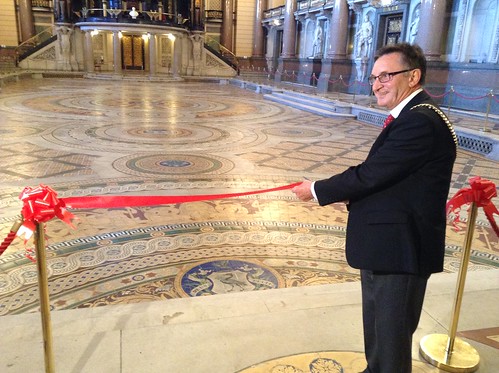
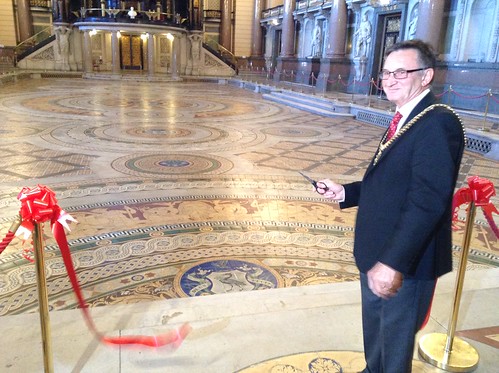
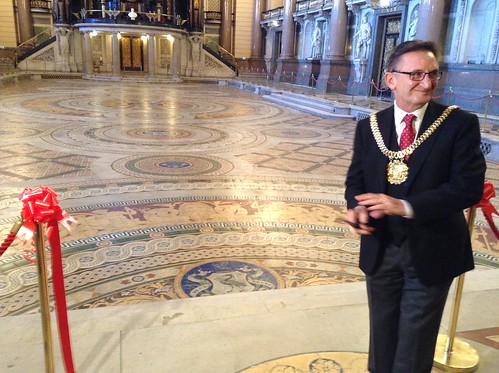
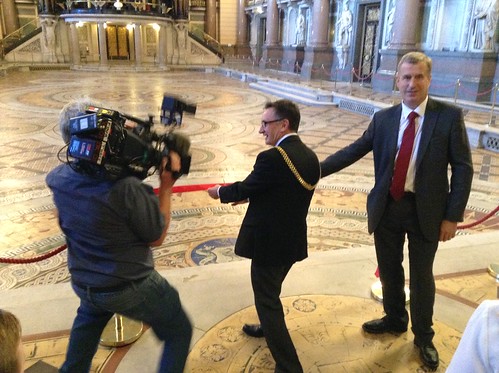
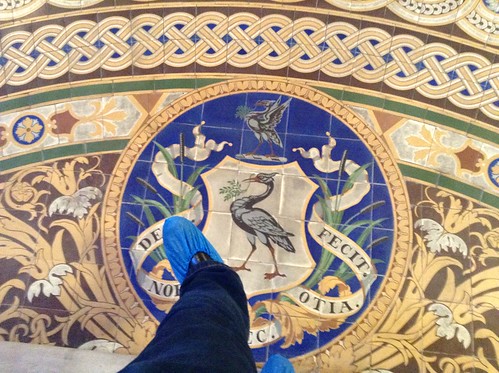
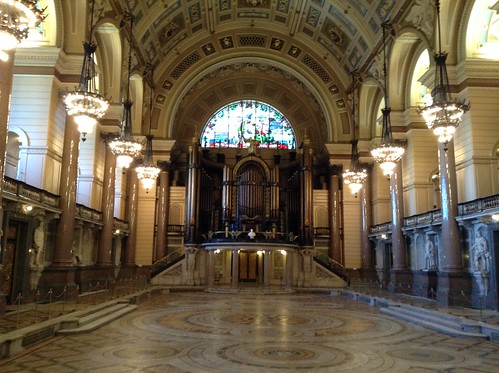
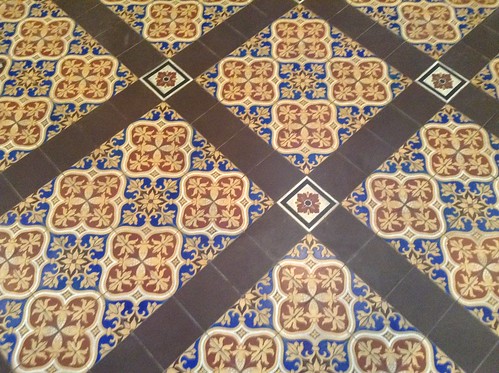
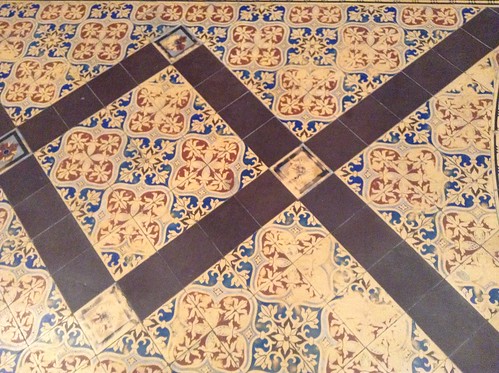
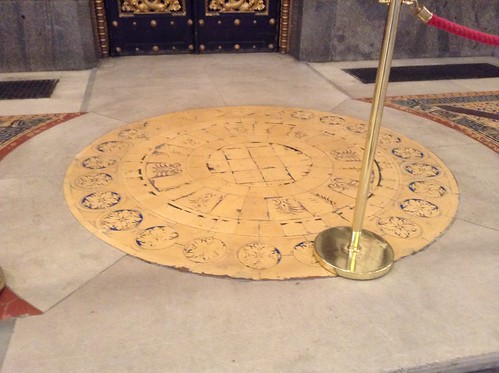
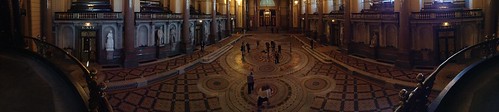
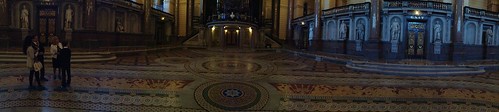
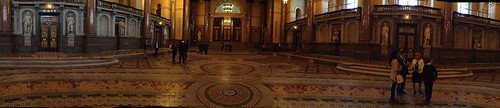
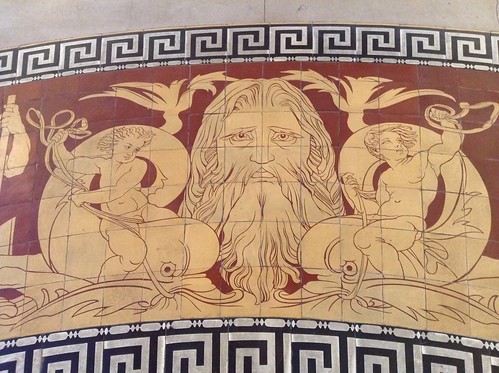
Lodestar Theatre Company have inhabited the Concert Room at the St George’s Hall, an opulent neo-classical gem which looks like the interior of the Titanic and has hosted concerts and theatrical performance since the main hall was built in the 1830s.
BBC Liverpool has a 360 degree panorama of the room as viewed from the stage and
here’s an article about the 2007 restoration project. I’ve been to meetings here before and always wondered how a theatre director would utilise it.
Aesthetically it’s a palace so director Max Rubin and Designer Nadia Tahiri have decided to set their Hamlet in an actual palace, with thrones on the main stage and a red carpet spilling over the edge and into the stalls were they’d boldly removed the chairs, the audience watching from the very edges. The room already has a grand piano and glorious chandelier and in this Elsinore they became the trappings of wealth, emphasising the aristocracy of the family, making us interlopers on a crumbling legacy, which is also reflected in the choice of 1930s costumes, a period which saw the last gasp of the old fashioned class structure, when old wealth still outweighed new (this was reflected also in the cuts which tossed out Fortinbras choosing to focus completely on the domestic drama).
Rubin took full advantage of this arena; after a prologue showing Elsinore in happier times, the room was plunged into darkness for the battlement scene Horatio and Co providing their own key lighting using torches. With the audience distracted, Liam Tobin’s Hamlet Snr presumably slipped into at the back so that when he suddenly ‘appeared’ bathed in spotlight it was a genuinely surprising flash, aided by the abject horror in Horatio’s eyes. When the Ghost emerged again later before his still living son, his resonant voice eerily filled the room from all angles (Tobin the only actor to enjoy mic support). When Hamlet spoke against this from his own location, the impression was positively supernatural.
The extra performance area also made sense of The Mousetrap, which on the few occasions I’ve seen the play in the theatre has looked a bit clumsy. Here, the family were placed just a row ahead of the audience and together we watched the action of the play up on stage, with Hamlet between us and the players offering his commentary placing us briefly within the world of the play, supporting players in the drama. From the back that did mean that we didn’t quite see the moment of Claudius’s realisation that he’s been exposed, but his ensuing anger (perfectly rendered by Renny Kruplinkski) and Hamlet’s relief more than made up for it, the exploits frozen at just this moment for the interval, picking up where we left off twenty-minutes later.
This choice of staging clearly had its benefits but with the performance occurring half in a proscenium arch and half in the round, whenever a scene was set completely on the back stage it tended to feel a bit remote and that barrier seemed to continue when the action spilled into the front area, with the actors rarely relating directly to the audience, speeches sent towards the floor or ceiling rather than directly at us. The play really came alive when Polonius passed his asides to us during Fishmonger and during To Be Or Not To Be when Hamlet fixed me with his eyes, and I would have liked to have seen more of that.
Outside of the director's control is that the concert room is essentially an echo chamber which might sound beautiful in concerts but as we I discovered works against lucid theatre.
As a couple of the reviews have eluded to depending upon where you were sitting the re-verb tended to muffle quite a lot of the verse. This was particularly obvious from my position directly opposite the space -- when the actors had their backs turned and shouting towards the stage, their words disappearing through the window onto the plateau and car park outside.
Yet despite these potential impediments there was still much to enjoy. Stephen Fletcher took full advantage of the flexibility Hamlet offers, presenting us initially with a broken soul whose fatherly visitation motivates him to action, relishing the process of entrapping his uncle until his actions cause the deaths of Laertes immediate family at which point he obviously realised that this was not a winnable situation. He was well matched by Tom Latham’s Horatio whose expressive face balanced between abject horror and quiet resignation throughout, the barometer gauging the emotional pressure of the court.
But the highlight in this production, at least for me, was the first appearance of Rosencrantz and Guildenstern played by Richard Kelly and Simon Hedger, confidentally standing at the edge of the stage. Hamlet seemed genuinely pleased to see them, and we were too because with they confident humour proceeded to steal not just this moment but all of the scenes in which they appeared to the point that the eventual news of their offing off-stage was a genuinely tragic moment. There’s a good reason for this: as well as Hamlet, in September Lodestar will be offering
a production of Tom Stoppard’s Rosencrantz and Guildenstern is Dead at the Novas Contemporary Urban Centre featuring the same cast.
So whereas in most stage productions, R & G are offered by actors doubling up servants roles or even the gravediggers which can lead them to being a bit bland, Kelly and Hedger have properly rehearsed their roles and boasted a clearer than usual idea of who these men are, which is reflected in their performance, sharing the looks and glances of fellow journeyman as the story spins on around them outside of their control, the Stoppard version of the characters transplanted back into Shakespeare. It works very well and certainly a good advert for their further theatrical adventures.
Click here for more information about the Liverpool Shakespeare Festival.
They also have a production blog.