Annotations:
Radio Control.
waitrose liverpool
Web As I've mentioned previously I have a Google Alert set up for the words waitrose AND liverpool in the hopes that one say it'll feature an article for the shop opening its doors somewhere closer to me than Formby. Still no news, but I did learn recently about a salmonella scare in relation to their Green Pesto with Basil. Products have been recalled.
Casey Cep of The New Yorker writes here about the serendipity of Google Alerts and it has to be said her discoveries, especially about herself, are far more interesting than potentially dangerous pecan nuts:
"Google Alerts exercise no judgment, so, in addition to sending you to your ex-boyfriend’s blog alongside The New York Review of Books, they fail to warn you the former is complaining that you got tenure before he did, while the latter is praising your academic research. As a result, they are not for the squeamish, since the good, the bad, and the unreadable appear together without any warning; the service promises content that is new, not content that is useful or desirable."
As she says, it seems to work best with topics that are either incredibly niche or very broad. This also reminds me I need to sort of my inbox.
The Mary Whitehouse Experience.
TV Sorry, I couldn't come up with a better title for this post. You probably clicked expecting something about the "you could do a lot better" sketch or Ray or "that's you that is" but this is actually about Doctor Who again. I was thinking about the exhibitions in Cardiff and London and thought inserting the name of the late censorious nonagenarian would be funny before realising it suggested something else which is how we ended up in this opening paragraph length disclaimer.
This Saturday's instalment of BBC Radio 4's Archive on 4 strand is Disgusted, Mary Whitehouse in which Samira Ahmed talks about the life and work of the person who's complaint about Doctor Who led to them physically vandalising and transmission tape after spending months reading through her diaries at the Bodleian Library (not all heroes wear capes).
On his blog, in a post with with a much better title than this, one of the producers Simon Gurrier talks about the production and in greater depth about Whitehouse's enmity with the Time Lord and the extent to which her criticism had some foundation:
"Right from the beginning of Doctor Who, there had been questions about how suitable it was for children. Opinion on this was “strongly divided” at the executive meeting of the BBC’s Television Programme Planning Committee on 4 December 1963 - after just two episodes of the series had been broadcast. The following week it looked like the programme might be moved to a later time in the schedule, though this was over-ruled by Head of Drama (and co-creator of Doctor Who) Sydney Newman."
Whitehouse will be voiced in the documentary by Lisa "Bernice Summerfield" Bowerman if you need any more incentive to tune in.
Romola on her career.
Why are all streaming services rubbish?
Film Like most film fans, I'm subscribed to a lot of streaming services and in terms of the television versions of their apps, they're all an absolute mess to use. With each utilising a different interface, most are more interested in pushing new content than making it easy to get back to the films and television we've already been enjoying. Watchlists are often hidden away or take several clicks. The iPlayer's the absolute worst example with its "your added programmes" section at the very bottom of the page.
Much of this has to do with a lack of standardisation between the apps. When streaming was first introduced, for the most part, the app producers had to the follow a template which was baked into the technology. So on my first "smart" DVD player, the Amazon and Netflix apps worked pretty much identically. But with more powerful technology, that's no longer the case and that freedom has come with a usability cost. The user has to learn how to use each streaming service separately which as I found with my elderly parents creates a barrier between the user and the content.
Hypercritical suggests here a standard spec for streaming apps to adhere to and it all seems eminently sensible.
"There must be a way for the user to manually create a list of media. In the common case, this is a list of media that the user intends to watch (eventually), but it can be used for any purpose. The important part is that the user makes the list intentionally. Nothing gets added to this list automatically."At a minimum, the list must accept top-level items in the hierarchy (e.g., TV shows, movies). The list could also accept more granular items, like individual TV episodes." [via]
My solution has been to largely abandon smart apps altogether. Instead, I have my TV set up as the third screen on my PC with a very long HDMI cable around the room to the television with the mouse positioned within hands length of the armchair. Many streaming services have Windows apps and although they're somewhat like their TV counterparts, are much easier to navigate with a mouse and keyboard. Plus it allows access to streaming services which don't yet have a workable tv app and remain stubbornly in the browser.
As for watchlists, my LetterBoxd Pro subscription allows me to tell it the services to which I'm subscribed and the free streamers which means I can have a unified list of films things I'd like to see which acts as a kind of off-site (honestly ITV Player and 4od are significantly less shit in a browser). The list can also be sorted chronologically by release date and date added, filtered by decade or genre and shuffled so that if you have a list as long as mine, some of the more unusual stuff will surface.
Cataloguing BBC Radio 4's In Our Time using Dewey Decimal Classification.
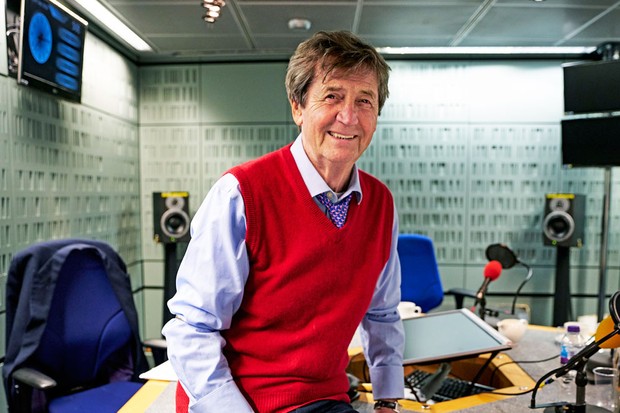
Radio In Our Time is a weekly live BBC radio discussion programme in which the broadcaster Melvyn Bragg and several academics elucidate a topic of a philosophical, historical, cultural or scientific nature. It's been on air since October 1998 and its format has changed little in that time, a moment in the week to listen to a group of very clever people saying some very clever things for forty-five minutes.
The series has clocked up nearly a thousand episodes and its inevitable with an archive that rich that a listener is more likely to catch-up on instalments which cover subjects with which they might casually be interested or being studying at school or university. Except the website only sorts the episodes into very broad topics, culture, history, philosophy, religion and science so someone wanting to hear about mathematics or theatre has to wade through many pages of other topics.
Which is why, with my librarian's brain, I hit upon the idea of sorting the episodes using a library classification system and after the comparing a few decided Dewey Decimal Classification system (DDC) would suit the purpose because it's less complicated to work through than others and will be most familiar to readers due to its prevalence in public libraries. Also Library of Congress can be astonishingly obtuse with all of its letters AND numbers.
Find below the results of my free time this past week and a half. As you can see it's pretty logically ordered, a combination of following an abridged copy of DDC designed for small libraries originally published in 1979, Classify (an experimental classification site which aggregates the choices of thousands of librarians across the planet) and this Wikipedia page which has the most recent names for class names and hierarchical divisions.
Classification is automatically a compromise. You're applying a numerical label to an object which it wasn't really designed for, so on some occasions, especially with something like In Our Time which revels in obtuse topics, there isn't a perfect place for the episode to go. Also I've only used the a heading when it pertains to an episode which is why it looks like there are gaps in the sequence. Melvyn and the gang haven't covered every sub-division in the DDC.
Every title below links to the episode's page on the Radio 4 website.
You'll notice that if you're on a PC and you hover over many of the links have what would be the original shelf number which was part of the initial iteration to show I'd done the work. But it became too fiddly to update since so I've left them out and some of the items have moved around since then too. There are too many of them to remove so we're stuck with them, but this paragraph was by way of explanation.
You might also like to hear, Melvyn talk to Mishal Husain on the Today programme to mark the 1000th episode.
Anyway, I hope this is of some use to you and if it is, please consider leaving a Ko-Fi donation. The most recent episodes are here and I'll try to keep this list updated as much as possible.
The Hamlet Gamble.
"I can just about understand why Holmes introduces a speech from Romeo and Juliet, but not why he replaces the gravediggers’ dialogue with a rambling contemporary improv routine and a singalong of Kenny Rogers’ The Gambler, all performed by the show’s composer/musician Ed Gaughan. This is the most misguided interpretation of the scene since I saw it done in the mid-90s as a rap that ended with the words “now I’m gonna neck Ophelia”."Here's the key problem with this - it's for people who already know the play. I'm still curious to see it, because any variation from norm is always interesting especially if there's a particular intellectual underpinning. Lord knows, after seeing the play forty-one times in different versions, it's the variations on the main theme which keep it interesting. It sounds brilliantly awful.
But I shiver to think about the people for whom this could be their first introduction to the play and Shakespeare in general. Will any of this make any sense? Isn't adding in lines from Romeo and Juliet simply confusing? Not to mention my usual annoyance that you wouldn't do this sort of thing to other artforms, so why must Shakespeare's writing continually endure this desecration? [via]
Annotations:
An Editor's Burial: Journals and Journalism from The New Yorker and Other Magazines.
A conversation between Wes Anderson and Susan Morrison.
Hearts of Darkness (The War Master).
Audio Spoilers ahead, warning, spoilers ahead. If you've not listened to Hearts of Darkness, stop reading here. That caution proffered, the fact I'm reviewing all four episodes should be a strong indication that this is a bit more than the cover suggests except to say, within this pre-amble, that what we have here is essentially a bonus Eighth Doctor Time War box set under a different guise and so therefore essential to anyone at all interested in this incarnation (assuming printing McGann's face on the box wasn't enough already).
The Edge of Redemption
Not having really followed The War Master series unless McGann's face is printed on the box, the changes to the renegade Time Lord's personality seemed to be a character choice made by the writers in order to sustain him as a protagonist over many episodes. Even the lightened shades of Jacobi's performance seemed to be a choice to indicate that they're working towards Professor Yana or some ethical re-engineering in a boxed set I'd missed. He's very specifically not attempting a McGann impression but rather what a Jacobi incarnation of the Doctor might be like.
The Scaramancer
Why doesn't the Doctor reveal his identity earlier, especially when The Scaramancer obviously has cause to have the body he's currently inhabiting? The more obvious answer is to delay the end of the episode surprise but the in-story explanation could be that he sees the Master's identity as a way of opening doors and taking steps that he'd find morally dubious in his own skin. My tired old brain did later wonder why the Doctor didn't recognise her from their old Doom Coalition days, until I remember that it's a different character. She was the The Sonomancer, completely different 'mancer.
The Castle of Kurnos 5
Finally the big reveal that the Master is essentially a supporting player in his own series and that the character we've been listening to for the past couple of hours is the Eighth Doctor with a different face, the no guns rules now making perfect sense. The Castle of Kurnos 5 offers us some prime Eighth Doctor shenanigans in the flashback with a witty one-off companion, a host of fantasy tropes and walking straight into a trap. I know it's his job, but I'm always impressed with how McGann modulates his performance to reflect were the Eighth Doctor is on his timeline, at least in terms of the audios.
Cognition Shift
Which makes his portrayal of the Master even more sinister, especially when he says "the line". Like Jacobi, he's proposing what his incarnation of the Master might be like, which is to say just as charming and in such a way that you can believe that he'd become a Kurtzian figure leading a population of dupes. It's unfortunate his plan isn't allowed to succeed before its foiled. Having the Master's consciousness consume the entire Dalek fleet is an epic, horrific prospect along the lines of the entirety of humanity having John Simms's face and on television would surely be the stuff of an RTD cliffhanger, the Dalek Emperor booming "I am the Master and you will obey me. Or I will exterminate you ..."
Placement: The Doctor talks about becoming more involved so just before The Time War boxsets.
Short Trips and Side Steps.
Blue Monday Links.
BBC Media Centre: "Marking 100 years since the publication of Ulysses, Radio 4 and Radio 3 explore Modernism’s big bang - and its aftershocks - in a season of programmes."
Sunday Links
BBC News: "The £1.4m building has been paid for entirely by public donations on behalf of the Southport Offshore Rescue Trust."
Multi-Coloured Link Shop.
What happened to the Fox films Disney picked up?
Simon Brew: "Disney inherited a slate of Fox movies when it bought the studio up in 2019 – here’s what happened to one that survived the initial cull of projects."
Lohri Links.
Ben Travis: "WARNING: Contains major plot spoilers for Eternals."
Thursday Links.
Christmas pudding sales fall 30% in five years as mince pies fly:
Amy North: "Christmas pudding sales have fallen by nearly 30% over the past five years, British Baker can reveal."
Tales of the Dark Times (Comic Creator).
Wednesday Links.
Emily VanDerWerff: "Why do so many TV shows and movies look like they were filmed in a gray wasteland?"
Tuesday Links.
David Adamson: "Ellie Coldicutt, 24, starred as Beth in the festive favourite Nativity! back in 2009, charming viewers with the song Sparkle and Shine before going on to feature in the sequel as well as touring productions of The Sound of Music and the RSC’s Richard III."
Plough Monday Links.
Sunday Links.
Clare Clarke: "Rivals, clones and parodies of Baker Street’s finest sprang to life in the late 19th century. Clare Clarke walks you through the best of the bunch, from Loveday Brooke to Flaxman Low."