Everyman and Mankind (Arden Early Modern Drama). Edited by Douglas Bruster and Eric Rasmussen.


Arden’s Early Modern Drama series applies the scholarly approach they’ve brought so successfully to Shakespeare to a collection of plays published between the late fifteenth to the late seventeenth century, plays which may have influenced and been influenced by him. They recognise that an emphasis on Shakespeare in recent times has somewhat eclipsed other great works from that period and offer a chance to approach these texts in a form which has been analysed with Arden’s usual editorial zeal.

Everyman and Mankind, two anonymous miracle plays from the late 1400s, are perfect examples of that ethic. Neither plays has gone unpublished before but in each case the editors Douglas Bruster and Eric Rasmussen (the latter co-author on the recent RSC Complete Works) have returned to the available copies of the texts only glancing at later interpretations when absolutely necessary. Though the spellings and punctuation have been modernised as per Arden’s usually editorial standards, both have the atmosphere of looking backwards into a forgotten time.

Both offer their only challenges. The only existing historic copy of Mankind is an incomplete manuscript held by the Folger Shakespeare Library. Pages are reproduced and to my untrained eye they’re in gobbledygook and to make matters worse the first of the two transcribers wrote in very tight lines so as to save paper. There are four quarto editions of The Summoning of Everyman (to give its full title) in existence but only two are relatively complete and of the others only fragments exist and all differ wildly in content, sometimes words, sometimes whole lines.

Given this is my first experience of either play, I can’t intelligently analyse the editorial choices though it's interesting to read that thanks to one of those fragments of Everyman, the Q2, having only recently having been discovered, they’ve used it in conjunction with Q1, to produce a brand new variant of the play, somewhat different to that seen in other editions which rely almost exclusively on Q3. That fits in well with the rest of Arden’s recent mission to fight against orthodoxy and offer an alternative.

But what of the plays? As was usually the case in pre-Reformation drama, they feature an archetypal figure experiencing some kind of symbolic trial explaining the ways of God to man. Mankind is tempted by the vices of New-Guise (the fashion), Nought (nothingness) and Nowadays (living for the moment) and ultimately seeks mercy from a character called Mercy for succumbing to their charms. Everyman is visited by Death (yes, the Death) and we witness their earthly belongings deserting them as they're ultimately tested for their worth and face the grave.

Mankind was as far as can be ascertained from the text, written and performed by the monks at the abbey of St Edmund in Bury (yes, as in the modern Bury St Edmunds) and toured within the South East region between King’s Lynn and Cambridge and may have been bankrolled by the ten nobles very specifically named in the text. Perhaps more interestingly, since it shows that English-language remakes are not a new phenomena, Everyman is a translation of a Dutch play, Elckerlijc, its satire blunted slightly to remove material critical of the Catholic faith.

Neither sounds particularly entertaining and in truth it’s impossible not to look at either of them without a certain detachment, especially if you’re the kind of person whose unlikely to draw solace from a story developed from the Book of Job just as Mankind is. We’re also used to symbolism, themes and allegory being buried deep within our dramedy, a characters we can somewhat identify with emotionally wrestling with the implications (thank to the reformation). Morality plays turn that notion inside and symbolism, themes and allegory are given character names.

But in parts they are incredibly funny. Mankind in particular was kept out of production for many years because of the lewdness of its language, one song in particular as scatological as a gross out film comedy, indeed more so because the participating audience is dragged into the mess. The writers understood, even at this early stage, that the best way to carry a message is through a mix of humour and drama and you can see the roots of how Shakespeare also would later include comedic scenes even in his blackest of tragedies.

The introduction is relatively short but that just reflects not only the brevity of the plays themselves – neither is much more than nine hundred lines each and feature continuous action – but also the relatively negligible critical and performance histories. Brusher and Rasmussen make light work of revealing how the medieval mind would approach both plays and what they might draw from the text. There are no deep psychological discussions of the characters since their characterisation is less important than the effects they might have on the audience.

Just as useful in production terms are the staging discussions in the back which attempt to define just how large a cast both plays would require. Anyone who’s seen the underrated film about a troop of medieval actors The Reckoning (starring Paul Bettany) might have some idea of the conditions in which these plays were produced but it’s fun to see the mechanics of how certain characters must have been doubled up simply because it means a performer would have to sit out much of the show which is hardly cost-effective.

Perhaps that’s one of the only frustrations of finally greeting these plays. The Shakespeare effect means that neither is readily available in a modern professional recording. I like to hear these words performed and I’m not sure I did Mankind justice reading it out to myself (I certainly lost much of the sense). There is a copy of the 1955 recording of Everyman featuring Burgess Meredith (as mentioned in the Arden introduction) available on Spotify (link) but the treatment of the text is ponderous with only a couple of the actors properly catching its satirical tone.

Either way, Arden Early Modern Drama’s Everyman and Mankind is an illuminating read and a reminder of just how much drama developed even in the hundred years leading up to Shakespeare’s birth. Plus its impossible, just now and then, not to wonder if he read these words himself. When in Everyman, Fellowship says “In faith, Everyman, farewell now at the end. / For you I will remember that parting is mourning”, it’s impossible not to hear Juliet’s line to her Romeo: “Parting is such sweet sorrow.”

Everyman and Mankind (Arden Early Modern Drama). Edited by Douglas Bruster and Eric Rasmussen. Methuen Drama. 2009. RRP: £10.99. ISBN: 978-1904271628. Review copy supplied.

Ophelia by Christine Hand.

I've received the following letter/email/press release:
"Singer/Songwriter Christine Hand Jones has now written and recorded her lovely song "Ophelia", inspired by the character in Hamlet, which is included on her new six song EP, "Girl on a String". This EP is available for purchase, download, or free download (by recommending to online friends). "Girl on a String", including "Ophelia" is now available through www.christinehand.com. I believe you will appreciate the authenticity and music style of "Ophelia", which Christine performs solo (without the other band members).

FYI - I am Ed Hand, musician in Christine's band, and am also her Dad.

Thank you for your support and for your wonderful blog.

Ed Hand"
Sure enough it as as Mr. Hand describes, an acoustic concoction based on Ophelia's story and quoting directly from her descent into madness.  Well done you.

darkness, death and drashigs


TV Lovely’s not really a word that’s often used to describe Doctor Who, largely because there’s rarely anything to describe as lovely what with all the darkness, death and drashigs, but it suits Gareth Roberts’s Closing Time perfectly so I’m going to use it. That was lovely. A love letter to the Russell T Davies era and the kind of welcome alternative that only Doctor Who could offer from the surrealist trilogy of the past few weeks, it seems designed for those viewers who’ve found themselves a bit alienated recently and much prefer the Doctor teaming up with his old friends to fight Cybermen. Lovely.

The problem with lovely things, of course, is that they can become dulled by too much analysis of the kind which usually clogs up this weekly column. At university I had to write an essay about whether Amelie “conformed to the standard conventions of femininity in film” with reference to “the psychoanalytical theories contained in Freud’s Oedipal complex” and “elements of Lacan’s theory of the mirror phase in the development of human sexuality” and I’ve not been able to watch it since because I discovered that far from offering a brew of female empowerment, she’ll still ended up only being fulfilled at the end by the love of a man. Now I’ve spoiled it for you too.

Let’s tread carefully then and try not to refer to anyone who does their best work when sitting next to someone lying on a couch. Pre-publicity including Gareth Roberts’s interviews have suggested this is the first stand-alone episode. It depends upon your definition. It fundamentally has a different plot to next week, but the reason for it's existence, the Doctor making a final domestic stop before confronting his demise in an unseen gap somewhere in the teaser for The Impossible Astronaut places it firmly in the main story arc for these two seasons. We’re at episode twenty-five of a twenty-six part story (give or take some specials). Plus there’s the final scene. Stand alone episodes aren’t what they used to be.

As though to echo his first adventure in this new iteration at the end of his life, the Davies episode Closing Time most resembles is Rose. Except when the shop worker enters the shadows to be menaced by an old monster this time, the Doctor’s not there to hold her hand and whisk her away, too busy reacquainting with Craig. Like Rose, the threat is secondary, a way of bringing the Doctor and his companion, sorry, partner, closer, then romance, now bromance, and like Rose, it’s up to the partner to save the day as the Doctor stands on hopelessly trapped within the arms of his adversary.

Which also means that like Rose, the highlight is the screwball, and as with its antecedent, The Lodger, that zinged. Much of the episode is about Craig’s Mindy dealing the Doctor’s Morkishness, the alien qualities which he now finds rather charming if a bit frustrating with all the baby talk (lovely) and the shadows which have crept into his deep-set eyes. With two hundred more years on him since they last met, this Doctor even seems to have a clearly understanding of humanity than his old friend and the best scenes are when the Time Lord is instructing the human on looking after his son or aiding in the investigation.

Like the Davies era, this is also an episode which freely embraces pop culture.  Does mentioning Star Trek rule out a crossover now?  Best not tell IDW who now have the rights to both and were probably planning a crossover comic as we watch, the crossover Davies himself dreamed of back in the days before Enterprise was cancelled and Trekkers didn't have to wait years for a new instalment.  The shoe is firmly placed on the other foot.  Enjoy too the gentle satire on the show's main ratings rivals on ITV back when the show was a summer series, the Doctor slightly more pleasant in his approach to the karaoke Sauron and his hoards than Marina Hyde.

Parenthood has been a strong running theme through this past couple of years, people without them, people becoming them, and once again it’s parental love which wins through just as it did a couple of weeks ago in Night Terrors. Not having been a parent, this will be one of those moments in which my experience will be different to others, not having heard the sound of my own child in distress. But I know from my own experience what your parents are capable of and how they’ve always been there for me. That’s not a conversation we’ve ever had. When did they learn how to be such good parents? When I first cried? I cried a lot when I was a baby apparently. Still do.

Roberts etc are quite ambiguous as to the nature of these Cybermen. The design suggests some more marooned Cybus industry models ala The Next Doctor but with breast plates largely blown out they could just as well be renovated Mondasians. But it’s the nature of the story that, like the Autons who weren’t even named in Rose, such exposition isn’t included. Apart from all the cybermat fun (who’s attack run was also similar to the severed hand of the shop dummy) they might as well have been any number of other monsters. Their final end is almost perfunctory, the Doctor recalling his methodology from The Age of Steel, a feedback of emotions, the new gold to the chest.

Now do you see what analysis does to an episode like this? Enough! What next? Right, the actors. Hate James Cordon as much as you like when he’s not acting, but he’s simply marvellous as Craig, the sort of character who’s quite rare in television Who, of the kind which seems to have wandered in from a Cold Feet-style comedy drama and probably has given the actor’s previous work in Fat Friends and Gavin & Stacey.  Even in the "pervert" scene (for want of a better description) he doesn't overplay the moment, caricature it.  For a brief moment we were back in one of Donna's misunderstandings and that's high praise indeed.

Linda Baron was in Fat Friends briefly too, but this franchise knows her best as Captain Wrack in that last couple of episodes of Enlightenment and the singer of The Last Chance Saloon in The Gunfighters. Glancing across her CV, she’s bestrode British television with appearances in most popular drama series, sometimes as a regular which accounts for why she fits so well in here. A woman who offered one of the campest performances of the eighties, doesn’t exactly dial it down here since hers is, if we must continue the Rose analogy, the Jackie Tyler role of cluelessly introducing a vital piece of information without quite realising it.

Matt carries his weariness well. How do you play a character who’s physically the same but a couple of centuries older than in his previous appearance. You sag your shoulders slightly, perhaps droop your eyelids a bit, offer a bit of forced jollity. This is the bedside confession to Amelia from The Big Bang stretched out across a whole episode and you can see the thought processes of a man who’s already resigned himself to his fate linking in seamlessly to the opening of this season, helped by the explanation of where the Doctor’s now iconic stetson came from. Older Eleventh Doctor has feet of clay but he retains his smile.

Clearly his best moment was when seeing Amy and Rory. Hiding back, trying to remain unseen, he somehow manages to make the character suddenly become very small, not least because not for the first time Pond is towering over him. Given her previous employment, it's just right that Amy should have become a cosmetics model with a brightly metafictional advertising slogan. There’s a running theme this series of episode titles turning up in the actual scripts, and here it is again in a knowingly modified form. But I’m analysing rather than reviewing again.  Is there a difference?  I'm beginning to wonder.  Sorry. I’ll stop.  Steve Hughes’s direction was proficient wasn’t it?

Oh sod, I can’t hold it in any longer. That final scene. THAT FINAL SCENE. Even if its surprise existence was rather ruined by the cast list in the Radio Times. The fact of River Song’s appearance in the astronaut suit is a shock to no one other than that it is actually River Song and that her confession that she killed “a good man” wasn’t a clever misdirect but for once actually the truth. As far as we can tell. Unless there’s another astronaut in the drink with her. You have to love Doctor Who’s ability to leap from a fairly straightforward domestic romp (stop it) straight back in the mythology with what amounts to a teaser for next week.

Stand alone or not, Closing Time is a brave choice for a penultimate episode, especially considering the sheer weight of mythology which is currently in a holding pattern. Funny when it needs to be, heartbreaking too, it’s a demonstration of just how carefully though through even the pacing of the season has been. The forums are already filling up with people criticising it for not being the epic lead in to the finale but sometimes drama needs to be unexpected, needs to try something weird just to stay fresh and Doctor Who’s no different and if you don’t realise that by now … well … you’re just not paying attention.

Next week: Two years plus worth of mythology tied up in forty-five minutes. No, this is where it gets complicated.

How will nuTrek deal with Harry Mudd?

Comics Did anyone else wonder as they left the rebooted Star Trek how this new version of the familiar crew would be coping with the stories from the original tv series? Yes, me too, and that urge  has led IDW, current licensees, to turn the first official comic into a spin on that idea with a whole series of adaptations of the existing episodes, beginning with Where No Man Has Gone Before, the second pilot, and the episode that led to the rest of the series being commissioned. We’re in production rather than transmission order, people (good thing too since the original network choice, The Man Trap, was never a representative place to start).

Turn the cover and we’re straight back into this strange new world, with a first page featuring a Scotty that looks like Simon Pegg, artist Stephen Molnar neatly capturing his essence without being slavish, and his alien helper, and a joke about whether anyone really listens back to Chief Engineer’s logs. From there everything is as you might expect, the story plays out as it did on screen with various changes reflecting the characterisations from the new film, with Kirk and Spock on slightly less chummy terms with Bones and Chekhov in attendance.

It’s relatively early but already there are a couple of fault lines.  Barring one major omission that would be unfair of me to give away because the reason’s funny, the story still roughly plays out much as it did on-screen with plenty of dialogue carried over. Which is logical of course since these are (roughly) the same characters. But that means the main interest is noting what the actual changes are rather than the story itself, in other words not that much different to reading a more typical movie adaptation comic of the kind tending to be developed from a shooting script and so always had slightly different dialogue and lost scenes.

Which is weird of course since that's what we wanted and expected the experience to be, but perhaps it's that the action isn't different enough from Samuel A Peeble's original script. Writer Mike Johnson does at least have a good sense of the movie even if the ensemble element isn’t quite as clear yet, another bi-product of IDW (or CBS/Paramount) choosing to adapt rather than going into original stories. This is Kirk’s story about one of his old classmates so difficult to pull of from Sulu’s perspective. Plus this isn’t the most thrilling story anyway, the first rumblings of Roddenbury’s God complex.

The really interesting stuff comes later. How will nuTrek deal with Harry Mudd? The time travel stories? The “no beach to walk on speech” from The Naked Time now that Spock’s in a relationship? How about Amok Time, how does Pon Farr work when there’s no Vulcan to retreat to? There are also episodes somewhat busted by the film’s desperation to get everything in, not least Dagger of the Mind who’s entire plot essentially exists to introduce Spock’s mind meld ability, and as this issue demonstrates, Spock's already less secretive about that.  It’s for all these curious reasons alone my order is in at the comic shop for future issues.

Funny, thrilling, hilarious, gripping, Torchwood is ...


TV Now that Torchwood's Miracle Day is finally over I sense a void so I've decided to run some of my old Behind The Sofa reviews of the first series. As you'll see I began in positive mood then too. Oh well ...

It's Wednesday 18th October at 9:40 pm and I've just returned from Manchester and a High Def preview of Torchwood. Although I'm sure in the next four days the web will be awash with spoilers I've decided to write this review now and blast it through the time rift into the future. Because really after the ending of Everything Changes it would be like telling a four year old that there isn't a Father Christmas and there's a seventy percent chance they'll spend most of their life working in an office. It wouldn't be fair or right. The screening was (I think) a success -- everyone laughed in the right places and gasped in others although I can't tell who were fans, I suspect a fair amount where from the Torchwood.tv blog.

But really, again I say, that climax. Not since Lisa Faulkner found the wrong end of a deep fat fryer in Spooks has something been so unexpected. 24? Yes, stock in trade, it'd be wrong if someone didn't die horrifically at the close of an hour. But here? Suzie even enjoyed gallery pictures at the official website and appeared on the cover of Radio Times, and warranting a profile which on reflection looks somewhat threadbare in comparison to the others but which I originally put down to the overall veil of secrecy which has hung over the project (until tonight).

I wonder how many people in the audience, like me, wondered when it would be revealed as an initiation trick to test Gwen's mettle, even the bullet to Jack's head. Which cleverly provided a second twist - so when Rose brought him back to life she also (inadvertently?) made him unkillable (Can he still age? Is he actually immortal? How old is he now?). Does this by implication mean the Rose too cannot die since she too was exposed to the time vortex? Does this mean that Indira Varma's IMDb page is wrong - or will there be some great resurrection later in the series?

But I'm getting ahead of myself, more speculation later. Really this is the most enjoyable fifty minutes I've spent in a cinema this year. Blown up to the size of a house, the episode looked amazing, better than some films in fact. Funny, thrilling, hilarious, gripping, Torchwood is probably everything I wished some episodes of Season Two of Doctor Who had been. This looks like the work of a group of people who are finally getting to make the kind of show they've wanted to make. Nothing is misjudged, with even the sex, violence and swearing fitting within context.

I don't think Cardiff has looked this good and as promised, the city is presented in all of its potential glory - and yet with Weevils, the dark underbelly, the sewers. Did I mention it was funny? Lines that got a laugh in the screening 'Just a pterodactyl', 'Well if this'll make it easier.' 'That's harassment.' 'Walked here. I bloody walked' 'All that CSI bollocks. I'd like to see CSI Cardiff - they'd be measuring the velocity of a kebab.' 'You Welsh. Someone shows you something extraordinary and you criticize it.'

As an opening episode, this was perfectly structured. The drawing of a newby into a fantastic realm, has quite rightly been described as nothing new, but here it worked beautifully because Gwen's natural curiosity drew into the 'inner circle' rather than through some kidnapping or mistake. Also, unlike Rose, the 'real world' seemed perfectly realistic, well realistic in a television sense in that it looked like an expensive episode of The Bill, which meant the fantasy she was being diving into really was different. Her initial interaction with the Weevil was natural - no such thing as aliens so it has to be a guy in a mask, right? One of the lovely threads which ran through the episode which perfectly retconned why almost everyone seems to forget big spaceships and robot troops is the creation of something even more unlikely but which somehow fits within our realistic expectations.

Perhaps most impressively, Russell T decided to take time to carefully set up the world of the series rather than running half-cocked through some forgettable plotline of the week hoping that the viewer will keep up. Here, the story was Torchwood, or rather Gwen's discovery of it and that was more than enough for the running time. Some might criticize the seemingly endless shots of items in the hub, they were obviously fascinating, particular the hand which was revealed in Radio Times to be the one that The Doctor lost in The Christmas Invasion (wonder where it landed). The other character introductions were perfectly pitched too, each receiving a moment that defined their character - the highlight obviously being Owen's experimentation with the love potion. Do Toshiko and Jack both know that the other has met the Doctor - I do hope they have that scene together, although given that Jack's reluctant to talk about the time lord I'm not sure it'll happen soon.

And what of Captain Jack? As befits the mood of the piece, John Barrowman has tuned down his performance slightly and whereas during his brief spell on Doctor Who he didn't seem like someone who could fit in any reality, he works very well here. Anyone else notice that he's now given to Doctorish speeches? But he's still funny. Pregnant? Really? As I left the screening I heard two guys talking about what they'd seen and one said to the other 'It was alright I suppose, but they should have shown Captain Jack arriving through the rift…' NO. NO. NO. Don't waste the mystery, don't reveal everything straight away, and if you do reveal anything, make sure that it simply creates other questions.

For example, does Jack know all about the Sycorax and Cybermen because he was in the country then? Did he know The Doctor was around? Why didn't he contact him? Is he still pissed about being left behind in the future? How much does he know about the setting up of Torchwood? Does any of this actually matter? Contrast this with Robin Hood, in which we already know everything we need to know about the lead character. The series isn't rejecting established mythology but it is having fun with it - like the cloaking effect left behind by the appearance of the TARDIS in Cardiff bay during Boomtown. I do hope that is a cyber lady in the trailers.

But there wasn't a weak link in the cast, everyone fitting very well into their characters. Obviously Eve Myles had the most screen time here, and thankfully she was mesmerizing able to leap tall acting buildings in a single bound, presenting tragedy and comedy with equal measure, something that wasn't reflected in The Unquiet Dead (although I'd still love there to be some kind of connection between those two characters). Some of the biggest laughs in the screening came from Myles moments, including the way she lifted her head from the keyboard after the insomnia pill. That hair.

The bloke I ended up sitting next to in the screening, was very quick at the close of the episode to note that 'someone had been watching Angel' and its true that throughout elements of other genre series could be seen. The brooding moments on top of buildings taken from helicopters were similar to Wim Wender's Wings of Desire (and its blah US remake City of Angels) and the now unkillable Jack is very Angel-like (although it doesn't seem to be bothering him too much, but then he can see the sun). But none of this matters. Buffy looked like the work of someone who had absorbed years worth of horror films since it managed to be influenced by most of them during its seven years.

What's important here is whether it's entertaining, and oh good lord, yes it is.

PS I was perhaps over-giddy. The Owen phermone scene is morally ambiguous at best. But I think the reviews that followed more than made up for that ...

Tate Liverpool’s latest Magritte retrospective, The Pleasure Principle


Rene Magritte
Golconda 1953
The Menil Collection, Houston © Charly HERSCOVICI, Brussels – 2011


Art It’s 1992 and I’m at the Hayward Gallery on the South Bank during a school visit to London in which a class of us teenagers were dragged around the great art galleries of the capital by a very patient art teacher attempting awaken our appreciation of paint and canvas. I’m standing in front of Rene Magritte’s The Treachery of Images and as my brain explodes he’s clearly succeeded.

This is a painting of a pipe with writing underneath in French suggesting it isn’t a pipe. Well of course it isn’t a pipe. It’s a painting of a pipe. Yet it is still a picture of a pipe and if asked for an identification someone would be more likely to say “It’s a pipe” rather than “It’s a painting of a pipe” in much the same way that if asked we’d sat Mona Lisa was a woman rather than a painting of same.

For perhaps the first time, I think I properly understood the way that art hovers somewhere between truth, literal truth and lies and that one of the decisions most artists have to make is how to utilise these forces and the kind of connection they want to make with the viewer. Do they simply want to please them aesthetically or make them think or is it possible to do both?

A version of The Treachery of Images appears in Tate Liverpool’s latest Magritte retrospective, The Pleasure Principle, in the English translation accompanied by the connected works This is not an Apple and This is a Piece of Cheese which is all the more confusing because it’s still a painting of some Camembert on a small piece of canvas housed underneath a glass cheese dome.

Each time we think we understand Magritte's approach, his message, he does something contradicting any meaning the viewer might be trying to draw, confounding our expectations over and over again. But unlike Dali and other surrealists the images are so tantalisingly realistic, that we’re still constantly chasing that meaning like a transparent dangling carrot. Or in his case apple.

The Night Owl in the first room, a typical example. A coated figure, an embryonic version of his later suited man, stands in a restaurant like room with an empty table in the corner and in the middle, entirely unrelated to anything else is a lit steet lamp post. Immediately we begin to interpret, ask questions. Who is the man, why is the lamp there, why is the table empty?

A brain like mine filled with film narratives wonders if what we’re seeing is a man on his way home, separately shot footage of his memory superimposed on the scene as he remembers the restaurant. Was he stood up? Is that what the bare table symbolises or what that literally the scene? Or is he day dreaming about a restaurant he could soon be visiting. For that matter he could be a restaurant critic who’s endured a horrible meal?

Magritte has no answers and sometimes in paintings with titles like Clear Ideas and The Explanation, neither containing anything of the sort, he’s clearly teasing us. To an extent it’s his more surreal images denying any possible similar interpretation are “easier” to appreciate because we can simply enjoy the shapes and colours without attempting to apply conventional standards to the work.

Tate have displayed the work thematically rather than chronologically. The artist returned to the same graphics throughout his career and only in seeing all of these bowler hat men together can we really gauge how his attitude to the work changed across his life even if, much of the time, those are almost imperceptible and mostly to do with the quality of his painting.

The effect is repetitive. Apple after apple, egg after egg, sky after sky, the many bowler-hatted gentlemen. The bedposts with eyes skewered into the top. Alone, they’re very effective.  Together the experience is quite overwhelming. That’s a by-product of the academic need for comprehensiveness probably. I have much the same problem with Monet displays with their endless lily-pads.

It’s those canvases not containing these familiar elements that stick in my addled mind. The Delights of Landscape with its empty canvas labelled “paysage” (French for landscape) next to a shotgun. The Eye, a circular painting of an human’s ocular feature resembling a close-up of a peephole in a silent film. The Uncertainly Principle, a nude woman whose shadow is a bird of prey.

Which could suggest he didn’t have much time for women but famously as we're reminded by the Paul Simon song,  he had a long marriage with his wife Georgette and if the biography in the accompanying exhibition leaflet is anything to go by the artist was loved and his was not the life of a tortured soul and a man who was never out of work, as the film posters and other ephemera included here demonstrate.

The other surprise is the collection of photographs, a mix of candids of the Magrittes and friends in his studios and some attempts to replicate the ideas of his paintings. Watch out for The Feast of Stones (a perfect Doctor Who episode title) were he and his brother Paul and their friend Marcel pose in what looks like a building site pretending to chew on bricks.  Perhaps if he'd not been the painter he could have been a film comedian.

There are a couple of disappointments. Perhaps his most iconic image, Le Fils De L’Homme, the man with the apple for a face only appears on postcards and merchandise in the gift shop (the wikipedia says it’s privately owned) and I’ve always looked forward to the Tate’s audio guides.  For presumably good reasons that’s absent this time.  But that's more than made up for by the carpeted floor making the exhibition far cosier than usual.

For me the highlight of the show is, The Dominion of Light series, with its a cloudy blue sky over an atmospheric moonlit street scene which remind me of Rachel Louise Brown’s photographs at the Wolstenholme Creative Space during the Biennial this time last year.  She said she was attempting to “absorb, abstract and portray the psychology of artificiality”.

That's also perfectly describe Magritte work in general and these paintings in particular.  As anyone who’s tottered home at dusk in the moments when night turns to day and looked towards the sky and notice the stars have been replaced by clouds, it is, for want of a better phrase, a surreal experience. Which is propably why I like these. Out of all of the paintings in the exhibition, it’s one of the few occasions when Magritte's world and our own finally touch.

Until 16th October 2011.  Visitor details available here.  Press ticket supplied.

Shakespeare's Poems (Arden Shakespeare: Third Edition). Edited by Katherine Duncan-Jones & H.R. Woudhuysen.


As the editors of this third Arden edition of his poems explain in their introduction although Shakespeare is generally thought of a playwright first, poet second, during his lifetime, the situation was very much reversed. Venus and Adonis was his first authorised edition to go into print and it was that, along with the follow up The Rape of Lucrece which made is fortune, both entering multiple editions.  Only later with the publication of the First Folio and the start-stop Bardolitary which followed did the plays become the more prominent expression of his genius, largely because they were omitted from that collection of plays because at the time those perfectly useful editions were already in circulation.

Katherine Duncan Jones and H.R. Woudhuysen say they're fighting against a situation in which the poems are now so frequently overlooked or regarded as a footnote that they're added only apologetically to lists of topics under consideration at conferences. Their method is to produce about as comprehensive collection of the works as possible and with my amateur eyes, I’d say they’ve succeeded. Along with Venus and Lucrece, the whole of The Passionate Pilgrim is reproduced, The Phoenix and the Turtle portion of Love’s Martyr (along with a photographic facsimile of the rest) as well as a range of attributed short verses, mainly from tombs of aristocrats and nobles connected with the family and friends of friends.

F.T. Prince’s second series edition from 1960 was two hundred pages. This edition is nearly six hundred and the kind of baroque volume whose maze like text leaves you staggered once again by Shakespeare’s flexibility and the variety of his thought. There’s no conclusive proof that he wrote the epigram which accompanied a set of gloves to one Alexander Aspinall, but if as a working poet we have to believe that he wasn’t simply hoarding his talent for limited application but like many contemporary writers spreading it across a range of disciplines turning his words even to gift cards when necessary.

Both of the epic poems, written during a period when the theatres of London were closed due to plague, are entirely accessible and steeped in emotion. Venus and Adonis (in which the latter fights off the predatory advances of the former) is positively pornographic, surprisingly so considering it was signed off for publication by the then Archbishop of Canterbury. For reasons inherent in the title, The Rape of Lucrece is more ambiguous but no less absorbing in its ability to draw the reader into the pain of the protagonist. On stage, Shakespeare was constrained by the ability of the boys to communicate the emotional complexity of his female characters. No such constraints exist for him on the page.

There are perhaps a couple of unusual choices in relation to the presentation of the text. As with Prince's earlier edition, The Passionate Pilgrim is printed across the pages so that sometimes the flow of the verse is broken up with the first line of a poem marooned on one side of a sheet from the others. Perhaps a clearer approach would have been to dedicate a single page to each with the “footnotes” printed on the opposite page, as happens with the attributed poems at the back and in the separate edition of sonnets. Also, teasingly, although explanations against authorship are included for poems of modern attribution, the texts themselves are not, unlike the complete Pilgrim section.

With such a diverse range of material, the introduction and appendices are surprisingly comprehensive, covering everything from production history, authorship to thematic resonance. The key word, as is so often the case with Shakespeare is “perhaps”. Most of the poems only exist in unique copies and the available contextual material is of the kind which sends most academics down a rabbit hole, especially in relation to The Phoenix and the Turtle, which is as enigmatic as a clue from old gameshow 321. That section does offer some way into understanding at least a couple of the passages though as the editors freely admit there are others for which we will never have a satisfactory explanation.

Shakespeare's Poems (Arden Shakespeare: Third Edition) edited by Katherine Duncan-Jones & H.R. Woudhuysen. Methuen Drama. 2007. RRP: £9.99. ISBN: 978-1903436875. Review copy supplied.

"I didn't look hard enough"

Film The much heralded "easter eggs" on the Star Wars blu-rays seem to be confined to changes in the films themselves. Except, oh except ... from Digital Bits ...
"[Editor's Note: Apparently I didn't look hard enough. Thanks to Bits readers Dave F. and "Darth" M., if you insert Disc 8 and go to: Episode V - Pursued by the Imperial Fleet - The Collection - Boba Fett Prototype Costume - First Look... you'll get the chance to watch the Boba Fett cartoon from the Star Wars Holiday Special IN FULL.]
C'mon George, you know you'd make an even bigger mint if you released the whole thing.  We want Bea, we want Bea.

"Save yourself!"

Food I know it's lazy linking to yet another evisceration of a restaurant from Jay Raynor but this one's particularly poetic. If only my Torchwood reviews could be as creative as:
"People don't go to the Lyttelton Restaurant of the Stafford Hotel in London's St James's for dinner. They go there to be interred. It is a deathly place of over-stuffed cushions and over-varnished woodwork – the sort of joint that would feature in a Le Carré novel as the meeting point for dodgy oligarchs and London's investment bankers looking to asset-strip a small nation. As we were led through the restaurant space, little more than a gussied-up lounge, I imagined the glassy-eyed diners muttering "Save yourself!" under their breath. Our table was located up a flight of steps in a small wood-lined box of a side room. Hurrah. Our very own coffin. Quite so, for the Stafford is also where bank accounts go to die."
The tussling over the wine menu is particularly special. Personally, this is my method for selecting a fine wine and its never let me down. Not that I drink wine. But the present recipients have always been more than happy.

Plus corridors, corridors, corridors.


TV Earlier this evening, at about tea time, I visited our usual Fish and a Chip emporium. After ordering, I nipped out to the pillar box to post a dvd back to Lovefilm (Maaasshhhette!) and when I returned I leaned against the counter and must have looked a bit bedraggled. I’ve been growing my hair long again and it hasn’t quite reached the stage of sitting properly so the fringe sometimes falls forward across my face. The lady behind the counter asked what was wrong, and smelling the salt and vinegar and curry sauce in the air, I simply said “I’m just hungry.” I may have sounded like The Wire.

The lady stepped forward, pulled out of the foil trays in which their pies are usually served in, steps over to the chip warmer and shovels some into the tray. I’m embarrassed of course and tell she doesn’t have to, but all she says asks is “Salt and vinegar?” I reply in the affirmative, politely, and after shaking and spraying it with condiments, places the tray at my eye level, finally reaching for and skewering a small plastic fork vertically into the top. I thank her again and then begin munching and as is always the case with chips from this chip emporium they’re gorgeous.

Right now, that’s exactly the experience of watching Doctor Who each Saturday night with Moffat et al as the woman in the Chip shop, offering before us an always unexpected special treat. Never mind last week’s astonishing episode, here’s another one. By turns funny, creepy and exciting, Toby Whithouse’s The God Complex is the final instalment of what we can now see as a trilogy of surrealist fantasies of the kind which you can’t imagine any other broadcaster offering up on a Saturday night in this timeslot. #ilovethebbc

As with both of the previous episodes, it's possible to list the story’s influences. Whithouse himself has presented a hotel filled with nightmares in his own Being Human and having those nightmares feeding back into the consciousness is almost a running joke on Buffy The Vampire Slayer (like everything else). As was unexpectedly noted in closing dialogue of explanation they’re chased by Nimon redux (squee), sapping of belief was almost the reverse of the main central chapter in the “Repelling the curse of Fenric for Dummies” and the effects of the bliss pure Star Trek V.

Plus corridors, corridors, corridors. Shifting corridors.  And stairs.  Though not to the point of recursive occlusion. Whithouse is also tapping into our own fears of disorientation, of not being able to control our space or at least the spaces we’re existing in. Anyone who’s experienced Liverpool’s unending road improvement schedule with its ever changing traffic management can seriously relate. The hotel is clearly supposed to evoke the film version of The Shining, especially when said bliss envelops the victims and they find themselves in the spiral of repetition.

Whithouse’s script respects those sources but makes some significant choices which break away from potential cliché. For a start, the nightmares aren’t milked. They’re rarely scary in similar efforts, which is why the Elm Street film series so quickly turned to satire and King so often chooses universally creepy figures like clowns. So Whithouse largely uses them as a trigger for the horror of the “rapture”. Joe's is already in situ and the rest are barely glimpsed and deliberately chosen to only be significant to the victim and mostly stereotypical.

The master-stroke is not giving us the nightmare which most other series would be so pornographically desperate to show us they’d put it in the trailer. Quite rightly, the Doctor’s apparently unaffected by the brainwashing and opens the door just out of curiosity. The sound of the cloister bell, a sigh of resignation, then closed again. What did he see? What can scare a man who’s barbecued his own race in order to destroy something even scarier, who’s cheated death, so, so many times. My guess? Himself. But the contents of that room have to be returned to.

What does the Doctor believe in? When he’s asked directly by Ida whilst dangling in The Satan Pit he doesn’t answer the question, says that he hasn’t seen everything, that he doesn’t know, before plunging into the black. You may remember other examples. If he has any kind of faith, it’s probably in the humanoid spirit, which was what made Midnight a tragedy because he was only able to bring out the worst in those units. Perhaps the real answer is obscured like so much else by the question inherent in the title of the series.

Unless it’s faith in his subjects. In Fenric it was his companions, his list from Susan upwards warding them off. That seems simplistic, but the scene in which he shook Amy’s faith in him underscores of late the near religious fervour he can engender, never mind a lonely God, he’s David Koresh in a box, as Davros suggested his disciples willing to die for him. The intercutting between Karen and Caitlin underscores how he views Amy, that she’s still the little girl he met when he was still cooking and what we saw was her understand that was the still care.

Was it thematically critical of faith in general, that faith will get you killed if you're not careful?  Not unless you modify that to faith will get you killed if you're trapped in a mad hotel etc.   When Rita confirms to the Doctor that she's a Muslim he's genuinely excited by the prospect.  As Gridlock and Last of the Time Lords demonstrate, this is a show that positively adores faith even if its just a machine for binding people together to create hope.  Amy tells Gibbis that the Doctor will get him out alive.  Despite the alien's ambiguous morals, he does.  End of.

Perhaps the most shocking moment in the episode is the rawness of Rory's joke about wondering if when the Doctor talks to someone, he should advise the next of kin.  Perhaps an indication of the slight fracture in their relationship after The Girl Who Waited, it references back to a similar moment in Whithouse's The Vampires of Venice.  The process is to underscore Rory's disturbing lack of faith, the thing which is keeping him alive, but it tempers the resonances noted above.

If you want my real guess for how his story this season will resolve itself, never mind Miracle Day, the Doctor will somehow make the universe forget him. Moffat’s already hinted towards a shift away from his god-like status, if the Silence don’t know who he is, why would they attack him so how could he die? Unless that’s how “silence will fall”. Everyone he knows, all the lives he’s touched in his history will forget the name Doctor and he’ll be really all alone without his reputation to assist him, a stranger to River, to UNIT, to all his friends.  QED.

The script is also a textbook demonstration of how to create characters we care about and more significantly that we care about when they die (downwards glance). If Howie is bit too Whizz Kid for my tastes, Rita is beautifully realised clearly meant to evoke all of the nuWho Doctor’s previous companions with her sharp wit and willingness to speak to the Doctor as an equal. The tea references make me chuckle now that I'm researching this paragraph because Amara Karan is I think the first actor in the Whoniverse to have worked with Wes Anderson. In The Darjeeling Limited. Playing a character called Rita.

Making his third appearance in the Whoniverse, after turning up in Mark Gattis’s audio Phantasmagoria and the Doctor Who Night skits also with Mark Gattis is David Walliams, almost unrecognisable as Mark Gattis, sorry Gibbis, making the most of a character which could just as well have been created by Douglas Adams. An alien who wants to be oppressed is just the sort of twisted logic he would have loved (see the Dish of the Day) my favourite line being the row of trees being put in so that the invading army can keep in the shade as they’re marching to the capital.

And again, another beautifully directed episode. Nick Hurran’s had an interesting career. According to the imdb, his first work was on Telly Addicts, before moving into sitcom with a dozen episodes of Never The Twain, then Big Break, Boon before oscillating between tv drama and film, the auteur behind some of my guilty pleasures like Virtual Sexuality. He was last on The Prisoner mini-series and now here he is creating visually stunning Doctor Who that as it transpires was the source for much of the preview trailer for this half of the series.

The most striking element is that he and the DP aren’t afraid to rest on close-ups. That was a feature last week too, even in action sequences we’re right up in actor’s faces, risking a lack of narrative clarity in favour of seeking a character's thought processes. The shots of the Doctor in particular seem like some of the closest, his strange congregation of features both enigmatic and reassuring, demonstrating how carefully thought through Matt’s performance actually is, now and then revealing the flashes of fear which provide the Time Lord’s motivation.

But as the night continues and the episode recedes into my memory (until the blu-ray release) we can’t complete our acquaintance without reference to the conclusion. Imagine for a moment if this was Amy and Rory’s final moment in the series. External forces like interviewers with microphones at conventions and twitter chatter have put paid to that, but how beautiful would it be if, just once, the Doctor chose to leave his companions behind. Not out of failure, not like Adam.  Or obligation like Sarah Jane.  But because he knows that eventually something will happen to them and he can’t stand by and let it.

To an extent it is an empty gesture because we know Amy and Rory will be back, they’re just taking a week off because of the Cardiff double banking quandary. Plus the Doctor’s faced worse things than the hotel of doom with its horny Minatour and not thought it prudent to drop his plus ones and twos off just in case, y’know. However well written and acted this scene, this can’t be the end for them unless the referencing of the 60s episode drifts backwards from The Mind Robber to Dodo’s exit in The War Machines.

The ambiguity is what’s compelling here. The words not spoken. Like the best drama, we’re asked to fill in the gaps. He knows now that he’ll be travelling to his death and somehow that these versions of his friends won’t be there. Amy understands that she’s already met this future Doctor; she knows that at some point he’s going to have some wild adventures with her daughter, perhaps with everyone finally on the same page. Worse episodes, worse series would have barrelled towards melodrama. But he doesn’t mention it to her, she to him or indeed she to Rory.

Now we’re in the end game, a cyber-Cordon episode representing part of the two hundred years traffic, the old creature trapped in the maze of the universe and time, with a thousand pieces of spin-off fiction to fill in the rest of the gaps. Then presumably a return to the beach in Utah and the final showdown with the Silence. Treat, after treat, after treat. Generally unexpected, always welcome and in a week when another corner of the Whoniverse made some us feel very tired and a bit tetchy, a reminder that there is still a reason to keep the faith and praise him like we should.

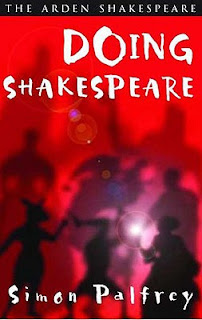
Doing Shakespeare by Simon Palfrey.


Above my desk is a postcard which reads: “A library may be very large; but if it is in disorder, it is not so useful as one that is small but well arranged.” It’s from Schopenhauer in an essay on thinking for onesself. He continues: “In the same way, a man may have a great mass of knowledge, but if he has not worked it up by thinking it over for himself, it has much less value than a far smaller amount which he has thoroughly pondered.” The Eggheads might have a thing or two to say in contradiction to that, but it’s quite possible to think of Shakespeare’s writing in those terms.

As well as a collection of forty-something dramas, these are also texts filled with poetry and a depth of meaning few brains can totally comprehend. The work of critics and historians mirrors that of archivists and librarians attempting to apply some order to the chaos through interpretation. Like the man in the second quote most of them can only become experts in one small part, but collectively they have managed to create a certain agreement as to how the texts were assembled, from word to word, verse to verse, character to character, story to story. Which makes Simon Palfrey’s Doing Shakespeare, the literary criticism equivalent of a classification system.

Generally ignoring an appreciation of the plays in performance, Palfrey seeks to strip the text down to its essentials and confront, oscillating between simple explanations and deep investigation, the various elements of Shakespeare’s writing, answering a series of why questions. Why metaphors? Why hendiadys? Repetition? “High style”? Rhyme? Prose? Puns? Characters? Soliloquies? This the academic equivalent of Arden’s other far lighter Miscellany with far less interest in trivia and focusing on the construction of the writing, grasping towards the reason why the plays went from the playhouse to the printed book.

As Palfrey explains in his introduction, the book's structure demands a reader dips in and out, reads the chapters in any order. Doing Shakespeare can’t be usefully ploughed through from cover to cover. Each chapter is set out in a very particular way, with a basic introduction to the topic, an explanation, then contextual discussion, a dense ransacking of often just a few words, revealed to be packed with meaning. Through this method, the author hopes that we’ll then be able to look at similar usages elsewhere in the canon and have a greater understanding of what Shakespeare is trying to achieve.

Of the chapters I have had a chance to dip into, the overall message is that there are few words or speeches in Shakespeare that haven’t been carefully thought through and which don’t have some implication for our understand of not just the story but the speaker. Even during his lifetime, Shakespeare was criticised for overwriting, in some cases offering pages of lines when a few world communicate the same information. What Palfrey demonstrates is if a character like Canterbury in Henry V does offer what looks like great oratory over a relatively small matter, it’s Shakespeare very specifically giving that character that mode of speech.

If you’re prepared to attack it with a fresh brain, the book can be highly rewarding. Palfrey dedicates four pages to Macbeth’s oft quoted and usually in the wrong context “If it were done, when ‘tis done, then ‘twere well / It were done quickly.” As he indicates there are two ways to interpret the central clause. This could be Macbeth stuttering over his words, replacing the inherent element of doubt within “if” with “when”. But this could also be Macbeth simply repeating the same phrase for emphasis. Indeed the phrase is pregnant with the predestination at the centre of the play, that when Macbeth meets the witches nothing he could do would change matters. He is a broken human the instant they hail him.

As you would expect, Hamlet is covered in some detail, the best section considering Ophelia’s sexuality. As Jonathan Bate describes in The Genius of Shakespeare, the genius of Shakespeare is the apparently deliberate ambiguity within the text and characters but within very specific options. In this case, have they or haven’t they? This is one of the few occasions when Palfrey holds his hands up and suggests that it is something which can’t be developed from the text, that the answer hovers somewhere between the page, interpretation and performance. Even in a library, it’s impossible to satisfactorily classify every book. All the cataloguer can do is make an educated guess.

T’Sar Wars, the opening chapter of Paul Magrs’s new fourth Doctor opus Serpent’s Crest

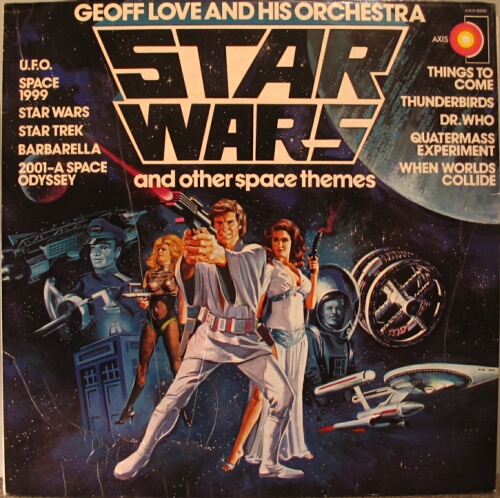
Books Something I’ve always loved about Doctor Who is its capacity to make me chuckle about the tiniest of things. Listening to T’Sar Wars, the opening chapter of Paul Magrs’s new fourth Doctor opus Serpent Crest, that chuckle happened at about the thirtieth minute. After being grabbed from Nest Cottage in the company of Mrs Wibbsey by servo robots and deposited in the far future, the Doctor finds himself mistaken for Father Gregory, an old ally of their hosts the Tsar and Tarina of the Robotov Empire. If the cover is anything to go by (a pastiche of this old Geoff Love vinyl), we know that the real man is soon to appear and Tom Baker is once again given the opportunity to play a double but thankfully without the need to wear the comedy beard.

So we’re primed for the moment when Gregory appears and we hear what Tom’s done about the accent. This isn’t the first time he’s been called upon to utilise a Russian lilt – the character is a riff on his Rasputin in Nicholas and Alexandra after all. But there’s something quite extraordinary about hearing one of the most recognisable voices in British acting relishing the opportunity to extend his consonants even further and play a character who’s even more bonkers than his signature role, which based on the interpretation that’s appeared in the previous two AudioGo series, is really saying something. Like I said, I chucked. Then I realised quite how much menace was implicit behind the performance.

The first of these adventures to dispense entirely with narration, T’Sar Wars is thick with Hinchcliffian atmosphere with its enmeshing of historical drama with futuristic tropes, though to say much more would spoil some of the play’s best surprises. I’m probably safe in mentioning that amid the action and adventure is a useful discussion about the nature of humanity with a nice inference that it’s not what a person is made of but their attitude which makes them worthy of the Doctor’s heroism. Magrs has investigated similar themes before, not least in the heartbreaking The Zygon Who Fell To Earth, although it’s worth underscoring that T’Sar Wars is very much a romp rather than an emotional rollercoaster.

As the Doctor, Baker is the slightly more understated, brooding sometimes terse figure of that period, only now and then breaking out his teeth and curls when he’s trying to bluff his way through the situation. This is presumably to contrast with his Gregory persona, but there’s less of a sense of the dialogue being “read” as was the case early on and worried fans when that first little clip from The Stuff of Nightmares was released. There’s less of a sense of Tom just playing Tom, that he’s remembered who the character is and that bodes well for the Big Finish releases (for which this has the spirit of coming attractions) as well as the rest of this series.

The main link to the whimsy of those first two series is Susan Jameson as Mrs Wibbsey, his landlady and still the most eccentric of choices for a companion. She still retains that element of dottiness, but removed from the influence of the Hornets (finally) she’s slightly less of a Mrs Hudson figure and their good-natured bickering isn’t too far from the relationship he had with Sarah Jane, though with slightly less inquisitiveness and Wibbs also has an ability, similar to Donna Noble, for saying the wrong thing at the right time for plot. Nothing wrong with that if you’re trying to drive an hour’s worth of drama forward and there’s a reality to Jameson’s performance which is rare in Doctor Who in any medium.

Although, of course, Tom could play all of the parts himself, T’Sar Wars has attracted a good cast, not least the Valeyard himself, Michael Jayston as the Tsar (himself) who’s mainly called upon to act suspicious which he does very well indeed. Suzy Aitchison also catches the tone of a Tsarina steeped in secrets. It goes without saying (though I’m saying it anyway) that the story could do with being the length of the old stories simply so we can hear them doing more acting. Which is about the only criticism of Magrs script – it’s not long enough. With this many ideas it would have made a perfect six parter in the old days though given this is another series of five linked stories, perhaps this won’t be the last we’ve heard from any of them.

Doctor Who: Serpent Crest - Tsar Wars by Paul Magrs is out now from AudioGo. Review copy supplied.

the cadences are the same.

TV A-list Doctor Who fan Ian Levine has created a version of lost Douglas Adams story Shada, filling in the gaps left in the recording (which was finished due to industrial action) with animation, voiced by Lalla Ward and various mimics. Starburst Magazine website offers a review:
"First, I must state that the timbre of Paul Jones’ voice is different to that of Tom Baker’s, and so there’s never any question of the fact that you’re listening to a different man. Having said that, there were occasions, particularly towards the end of the story (during sequences in which the ‘original Tom’ hadn’t been on screen for a fair amount of time), when it was very easy to forget that you weren’t listening to (or watching, even) the authentic fourth Doctor after all. The timbre of the voice might be different, but the cadences are the same. There are moments that are scarily familiar, even. The performance is set to fourth Doctor ‘maxed up’ a little, but if anything, that’s probably because attempting a subtle Tom Baker would have been incredibly difficult, and as the story progresses, Jones is comfortable enough to tone it down."
2Entertain apparently have their own idea on how to prepare the story for dvd release, but if they fall through this sounds like it could be a useful back-up [via].

Anthony Coburn's legacy.


TV Regular readers will know that I tend to be quite circumspect when it comes to posting photographs of myself on this blog. I’m not the most photogenic of people and really I wouldn’t want to inflict my mug on you unless it’s really necessary to the narrative. But after watching the final episode of Torchwood’s Miracle Day and inspired by the previous post about the review process at Zzap! 64, I realised that, since my write-up of episode eight probably textually captures my enmity for the series, a partial visual record of my reaction would be required for week ten.


I only had a shave yesterday. Now look at it. God, I look old. A programme about people who can’t die has physically aged me. Ten weeks ago I looked at least ten years younger. Such narcissism only goes to show that I’m pretty well over this. As a wise man once said, “I went in with low-expectations, and they were met”. If at any other time a writing credit had said “Russell T Davies and Jane Espenson” I’d think a miracle really had happened. But reputationally that’s really rather gone to seed.  Rather like my hairline.

The process of watching this series of Torchwood has been rather like meeting an old classmate on Facebook, rekindling that acquaintance even though you weren't really friends at school apart from one amazing week, but enjoying the glimpses of nostalgia for a more innocent time.  At a certain point you realise that you're still not friends, that it’ll always be a little bit rubbish but since you also still fancy their sibling, who’s amazing and far cleverer than this bozo ever will be, you can’t help hanging around.

Because really if this hadn’t been Doctor Who related, I would have left weeks ago. Some have. Proper fans I know bailed just after Rendition. The BBC’s been brave in sticking with it, despite the fact the critical reactions been even worse than the last like for like Outcasts and the ratings just as much of disaster. If this hadn’t been a Who spin-off, would it have been shunted to the late night Sunday as well perhaps with double episodes so that it ran out quicker? Imagine the headlines. Instead, there it’s sat on Thursday night sapping our goodwill.

What do you want me to say that I haven’t said already in these past nine weeks? The Blood Line only confirmed that there was barely enough story in Miracle Day to fill two cds of a Big Finish audio, with a resolution which would have been thrown out if it had been proposed for an 80s 6th Doctor story featuring characters with ultimately less depth and purpose than a citizen of Terry Nation’s Dalek Annual. They could have put last week’s “Two months later” caption up after any one of the previous episodes and with some token rewriting, absolutely nothing would have been lost.

It's usually at this point in a Who review that I'd investigate the story seeking other resonances.  Well here's one.  We've seen The Doctor Dances already.  We've seen a big dumb object rewriting the dna of the human race to be kind only to be thwarted at the end by the main character's constitutional make-up.  We've seen morphic fields in action too in The End of Time.  Putting the two together does not an exciting new story make.  Even the irony that just this once everyone dies, doesn't work, because they always do.  On Torchwood.  And in this episode at their hands.


Bitter? You betcha. But there’s nothing worse than something that’s predictably bad and in which you’re able to predict where that badness will be. Anyone else think Oswald Danes would be much more than a Courier New 12pt honey trap to get an actor like Bill Pullman involved so that he’ll look good in the trailers? So what if his story arc makes no sense, if he initially flirts with being vitally important but ultimately exists to provide some not needed philosophical underpinning to the finale, someone else for Gwen to Welsh at, a walking, talking red herring.

Similarly Jilly Kitzinger, who initially seemed like a most alien, most seductive character also turned out to be included simply to be a satire on what? Right wing politics? I thought their whole bag was the sanctity of life not the choosing of who should die. It’s Sarah Palin after all, who wrongly informed the American people that Obama’s health care bill included a provision for death panels. If this lady in red is a metaphor for anything, it’s what can happen when a writer isn’t sure of the message s/he’s trying to convey.  This can't be Anthony Coburn's legacy, can it?

Of course we’re not even offered a valid reason for the existence of The Blessing. We’ve barely been offered a valid reason for the existence of the rest of the series beyond some co-production money. At least Davies has the decency to reference everything that’s been commented about online in the past week in relation to the Silurians, the Rachnoss and whatever else lies beneath though it's symptomatic of this show’s parasitic existence that it can’t reach a climax without mentioning the Doctor again as if to remind us that despite other evidence it’s still supposed to be set in the same Whoniverse.

But those glimpses, oh those glimpses. The warmth between Gwen and the restaurant owner. The decency of her mother in realising it was time for her husband to die. Sergeant Andy’s kindness to a total stranger. Rhys’s tears. As has so often been the case, when Davies returns to the domestic he has the potential to break our hearts. The opening monologue he gives Gwen is one of the most emotive pieces he’s ever written though I don’t know how many of us ever do end up being spoken to as adults by our parents. No coat is ever warm enough.

Did I gasp when Esther was shot? Yes.  Mostly because of the brutality. Did I shout, “No …” many times like a demented Vader when it was revealed she’d really died at the end and that we weren’t attending Gwen’s father’s funeral? Again, yes, but for no other reason than because hers was the most expected death. Rex’s shooting was a surprise, as was his resurrection but like the whole “plan B” it quickly turned sour because it meant that there would be another series. Like these two immortals, this is a show which can’t die.

Except, and this is interesting, the British broadcast lacked the final caption that appeared on Starz (and in Australia) indicating that Jack would be back in January 2012. In fact, there was a stuttery edit at the end of the credits before the co-production monstrosity card appeared. Was that just heralding a repeat of the first few series in North America or a genuine new series over there which the BBC haven’t decided when they’re going to show here? Why do I care? Never mind Facebook, this is Brokeback Mountain. “You know friend, this is a god damn bitch of an unsatisfactory situation. ”  Yes, that’s the quote.

the magazine of my youth

Games Well, this is quite something. Archive.org have an evolving programme of digitising out of print computer magazines which includes all of those 8-bit review titles from the UK in the 80s and 90s.  Jason Scott has posted a list to his blog and just even the names bring back memories especially of the groundbreaking Newsfield titles: Crash, Games Machine, Amtix and the magazine of my youth Zzap! 64.

What made these magazines different wasn't just the humour, but that each review contained a range of opinions with small caricatures of the journo giving a thumbs up or a whithered look which, along with a percentage rating and sometimes the screenshots gave a quick indication of whether this particular film tie-in or coin-op conversion was worth the ten pounds.  Usually not.

Of course such things should be obsolete, but in these days of emulation such magazines become invaluable again as a reminder of those games forgotten or for those of us couldn't afford such massive sums from our pocket money, games that were once out of our reach.  Most would probably consider passe but as Zzap etc frequently reminded us, sometimes gameplay more than makes up for deficiencies in other areas.

Hopefully future uploads will include Acorn User, Electron User and Input.  OCR should make the process of turning those pages of machine code into working programmes far.  Hours spent typing "00 ... AE ... 8A ... 0E ... E4 ..." only to discover the checksum portion was incorrect anyway.  I have theory that the reason kids have no patience these days is because they've never had to spend ten minutes waiting for game to load from cassette.

Conching.

Costume Drama: Fashion from 1790 to 1850, the latest exhibition at Sudley House

A vibrant blue brocade day dress

Fashion Forrest Gump’s mamma always said, “you can tell a lot about a person by their shoes, where the go, where they've been” but as I discovered today at Costume Drama: Fashion from 1790 to 1850, the latest exhibition at Sudley House, it also helps if you can see the cut of the rest of their jib. When I arrive, exhibition curator Pauline Rushton is giving a talk during which she notes that when a lot of these fashions were acquired in the 1950s, retaining the details of the owner wasn’t of primary concern. Now we live in times were social history is just as important as design, such lost details have gained a new importance.

But all is not lost. The one male costume in the first room, a smart suit and britches seems from an initial glance to be the attire of someone very well to do. As the curator says, the usual reaction from visitors is “Oh, Mr Darcy.” Except if you look closer, you realise that the jacket and waist coat are made from a cotton derived fabric of a kind which would never be utilised by a member of the upper classes in this configuration and which is strong enough that it can be worn in most weathers and still keep its integrity. The trousers are corduroy, again not a fabric usually associated with the landed gentry.

So it’s possible to surmise that this is a working man’s suit. Except that it’s not designed for manual labour, the owner couldn’t lift a spade with it, so it has to be for someone who manages the workers, or collects land tax. Pauline said that it’s her favourite piece in the room and by the time she’d finished it was mine too, simply because it was such an expressive example of deductive reasoning and a demonstration that even the fashions which might not be the most aesthetically pleasing at first glance, certainly in comparison to some of the frocks on display, like some people, have hidden depths.

Across its three rooms, Costume Drama can’t and doesn’t seek to offer a complete picture of fashions in this period. As the title suggests, this is an opportunity for fans of Austen and her many adaptations to see the real deal up close, and gain some measure in seeing the accuracy with which the BBC costume department et al have created the period settings across these years. All of the dresses look like they could have the beating heart of Jennifer Ehle, Kate Winslet or Ruth Wilson beneath them but unlike some modern fashions still work as beautiful display objects in and of themselves.

The vibrant blue brocade day dress pictured above is probably my favourite simply because the colour is such a statement much needed for this frock's probably function in the early 1840s as the "going away dress" for a bride after a wedding, presumably something of a contrast from the white of the wedding dress. In this period, white was the predominant colour and seen as a sign of "purity and innocence" and most were designed to resemble to Greek marble statues which were being excavated at the time.

The most expensive dress costumes contain elaborate embroidery but it wasn’t until the advent of more complex printing processes, from hand printing to the placing of the pattern on a roll that the fabric in every day clothes became more complex. For a period, it was fashionable for the sleeves to have a “mutton leg” a kind of ball shaped bunching which began at the shoulder then across the years moved down the arm until the Victorian era when they were removed altogether.

Partly that was to do with fashion but mostly it was to do with a change in values. As the middle class ascended, we descended into what are now described as Victorian values, and fashions reflecting that with slimmer sleeves and the loss of low necklines. We loosened up again eventually, but clothes do still make the person.  Perhaps we'll never reach a point where they stop being about projecting a set of moral choices or the connection to a sub-culture and simply become something to keep us warm.

Until 7 May 2012.  Details here.

“one day you’ll be cool”

Film This New York Magazine profile of Zooey Deschanel brings a casting nugget about one of her earliest films:
"During Deschanel’s first year at Northwestern, she says, Sarah Polley dropped out of the role of Penny Lane in Almost Famous, and Kate Hudson took over for her, leaving an opening for Hudson’s original part, the older sister who assures the “Cameron Crowe” character that “one day you’ll be cool” as she runs away from home with her boyfriend but leaves all her records behind. The casting director remembered Deschanel from an earlier audition. “It was a divine stroke of luck,” Deschanel says, enough for her to quit school and move back to L.A. She didn’t want to find herself in the same position Emily had: having to compete with 17-year-olds at age 22."
Both Hudson and Deschanel are so perfectly cast with their era defining faces, it's impossible to imagine anyone else in either role.  It's a good interview and includes one of Zooey's mix cds towards the end, even if the topic, her new tv show, seems like a risk. 

But then there's bad blood between me and Fox.  They're always cancelling my favourite programmes.  And they're owned by Newscorp.  But since I bought the Star Wars blu-rays this week, I think the boycott ship's rather sailed.

Artifacts: The Beautiful South

Music It's 1996 and kids, The Beautiful South one of the biggest bands in the country, their filthy lyrics to a lyrical hum having slowly pierced the national consciousness over four albums. Their fifth, Blue Is The Colour is imminent and to accentuate their image as a working class drinksy operation, their advertising agency decide to re-brand a range of pubs throughout the country as The Beautiful South.

I'm 22 years old, something of a fan and I have the presence of mind to take some photographs:

The Beautiful South.  A Pub.

This is, The Grapes in Mathew Street (as you can see from the windows), presumably chosen because of the existing geographic musical connection. This washed out photo doesn't really do justice to the blueness of the sign and connected stationary. The pub sign was replaced/covered with the album cover which included that child's face.

The Beautiful South.  A Pub.

The album reached number one on 2 November that year with most of the singles charting pretty highly. The main track, Don't Marry Her had to be substantially changed for radio. The lyric "Don't marry her, fuck me" became "Don't marry her, have me" but I didn't notice until I just saw it on the primary source of all our knowledge that "sweaty bollocks" became "Sandra Bullocks".