Showing posts with label comics review. Show all posts

New Adventures With The Eighth Doctor (Titan Comics).

Comics Hello again and here we are nearly a quarter of the way through the present hiatus, gap or whatever word you’d like to use for a year in which the only televised episode is at Christmas.  But there’s still plenty of Who around, certainly far too much than most of us can afford, between the BBC and Big Finish audios, books and comics. My strategy is to pretty much stick with making anything with the Eighth Doctor a priority then picking and choosing whatever looks essential from everything else. Does anyone really have the purchasing power to collect everything produced each month now? How do people find the time to read and listen to everything. Presumably enough of this stuff is selling to different fan demographics to sustain itself, but there can’t be many franchises this prolific.

Anyway, at the sharp end of production is Titan Comics, who having nabbed the license to produce US comics from IDW has set about creating their own cottage industry with titles for all of the nuWho Doctors (10th, 11th and 12th initially and now 9th) and a series of limited series for the classic models which means the Eighth inhabits yet another media. The selected approach, set the story during the Time War, is somewhat predictable given the world having moved on from being able to create sequels to the now twenty year old TV movie and the wild popularity of Night of the Doctor (which according to this month’s association circular led to an increase in sales of the McGann audios at Big Finish) making the pre-regenerative Eighth the expected model.

Except this is not a story directly about the Time War. As with the River Song cameo, this is a Doctor who’s actively trying to avoid the thing and seeking a distraction.  George Mann brings some weariness to the incarnation, but for the most part he’s back in the powerful adventurer mode, life’s champion and all that, carefully dodging the cataclysms which are presumably destroying the universe as hinted at in the Justin Richards short story Natural Regression. Perhaps at some point in the future, perhaps in the Big Finish audio, someone will make an attempt to define the chronology of these stories. For now I’m putting it early. At this point there aren’t enough stories for it to matter too much.

Mann’s story somewhat mirrors one of the Big Finish boxes, the Doctor having been tasked by some mystery other with discovering the origin of his new companion, Josie Day, a painter who somehow knows more than she should about the universe, with each issue developing from visiting a space and time on a handwritten list. We’re back in Seasons of Fear, Keys of Marinus or Key To Time multiple territories, though the impetuous is much looser, there’s no ticking clock, it’s simply a way to justify each adventure and when the conclusion comes, it would probably have worked out the same way if they’d simply skipped to the end (not that you couldn’t argue that the emotional connection sparked by the intervening adventures doesn’t help).

New companion Josie is pretty old school in Eighth Doctor terms, fitting a similar silhouette to Sam Jones, Izzy Sinclair and Lucie Miller (and so Ace and Rose), although for various spoilery reasons it’s not quite that clear cut. If you haven’t read the comics yet, if you’re waiting for the trade paperback, my suggestion is that you stop reading now. I want to briefly discuss the implications of Josie briefly. Have you gone? Good. Right so, yes, the cleverness of Mann’s writing is that as well as making the final instalment provide a logical conclusion to the first and provide a twist (effectively shifting the cliche into someone akin to Majenta Pryce of DWM fame), it’s how in those intervening adventures by giving Josephine a key part to play in helping the Doctor, often with a big speech attached, he justifies the Doctor’s faith in her more than is often the case with companions.

The Pictures of Josephine Day

Paintings coming to life is as good a start as any and Mann connects it well to that central mystery about Josie. As we discover (and yes, I’m writing this after reading all five issues) (twice!), Josie knows full well why she has all the knowledge that troubles him and in re-reading the issue, we can already see Mann layering in that she’s hiding something, providing lame excuses but doesn’t overplay his hand, aided by Emma Vieceli’s superb characterisation of her face which manages to capture the double meaning of the words so that can read something new into everything in hindsight. Mann notably doesn’t feel the need to reintroduce Eighth, treating him as being as much of a known quantity as any of his other incarnations. Although he’s not sequelising the cross-media legacy exactly, he is at least acknowledging it.

Music of the Spherions

Tricky second story. Arguably imperilling Josie Androzani-style is an odd choice for her second adventure, but it does provide a good moment of raging anger which you can absolutely hear McGann himself relishing and his companion having the first of her big speeches as she brokers peace between the inadvertently genocidal Spherions and the accidentally oppressed cat like inhabitants of the war-torn planet. Vieceli’s artwork really is epic and gorgeous in places, taking anime as a clear influence especially in the latter stages when Josie’s infection is flushed out. Unlike the various DWM artists across the years which strove to create a clear likeness of the actor, Vieceli’s most offering an idea of the Eighth Doctor, preferring to underscore movement over tableau.

The Silvering

Following the pattern of the 2005 series, after a contemporary setting, then something alien comes Earth’s past, Edinburgh 1866 and like The Unquiet Dead a trip to the theatre. Are these influences intentional? The Doctor confronting magic that isn’t is a deep seam running through his biography and Eighth in particular, this recalling some of the atmosphere of Lloyd Rose’s Camera Obscura. It’s pretty slight stuff, like one of those pieces that would turn up the DWM strip between the larger arcs when Scott Grey or Alan Barnes needed a break from writing in order to catch up. I didn’t notice the twist at the end first time around, perhaps because there’s not enough room in the reflected mirror to see that Josie isn’t there.  There's probably a discussion to be had about who the viewpoint character is in these stories.

Briarwood

“Aaah, it’s The Krynoid Invasion or Invasion of the Krynoids” “[Caption: Seeds of Doom]” Sadly, The Paul McGann Years would be a very short video although I’d pay good money for Big Finish to produce an audio version in which he attempted to provide anecdotes about spending a week in the booth every couple of years recording his scenes. Anyway, Mann returns to another of the Doctor’s key antagonists, alien plant life, on this occasion crossed with a big mansion mystery. The piece has a Masefieldian tone as Mann foregrounds a small boy getting to grips with the notion of having an adventure and the mythology which has built up around his family.  You could well imagine this story told with mid-80s production values, the moments when the plants take control of humans achieved through stop-motion animation ala The Box of Delights.

A Matter of Life and Death

The finale caught me by suprising, having thought that this was a six-part series. Despite rehearsing some of the same arguments as The Almost People from television and Immortal Beloved from the audios, this is my favourite issue of the run with its strong antagonist in the source of Josie’s existence and the Doctor having to take moral decision that underscores how he stands apart from humans without undermining his heroism. The reveal of who provided him with the original list (which also reconfigures our understanding of the first page of the previous issue) is the kind of thing which should annoy me, but I couldn’t help grinning at how well Mann provides necessary contrasts in personality. The final moments hint at there being further adventures for Eighth and Josie. Good.

The Forgotten: Revelation
(IDW Comic Issue #5).

Comics Published in 2008, this was the first rough draft of the Doctor's adventures during the Time War, before "The Moment" and definitely before the War Doctor when it was still assumed Eighth was the one who eventually destroyed Gallifrey. Again. Seven pages of the Doctor waiting in a prison cell for days with Chantir the Malmooth (the same race as Chantho from Utopia) until he can break out and use the Key of Rassilon to help end the war, it's pretty action packed with gun play and good hijinks. He's mostly in character with some business about rock, paper and scissors. The Forgotten was a six issue story arc in which a Tenth Doctor story worked as framing device for an anthology series featuring his earlier incarnations. Since IDW (like Pelican in 2013 when preparing their anniversary offering) were presumably unable to refer to Big Finish or anything else, this is what writer Tony Lee decided was the best option. I remember it being quite a big deal at the time, although now you do spend much of its duration trying to work out how it might still fit into what's been narratively established since.  "This key will help lock the Medusa Cascade forever if we need to" he says which doesn't sound incarnation sensitive.  About the only fly in the ointment is after the flashback, Tenth intimates that he spent most of the incarnation alone as though the Time War happened pretty quickly after the TV movie, which I remember seemed very mean even in the late noughties.  Lee didn't need to deny the existence of the audios, books and comics really, just not refer to them.

Star Trek: The Next Generation / Doctor Who: Assimilation 2, issue #5.

Comics Sigh. Of all the crimes committed by Star Trek: The Next Generation / Doctor Who: Assimilation 2 against actor likenesses in tie-in comics across the past few months nothing quite prepared me for seeing this on page eleven of issue five:


Yes, that’s supposed to be Rory. Reading the issue on the bus home this afternoon, on turning the page I swore. Out loud. The person I was sitting next to gave a peculiar look and I had to put my hand over whoever that’s supposed to be so I could get through page ten without the distraction. How does that happen? Was a picture of Daniel Radcliffe accidentally mixed in with guide photographs the artist was working from and he couldn’t tell the difference?

Just for some balance, some of the art in here’s pretty good this week. The close-ups in general do look more like their television counterparts, especially Guinan, the Doctor and Amy (oddly - she's had an even worst deal that Rory up until now). Some of the lighting effects in particular are lovely. But as soon as we’re into the comic art equivalent of a mid-shot or master, either Picard gains massive black eyebrows and Barbara Cartland’s eye shadow or Riker’s being played by one of the Gibb brothers.

As ever such inconsistencies are also reflected in the script. This is a better issue than the previous four but to an extent that’s like saying the Immortal Sins episode of Torchwood’s Miracle Day (the one with the flashback) is the best of that series. The inherent structural problems remain and while these twenty-two pages has something like a goal orientated story, the chance of it having any great significance across the rest of the series is slim because none of these issues really does.

The main thrust of the issue is about the Doctor convincing Picard to talk to the Borg which suggests that he’s somewhat being privileged with narrative agency in the odd numbered instalments, though issue three barely counts since it's mainly a flashback and arguably Kirk was in charge. It’s not much of a story but at least it feels like a clear direction of travel rather than the start/stop approach of previous instalments.

If there’s a problem, it’s that over two thirds of the issue happens in the Captain’s ready room. Such production behaviour is understandable in network television were budgets are tight but its simply bizarre that in a comic book we should get endless two shots and over the shoulders when there’s practically an infinite budget available. Idiom wise, it’s perfect, of course and probably why #5 feels superior to previous editions. But it’s also pretty frustrating.

Anyway, so we’re back after last month’s cliffhanger with the Doctor suggesting they talk to the Borg, Picard wondering if the Cybermen are all that bad and the massed constituencies of the two franchises wondering why they’re even having this conversation. We’re quickly and pretty accurately ushered into that ready room and before long in the midst of a long expository scene in which the Doctor and Guinan explain their antagonist’s plan without much in the way of evidence.

This is a conversation which takes just over nine pages, nearly half the issue. In the middle the writers spend three pages in what they think is the voice of Guinan offering a synopsis of the Best of Both Worlds for the none of us, including Who fans, haven’t seen the key text of The Next Generation which is visually arresting but outside of television where this might have taken seconds comes across as time consuming and superfluous.

Much like the previous Guinan monologue in the last issue we’re not gifted new information, indeed there’s a lot of explaining of who the Borg and Cybermen actually are, how they must have seen each other as “kindred spirits” but fell out when they realised that the Trekverse wasn’t big enough for the both of them. It’s difficult to see who all of this is aimed at and again this is half an issues worth of material that was adequately inferred over a couple of frames last month.

When Guinan does make a key supposition that the Cybermen are attempting to convert the Borg collective for themselves we reminded again that the writers seemed to have forgotten the medium they’re writing. They can afford to show us this and yet its rendered through an admittedly lovely portrait of Whoopi Goldberg. Allowing our imaginations to do the work is fine on television, but comics are an inherently visual medium and we know already that the artists are ok with spaceships.  Show don't tell.  Please.

By the close of the conversation because he doesn’t need to be for the issue to have a point, Picard’s still not convinced and continues the ship’s course back to Earth. We’re now at page ten and we haven’t left the bridge. It’s probably an unfair comparison but by page eight of this month’s Angel & Faith, Willow’s thrown a mountain at the Whedonverse’s equivalent of the Balrog. I don’t read a lot of comics but even taking pacing into account that seems like a lot of comic spent in one room.

New room. Oh it’s sickbay and Harry Potter’s swapping remarks about the advanced medical technology. Rory has exactly two speeches here and neither of them have anything to do with the main story unless in a couple of issues he’ll be utilising his nursing skills and neither of them sound like anything Rory would even say. Since he hasn’t been assimilated yet, that seems like the only option left for giving him something to do.

Finally Amy has something to do. In a conversation which as Allyn identifies “is reminiscent of her conversation with Kazran in “A Christmas Carol” and Lorna Bucket in “A Good Man Goes to War”, Pond explains why the Doctor’s a brilliant planet saver. The characterisation of Amy’s surprisingly good in these three pages and just briefly Karen Gillan’s even on the page rather than a non-descript red head.

However brief, it’s charming and also has reminds us of what could have been and should have been earlier. It’s not about exposition, it’s not even about telling us information we already know. It’s about character and though we aren’t entirely convinced why Picard wouldn’t yet have been more curious about the blue box on the holodeck, does fairly naturally lead in to the moment we’ve all been waiting for.

When Picard steps onto the TARDIS he does and says everything you’d expect him to and so does the Doctor. But for once there’s a magic which has otherwise been lacking and that continues as the Doctor takes the Captain into the future, Pyramids of Mars style to show him the devastation which would be the result of the Cybermen being given a foothold.

The time mechanics of these types of scenes have never really convinced me. Time ebbs and flows but typically in Doctor Who, unless the Doctor specifically goes out of his way to change events once he’s witnessed them, they can’t be. It’s why he doesn’t whisk Rose back a year in Aliens in London and why the intricate storytelling in Blink just about fits together.

Except here they both are looking at the future pretty close up, the Doctor even makes a point of saying that it’s real. Which means that as in Pyramids, he’s showing Picard something he hopes will be changed by their intervention in the past when really if it had already been changed it should reflect that. My head hurts. Either way it’s a rare occasion when the writers and artists make full use of the comic book format.

Oddly, The Doctor shows Picard the results in both the Trek and Who universes which suggests that the Cybermen can slip easily between the two and mores to the point the Doctor can too which doesn’t make much sense given how he was supposed to be visiting this universe by mistake and the difficulties the TARDIS has in traversing such divides in the Tenth Doctor years.  Unless we're supposed to assume the two universes are merging like the Doctor's memories but at the close the Time Lord refers to "each galaxy, each universe" which suggests they're still supposed to be separate.  The writing's simply not clear enough.

After which Picard’s finally convinced to talk to the Borg and there’s a trailer of the next cover image of the Doctor shaking one by the hand and we’re another issue closer to the end. About the only flaw, as Allyn also suggests, is that the Cybermen simply haven’t ever been this powerful. In between the gold and the sonic screwdriver, the Doctor’s always been able to vanquish them pretty easily.

Which is all fine.  Except in story terms this whole issue's bunk. By now, on television, the Doctor would have been in the TARDIS and landed in the middle of the Borg collective, force field on for safety, having a conversation. He doesn’t need Picard or the Enterprise crew and as the close of the episode explains the TARDIS is in full working order and there’s been nothing stopping him using it, not even a couple of security guards.

Perhaps he imagines the Enterprise will go some way to explaining why he has all of the new memories (something which isn’t touched on this month) but that’s not established in the text. Because of all the pointless exposition in the ready room, there’s no time given for the Doctor to have much of a conversation with his companions. Has he even said yet exactly why he’s still on the Enterprise?

But the main overall problem at this stage is that there’s no sense of personal threat. There’s the galactic problems with the cyber-divorse and the close of the issue ramps up that tension. And I know the Doctor doesn’t generally need it, he’ll get along with saving anyone or anything. But the writers haven’t taken any opportunity to ramp up the tension.

None of the usual stand-bys have been employed. No one’s been captured for example, and Rory being assimilated would have been the expected example, or the Doctor which would have been more interesting and dangerous. The Doctor and his companions haven’t been isolated from the TARDIS or the crew haven’t lost the Enterprise. There a definite lack of jeopardy.

Thinking on, maybe the problem is that the underlying story is too huge.  Maybe the writers would have been well to have told a much smaller story, perhaps with the Doctor his companions and the crew of the Enterprise both isolated from their ships on some planet with a bunch of issues worth of suspicion before they decide to work together, in other words a base under siege story.

Or the Doctor and his companions losing their TARDIS and having to covertly become part of the Enterprise crew during a space battle with all the fun of the Doctor in a Starfleet uniform, Rory in sickbay and Amy waitressing in Ten Forward or exploring the family parts of the decks.  That's another problem.  We have a Doctor who's great with children on a starship filled with families and he hasn't met any of them.

But like I’ve said before, perhaps I’m expecting too much of what’s now a hundred and ten pages and I should just enjoy seeing the Doctor and his companions walking around the Enterprise saying stuff. Except none of it is fulfilling the promise of the original preview covers and although we’ve no real idea of what’s happening next, it doesn’t seem to be due to clever storytelling and more to do with the writers not knowing what kind of story they’re trying to tell.

Swap Shop’s Trek parody

Comics Just awful. After an issue that amounted to a stand alone Who story, another which was half stand alone Trek, half an issue of missing the scenes we’d all been waiting for and a third which amounted to a flashback we’re finally in the two teams working together material and since I haven’t read enough Trek comics to suggest it’s one of the worst Trek comics I’ve ever read, I have read enough Who comics to at least able to say its one of the worst Who comics I’ve ever read. At least the mid-70s World annuals have a certain surreal charm. This takes what is one of the best ideas for a comic ever then pisses it down a Jeffries tube.

Once again the storytelling is modular enough that the issue can be split up into roughly three chunks. The first resolves the cliffhanger ending of the Doctor meeting Guinan which should have enough material for a whole issue, but we’re presented with six pages in which the two of them agree that something’s gone wrong with the timeline to the point of effecting their memories, in other words, pretty much what we’ve already gathered from the previous two issues. Once again, the writers are simply repeating exposition rather than moving the story forward. Once again they’ve squandered the potential to do something interesting.

Next we’re into another scene in the Enterprise’s meeting room in which Data miraculously offers a set up for the next chunk of the issue, a visit to a planet which has been attacked by the Cybermen and Borg. It’s fairly typical of Trek that some useful information turns up like this via the ship’s scanners like some electronic Huggy Bear but it’s a boring approach to storytelling and doesn’t come naturally in the flow of the narrative. Ultimately it leads to Riker being asked to mount an away team and unsurprisingly the Doctor asks if he and the Ponds can tag along. Cue the expected transporter scene which is efficient if predictable (see below).

The rest of the issue’s about the investigation and aftermath. The Enterprise crew meet a Cyberman for the first time and vis-versa. Both have malfunctioned so they’re barely a threat. Just a couple of issues it seems, this great alliance has fallen apart and the two cyberborgish races are attacking each other rendering nullifying what was hyped to be the main point of the story, which is followed by, in the dying moments of the issue bizarre scenes in which Picard considers an alliance with the Cybermen against the Borg and the Doctor with the Borg (or some open dialogue) none of which rings true, followed by a tease of next issue’s cover with Picard in the TARDIS.

Well hum. If these reviews about been about anything, they’ve been about the hope that the series gains momentum and heads off into left field. It’s certainly done that, but only because I’d not expected anything this dull. Huge moments like the Doctor using the transporter for the first time are there for the milking (previous t-mat travel accepted) but it's over in three frames beginning with Rory if the ship’s going to land on the planet which is the kind of Jokoid which might have turned up in Swap Shop’s Trek parody in the 1970s, presumably delivered by Cheggars pretending to be Chekov.

At no point does this feel like the Eleventh Doctor. The art says Matt Smith (just about) but he’s generic Doctor all the way, without any of the wit he’s infused with by writers Johnny Morris or Scott Gray in the Doctor Who Magazine strip and a shadow of what was even achieved in the first issue. He’s says Ponds a bit, but much of the time he’s the kind of Pertwee/Baker amalgam with Mark Gatiss says he and some of the other writers fell into producing dialogue for in their first drafts when the show returned in 2005. Not that he even has that much to do since the writers have finally decided they’re writing a Star Trek story which happens to have a Time Lord and some civilians in it. You could replace him with Data and tell much the same story.

Amy and Rory have more to do this month. Nothing to do with the actual story, they’re still being dragged about like a contractual obligation, but they’re at the forefront of the frames and have dialogue with other characters. None of that dialogue rings true of course. There’s a bizarre scene with Troi, half of which is just them introducing themselves to one another, the other half their relationship with the Doctor in which Amy sounds like Rose, them needing to look after him. But the writers clearly don’t know what to do with them (a different approach, like having each of them kidnapped by a different cyborg faction, could have made them critical from the start) and if anything they’re a distraction.

Speaking of which, the artwork’s also becoming ropier as the series continues. Perhaps faced with deadlines, the artist’s work is increasingly muddy and impressionistic. The characters all generally look about right, but there are a few frames which border on a naive art approach (hello, page sixteen) and the geography’s all over the place planet side as there's no sense of how time's passing. We’re not quite in the territory of some of IDW’s early Angel comics, it doesn’t actively work against the script to render it incomprehensible, but there are moments, big, potentially epic moments, which disappear into a few brush strokes and strange angles.

Also, as the comments under TrekMovie's bizarrely generous review (in no way is this artwork "outstanding") remind me, it's still looking increasingly likely the writers either haven't realised that Trek is a television series in the Whoniverse or are simply ignoring the fact.  Again, that's a shame and certainly makes a nonsense of the whole storyline about the Doctor having knowledge of this strange, new, or a least different world.  He must know what a Klingon looks like, because he's seen it on television which should have made this whole trip seem like a sideways step into the land of fiction rather than a whole new reality.

I’m not sure anything can save what’s increasingly looking like a bunch of flirty covers in search of a story. What could have been a massive battle between the aligned forces of good and evil across realities is already beginning to destabilise into endless pages of exposition punctuated by character moments which are the stuff of poorly realised fan fiction (bottom of page 10 probably, those guys simply don’t talk like that and it’s not even proper English). But we’ll still be buying it through to the bitter end because you never know. There could indeed be an incredible metafictional reason why all of this is happening.

"my universal Merlin theory"

Comics After what amounted to an issue long prologue, the second instalment of Star Trek: The Next Generation / Doctor Who: Assimilation 2, has another half issue of prologue before the TARDIS team bump into the Enterprise crew and although the result is a bit of an improvement, many the narrative leakages I predicted last time are already beginning to leave stains all over J.K. Woodward’s still gorgeous artwork. It’s becoming very apparent that given the material available, two franchises filled collectively with nearly a hundred years of mythology this isn’t necessarily turning into the finest hour for either of them.  Spoilers begin here.  This review assumes you've already read the comic.

The Tipton’s script begins by given the Star Trek the same treatment as Doctor Who last month, offering the reader a prototypical TNG story of Riker, Data and Worf visiting a Starfleet mining operation uncovering important stuff for rebuilding a fleet still depleted by Wolf 359 (oh, the foreshadowing) working within a set of unbelievably specific conditions agreed with an amphibious population whose design is uncomfortably similar to the fish people from The Underwater Menace. After some astonishingly boring exposition of the kind which can be TNG's stock in trade, disaster strikes and it's quickly agreed that Starfleet should have been paying more attention to its mining colony.

The character work in here is pretty good. There’s a useful conversation at the top in which Geordi finally asks Data why he hasn’t upgraded his technology which shifts through some expected philosophical areas (though I can’t help feeling the television series would have actually mentioned Theseus’ paradox because Patrick Stewart would have asked for it to be put in) and there’s some excellent sickbay cameos on page ten. Then, like issue one, story requirements take hold and the cast are quickly shunted into the holodeck as it becomes apparent we’ve been watching the Trek side of the first issue.

My criticism of this approach still stands. Unless both of these explanatory prologue sections actually become relevant to the story, neither is specifically required. Doctor Who fans probably don’t need to be told what a ST: TNG story looks like because during the wilderness years, along with Babylon 5, it’s what most of us were watching. Similarly there can’t be many Trek fans who don’t at least have a passing notion of Doctor Who. The holodeck opening is nice idea and would have been just enough before we’re scooted into the adventure and what we really want to see, the mating of these two classic franchises.

Indeed perhaps the holodeck material could have been stretched out across a whole issue, the Doctor mixed up in a Dixon Hill mystery coming ever closer to the Riker and the rest but forever missing them ala Partners in Crime or even working with some of them entirely unaware that they’re real beings within a virtual environment. Unfortunately as Allyn Gibson predicted in his review of the first issue that’s all dispensed with in a few, admittedly fun pages. The final image of the TARDIS sitting in the holodeck grid is as bracing as we anticipated. Structurally it would have been the perfect end of an issue. But it’s not over yet.

Finally though we’re into what we’d all be hoping for, the Doctor vs. Riker etc and with credit to the Tippets for all the structural issues, the characters do sound exactly as they should and more importantly the different characterisation styles of the different franchises contrast nicely. Unlike the precision of Trek, the Doctor’s words spill out of him as he excitedly comments on everything (like an early Data perhaps) and his companions seem amazingly British up against the prosaic Americanisms of the earlier series; I don’t remember anyone saying “Hi” or “Hullo” in the 24th century at least not in this way.

Of course, we’re also now into the uncertain territory of whose adventure this is. It’s trying to have it both ways, the Doctor reacting to his new locale in the way the Doctor always reacts to his new locale whilst simultaneously the Enterprise crew are trying to come to terms with these intruders. Often we’re watching a room full of protagonists and at this point it's Amy and Rory who’re worst off, sometimes wordlessly swanning around the edges of the frame, only now and then speaking up. Unless they get they’re own storylines later they’re rendered superfluous in a way which wouldn’t happen in a story told from their POV.

While we're on the topic I'm wondering if a better strategy might even have been to publish to different comics simultaneously, each telling the same story from the Doctor's POV and the Enterprise crew's POV, in other words what we've been given in this opening issue but carefully plotted around each other.  Marvel have used similar strategies before, notably way back during Secret Wars II when an Avengers annual and a Fantastic Four annual which otherwise seemed entirely unconnected suddenly came together at the climax in which the same layouts were rendered by different artists.

There’s an interesting moment when the Doctor recognises Worf, or at least recognises he’s a Klingon. Along with his bang-on insights into Data, it seems for a moment that we’ll be reminded that Star Trek is a known television series in the Doctor Who universe with loads of spin-off references but also lately in the television series, notably in The Empty Child and Closing Time (see this Wikia entry) (and this one) with the TARDIS team realising that the fictional universe actually exists in this alternate reality with all the metafictional implications that has. Unfortunately in skipping time tracks, the Doctor, Rory and Amy have entirely forgotten Star Trek exists.

Instead we have the intriguing notion that the Doctor’s gaining memories, remembering events which never happened to him, including knowledge of Klingons which leads into that cover which has already been released of Tom Baker’s Doctor meeting Kirk and Spock. Of all the ideas in the book that’s the one which is going to keep me reading; perhaps at some point he’s going to forget the version of his life in the Whoniverse and it’ll be substituted for a millennia of travels in the Trekverse, Roddenberryverse, whatever it’s called. In some ways, I wish we were simply getting a spin-off series version of that, with the Doctor pitching up on Romulus or Bajor.

Another quick sidebar and it's probably too early for this since it's entirely irrelevant, but I've just realised that the Q is the reflection in Star Trek of my universal Merlin theory in which a large chunk of fantastical fiction takes place in a multiverse in which magical Merlin-like figures sit at the centre reflected in different ways across them, the various Merlins in various interpretations of the Camelot myth, Doctor Strange, Prospero, Gandalf, the Doctor (who is also Merlin of course) and in the Trekverse the Q continuum.  Perhaps it'll be revealed down the line that the Time Lords and Qs really are cosmologically connected in some way and the Doctor's unconsciously tapping into that power.

Anyway back to the slating.  Where was I?  Right ... all of which isn’t to say that the many frames with the Doctor and Picard in them don’t make me tingly, especially the final scenes in which the two of them (standing on a starship) finally bump into the armada of Borg cubes and Cyberman ships even if once again the comic doesn’t have a cover which reflects the story neither of the two cyborg actually appearing within the pages. It’s almost as though they’re running a whole issue behind. The alternative covers featured inside aren’t much better. One of them teasingly features the Enterprise crew in the TARDIS. That doesn’t happen either. At least is hasn’t happened yet.

I know, pick, pick, pick. It’s just that we’re at issue two of eight and the main story hasn’t really started yet, most of what we’ve had so far lacks the epic quality the title suggests and there are few character beats which couldn’t be guessed even before the issue hit the printers. Most of this feels like a contractual obligation rather than the work of some people with a strong story they’re desperate to tell and although, and again I’ll repeat that although the moment when Deanna Troi empathically scans the Doctor has me squeeing like the professional teenager I am, I wish we hadn’t had to wade through so many pages of other stuff to get that far.

this Star Trek: The Next Generation / Doctor Who crossover Assimilation 2

Comics The staff at the local Forbidden Planet must be tire people like me. The kind of people who turn up on delivery day nomically asking “Is it in yet?” assuming they’ll remember what I’m talking about out of the many hundreds of titles they have to sift through each week. Such as its been waiting for this Star Trek: The Next Generation / Doctor Who crossover Assimilation 2 since it was announced what feels like many months ago with ambiguous publication dates and an uncertainty about whether it would be supplied to the UK at all thanks to Panini’s sole UK comic rights to the franchise.  Strangely not a problem thanks to having Star Trek first in the title.

Was it worth the wait? Well … in #1, the writers Scott & David Tipton (with Tony Lee) have in mind to adjust what they see as two disparate fan bases into the different universes. The story opens with a teaser section about a Borg invasion of Delta IV (home planet of the Motion Picture’s Ilia) catching a bunch of Starfleet officers by surprise. Familiar characters are AWOL, but it’s a thrilling piece thick  Trek mythology with Vulcans and Andorians, sober barking of orders and starships being vapourised ala The Best of Both Worlds. There’s also a bit of beaming and some fantastic artwork of an armada of ships from J.K. Woodward.

Then we’re plunged into an entirely Trekless pseudo-historical romp around ancient Egypt for the Eleventh Doctor and friends, the writers capturing nicely the interplay between the three of them as they infiltrate a pharoh’s palace to flush out an alien – a kind of extended bit of Doctor Who Adventures business that manages to also work in that Rory was a Roman for a bit and that Amelia was the “girl who waited”. The likenesses are beautifully rendered by Woodward working from some familiar publicity shots, a rare occasion when Amy Pond in comic form actually looks like Karen Gillan and not some anonymous red head.

Then breathlessly we're into the final few pages with the TARDIS landing in 30s San Francisco but once we see a splash page set in a bar featuring Riker, Data and Beverly we know they’re on the holodeck at which point I rolled my eyes and wondered what they’d been doing for the previous nineteen pages because this should have been the first three, this should have been the teaser. I’m not often one to review what isn’t there, but it seems bizarre that with just eight issues to play about with the writers have decided to spend most of the first keeping the key characters apart.

The essential problem is this:  Though the Egyptian runaround is fun, because it has to reflect a typical Doctor Who story its also horrendously generic which means Who fans for all the cute back references are going to feel short changed because we’ve seen it all before. But Trek fans will have an even more understandable grievance because after the initial invasion chunk, they have to sit through all this Time Lord eccentricity before regreeting the characters they probably bought the comic for since they’re on the cover. Apart from Picard, who’s on the cover but not even inside.

The opposite approach would have been twenty pages of the Enterprise cocking about with an interstellar phenomena interspersed with Data discovering jealousy via his cat Spot finding romance elsewhere with the TARDIS vworping into a corridor at the end, which would have been equally alienating to those Who fans who couldn't give a stuff when the anomaly's revealed to be focus of the feline's amore.  Just because most of this thing is going to be set in the Trekverse Prime, we're adjusted enough not to need some old school Deus Ex Machina.

They're assuming an audience incompatibility that may not exist.  Perhaps another way of dealing with it would have been to have the TARDIS land on the holodeck much earlier and have the crew explore that 30s setting slowly coming to the conclusion that perhaps it was either too fake, too perfect or too fictional.  We readers would all know where they actually are, but it would have given the supposed non-Whovians a chance to get to know the characters but in the familiar setting from The Big Goodbye.  Then drop in the reveal of the Enterprise crew and go from there.

It’s not a total disaster. A lapsed Trekker like me can see all kinds of ironies in the opening pages, like the fundamentally emotionless Cyber-Borg alliance annexing the Deltans, a notoriously empathic race (“My oath of celibacy is on record, Captain.” etc). Or the stardate included which may orientate the attentive Trek fan to this being set in season five between The Outcast and Cause and Effect, but might have Who fans like me sniggering because the former’s a gay allegory and the latter's about a time loop. Plus, is the Cybus logo on the chestplate of the Cybermen a deliberate choice or a reflection of the images Woodward was working from?

Hopefully when the other seven issues are published, this opening instalment will make better sense within the overall structure and the writer's will have resolved who's supposed to have narrative agency and who they're supposed to be writing this for.  Maybe issue two will be from the Enterprise crew’s perspective and we’ll have A Matter of Time referencing discussion with the Doctor trying to convince Picard that he’s not bonkers and that he should be listened to in regards to the alien invasion which is making Wolf 359 look like a labrador.

Perhaps it’s just that having been the boy who waited, I can’t believe we’re having to wait another month for the inevitable scenes when Riker flirts with Amy, Data enters the TARDIS and blows is positronic net, Geordie and Rory realise that they're functionally similar in the narrative and Picard asks for the doctor and both the Time Lord and Crusher turn up.  Hopefully we'll not greet issue three with Kirk and Spock bumping into the fourth Doctor (Shatner meets Tom!) and wonder if we shouldn't have had eight issues of that instead.  We'll see.

"an unholy alliance"

Comics Star Trek dot com has slipped some extra information about the Doctor Who/Star Trek crossover and amazingly I guessed what the storyline might be (though didn't write it down here so you won't believe me). Spoilers, obviously:
"It’s official. And it only took five decades to happen. Yes, Star Trek and Doctor Who, two of the most popular and venerable franchises in entertainment history, will cross over for the first time ever in Star Trek: The Next Generation/Doctor Who: Assimilation2 #1. Set for release in May by IDW Publishing, Assimilation2 #1 – the first in a series of eight adventures -- teams up Captain Picard and the crew of the Enterprise and Doctor Who and his companions when the entire galaxy is threatened by an unholy alliance between their respective greatest nemeses, the Borg and the Cybermen."
Eight issues worth!  The monster alliance is fun too.  Will we see Borgermen hybrids? [via]

How will nuTrek deal with Harry Mudd?

Comics Did anyone else wonder as they left the rebooted Star Trek how this new version of the familiar crew would be coping with the stories from the original tv series? Yes, me too, and that urge  has led IDW, current licensees, to turn the first official comic into a spin on that idea with a whole series of adaptations of the existing episodes, beginning with Where No Man Has Gone Before, the second pilot, and the episode that led to the rest of the series being commissioned. We’re in production rather than transmission order, people (good thing too since the original network choice, The Man Trap, was never a representative place to start).

Turn the cover and we’re straight back into this strange new world, with a first page featuring a Scotty that looks like Simon Pegg, artist Stephen Molnar neatly capturing his essence without being slavish, and his alien helper, and a joke about whether anyone really listens back to Chief Engineer’s logs. From there everything is as you might expect, the story plays out as it did on screen with various changes reflecting the characterisations from the new film, with Kirk and Spock on slightly less chummy terms with Bones and Chekhov in attendance.

It’s relatively early but already there are a couple of fault lines.  Barring one major omission that would be unfair of me to give away because the reason’s funny, the story still roughly plays out much as it did on-screen with plenty of dialogue carried over. Which is logical of course since these are (roughly) the same characters. But that means the main interest is noting what the actual changes are rather than the story itself, in other words not that much different to reading a more typical movie adaptation comic of the kind tending to be developed from a shooting script and so always had slightly different dialogue and lost scenes.

Which is weird of course since that's what we wanted and expected the experience to be, but perhaps it's that the action isn't different enough from Samuel A Peeble's original script. Writer Mike Johnson does at least have a good sense of the movie even if the ensemble element isn’t quite as clear yet, another bi-product of IDW (or CBS/Paramount) choosing to adapt rather than going into original stories. This is Kirk’s story about one of his old classmates so difficult to pull of from Sulu’s perspective. Plus this isn’t the most thrilling story anyway, the first rumblings of Roddenbury’s God complex.

The really interesting stuff comes later. How will nuTrek deal with Harry Mudd? The time travel stories? The “no beach to walk on speech” from The Naked Time now that Spock’s in a relationship? How about Amok Time, how does Pon Farr work when there’s no Vulcan to retreat to? There are also episodes somewhat busted by the film’s desperation to get everything in, not least Dagger of the Mind who’s entire plot essentially exists to introduce Spock’s mind meld ability, and as this issue demonstrates, Spock's already less secretive about that.  It’s for all these curious reasons alone my order is in at the comic shop for future issues.

I still have some reading to do.

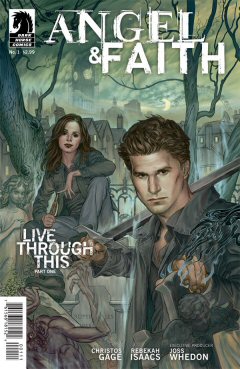
Comics Way back in the distant past (2007) when IDW Comics launched their canonical line based on Joss Whedon's Angel, I gave it a cautious welcome, applauding the ideas and Bryan Lynch's scripting but losing my temper over Franco Urru’s artwork which was frankly a mess. Though I bought each and everyone of the ensuing issues (though none of the spin-off), the messy plotting and blury artwork eventually tried my patience and my last actual read issue will have been somewhere in the low twenties.

That being the case, my reaction to the character suddenly reappearing in the Buffy line at Dark Horse was slightly less unhappy than some fans who thought IDW had been shafted. They had been shafted of course, not least because the person scripting the series learnt about the character being revealed as the big bad Twilight at the same time as the fans and then found himself filling in a gap rather than writing an ongoing series.  I see now from the Wikipedia that he left before the final IDW story arc.

Now all that's been settled, IDW have ceased their publication and Angel's been teamed with Faith in Dark Horses's Angel & Faith which will run in a fortnightly waltz with the new Buffy series, assuming that the publication schedule is followed for a change. It's also handily designed as a jumping on point for people who only read the "season eight" comics but with respectful references back the IDW range which retains its canonicity and suggests I still have some reading to do.

It's good. Opening unexpectedly in a way that few writers would have the confidence to before making precisely no grand gestures towards any kind of weekly format, Whedon (who's listed as executive producer which seems like a unique job title in regards to comics) and scripter Christos Gage offer a natural continuation from the end of Buffy: Season Eight with Angel trying to atone for the sins he wrought as Twiglet, sorry Twilight, with Faith as his babysitter.

Cleverly the issue's told from her point of view which helps to emphasise that this is an equal partnership and this isn't just another Angel spin-off comic with the once rogue slayer as a hanger-on. Gage gauges Faith well; since she gave up the evil life, she's been particularly difficult to pattern out for some writers unable to square her original antonyming for Buffy's righteousness when she's also essentially good. There's been a certain element of merging over the years, and it's to Gage's credit that he keeps her distinctive.

That said, it is odd seeing Angel back within an ensemble (albeit an ensemble of two) rather than leading it for the first time in years. Even in the television series it was always clear who's boss but the vampire with a soul here is more akin the version who strode through the shadows of the first three seasons of Buffy and that's underscored by some surprising and thoughtful back references. He's not out of character, just out of sorts but the closing few pages do suggest that he'll become more active in the coming months.

Rebekah Isaacs's artwork is lucid and action packed. She captures the likenesses of the regulars well but continuing the approach of the Buffy comics of making the purely comic based creatures entirely unlike anything that might have occured on screen. Even the frames are well thought through too, showing the kind of narrative and thematic attention to detail inherent in the direction and editing of the television series especially in a Whedon directed episode. An exiting, confident opening.

she’s the only chosen one

Comic If you’re a Buffy: The Vampire Slayer fan of old but haven’t been following the season eight comic books, I’d strongly recommend you at least find a copy of this month’s issue, #20. A continuity light number, it sends Buffy into what seems like a dream world were she’s back in Sunnydale, it’s season one again, her mum’s alive and she’s the only chosen one.

The metafictional twist is that these earlier times are actually a homage to the much muted animated series and in particular this pilot, with a simpler story and characterisation, more slapstick and well, some of the same jokes. Eric Wight's character designs are used as contrast to the more "realistic" work from Ethen Beavers and Adam Van Wyk.

On a couple of occasion, Buffy almost seems to be aware that she’s in a cartoon (or a comic book recreations of one) and writer Jeph Loeb gets loads of comic mileage and poignancy out of the disconnect between the older slayer in her teenage body, to demonstrate how, even though some things change, some things often stay the same.

"Let's go to work." -- Angel, 'Angel: Not Fade Away'

Comics After the successful release of a Buffy continuation comic, it was somewhat inevitable that an Angel: Season Six spin-off would follow. After The Fall picks up the story of the vampire with a soul some time after the cliffhanger that wasn’t and [begin spoilers] Los Angeles has literally been sent to hell and become a demon playground in which humans have become irrelevant, the exact opposite in fact of the status quo whilst the show was on-screen. As with Buffy: Season Eight, the story is bewildering, deliberately placing the reader in the position of catch up, trying to piece together from fragments what they’ve missed, as though somewhere out there, a whole series of other comic exists filling in the gap. Angel is still apparently in the employ of devlish law firm Wolfram and Hart as is Wesley, all ghostly, still starchy. He’s aided and abetted by a dragon and has allies throughout what’s left of the rest of the city.

IDW have had the rights to publish original Angel stories for just over two and a half years and their work and in particular the writing of Brian Lynch impressed creator Joss Whedon enough that he should simply provide plotting duties, much as he did later into the television series. Lynch does a fine job capturing the regulars who appear here, Angel’s black humour in particular is particularly well done. It is only first issue so you can’t really criticise it for the nebulous plotting, and the concept is a good one; it's somewhat similar to the 'one year later' effect from Battlestar Galactica and Doctor Who in which the status quo changes abruptly and we're left to pick up the narrative pieces. There are some quite wonderful revelations and the cliffhanger ending is a shock, once you’ve worked out what it is.

The problem, and it’s a big problem in relation to comic books is Franco Urru’s artwork. It’s a very dark tale and quite rightly muted colours are used throughout – the city is in the grip of a permanent night and so much of the action is going to occur in shadow. Except that most of the pages are picked out in blacks with Urru’s inking often haphazard and in place very difficult to look at. Often the faces have a mask-like quality, the eyes lacking expression, the bodies framed by rather thick lines to the point that on a couple of occasions the re-emergence of a semi-regular from the series isn’t clear simply because they’re unrecognisable. In addition, just sometimes the framing of the artwork renders the story hard to follow, the cuts between scenes not always clear. Which meant that when that cliffhanger arrived, it took a little while to realise what had happened and to whom.

None of which really ruins the entertainment value and it’s good that everyone has decided to be deliberately ambiguous. This is a limited series and so will be tell its tale over twelve issues, so as is the way these days, it’ll be a few months before the full narrative thrust becomes apparent. Angel was always the misanthropic cousin and it seems right that everything should go to shit quite so magnificently. Except that in the television series, there was always a thread of hope, that the city would and could never fall and here it is, all broken. Perhaps that will return as the story continues and it’ll be worth keeping with the series for that. Oh and Spike’s back next issue. And I want to know what happened Illyria...

"Still got my demons."

Comics Buffy's back, jumping and kicking and thumping and thumping her way through the demon hoard just as she always did, the burden of her calling still sitting heavy on her shoulders, and this time she's back with her creator Joss Whedon, who's writing a whole new season of adventures for her and the gang. Most of the articles I've been reading online have begun with that kind of patter before dropping the revelation that it's not on television - but a -- get this -- a comic -- before increasing the level of surprise by indicating how good it is! Well of course it's good.

This isn't of course the first time Buffy: The Vampire Slayer's appeared in comic book form - even when the series was on air, Dark Horse Comics was publish tie-ins, but along with the novels these leapt into the gaps in the series, between episodes, between seasons, before the slayer's story began, even rewriting the plot of the movie to fit television continuity. But even since the show went off air, unlike some other rudderless franchises, have rarely ventured past the final episode.

Which is why this new series is special - it's effectively Season Eight, the continuation and more importantly it's 'canonical' - in other words it's just as important to the continuity as Buffy's death then resurrection and the cheese man. But cleverly, the story here is a natural extension of the tv series, extrapolating the aftershocks of that final episode on some time instead of simply producing more of the same, pitching up the Scoobies in Cleveland for more of the same until that town becomes a crater as well.

Instead, Buffy has become the leader of an army of slayers, grouped throughout the world, fighting the good fight wherever it may be. She's no longer the chosen one, but it's her experience that makes her special, having dealt with the undead longer than anyone. But she's perhaps even more isolated than ever, her friends scattered, with only Xander and her sister Dawn around from the old days.

Unsurprisingly given Whedon's superlative run on Astonishing X-Men he's been able to translate the saga to the page and at no point does this first adventure The Long Way Home feel like a tv script dropped into comic frames. He takes full advantage of the form allowing each turn of the page to reveal some new surprise of revelation, more often than not in the reveal of an old friend and showing what's happened to them in the intervening time. Some are touching, others are just plain hilarious but that classic Whedon technique of combining the funny with the tragedy is all present and correct.

As is the characterization - the man knows his protagonists inside and out and even a figure like Dawn, who I've never felt has been captured quite right off the screen is just perfect here despite her predicament. Xander's grown up a bit but still retains some of his goofiness -- but the star, just it should be, is Buffy the crack of light and dark evident in her words. Cleverly, their goodness, leading what amounts to a kind of feminist version of The Initiative, the evil government authority that appeared in fourth season of the tv series, is played off against that very organisation. It's the usual array of scientists and military men and it'll be interesting to see the two groups jutting up against one another as the story progresses.

Of course the script my still work if there were stick men (and women) across the pages but thankfully this project as the team of Georges Jeanty (pencils), Andy Owns (tracer) and Dave Stewart (colours). Rather than trying to create likeness of the actors - a risky strategy that usually fails in projects like this, what feature instead are comic book versions of the characters, providing something of the flavour of them without it seeming, well, wrong. The action sequences work particularly well and have a good sense of movement - I wonder how they're going to deal with the vamps.

If the story doesn't quite scale the heights of the tv series yet (a criticism I've seen in more than one place online) it's because it's early days and Joss understands that you have to build towards and earn the big dramatic emotional moments. The television series, even in the less appealing sixth season, was carefully paced in the minutest detail and that's exactly what's happening here. I was reading my copy in Starbucks and couldn't stop myself from yelping throughout and particularly at the shocker of a climax even though I was in a public place.

Welcome back Buffy.