Review 2007: Home


Jacque Baptiste on Sables d’Olonne

I live now in a small town called Sables d’Olonne, after spending some years in Paris and in the UK as part of furthering my life adventures as well as my educational studies. I have done many exciting things and met many amazing people along the way. As you will recall, the towering pinnacle of my life thus far was the time I parachuted from La Tour Eiffel - but this was covered in an end of year "blog" not too many years ago!

There were, of course, other memorable encounters for me as well - the fracas involving myself and Bob Carolgees while working in a Parisian patisserie, and most remarkably, the time I was mistaken for your fellow Englishman Darius Danesh and was mobbed on a London tube station platform by many a lady, young and old. Clothes were torn, and charges eventually dropped, but as we as we say here in France, that is a story "pour une autre fois"!

Disregarding these incidents in my past - why me I always ask myself ?! - what happened this year on my very doorstep is just as memorable, if not once again, un "touche bizarre" !

It was a sunny morning in mid-June. The sun had just begun to shine through my bedroom curtains, and I awoke looking forward to an entire week of vacation. I lay in bed thinking to myself what productive things I could spend my week doing, when all of a sudden I heard an almighty crashing noise coming from what seemed to be my back garden ! I jumped out of my bed, my eyes still closed, I pulled back the curtains, to see for certain, what I thought had happened in my back garden. To my astonishment I opened my eyes to see something I did not expect to see - a wild beast eating its way through my marrow and courgette vegetable plot! There now was a huge hole in my back passage fence! "Sacre Blue" I exclaimed. My astonishment turning now to rage - I was an irate man! How dare this creature be munching his way through my prize winning marrow!

Not thinking, I ran downstairs and out of the house to confront the beast. I was not thinking ! As soon as I entered my garden, the beast raised its head and had spotted me. I suddenly realised I was making as we say in France, a "faux pas" ! I looked at the beast, the beast looked at me and began to make a loud grunting type of noises - the beast, not me of course ! I realised that returning to the safety of my house was now looking to be a sensible move. I turned and ran back in before the beast could charge me. I picked up my cellular phone and dialled the emergency services, I explained my predicament to the police, and they said they had just received reports of a missing Gnu from the local wildlife park! Good grief, a Gnu in my back garden! I now realised leaving the garden had been a good idea.

Anyway, a few minutes later the authorities arrived and my garden looked like something out of some mad Hollywood film. There were men with nets, others with cages, and even a man with what I presumed was some kind of gun to tranquilise the beast should anything get out of hand. I decided to watch from my bedroom window so as not to get involved with anything dangerous. The man with the gun took aim at the beast, as two other men approached with a large net. The beast could obviously sense trouble, and as the man with the gun took aim the beast made a run for it, straight past the men with the net. There was a lot of confusion and what seemed to have happened was that the tranquilliser dart had not struck the beast, but had in fact shot one of the men holding the net! He was holding his "derriere" and blaspheming loudly. Meanwhile the beast had bolted and crashed through another part of my back passage fence, on to the fields behind my house. The authorities pursued it, leaving my garden looking like a right mess. There were half eaten, half trampled vegetables everywhere, muddy footprints all over my grass, as well as an unconscious man being tended to by the paramedics. At least the beast was now gone and I could take stock for a moment.

Eventually I managed to repair the damage the beast had made, and the paramedics had revived the poor man who had been accidentally tranquilised. We shared a well deserved coffee together and tried to take in just what had happened in the whirlwind of the last thirty minutes.

I received a phone call later that afternoon to inform me that they had eventually managed to catch the escaped Gnu. Whilst perusing it for over two hours, the beast eventually came a cropper whilst cavorting across a dual carriageway and was hit by an ice cream truck. Luckily the beast was only stunned - probably not as much as the ice cream truck driver I imagine!

Since then, I have visited the beast in his natural habitat, safely enclosed in the Gnu pen at the local wildlife park. I think he remembered me when our eyes met, and I could sense a feeling of mutual respect between us. As I walked on by to the next enclose - The Tigers - I thought to myself, I guess there are a lot more dangerous animals that could have escaped than a Gnu!

Click here to find out more about this review of 2007, read previous posts and learn about contributing yourself.

"Let me see your beauty when the witnesses are gone..." -- Madeleine Peyroux,, 'Dance Me To The End Of Love'


Film At the box office buying a ticket for director André Téchiné’s new film I entirely forgot what the title was.
‘One for … I’ve forgotten the title …’ I said as the clerk looked up puzzled, ‘Erm … it’s the French AIDS drama …’ I continued throwing genre in her face.
The Witnesses?’ She said thinly.
‘That’s it.’
Someone wiser than I am has said that French cinema essentially contains two genres – the so-called heritage films (corsets and revolutions) and everything else. Oddly enough that works pretty well, although it has to be said there are still sub-genres within that which despite the best efforts of the film makers still manage to fit in with pre-existing Hollywood genres one of which on the basis of And The Band Played On, Philadelphia, Angels in America and RENT is the AIDS drama.

AIDS dramas tend to be set in the early to mid-eighties just as the virus spread throughout the western world and depending upon the date it’s given a name. One of the main characters will to some extent experience prejudice which stems both from their condition and from the sexual orientation and they will more than likely die during the course of the film while their friends and family look on helplessly and hopelessly. Before death though they’ll appear to have put their lives in order and proven to someone who once mistrusted them that they’re a real human being really.

The Witnesses
does all of these things. A young gay man, Manu (Johan Libéreau), moves to Paris and shares a hotel room in what transpires to be a brothel with his opera singing sister, Julie (Julie Depardieu). Cruising in a local park he meets Adrien (Michel Blanc), a medical doctor and they become inseparable and he’s then introduced to a middle class couple, Emmanuelle Béart’s Sarah, a writer and her husband Mehdi (Sami Bouajila), a local policeman. His appearance in all their lives disrupts the status quo particularly when he develops the virus and we watch his slow death, as those around him try and get on with things as best they can.

The film is indeed set in the 80s although there isn’t too much in the way of period detail – some of the fashions perhaps and some god-awful pop music. Téchiné is clearly wanting to show that the opening of the epidemic afflicted gay communities in the whole of the western world and it’s useful that Adrien is a doctor since it allows him to show the first hopeless steps in the research of the virus as it becomes clear that it’s nothing like anything that they’ve tackled before. Mehdi is a vice-cop and becomes part of what governments thought was the solution at the time of shutting down dens of iniquity. The director uses a very small ensemble which pays dividends as we can see the characters change during the two or three years that the film is set.

They’re the real reason for seeing this and there’s not really a weak link between them, the particular surprise being Bouajila whose initial one-note bullishness rapidly gives way as the story evolves and we find out that Béart has the strongest position in their marriage. Libéreau sparkles as Manu and deserves some recognition for bringing some shades to what’s otherwise a thankless role. Blanc (looking disconcertingly like a bald Woody Allen) is equally strong but the best performance of the lot is probably from Depardieu (daughter of Gerard) since despite having less to do than anyone seems just as prominent, this dignified woman whose somehow managed to find the niche in life that’s been denied to everyone else.

If there’s a problem it’s that in the end despite the cast and material everything is just a touch underdeveloped. Between the surprisingly abrupt opening and climax there’s enough interesting drama going on, but it never seems to get under the skin of the characters and worse you often the same emotional beats keep repeating which might be true to life but give the impression of a film which isn’t going anywhere fast. The screen is certainly filled with emotion, but it lacks the warmth of something like The Barbarian Invasions or the bite of Harry, He’s Here To Help. There is a structure – the opening Act is rather sunny, then the darkness and the return to a positive outlook (there are even captions) – but you do wonder if the film might have gained some reality and depth if these brackets had been less stringently adhered to giving the characters breathing space.

"I take it you're yet another member of the UNIT team?" "Yes. Depressing, isn't it?" -- Doctor Who and the Silurians

TV I love restoration stories -- those explanations by technicians about cleaning up films for dvd release. The documentary in the Blade Runner: Final Cut boxset which explained just how Ridley Scott's film manages to look quite so amazing after all these years. I'll write some more on that when I've finished this week of Christmas shopping.

But that seems as nothing to the ingenuity which has gone into a forthcoming release of Doctor Who in which the job was to restore colour to Jon Pertwee's cheeks after the original tapes were wiped and the only copies available were a b/w film and a recording of the show on VHS tape made by a fan when it was shown on US television:
"In the end, to maximise flexibility, it was decided to start with a one-light ungraded Spirit transfer of the film, and a DVNRed, "ball-park graded" colour videotape copy for the basic clean up. This work was undertaken by Jonathan Wood at BBC Resources, then the tapes handed on to our cleanup team at SVS in Manchester. They tackled the video defects in the usual way, with frame-by-frame deblobbing on each episode. Although this meant that 14 episodes had to be worked on in this way, it meant that the peculiar problems inherent to the different source formats could be tackled independently."
I have only a vague idea of what any of that means but it all sounds very complicated but the results speak for themselves. Now about the CG lizards for Invasion of the Dinosaurs...

"PLEASE-MAY-I-HAVE-SOME-MORE-PLUM-PUDDING-AND-CUSTARD"

TV Take that Terry Nation's estate! The Out of the Blue Six Blog spends its Christmas with a Dalek:

"As if that wasn't enough, there are also the truly ridiculous lyrics penned by someone who had clearly neither seen nor heard of the Daleks, making reference to them having a 'foam inflated head' and a 'big red toe' from which festive stockings can be hung. There are also, for no apparent reason, some bleep-festooned 'blanked out' bits that sound worryingly like an attempt to cover up some stray bad language. And what does the young narrator want with this malevolent mutant in metal casing? Only to "say hi to mum and frighten daddy out of his bed", that's what."

It does have to be heard to be believed. And indeed until I heard it I wondered what the likes of Belinda Carlisle and Jane Weidlin were doing singing about the pepperpots. Clearly a different The Go-Gos. Last available on the currently deleted Who Is Dr Who? which also includes fragments of the fledgling (some would say cash-in) pop careers of Frazer Hines, Jon Pertwee and little Roberta Tovey.

The Unconstant Gardner.

TV A new executive producer's been announced for Doctor Who, taking over from Julie when she leaves the post in time for the fifth series. In future, podcasts and dvd commentaries will be begin with 'Hello faithful viewer, I'm Piers Wenger.' I hadn't realised that her role on the series and as Head of BBC Wales Drama were so inextricably linked and it will be a shame to see her go.

"A sign spoke to me, said I was in trouble." "If you're talking to signs, you are in trouble." -- Harris & Trudi, 'LA Story'

Life A new traffic sign has appeared on Princes Avenue in Liverpool (well actually it could have been there for weeks but I wasn’t reading on the bus this morning for a change). It’s large, and red and in white Helvetica across the middle it says:
”Changed Priorities Ahead”
Being in the kind of philosophical mood that usually descends just before Christmas I burst out laughing and wondered if it was talking directly to me, in much the same way that the electronic signs were imparting advice to mid-life crisis victim Steve Martin in LA Story.

I’ve seen these kinds of signs before, in which it seems as though the planner has thought about the words he’s using and deliberately imparted a double meaning. On a coach trip to Dublin (this one if you must know) we passed at a turn-off where a sign simply said ‘You’re going the wrong way. Turn back.’ which was the most sensible advice I’d heard from anyone up until that point in my life. As I sat on that bus this morning I began to wonder if we’d be better off as a society someone spread similar signs throughout the place imparting these little ideas.

These would be uplifting phrases, shorter even than a haiku, just enough to make you think, undiluted by the superstition of horror-scopes. That it shouldn’t be state owned either – reading Orwell explains why that would be a bad idea – there’s quite enough government bought advertising telling us what not to do for the good of our health, and it’d probably be spoilt because the lunkhead who was given the job of running the project would sign some sponsorship deal and the sign would essentially be shilling for Coke.

Three distractions broke my reverie. Firstly, someone had noticed me laughing to myself and her eyes sparkled. Secondly, that I lack the imagination to even begin to design one of these uplifting phrases, at least not ones which wouldn’t become intensely irritating the twentieth time you’d seen them that month and thirdly I realised that churches have been doing this for years anyway on the signs outside their doors, either through some pun or bible verse and they clearly have only been of sporadic help.

Clearly, as we sat in traffic for a very long time at the lights the words on this particular sign really meant that the cars heading across town would have more time to move than those heading inwards. But are ‘changed priorities ahead’? Will I at some point in the next couple of months have some massive change in my life which means that writing this blog or watching quite so many movies and all the things I do to get by will become less important?

Of course not – at least not on the strength of a traffic sign – if I believed that than my priorities really will have changed and not necessarily for the better. But the point is for the first time in ages I considered the possibility, I’m not, to use an obvious cliché, stuck on this particularly road forever; and that’s pretty valuable.

Thank you, Keith or Lucy or Andy (or whatever the name of the sign writer is).

Peacemaker.

TV Considering he has a space and time ship, the Doctor has opened the TARDIS doors in the old wild west surprisingly little. There’s only really been the 60s story The Gunfighters, what would now be described as a celebrity historical in which the then crew were mixed up with the gunfight at the OK Coral (referenced herein as the reason for the time lord’s reluctance to pay the era a visit) and a smattering of short stories, particularly Lance Parkin & Mark Clapham’s A Town Called Eternity from the BBC anthology Short Trips and Sidesteps which was more Wild Wild West than High Noon.

But then science fiction and westerns have never tended to mix that overtly, never quite working out how to balance the recipe – you either copy the tropes of the genre but not the icons (Star Wars) or appropriate them and make them a twist (Westworld). Only really Joss Whedon's Firefly has got it completely right, at least in its television incarnation; the film Serenity went more in the space opera direction apparently because the studio noted that the public might not be too comfortable with seeing these two genres existing side-by-side (even though the sight of a spaceship scaring the hell out of horses in a desert is rather nifty).

James Swallow’s Peacemaker hopes to redress the balance and for the most part succeeds, mixing the tropes of the western genre into the Doctor Who horse trough and although predictably in the end the phasers outgun colt 45s there’s enough here to convince you that a television revisit would not be an unappalling idea. The Doctor and Martha roll into the town of Redwater, Colorado just as its getting over the effects of a small pox epidemic, apparently cured by a travelling flim flam man with clearly no medical training and a medicine which obviously isn’t. Not long afterwards two outlaws enter town with murderous intent looking for the fake medic and all hell breaks loose.

As well as a range of Star Trek novels and a few Big Finish short stories, Swallow also has the Sundowners series of steampunk western novels in his holster so he's comfortable in this cross genre teritory. Clearly and rightly one of the author's main influences in Back To The Future III, with the appearance of a Mary Steenburgen-like teacher and this Doc getting on the wrong side of the local gambler and said outlaws.

As with that film, all of the characters feel as though they’re passing through from a western movie or novel, rather than the actual period in history which is understandable given the audience for the book (and indeed when it’s suggested that they visit Deadwood, the Doctor remarks that it’s a bit rude). If anything the author seems a bit more comfortable in these earlier scene setting chapters, and the reader gets a great sense of the town and its people, particularly said teacher Jenny, a rich invention whose a romantic potential might have flourished even more given a greater word length.

It’s a pity then that as the book goes on and the science fiction begins to intrude that the story becomes more derivative with many of the repetitive elements we’ve seen from the new series making an appearance. To describe what they are would perhaps spoil one or two of the few surprises, except to say that what’s done as a money saving measure on screen needn’t happen quite so much in the prose versions. Unless Swallow is making some meta-reference to how genre works tend to be pretty lacking in originality anyway.

That said, he nails this alien presence which is particularly epic and creepy, especially because of their knowledge of who the Doctor is and what’s he’s capable of if pushed. The concluding battle of wits takes full advantage of being in prose and would be really difficult to recreate on film without resorting the kind of thing some us endured during the Star Trek: The Next Generation episode Night Terrors. They really bring out the lonely god's potential darkness and we even learn a bit more about what he was like during the time war, the suggestion being that he deliberately tossed out some of his fundamental beliefs in order to claim victory something hinted at but never confirmed before.

Despite all of this, the book is always entertaining. The central relationship is brilliantly captured (on his own website he says 'I really liked the chemistry between David Tennant's manic-dynamic Doctor and the competent and smart Martha Jones' and this is one of those rare occasions in the spin-off fiction that the story feels part of the tissue of the television programme, with some of the concerns of the third series making an appearance including Martha’s mother’s Saxon fueled disapproval of their friendship, the unrequited love she has for the time lord and her building confidence.

Most of the major monsters are name-checked and it’s because she’s been able to face down the Daleks and The Family of Blood that she’s able to do some of the things she does here. If the Doctor just now and then becomes a bit generic, most of the time he’s very much the Tennant model, jumping about, repeat repeat repeating words and phrases and dropping pop culture references. But significantly in a charming rather than annoying way, which again is something other authors have never seemed to get quite right. It’s this duo and their infectious humour which ultimately makes the novel so engaging and one of the best of spin-off range so far.

Peacemaker, by James Swallow, is released by BBC Books on 26 December. ISBN 9781846073496.

"A Christmas shopper's complaint is one of long-standing." - Unknown

Life After booking some annual leave, with the exception of next weekend, I'm now all finished with work work until just after the new year, which is pretty fascinating considering it's only the ninth of December and I'm feeling entirely Christmassy which makes a change. I suppose the big project of December is present buying which I always try to make the most of even though there's only a few of us to buy for. Over compensating perhaps, but after all the build up I've never seen the point of the Blue Peter kind of situation of having just one present each to open. Each year we agree -- this is the last year we'll be doing this -- and the following year it looks as though there are a hundred people in our immediate family and not just three.

SpookiTalk

[Major spoiler] BBC One's ten-second trailer for Voyage of the Damned rather explains something about how The Titanic is involved. Looks amazing.

Review 2007: All Roads Lead Home


Kat Herzog on Minnesota

About a week before a visit to my native Minnesota, the road fell into the river.

Most news outlets called it a bridge collapse, but nobody I know ever thought of that stretch of 35W as anything more than a bit of highway that happened to run over the Mississippi River. It's indistinguishable to me from any other part of the highway. It was one of those anonymous capillaries that are part of the vast roadway circulatory system that usually gets you where you need to go with a minimum of fuss.

Being a thousand miles away, it wasn't quite breaking news on network television, and even if it had been, I was at the computer. I read about it right after it was posted to Metafilter, which is, for better or worse, how big news usually finds it way to me. A sucker-punch, a minor black wave of nauseating anxiety washing over my vision, and then I was on the phone. My family was fine, my sister and brother-in-law in verklempt trances in front of the television. One friend was unaccounted for, and repeated hysterical messages ("Even if you are at the bottom of the Mississippi River... you've got to call me back!") to her voice mail were finally answered a few hours later when she checked her messages.

One of my sister's coworkers was among the missing and later -- weeks later -- confirmed dead.

I absorb trauma easily, and this blow so close to home added one more entry on my List Of Things To Daydream About In A Highly Paranoid Fashion. I play The Highway Collapse in my head as I drive along the roadways. The sight of even the most slightly shabby concrete will trigger it. My mind's eye sees the road shudder slightly, the asphalt rolling in an unlikely gentle wave, cracks open, steel girders groan as they buckle, the cars in front of mine fall in a cascade of rubble, airborne and silent for a moment before everything roars in a crunching crush.

I snap back fully to reality, to the reassuring pace of rush hour, to the present view of cars and streetlights, before my car slides off into nothing.

Kat writes Geeky Sweet Nothings.

Click here to find out more about this review of 2007, read previous posts and learn about contributing yourself.

"Sometimes I look in the mirror and I'm not sure it's me looking back." -- Niki, 'Heroes'

Elsewhere My review of Heroes has been posted at Off The Telly. No matter what everyone else has said, despite some slightly overripe dialogue it was a perfectly satisfying conclusion to the series. I'm really going to miss my weekly effort to guess the strength of Claire's lip gloss and why Niki is spelt with one K.

"The qualification piquing my interest, before Barrowman walked over and groped her tits."

TV [Spoilers if you're not careful, especially paragraphs two to four of linked article]

Graham from Off The Telly was at the now legendary Torchwood Season Two launch at the weekend and had a very candid interview with Mr. Barrowman about the fan reaction to the first series and how the production went during the second year. In particularly, see the quote at the bottom of the post. Eek.

Review 2007: Home


Andrea Dowling on Liverpool

I love my city, it has so much to offer and so much more than just the Beatles. Its 800 years old this year and its history is fascinating, and not just our dark history like the Slave Trade, which is a blot on our humanity.

It used to have a small pool running right through it and its own beach and lots of sand. Then as things progress it changed dramatically.

Massive Tall Ships came sailing down the blue ribbon of the Mersey, she was as clear as crystal then. The ships where wooden in structure and had huge white sails. Many a Naval Officer set out to sea from Liverpool, including the very famous William McMaster Murdoch First Officer of the Titanic.

Which brings us to that beautiful stripy sandstone building on the Dock Road, facing the magnificent Mersey Docks and Harbour Board Building. That is where White Star started its journey in that humble building that now stands waiting for someone to buy it and turn it into flats.

Liverpool was formed, developed and enriched by the Shipping Industry. It lived and breathed and pumped the heart of our City. My Grand father used to go down to the Docks every morning, very early to see if he could get work on a ship. If he couldn't he had to sign on at the dole office so that he could take food home to his wife and her many children.

The one thing I love about Liverpool is that so many historic buildings have been restored to their finer glory. St Georges Hall, our Museums, our Docks have been salvaged like old wrecked ships and brought back to their finer days.

Yet that's not all that Liverpool has to offer, that makes my home so unique, so rich in beauty. Its the people of Liverpool, the native scouser's the people who where either born and bred here or arrived from Ireland and made Liverpool their home. Through every hardship that Liverpool has thrown at these wonderful people, they always manage to smile. To band together in sorrow and tears, to unite as one as a public voice for the people who have been hurt in tragedy.

I saw it in peoples hearts and smiles and the team colours and the songs of Football Fans when we lost so many people in the Hillsborough tragedy. Liverton and Everpool they sang, and tears made the river rise up higher.

When little Jamie lost his life once again the City came together as a family. All supporting Jamies family. This summer they did it again, they united once more in grief. First we tied up yellow ribbons for the safe return of Madeline McCann and then we wore purple ribbons in memory and honour of Rhys Jones.

That's what is unique about my home, that's what makes me proud to say I live in Liverpool. Hearts as Golden as the Setting Sun on the Anglican Cathedral. Heads held high as Paddy's Wigwams Crown which you can see from Prescot Town.

God Bless Liverpool and all who sail to her and live under the protective wings of our Liver Birds, each one of us makes this City what it is a pool of life.

Andrea Dowling writes about Liverpool City.

Click here to find out more about this review of 2007, read previous posts and learn about contributing yourself.

"All right! They're spiders from Mars! You happy!" -- Chris, 'Eight Legged Freaks'

Art If think a giant race track in the middle of Wembley Stadium looks weird, how about a giant spider web across the Albert Dock?

"McRomance. Want some fries with that shake?" -- Frank, 'Eternal Sunshine of the Spotless Mind'

Film James MacDowell writes poignantly for Alternate Takes about happy endings in films and how actually they're all different and in some aren't as uplifting as they first seem. On Eternal Sunshine of the Spotless Mind: "This ending is, in the context of Hollywood cinema, rather extraordinary. The conclusion depicts a united romantic couple embarking on a relationship (as is usually considered the norm for a romantic ‘happy ending’), but it also explicitly states that its characters’ subsequent relationship will likely finally fail for the same reasons as it did the first time. Formally speaking, the ‘happy ending’ - as commonly defined - is certainly present: the couple have fallen in love, are about to begin a relationship, and are framed in a moment of shared bliss in the film’s final frames. Indeed, there is even a mini version of ‘the run’ - that familiar romantic comedy moment at which one half of the couple realises they are in love, and runs (or at least travels) to tell the other how (s)he feels. However, the list of things that will likely go wrong for the couple, and the following “okay”s that signal that they also accepts the likelihood of the affair’s eventual failure, makes this ending entirely unlike any other Hollywood ‘happy ending’ I have come across."

"We apologise to those guests who have waited patiently in past years to get protest leaflets signed..." -- Charles Thomson

Art It was somewhat inevitable that Mark Wallinger would win the Turner Prize even though Zarina Bhimji is clearly better. It's supposed to be for a career's work, his was the showiest of the pieces. Charles Thomson, co-founder of the Stuckists art group thinks we should have boycotted it altogether: "It is desperately necessary to upgrade the standards of the prize which has steadily degraded into increasing blandness. What is needed is someone whose manic personality is guaranteed to give some zest to proceedings by doing all the wrong things. We suggest possibly Billy Childish (Co-founder, now ex-, Stuckist), who is incapable of not speaking his mind, and Stella Vine (another former Stuckist) who is well known as the loosest cannon since the Battle of Trafalgar. However, we understand the natural reluctance of the Tate to nominate people who paint pictures for a prize named after a painter."

Review 2007: Home


Andrew Boyd on Canberra

I grew up in Canberra, capital city of Australia. In recent years I've not thought of myself as a Canberran - too many tourists with those distinctive blue and white ACT plates behaving badly to give us anything other than a bad name. Canberra drivers are aggressive (whereas I am assertive), they are small-minded and petty (whereas I have a keen eye for detail and expect fellow motorists to be courteous and respectful of the road rules). You get the picture.

I think that the time has come for me to embrace my Canberran-ness. I did spend nearly 15 years in government service, so I can't really see the shame in being part of a government town. I've lived in this town for at least 35 of my 42 years - and while I've tried living elsewhere, I always seem to come back here.

I helped to raise my children here and near here. I fell in love here for the first time as a young man, and have recently fallen in love again here. I've bought houses here, rented here. I have family here.

Coming back to Canberra is coming home (despite the best efforts of QANTAS to make air travel to or from here unbearable).

I love the vibrancy of Spring here and the many colours of Autumn here. The seasons are really in-your-face - when it is hot in Summer, it is really hot, and when it is cold in Winter, the breath catches in your chest - it is really cold.

The popular conception of Canberra outside the nation's capital is a bit negative - the rest of Australia is often slinging mud at us because federal parliament is here and the newsfolk invariably start bad political news with "...and in Canberra today...". The trick is, guys, that whoever you vote for, a politician gets in - and for the 11 years of the previous regime I was able to keep saying "whoever it is, we probably didn't vote for them" (because Canberra has been a fairly safe Labour seat for around 35 years).

I am Canberran.

Andrew Boyd writes On Blogging Australia.

Click here to find out more about this review of 2007, read previous posts and learn about contributing yourself.

Review 2007: Home


Kat Herzog on Baltimore

Good Morning, Baltimore!

It was big news when the latest incarnation of Hairspray was released this summer, with Baltimore fawning over their Pope Of Trash.

I love this about Baltimore, and about John Waters. He deftly skewers this city with such love, and while the bowdlerized Broadway and Hollywood Hairsprays don't quite have that loving touch of smut that all Waters films have, they at least wink at what they've hidden behind the family-friendly songs and scripts.

John Waters' Pecker was my Baltimore Orientation, prescribed a few months before I moved here. And that was a good thing, because I pictured a city of boarded-up drug dens and, more or less, every plot line from Homicide: Life On The Street. That's not to say that Baltimore isn't like that from time to time, neighborhood to neighborhood, but, for the most part, it's alright. The people were voted the ugliest in the country a couple years ago, but I see a lot of kindness and good humor beneath the shabbiness and trashiness. (Ask me if my car gets vandalized again, and I may have a colder perspective.) They call it Charm City, but it's probably not really the sort of charm you're thinking of. It's a little smellier than that:
What does the city of Baltimore mean to you and what sets it apart from the rest of the country?
John Waters: The city of Baltimore is home to me. I've always made movies about what the Chamber of Commerce tried to hide and I always joke that they should put out a bumper sticker saying, "Come to Baltimore and be shocked" and they did about five years ago. I guess they've given up and realized that we have to celebrate the weirdness of the city.
I think that Baltimore understands that. When he filmed A Dirty Shame in my neighborhood not too long after I moved in, people fought over the suggestively trimmed set-dressing topiaries. Fought over, as in: they wanted the penis-shaped shrubbery in their front yard. I can't think of a place that has as much of a sense of humor about itself.

One must have at least an abstract fondness for vermin to call Baltimore home. I don't know if I truly understood that before that afternoon in the cool dark theatre, with my popcorn and my Raisinets, the opening sequence capturing Baltimore through and through, filling my heart with warm pride, the same sort of buzzy, humming feeling usually achieved through greeting-card commercials and holiday songs. Except for the fact that my heart was joyfully bursting, tears welling in my eyes, at the sight of John Waters's split-second cameo as the flasher next door.

Kat writes Geeky Sweet Nothings.

Click here to find out more about this review of 2007, read previous posts and learn about contributing yourself.

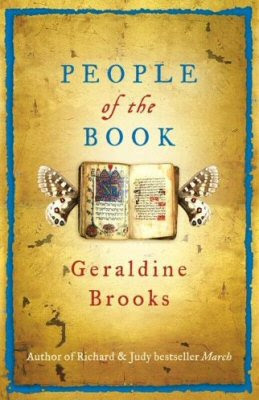
"I might as well say, right from the jump; it wasn't my usual kind of job" -- Hannah, Geraldine Brooks's 'People of the Book'


Books Geraldine Brooks's last book, March, was a Pulitzer prizewinner and found itself in Richard and Judy's Book Club reaching both ends of the critical spectrum. In that work, Brooks celebrated Louisa May Alcott's novel Little Women, a childhood favourite of hers, by presenting the parallel story of the March family's absent father fighting in the American Civil War. The historical evocation of literature continues in Brooks's new novel, People of the Book, which describes the investigations by Hannah, an Australian rare book expert into the Sarajevo Haggadah, a Jewish sacred text which has survived for just over five centuries through wars and inquisitions.

The structure of the book is somewhat similar to Vincent Ward's luminous film The Red Violin, in which the titular instrument's life from ancient creation to contemporary auction was described through an intricate flashback structure, with near short films presenting the various owners of the violin. As Hannah discovers items stuck between the leaves and in the binding of the book, the action changes to the period in history where the book enveloped them from a priest during the inquisition to a museum working in Bosnia during the second world war. Linking these stories is a sense of a work of art forever being saved for future generations even when its Jewish religious utility conflicts with the prevailing theology of the time.

At times, this is an extraordinarily detailed text, keeping the reader aware of the sounds, images and particularly smells in an environment. One of the best scenes in the book occurs when Hannah comes into contact with the Haggadah for the first time, as pages are given over to putting the reader in the position of this privileged expert forensically turning the pages making us understand what she's expecting and also surprises her; the sense of the scent and feel of the pages is so clear that to the extent that we could imagine the new book we're reading the description from has similar properties. The author is careful to modulate this however and it's frequently the case that when scenes are set against a modern backdrop, the dialogue is more fluid and expository.

The problem is that although the Haggadah is an intriguing object, the structure of the novel, which is essentially an anthology with Hannah's story, told in the first person, weaving in and out, leads to a certain lack of impetus which despite everything makes it quite an arduous read. There's a repetitiveness to the Australian's discover of a new property - an insect wing or a wine stain and then the appearance of a story which explains how it got there. The intent could have been to mirror these ancient manuscripts which would feature a range of stories and ideas, some which only tangentially tie together, and perhaps it does work on the level of a short story collection with a connecting tissue. But Hannah's character is so attractively drawn, and the novel so comfortable amidst her observations, that it's a pity Brooks couldn't have found a way to present the whole story of the people of the book in her words.

Melon Farmer

TV SFX Magazine's blog offers a couple of Torchwood related posts which suggest two slight change of direction for the series:

The first is that there's to be a pre-watershed version of the show with altered dialogue and the implication of things which you wouldn't want your kids seeing. Since it appears to have been decided before filming, it might be quite as obvious as when Channel 4 took their scissors to the likes of Angel and Alias, often leading to episodes becoming fairly incoherent.

The second change is that it might be quite good
. There's lots of talk about more humour and the team having more affection for one another and only failing because the foe is overwhelming not because they're incompetent which all sounds good. You can get away with a lot if what your doing is a bit funny.