
Love Actually is rubbish.
Film There’s a moment and it happens with increasing regularity because apart from American Pie: Band Camp it seems to be the only film ITV2 has the terrestrial rights to, that Twitter decides to collectively watch Love Actually. Often it’s a Sunday night and for about two or three hours (or longer thanks to ITV2+1) my timeline will fill up with people crying over Emma Thompson’s performance or Liam Neeson’s performance or offering their strongly held belief that it’s the greatest romantic comedy of all time.
I hate the film but much of the time I ignore it and carry on reading whatever The New Yorker’s allowing non-subscribers to read or listening to This American Life. But the other night, I couldn’t hold my breath any longer and tweeted, “Love Actually is about middle class white men seducing their employees and the only two female lead characters have unhappy endings.” Which was RTed a few times and led to a stream of replies in agreement with the sentiment and noting a few other issues.
My enmity for the film stems from deciding to study it for my dissertation at university. That dissertation was about hyperlink cinema an idea originally proposed by critic Alissa Quart and popularised by Roger Ebert. As I discovered after watching a couple of dozen examples and a couple of dozen more, what this can be boiled down to, is films in which a bunch of different characters appear in a bunch of different stories which might be thematically linked but are otherwise narratively unconnected, designed to compare and contrast geographical, class, race or gender differences.
Whenever I’ve had to describe all that to people who’ve asked me, I’ve generally resorted to listing the kinds of films which have this kind of structure, such as Short Cuts, Nashville, Magnolia, Crash, Syriana and Love Actually. One of the elements of my dissertation was in pointing out the distinction between these and simpler “ensemble” films like Hannah and Her Sisters or Parenthood where the connections between the characters are made obvious from the start. Hyperlink films go out of their way to surprise the audience in that regard.
It’s important to note at this point that the wikipedia page is a bit of a mess on this point, including stuff like Go, The Player and Pulp Fiction or 21 Grams all of which are wrong as is the main definition which is designed to toss in anything which has a slightly loopy narrative. Go and Pulp Fiction are just old fashioned anthology films without a linking narrator. The Player is a single protagonist story which has lots of surrounding cameos. 21 Grams has a perfectly traditional three act structure with additional flashbacks and flashforwards.
Anyway, in writing the final chapter I had to analyse three films and chose Short Cuts, Don Roos’s Happy Endings which was the film Quart had originally applied to description to and Love Actually because I quite liked it and it seemed to have the interesting angle of attempting to apply genre rules to the format. But having in-between times learnt a few things about film analysis, and after watching the text about five times for the purposes of that analysis, realised it’s a horrible, horrible film. For a start …
It’s not a romantic comedy.
The original advertising for Love Actually trumpets that it’s the “ultimate romantic comedy” and as we’ll see that was Curtis’s original intention. Except somewhere in the writing he’s obviously realised you can’t have nine romcoms happening at the same time because you’ll end up with the same ending over and over and over again, which as anyone whose seen Valentine’s Day will know doesn’t work. At all. Instead he has to resort either through design or happenstance on the usual hyperlink film tactic of “genre artifacting” in other words having essentially different kinds of story in the same film. So Crash has relationship dramas, detective stories and that sort of thing mixed in together.
The stories of author Jamie (Colin Firth) and Aurelia (Lucia Moniz), the PM (Hugh) and Natalie (Martine) and perhaps John (Martin Freeman) and Judy (Joanna Page) are classic romantic comedies, Billy Mac (Bill Nighy) is arguably in a back-stage musical, Mark’s is a tragic romance (perhaps, see below), Colin’s story has all the hallmarks of a sixties sex comedy (the kind that usually starred Robin Asquith rather an Kris Marshall as here), Karen (Emma Thompson) is in a domestic melodrama dealing with the possible infidelity of her spouse and Sarah (Laura Linney) is in the kind of women’s film that Molly Haskell proposes in which a female is stifled from love by responsibilities to her family.
So Love Actually is not just a romantic comedy. Indeed most of these stories, for all the comedic incidents put it closer to the romantic drama typified by something like Life as We Know (the one with Katherine Hiegl) or Love and other Drugs (the one with Jake Gyllenhaal) which have all the hallmarks and advertising or a romcom but due to tragic incident have a greater puffed up thematic interest. See also The Notebook. Interestingly not Four Weddings and a Funeral, because the unfortunate incident whilst the point of the thing, doesn’t become the point of the thing. If you see what I mean. Um, the point is, to say Love Actually is “the ultimate romantic comedy” barely prepares the viewer for how all of the stories conclude.
It’s poorly edited.
Even having done all of that, each of those stories still needs a beginning, middle and an end. Curtis says as much in the script book published a few months later, where he says, having decided on the Short Cuts model, “I thought I’d like to have go at writing that kind of film – to see if it was possible to write a film that with nine beginnings, nine snappy middles and nine ends – without any of the stuff in between.” Except it’s the stuff in between that people watch these films for, the series of mishaps which impede the couple getting together, which in his previous films were weddings or fame or in When Harry Met Sally, friendship.
As the script book later reveals, the first cut of Love Actually was three and a half hours long, which is about average for this kind of film (cf, Magnolia, Short Cuts) but is simply untenable in a romantic comedy which is optimally an hour and a half, or romantic drama which as we’ve discussed this is closest to at between 105 mins or 120 mins depending on tone. The problem is having included all of these stories, Curtis has to include enough incident to make them worthwhile which means the film’s a mess, with repetitions, little in the way of narrative flow and some characters barely given enough screen time to establish themselves.
They’re barely characters.
One of the convenient ways Curtis deals with not having enough time to establish characters is to have his actors reprise their previous work or screen presence, primarily Hugh and Colin who’re essentially playing variations of Charlie and Darcy allowing the writer/director to omit expository information that would usually have been required to make emotional and dramatic sense of each story.
Being critical of a well honed genre tactic is probably slightly harsh, like being annoyed at John Wayne or Meg Ryan for playing John Wayne or Meg Ryan in every film (apart from when they’re deliberately trying act against type). Except in Love Actually it doesn’t just work as an emotion gap filler, it actually seems to be used to fill in holes in the storytelling.
During the film’s set-up very little information is given as to why the PM is not married but sympathy is arguably conferred because of a similar predicament faced by Charlie, the character Hugh Grant played in Four Weddings and a Funeral which gives room for Liam Neeson to give a more formal display of acting to create sympathy in the audience for his character. Ish.
It’s a really poorly edited.
These problems are particularly visible in the climax which is packed with incident and has two barnstorming finales that would not seem out of place in a romantic comedy with just two parallel protagonists, the crosscutting between Jamie’s march to find Aurelia and Sam’s dash through the airport to Joanna being visually unwieldy because their stories are unrelated. Seriously, neither of these stories have anything to do with each other, yet Curtis attempts to connect them with a bit of music and fingers crossed. People shout at Peter Jackson for all of the ends at the close of Return of the King, but he’s at least, in the extended versions, closing out twelve hours worth of narrative. Love Actually’s only two hours long.
But you can really see the torture of the editing room in the last half hour of the film as characters exhibit all kinds of strange behaviour in order for the film to actually end promptly. Colin Firth’s character Jamie apparently enters his family’s home after the radio chart show ends (usually at seven o’clock on a Sunday), and the audience is expected to believe that on Christmas Eve he is then able to flag a taxi to the airport, fly to Marseilles, take a taxi to Aurelia’s village, find her house then the restaurant at which she is employed before proposing to her. Shout all you want about this being a fairy tale like all romantic comedies, but if it was that, as we’ll see, he would have given all of his characters happy endings.
Even more bizarrely, earlier in the climax Martin Freeman’s character Jack drops Joanna Page’s Judy off after their date in the early evening, walks away happy and then the couple are later seen entering the school for the nativity scene, wearing different clothing. Just how long was the original date? Evidently, judging by the deleted scenes on dvd that nativity scene was much, much longer. Emma Thompson’s character gives a speech from the stage. Lord knows what would have led up to that, what’s missing from that escapade. No wonder the ending doesn’t make any sense.
It’s less funny and even a bit creepy the second time around.
Of course nearly all comedies are less funny second time around because the viewer already knows when the jokes are coming, unless its one of those rare examples where the anticipation of the joke is just as funny as the joke itself, or has that even more unique ability to become funnier as the viewer changes/gets older and our understanding of the situation increases.
The problem with Love Actually is because Curtis is trying to be clever he ruins one of the comedy scenes for the viewer the second time around. It’s not necessarily his fault but his lack of awareness is astounding. One of the points of the hyperlink films is the unexpected connection, when the connection between two characters is revealed and illuminates what’s gone before. Think the Cruise and Robards characters in Magnolia.
On the first viewing of Love Actually when Harry (Alan Rickman) is introduced as Sarah’s helpful boss and the object of Mia’s desires it feels rather touching – he seems a kind, perhaps lonely middle aged man with a budding office romance bringing some warmth into his life. Then some fifty minutes into the film, a simple cut from Karen (who is excited about her brother the PM’s diplomatic success) to a reverse shot reveals that Harry is her husband and the spectator was actually watching some potential infidelity.
The moment was a result of editing as Curtis explains: "‘You used to know that Emma was Hugh’s sister earlier in the film and you knew that Alan and Emma were married earlier [..] so you should be thinking about the Heike/Alan story as a fun story, funny let’s see what happens and then you suddenly realise that the flip side of it’s not so good." In other hyperlink films he would have been right. Except, Curtis is supposed to be making a romantic comedy.
At this moment the audience’s reaction to Harry changes, both in the rest of the film and on repeat viewing particularly the later comic scene in which Rufus the shop clerk (played by Rowan Atkinson) gift wraps the necklace, Harry’s gift for Mia is arguably uncomfortable even on first viewing because the humour is predicated on whether the gift will be wrapped before his wife returns so that she doesn’t see his indiscretion.
The spectator is meant to hope that his wife does not catch him even though their sympathy is now firmly with Karen. This may have been another result of the editing process; in the original version of the film Rufus was a Christmas angel supernaturally helping each of the characters – in which case he would have been extending the length of time taken for the gift to be wrapped so that Harry is caught before he does something silly.
Then the Emma Thompson scene happens at the end, an admittedly bravura piece of acting and something we can’t unremember, so when we see the film again, Rickman’s character’s a nasty, morally ambiguous fucker from the start so when he is helping Sarah we wonder what his motive is which has implications for her story going forward. Grr. Ugh.
It’s about middle class white men seducing their employees.
You won’t believe it, but I noticed this even before reading AO Scott’s barnstorming review/take down of Love Actually (which you should also read once you've got through this lot) (or instead of) in which he says:
“Most of the picture's half-dozen or so romantic subplots -- which lie scattered about like torn wrapping paper on Christmas morning -- involve workplace dalliances of one kind or another. The ones with the best chances of success all involve an older male boss and a young female subordinate. Jamie (Colin Firth), a writer cuckolded by his own brother, retreats to a villa in the South of France and falls for his Portuguese housekeeper, Aurelia, who speaks no English and who obligingly strips down to her underwear to rescue manuscript pages that have blown into the lake.”
“Harry (Alan Rickman), the head of a nonprofit organization, is besotted with his secretary, Mia (Heike Makatsh), who makes no secret of her attraction to him. The prime minister, moral exemplar of the nation, develops a crush on Natalie (Martine McCutcheon), a member of the Downing Street household staff. When the goatish president of the United States, in London for a state visit, puts the moves on her, the P.M.'s jealousy precipitates a chill in British-American relations (and also makes him a national hero).”
He has more positive things to say about the couple who work as body doubles perhaps because he believes their attraction to be more equal. But that doesn’t stop Curtis only giving us Jack’s reaction to their post-date kiss and not hers, falling into the usual romcom hole of making it all about the man’s reaction and not the woman’s, about him winning her over. But I digress.
Did Curtis know? Did he realise the socio-economic implications of these stories as he wrote them? Directed them? Why did he choose these characters and these situations? His idea is obviously to show love is all around and apparently this includes creepy class distinctions. It’s interesting that he doesn’t have a female PM romancing a male subordinate or a female novelist falling for a male cleaner isn’t it, but then …
Nearly all of the men are creeps anyway.
It is true that the reason Sarah’s romantic story ends badly is because Karl, the man she’s trying to date sods off because of all the interruptions she has because of her brother’s ill health, the impatient fucker. Her unhappy ending is in discovering the man she really fancies is an arsehole. At least she didn’t get stuck with him, I suppose.
Plus as someone replied the other night, “there's no sense in which what Andrew Lincoln's character does isn't stalking.” Unrequited love storylines are one thing, but there’s a strangeness to the way Lincoln’s character has that video and then turns up at Keira’s door essentially telling her that it’s ok that she doesn’t fancy him which is portrayed as an affirmation moment for her.
And what is that Kris Marshall story about anyway? Loveable loser goes to America and meets some walking sex dolls who throw themselves at him? It’s a wish fulfilment fantasy and on top of that makes you wonder exactly how this film is supposed to be for girls. Do they laugh at this loveable “loser”? Grin as he winningly fights against type.
Neeson’s character is given roughly the same gift. Having established that he really fancies Claudia Schiffer, he eventually meets a nice woman who’s played by Claudia Schiffer. #ffs About the only male character given any kind of redemption is Billy Mac and that only happens as part of a bromance story where he realises his manager is the love of his live. #ffs again.
The only two “main” female characters have unhappy endings.
One of the important structural elements of hyperlink dramas is its treatment of characters. There are loads of characters, some are still more or less important story-wise than others. Much of the time in each of the stories there’s still a single main character with a number of supporting characters (some of whom are main characters in their own stories.
In the stories above, Aurelia, Natalie and Mia are all supporting characters. We don’t visit their homes until well into the films and their stories aren’t about them but the blokes who’re falling in love with them. In a traditional single story romcom, these figures tend to be the manic pixie dream girls or unrequited objects of affection.
Now that means the only two leading female characters are Sarah and Karen. As A.O.Scott notices these are also the only two characters whose stories end unhappily:
“The fate of their characters suggests that women who are not young, pert secretaries or household workers have no hope of sexual fulfillment and can find only a compromised, damaged form of love. Perhaps Mr. Curtis wishes to offer this as an insight into contemporary social arrangements; if so, his indifference to the cruelty of those arrangements is truly breathtaking”
Before criticising Curtis too harshly for his apparent lack of balance, it should be noted that he originally wanted Karen’s story to end optimistically but was overruled by his producer Duncan Kenworthy, who felt that the ‘roaring rampage of romance’ required leavening (as enunciated in the supporting material on the dvd). Bastard.
It’s true that male characters do experience tragedy in the film, Daniel’s in particular. But they go on to have happy endings. To not allow either of these figures a modicum of romantic joy in the end, in a romcom, isn’t just shockingly insidious it borders on the m-word.
It also could have been much, much worse. The deleted scenes section of the DVD includes this entire story that was removed about the headmistress of the school tending to her dying lesbian life partner. It’s impeccably acted and heartbreaking:
Except it’s also another potential female main character, another unhappy ending and with a few more cliché’s thrown in for good measure.
Assuming they’re main characters at all.
Objectively from a hyperlink pov it’s also possible to suggest the only actual “main” character is Sarah. Karen until the revelation regarding her husband’s possible infidelity, is essentially a secondary character in her friend Daniel’s story, attending his wife’s funeral and providing him with a shoulder to cry on.
But it goes further than that. Even the scenes between the stand-ins on the movie set are about Jack nervously asking out Judy – at the end of their date, the audience views Jack’s reaction to the kiss – but not how Judy feels about it behind her closed front door, the man’s reaction again.
It has a stunning lack of diversity.
The only two prominent black characters, Tony (Abdul Salis) and Peter (Chiwetel Ejiofor) are facilitators in other stories; Tony is the doubting friend of Colin and the assistant director on the film set who brings Jack and Judy together; Peter’s wife Juliet is the target of his friend Mark’s affection. They don’t have their own stories.
There’s no reason any of the characters in this film couldn’t be non-white. Chiwetel Ejiofor could just as well have played the Neeson character or the Firth. But Love Actually is just another example of a film in which non-white actors find themselves marginalized into particular types of roles.
This is changing, but not much. At this point I can’t remember a “mainstream” uk romcom about non-white characters that isn’t specifically trying to make Curtis’s own point about love being all around, where the characters just happen to be black or Asian. I’m sure there must be one.
It gets worse. On the dvd are some deleted shots in which the poster behind Sarah in the fair-trade office comes to life and as Curtis describes ’two old women carrying a heavy burden of sticks [..] they’re not talking about the problems with the land they’re talking about husbands and children and boyfriends and all that kind of stuff’. Oh purlees. As Black Book (which has an embed) says in its analysis of the deleted scenes:
"The idea was to skew the typically "Western" portrayal of Africa, although Curtis kind of reinforces it by displaying the whole "joy in poverty" thing usually seen in the Facebook albums of your well-meaning friends who went on mission trips or whatever there. See, they're poor, and their crops are dying, but it's okay, because they have each other, and that's all you need. Except when you live in an agrarian society and... anyway, the scene is cute and all, but it doesn't present Kenya (or the unfortunate blanket, continent-as-one-country sort of perception of Africa) particularly differently and would have only really worked if Curtis had then gone all over the world to find other stereotypical, It's A Small World-ish love stories to complement it. But then the movie would have been, like, three hours and..."
Other random crimes:
According to the wikipedia (though I’m not prepared to watch this thing again and check) Jeanne Moreau is seen briefly waiting for a taxi at the Marseille Airport suggesting she had a longer sequence of scenes which were cut. The opening tasteless 9/11 referencing sequence which Will Self described as: “the most grotesque and sick manipulation of a cinema audience's feelings that I've ever seen since Leni von [sic] Riefenstahl's Triumph of the Will'.” The US version of the film has a “Sugababes” track replaced by one from Kelly Clarkson. No actually, that’s not such a bad thing.
Three redeeming features:
The directors commentary on the dvd in which Hugh turns up late and takes the piss out of the thing all the way through, piercing Curtis's piety. The moment where Nighy can't remember which is Ant or Dec. The Joni Mitchell scene which is an amazing piece of acting from Emma, even if you don't agree with the story that it's supporting. Kind of makes you wish Curtis had simply made a film about her character's story and not passed it off as a rom-com.
In Conclusion.
I’ve probably overwritten this and the original tweet probably captures everything much more succinctly but I thought it was worth finally putting into words. Or into words again. It’s a ghastly, ghastly film, and even ten years later exemplifies a particular type of filmmaking which gives the viewer some stars and amusing situations while subliminally, unconsciously or no, confirms or emphasises some of societies least digestible elements.
Curtis would go on to make The Boat That Rocks, a film that’s even more grotesque with its astonishingly ill-conceived “bed trick” scene which has the distinction of somehow making the viewer hate Nick Frost because he agreed to act in it apparently without noticing the psycho-sexual implications. But I’ve thankfully only had to watch that once and even then I wasn’t happy about it. But Love Actually? I feel like I’m watching it every time it’s on ITV2, even when I’m not.
Have I missed anything?
Also: More reasons why Love Actually is rubbish.
If you enjoyed reading this take down of your favourite film, please consider clicking below and leaving a couple of pounds to support my work:
The Master.
Books In 1940, George Orwell wrote a very long article about boys weeklies in which he suggested that Frank Richards, who created and wrote the Billy Bunter stories for Magnet magazine had to be a cover for a great number of different writers simply because of the sheer volume of work required to produce the amount of stories in publication.
He was half right. Frank Richards was a pen name, but for a single person, Charles Hamilton, who decided to write an equally long rebuttle in which he doesn't just take Orwell to task for misunderstanding his work load, but throwing The Magnet in with what he considers lesser publications but also argues against charges of plagarism [via].
He was half right. Frank Richards was a pen name, but for a single person, Charles Hamilton, who decided to write an equally long rebuttle in which he doesn't just take Orwell to task for misunderstanding his work load, but throwing The Magnet in with what he considers lesser publications but also argues against charges of plagarism [via].
Gulliver's Travels.
Books As you might expect, The Internet Archive has many editions of Gulliver's Travels and one of the more interesting is a Harcourt, Brace and Company publication from the 1920s, the introduction of which sees Ernest Bernbaum, then Professor of English at the University of Illinois argue that for all its satirical intent, Swift's book is a celebration of the human spirit:
"Gulliver's Travels, hastily termed a masterpiece of cynicism, rests on assumptions which a true cynic would deride. In each of the voyages, Swift forcefully intimates the greatness of man's soul or reason: he, like the 'Lilliputians" supposed truth, justice, temperance, and the like, to be in every man's power; and, like the Houyhnhnms, believed that "reason alone [i.e., the spiritual as well as the rational faculties] is sufficient to
govern a rational creature."
New Year.
Music Happy New Year! And speaking of which, oh my goodness:
I think that makes the mark I gave myself here all the more solid. PopJustice (who also have embeds of Overload and a cover of Rihanna's Diamonds) says this was at Ponystep’s New Year party (Ponystep has an interview with the girls this month) (though it's not online yet) (if it is at all).
You can barely hear them over the talking, sick-inducing camera work and people singing along, but beneath all of that you can still detect the harmonies and that sound and is back.
PJ also says they performed Freak Like Me, but no one thought to upload it. Well, hum. Perhaps along with the new material we'll get an album of "Sugababes" covers with the right vocals.
I think that makes the mark I gave myself here all the more solid. PopJustice (who also have embeds of Overload and a cover of Rihanna's Diamonds) says this was at Ponystep’s New Year party (Ponystep has an interview with the girls this month) (though it's not online yet) (if it is at all).
You can barely hear them over the talking, sick-inducing camera work and people singing along, but beneath all of that you can still detect the harmonies and that sound and is back.
PJ also says they performed Freak Like Me, but no one thought to upload it. Well, hum. Perhaps along with the new material we'll get an album of "Sugababes" covers with the right vocals.

Rapunzel.
Books SurLaLune publishing has a heavily annotated edition of Grimm's Rapunzel which includes details of sources, later updates and literary criticism. Here it is the on the implications of the marriage:
"On one level, this story is entirely about procreation and life cycles. The tale begins with one couple, man and wife, and ends by bringing another couple together to marry and have more children. In earlier versions of the tale, the prince doesn't always ask for Rapunzel's hand in marriage although a sexual relationship is implied when Rapunzel gives birth to twins near the end of the story."
Review 2012: The Projects:
Annual Predictions.

That Day It's that time of year again when I assess what were my predictions for the passing year and make up some new ones. Well, and indeed, then:
Obama re-elected.
He was and by a wider margin than might have been predicted mid-term. As a disciple of Nate Silver, I entirely ignored the polling numbers and simply watched his chancing of winning percentage graph and although it took a dip coming out of that first debate, by election day it had surpassed the previous peak. So while Republicans rubbed their hands together and the media, especially in the UK, were talking about the election being too close to call, I was quietly confident, if not entirely. Now one of Romney's sons is suggesting that his father didn't want to be President anyway which is either sour grapes or explains why the Republican candidate ran such a lacklustre campaign. But the most important thing is, ONE MARK.
Murdoch's empire collapses.
Not quite, not yet. To an extent it's too big to fail. It's not about Murdochs to much of an extent anymore even though they're still the figureheads. Their foot soldiers are now well trained enough to continue their legacy even if sections of the business are being separated. Now you could argue that splitting the empire into two separate companies is a collapse, and that I could award myself half a mark at least, but it's not good enough. Sky still broadcasts. His newspapers still publish. He still owns 20th Century Fox.
Sugababes reforms.
Aha, the jokey outside chance comes through again. Last year is was the lost Who episodes. This year, well, blimey. The album isn't out yet, but Siobhan, Keisha and Mutya giving interviews and recording is good enough for me. ONE MARK.
Shakespeare found.
No manuscript, no lost play, and actually no old plays conferred new canonicity even if an Arden edition of Edward III's been confirmed for a 2014 publication. Shakespeare's Curtain Theatre remains were found though, which is still a huge discovery given the archaeological implications so I'm taking HALF A MARK.
Planet saved.
"I have high hopes about us all finding a mutually agreed decision on climate change," the thirty seven year old version of me said, "though what I really mean is that we’ll simply move from being negative to positive about the future. I’ll leave it to the thirty-eight year old version of me, next year, to measure exactly what that means. Sorry, future me." You bastard. And to think I let you discover the majesty of Scott Pilgrim vs The World that year. Well, it's probably your fault that that Doha was a bust, the global financial crisis continues unabated and I've been unable to find a clear direction in life. Well, the third one at least. Though in all fairness it was a tall order. At any point in Earth's history has anyone felt positive about the future? The planet was saved in The Avengers, but I don't think that counts, sadly.
Another two and half marks, so still keeping to the average even after all these years. Now then 2013, what have you got for me. Or us?
Lab/Lib coalition in the UK by the end of the year.
Paul McGann in Doctor Who's 50th Anniversary television special.
BBC announces new complete works of Shakespeare.
Andrew Stanton hired to direct Star Wars. Aaron Sorkin works on script in some capacity.
Liverpool artist wins Turner Prize.
After last year's vagaries, I've decided to go specific, though not so specific that I'd risking adding that I think Tim Farron will be the new leader of the Lib Dems having replaced Clegg because Milliband won't work with him and Vince Cable won't want the job. I'll reserve the right to half marks if McGann is in the special but not playing the Doctor in case they utilise the Zagreus strategy of employing past cast members in new roles. The rest is self explanatory. Good luck 2013, I'm counting on you.
Review 2012: The Projects:
Mystery Music March.
Music Over a year after Forgotten Films, Mystery Music March was my attempt (in 2008) to force myself to write about music, not something I'd ever been comfortable with. I'm still not. When was the last time this blog carried a music review of any kind? Unlike the previous blogcapade, this was ultimately even more autobiographical and the culture under consideration mostly available. Which is why I've gone through and updated these old posts with illustrative YouTube clips of nearly everything.
41 Original Hits from the Soundtrack of American Graffiti
Beethoven’s Ninth Symphony
Carla Bruni’s quelqu'un m'a dit
The Doctor Who Theme – David Arnold
Bold Street – Eugene McGuiness
Funny How -- Airhead
Godspeed You Black Emperor's Raise Yr Skinny Fists To Heaven
The Elements – Tom Lehrer
I’m Like A Bird – Nelly Furtado
The 59th Bridge Street Song (Feeling Groovy) – Woodstock
Intro / Tokyo -- Richard Beggs
Me To Be – I Am The World Trade Center
BBC Music Magazine
Once More With Feeling – The Cast of Buffy: The Vampire Slayer
The Rough Guides To World Music
The Revolution Will Not Be Televised – Gil Scott-Heron
Losing My Religion – Tori Amos
Qui-Gon's Noble End – John Williams
Imperial Bedroom -- Elvis Costello and The Attractions
Supermarioland -- Ambassadors Of Funk Featuring M.C. Mario
The JCB Song – Nizpoli
Plays The Music of Oasis – The Royal Philharmonic Orchestra
Video Killed The Radio Star – Buggles
Zadok The Priest -- George Frideric Handel
What a Wonderful World – Louis Armstrong
Guilty Pleasures
Answer Machine Message (Baby Call Me Back) -- Britney Spears
By The Sea – Roosta
The 'Internet'
God Be With You Till We Meet Again – Ralph Vaughn Williams
Thank You -- Dido
Perhaps one of the most interesting isn't directly about music. In the post, I condescendingly include a scan of an old BBC Music Magazine article about the dawn of the internet as an illustration of how far we'd come. Ironically, two of applications mentioned underneath would be superseded by Spotify just a few years later, the Wired blog was shut down and the other posts far less than it used to.
Not long after I completed Mystery Music March, which due to illness was some time that May (!), on a visit to Vinyl Exchange in Manchester, I stumbled upon a promo copy of Scarlett Johansson's album Anywhere I Lay My Head. Having noted the richness of her singing voice in her cover of Summertime a few years before, I was looking forward to more of the same.
Anywhere I Lay My Head disappointed me. Her register seemed an octave too low, the content of the songs was, I thought, too maudlin, and not really understanding the music of Tom Waits then, decided it just wasn't my sort of thing. So I put it in a drawer and forgot about it for the next four years. Four years is a surprisingly long time. Four years in my case is the difference between being in my early thirties and late thirties.
Four years is long enough to realise what I've been missing. Over the past month, along with a bunch of Christmas music, my mp3 player's been filled with curiosities, albums which I've not listened to for some time if barely at all and so threaded through Chrissie Hynde and Wizzard have been Johannson's what I now realise, magical, lustrous cover versions of Tom Wait's songs.
Now it's one of my favourite albums. Scarlett's voice is low, wrecked almost (see above) with that slightly tuneless Dylan quality, but there's a poignancy to the way they're communicated, especially with the multi-layered production filled with uncommon sounds and percussive experimentation. It's all the more extraordinary because of its very concept, however potentially vanity driven, of Scarlett Johansson singing the songs of Tom Waits.
Waits himself turns up in a couple of tracks, notably the finale Who Are You in which Scarlett, having apparently tried her best throughout seems to finally find Tom's trademark growl, amid synthesised noodlings from the band including what sounds like one of the basic rhythm selections from a Bontempi. All of which sounds utterly bonkers, and it is, especially when you consider that this is the actress who played the female lead in one of the biggest films of this year.
An endless void.
Art Brian O'Doherty's seminal 1976 article, Inside the White Cube: The Ideology of the Gallery Space, originally published in now extremely rate issues of Art Forum Magazine examins the implications of the modernist blank space and how it either stimulates or clouds our appreciation of the art works displayed within:
"The ideal gallery subtracts from the artwork all cues that interfere with the fact that it is "art." The work is isolated from everything that would detract from its own evaluation of itself. This gives the space a presence possessed by other spaces where conventions are preserved through the repetition of a closed system of values. Some of the sanctity of the church, the formality of the courtroom, the mystique of the experimental laboratory joins with chic design to produce a unique chamber of esthetics. So powerful are the perceptual fields of force within this chamber that once outside it, art can lapse into secular status- and conversely."Some of my best art experiences have been in white cube spaces and it's certainly preferable to the elaborate rooms which fill some British museums in which the paintings fight for visible supremacy against the fixtures and fittings, images impossible to see due to fluorescent lighting bouncing across their glazed frontages. But sometimes, as was the case at Copperas Hill during the Biennial, a very curious space can enhance the work because of the unexpected juxtapositions.
Review 2012: The Projects:
Forgotten Films.

Film Can any film truly be regarded as “forgotten” even in these slender five years since this blog dedicated an entire month to the form? Surely with thousands of films available to stream through Lovefilm and Netflix and the global accessibility of shiny discs through Amazon and the like, what seems like everything available, nothing can fall through the cracks, the long tail won’t allow for it.
Well, there are two issues here. Many, many films may be available now, but it’s still up to the consumer to discover them if their relative media companies aren’t advertising their existence. We still need word of mouth recommendations, behavioural engines and expert lists to point us in the direction of some classic piece of cinema which hasn’t yet joined the typical canons, academic or otherwise.
Before recommending one of the forgotten films I’ve enjoyed this year, I thought I’d look back over the films that were sprung on you that month and see how many have either fallen from accessibility or become newly available in the five years since that feature first appeared. Find them all listed below with links back to the original reviews for to aid new readers. Hello.
I'm With Lucy (2002)
Still some availability on dvd, though it looks to have been deleted. Are some copies from between £2.98 to £9.99 depending on where you're looking. Available on Lovefilm on dvd.
The Most Dangerous Game (1932)
On dvd. On Lovefilm, for rental and streaming.
Magic Town (1947)
Actually making a rare appearance on television as part of BBC Two's new wildly archival schedule on Thursday 10th Jan 2013 (so perhaps iPlayer for the week afterwards depending upon rights issues). Meanwhile on dvd to buy and rent.
The Hour of the Pig (1993)
Only available on dvd via an expensive R1 copy under the rubbish title The Advocate. Otherwise its still only available in the UK on a Curzon Video. Sometimes turns up on BBC Four in a terrible cropped print.
The Red Violin (1998)
Available amazingly cheaply now on dvd at Amazon. Reached BD in the US. Dvd to rent at Lovefilm.
A Thousand Acres (1997)
Budget dvd at Amazon which is rentable at Lovefilm.
Barfly (1987)
Apparently still unreleased in the UK. There is an R2 dvd import available.
Late Night Shopping (2001)
Available on dvd in various flavours. Also at Lovefilm.
Loser (2000)
Second hand dvds plentiful. Streamable at Lovefilm but curiously not viewable by post.
All World Cinema (1895 - present)
Link included here for completion sake. But I'd still recommend all the films listed.
The Core (2003)
Of all the films on this list to be available on region-free BD it had to be this. Dvd too and in a double bill with Deep Impact which is practically a tragedy remake. Lovefilm link.
11:14 (2003)
Amazon, Lovefilm.
Hostile Hostages (1994)
DVD under its UK title, The Ref. Lovefilm on shiny disc.
Quinceanera (Echo Park LA) (2006)
Amazon, Lovefilm (streaming and by post)
The Tribe (1996)
Still only available on R1 dvd, and even more expensive now than in 2007.
Stealing Beauty (1996)
Amazon, Lovefilm.
Visions of Light (1992)
Some dvd copies still floating around for sale and available at Lovefilm.
View From The Top (2003)
The worst film on the list is still one of the most available. Amazon, and on Lovefilm by post and streaming (so you can skip directly to the scene I'm writing about).
Next (1989)
Life Story (1987)
One of the best films on the list is the least available. The BBC Education VHS copy doesn't look likely now though there is a low grade copy on YouTube.
Nina Takes A Lover (1994)
Status hasn't changed in five years. R1 only.
Love and Other Catastrophes (1996)
Status hasn't changed in five years. VHS only, despite that cast. I mean look at that cast.
Chacun cherche son chat (1996)
Available on R2 import for £20.
Memento: The Beginning of the End
Is an Easter egg on the special dvd edition of the film.
The Red Siren (2002)
Amazon, Lovefilm.
One Night Stand (1984)
Not available. Not even the VHS version I bought ex-rental in the mid-90s.
The Family Stone (2005)
Of course it is. It's The Family Stone. Happy Christmas. Amazon. Lovefilm.
Happy Endings (2005)
No, not the sitcom. It's a Don Roos film. Was available on R2 for about three seconds so there are copies floating around. Lovefilm also have it. Along with the sitcom.
The Night They Raided Minsky's (1968)
Amazon, Lovefilm.
In reality, despite everything, the availability of titles hasn't changed much. If it wasn't available five years ago, it still isn't and indeed some titles have since been deleted, with YouTube and Lovefilm only coming to the rescue on a couple of occasions. As such, there isn't a film version of Spotify, a celestial cinema in which seemingly everything ever is available however obscure. A studio still has to choose to make it so.
What about a new recommendation? In short, The Whistleblower (pictured), in which a typically compelling Rachel Weisz is Kathryn Bolkovac, the real life U.N. International Police Force monitor who uncovered sexual abuse amongst her fellow officers serving in Bosnia. Like Green Zone, Blood Diamond and The Kingdom, it utilises fairly typical Hollywood thriller tropes to elucidate subject matter which might otherwise be illuminated via documentary.
Which isn't to say it isn't tough. The parallel storyline following a Ukrainian woman who's sold into the sex trade which ultimately leads to Bolkovac's involvement is horrific and enough to make the viewer hate their fellow person, especially when it seems that she'll be saved and is inevitably let down by bureaucracy at its most blandly mechanical and inhuman.
Despite being a film of unique quality, The Whistleblower toured the film festivals of the world but only received a limited cinema release in the US and did not go theatrical in the UK where it went straight to dvd this year and for ages exclusively to Blockbuster which is where I bumped into it for the first time having overlooked its existence until then. I eventually rented it from Lovefilm, but it is also available for a fiver on dvd and blu-ray.
WHO 50: 1968:
The Mind Robber.

TV One of the more eccentric elements of early Who includes the lengths the production team had to go through in order to produce each week’s episode, particularly in unforeseen circumstances.
During the making of The Keys of Marinus it was agreed that each of the regulars would have a couple of weeks off and in that and each ensuing story, other characters were brought in, sections were pre-filmed and scripts extensively rewritten to accommodate this much needed holiday.
With the show being made in series of over forty episodes, who could blame them? Did the public, as they would now, notice that the participation of the regulars were extensively scaled back in those weeks? Was there talk of a Susan-lite episode?
But sometimes, such changes were so last minute that they utterly changed the fabric of what was on screen, or as in the case of The Mind Robber enhanced it.
When Frazer Hines contracted chicken pox, there wasn’t much that could be practically or convincingly done to write the character out. So they recast.
A scene was written in which the Doctor and Zoe were forced to put the features of a cut-out version of Jamie back together to save him.
They fail and in walks Hamish Wilson playing Jamie for the rest of the episode and quite well too, blending seemlessly into the mayhem of the Land of Fiction.
By the next episode, Frazer was back, Jamie’s face put back to normal.
But our understanding of the environment became richer. Darker. It doesn’t just have the capacity to create fictional characters from the minds of the Doctor his companions, it can materially change them too.
Scary.
The Snowmen.

TV There you are. Where were we? Right, then, Doctor Who’s The Snowmen. Wasn’t it good? Wasn’t it? Since it is Boxing Day as a write and and I've still the rest of the Olympic opening ceremony to watch (Danny Boyle's a fan of the TV Movie it seems) it’s also lucky that it’s the kind of episode which lends itself to bullet headings, section titles and lists. So even though I’m generally dead against that sort of thing in blog posts, resorting to * * * * * and the like, on this occasion, I’m going to crack on with bullet headings, section titles or lists. Do not expect this to be business as usual, but let’s face it, as episode go, The Snowmen was not business as usual either.
Story.
Well, sort of, because throughout The Snowmen, for all the Moffat-patented Christmassy whimsy of intelligent snow it’s not until later that I realised that in fact the Great Intelligence’s plan isn’t a parsec or two away from what the Nestene Consciousness has already achieved. This GI’s plan is to repopulate the planet with ice sculpted human beings something the NC has already achieved and has been using for decades creating plastic pals who think it’s fun to behead you. In other words, ironically at this point in their relative histories the Nestene Consciousness is a cleverer being that something presumptuously calling itself the Great Intelligence, which probably serves it right.
Elswhere, The Snowmen shares form with specials of previous years. In Richard E Grant’s frosty Walter Simeon, a Kazran like figure who the Doctor can’t save by wandering through his past (even when he realises he can be bothered) so simply deletes it, influenced instead by the (not so) Great Intelligence. The Victoriana of The Next Doctor and A Christmas Carol (albeit then thanks to a colony world harking backwards). Less developed but still present there’s also a family touched by tragedy caught up in it all ala The Doctor, the Widow and the Wardrobe. There’s also the kind of love conquers all, there’s nothing quite like the magic of Christmas resolution which can only really be acceptable on the 25th of a December.
But on top of that, it’s also a paradigm reversal remake of Rose in which instead of the Doctor pulling his new companion into an adventure, teasing her along, it’s the other way around. Moffat seems to be deliberately echoing that earlier episode throughout, from the Doctor saving Clara from the Snowmen hoard at the end of her working day, to her (rather than him) following him to his place of residence, to her later dashing into the TARDIS, stepping out, running around the outside and dashing in again. Perhaps I’m stretching the point, perhaps there’s a standard model, but the classic series rarely had companion introductions quite like this.
Clara.
Since we’re here. My goodness. Now that the show’s been back for a few years, the companion figure is becoming increasingly difficult to get right. The new format, which has somewhat been remodelled on screwball comedies, demands that she be relatively feisty, well ok, very feisty, but without repeating what’s gone before. We’ve had mutually in love with the Doctor, crushing on the Doctor, friends with the Doctor, ambiguously attracted despite being married, married to the Doctor and now we have intellectually teasing the Doctor. I’ll theorise a bit later, but Clara has the potential to beat them all simply because like the Doctor, we can’t work her out. Clara who?
We know nothing about her. In her Oswin form, we were handed a slender bit of back story, of joining the Starship Alaska crew as Junior Entertainment Manager. This Clara person is a barmaid and governess, but beyond that we’re told nothing about her. This automatically makes her compelling. We don’t even know if these two characters are the same being, facet, reincarnations or … no, speculation later. The point is, companions in the new series usually come with a ready developed back story, a family, a mess of stuff and Clara Oswin Oswald has none at all. All she has is her force of personality.
Interestingly, the TARDIS Index File lists her under the same record. She was there and now she’s here, even though in describing her, they’ve essentially describing two (or three!) distinct fictional beings. The best bit is the final paragraph, one of those occasion when this wikia goes a bit QI. I’ll quote it in full to save me paraphrasing:
Clara's headstone in 1892 states that she was born on 23 November 1866 and that she died in 24 December 1892, meaning she not only shares the same birthday (though not the year) as Doctor Who itself but that she was also 26-years-old when she died — the same age as Doctor Who was when it was cancelled in 1989.Mind blown I know! I know! That’s Moffat at his most intricate, isn’t it? But wait, there’s more:
The Evil of the Daleks, which introduced the other Victorian companion, Victoria Waterfield, who also faced the Daleks and the Great Intelligence, took place in 1966, one hundred years after Clara was born. The oldest Dalek model to appear in her first story was also from Victoria's origin story and another of her stories (TV: The Web of Fear) was referenced in her second (a reference to the 1967 London Underground).This magnificent piece of detective work has to be more of a coincidence doesn’t it? Less of a coincidence than Victoria happening to be the star of this blog's title bar in Christmas week anyway. Let’s add that to the list of things to speculate about later.
All of which ignores Jenna-Louise’s compelling performance demonstrating that Asylum of the Daleks wasn’t a fluke and that Andy Pryor and the production team have chosen another fabulous actress for the Doctor’s companion, on this occasion with the range to articulate multiple accents. Like Karen Gillan before her, there also some automatic chemistry with Matt, who genuinely seems energised by her. There are also few actresses with the guile to convincingly jump about outside an invisible spaceship shouting the owner’s name, at least not since Catherine Hicks in Star Trek IV: The Voyage Home.
As she fell from the TARDIS, I gasped, both because I was watching a character who in the slender screen time I’d grown to adore unexpectedly dying at what’s supposed to be the most exciting moment for a companion, but also because of the audacity of it, especially on Christmas Day. It’s not quite Suzie being shot through the head in Torchwood’s Everything Changes especially with the ensuing throw forward, but it’s a rare occasion when an “emotional” death is wrapped up in an intellectual conundrum and that is different for Christmas Day, to have a piece of television which challenges the viewer in that way.
The Doctor.
Almost every Christmas special has consisted of the Doctor brooding about something, usually it’s a companion, once it was his own mortality and it’s a trope that something will force him to snap out of it, rekindle his sense of adventure. The idea of the Doctor not becoming involved is an anathema, so it’s little surprise that he does eventually don the bowtie and step up. We don’t know how long it is since the last episode in his lifetime. Could be decades. Could be a century. He mentions being over a thousand years old, but again, it’s entirely possibly he’s been moping around for decades.
Matt’s very good at moping, just as he is everything else. But what’s surprising is just how much more mature he seems. I accidentally stumbled on my copy of Party Animals the other day and the photo on the back looks almost like a different actor. Like every Doctor before him, he’s physically aged into the role. Not as significantly as Tom, not yet, but when he stopped to look in the mirror at one point, I thought it would be the character acknowledging the passage of time (it was the bowtie). Not that his line readings have changed much. Writers will probably never know if their dialogue will be shouted or whispered, though his choices are usually just right.
Old Friends.
“I am the lizard woman from the dawn of time - and this is my wife.” Aaah, Vastra and Jenny, you do spoil us. As everyone else has said, it’s ironic that on the day the Archibishop of Canterbury condemned gay marriage in the one address each year when people are listening and you’d think he’d instead be promoting peace and goodwill to all men and women, the BBC’s flagship family tv drama doesn’t just endorse it, but to such a degree that it’s interspecies. Oh bless you Steven for providing this antidote however inadvertent. This is why Doctor Who, like Shakespeare, is the closest thing I have to a religion.
Nevertheless, Moffat utilises the “keep them greedy” approach to their return, putting them central enough in the action that they’re able to pick up the curiosity slack early in the episode when the Doctor doesn’t give a toss, but again not so much that we learn all of their tricks. We still want that spin-off damn it. Aguably it’s Strax who has all of the best lines, having lost a few IQ points since he died leading to a Tribbianite understanding of life, albeit without the interest in women (unless he’s revealed to have a secret crush on Jenny and wouldn’t that be a complicated love triangle) (what else is the probic vent for?), and strange obliviousness to the Doctor’s racism. Yes it is. Isn't it?
Since it’s implied that Vastra is the inspiration for Sherlock Holmes, let’s ruminate briefly on the great detective’s status in the Whoniverse. A glance at the latest edition of Ahistory indicates that as far as spin-off fiction is concerned, from Andy Lane’s All Consuming Fire onwards, Holmes is a full blooded character within this fictional universe and has been embraced to such an extent that it’s possible to conjecture that all of Conan Doyle’s stories, like Nigel Kneale's, are retrospectively canonical. Lane’s book suggests the author is fictionalising the exploits of real people, which isn’t contradicted by The Snowmen. Thank goodness.
New titles, new music, new TARDIS interior.

 The murky time vortex has been replaced by a Contact-like drift through the cosmos which vaguely references all of the previous title sequences and Matt Smith’s face peering out of a nebula which vaguely references the cover of the Eighth Doctor novel The Slow Empire. The new Dominic Glynn hewed version of the title music reintegrates some of the alieness of Delia Derbyshire’s original arrangement, though frankly going into the 50th year what we’d really want is Delia Derbyshire’s original arrangement which if you’re paying attention hasn’t aged and continues to resonate in and influence electronic compositions.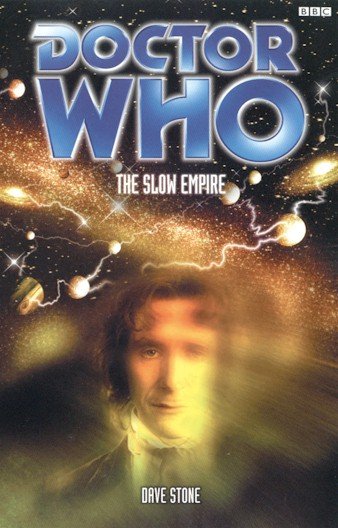
The decision to change these indicates The Snowmen is supposed to be something of a reboot that looks backwards across the history of the series and that’s also true of the new control room, a kind of submarine take on the white nightmare of the classic series. The space seems smaller, though with everything else happening we didn’t really get a chance to see Michael Pickwoad design at its best. There still isn’t a proper scanner, though opening a door and looking out is the more epic option. My favourite interior is still the TV Movie. It’s so ludicrously huge it fulfils the suggestion that the TARDIS has a whole universe within its walls.
Everything Else.
Where to start? Murray's music packed with new themes and a homage to David Arnold's Sherlock track at the necessary moment? Pickwoard's atmospheric design elsewhere including the spiral staircase leading to a cloud and the Great Intelligence literally inhabiting a snow globe? The costumes especially on Jenna-Louise who it seems looks amazing in both spacewear and corsetry? The Snowmen with their Jack Skellington faces? Life on Mars's Liz White (who was once companion material) in a tiny little (and frankly slightly thankless role) as a maid? No, let's start with Ian McKellan voicing the not so Great Intelligence. Ian McKellan! In the month that the new Hobbit film is out. Not bad, Andy Pryor. Not bad.
Speculation.
Who is Clara Oswin Oswald? It is still possible that she is fragments of the same figure blown across time Scaroth like, but she keeps dying. Is it that she keeps being resurrected? Is she conscious of the other versions of herself? My initial thought after Asylum was that we and the Doctor would meet a new version in each episode and that she’d die by the end of each somehow like Kenny from South Park, only to magically re-appear the following week never conscious of her other selves but entirely the same character, the Doctor flummoxed as to why he keeps meeting her, a string of one-off companions who’re all the same companion.
The problem with that approach, however ground-breaking, are the merchandising implications, with licensees trying to work out if each of their stories would have to have the same structure, the Doctor meeting a Clara at the start of each comic, novel and audio only to be lost by the end. It’s also a big ask for the audience to be empathetic across so many different iterations of the character, having to carry their affection across these multiple personalities. It’s the Dollhouse problem in some respects despite it being an adorable actress playing loads of different characters who’re the same character.
Luckily, the trailer offers a few other suggestions. There’s talk of a girl who died twice but still lives, which suggests the Doctor’s going to be meet the very modern Clara in the graveyard and she’s going to be the girl he carries into time (with the prospect come Easter of at least the third introduction of the same character) (will it still be played from her pov or his?), trying to find out what links her to the other characters. Clones? Sisters lost in time? Or has she been planted to be the Doctor’s perfect companion ala Paul Abbot’s suggestion for the slot which he was given in the 2005 series before he dropped out, either by some future version of the Time Lord or someone else? River?
The other main thread is the not so Great Intelligence. The implication is The Snowmen is supposed to be a prequel to The Web of Fear. Will all of the stories in the upcoming year feed back into the old mythology, perhaps all be subtle prequels to classic stories somehow, one for each of the Doctors? Lord knows what they’ll do for Eighth given the dodgy connectivity with the spin-off media leading to no chance of a pre-visit to Edward Grove or appearance from Fitz. Grace can’t wander through can she? It’s going to be a celebrity historical featuring Puccini isn’t it? Unless we actually get the Eighth Doctor himself. Yes, that should do it.
Conclusion.
A magnificent episode of the kind which you want to watch almost as soon as you’ve finished the first time, The Snowmen is clearly the best story of the seventh series so far, assuming, due to its weird structuring it can be included as part of that seventh series. What’s the boxed set going to look like? Will it include two Christmas specials? How is the series going to chime in international sales with a whole new bunch of stuff in the middle or is it being treated as two separate series? Is s8 actually beginning in Easter? I know, I’m effectively playing with the packaging. But can you blame me? It's still Christmas for two whole hours.
Sarcophagus.
Archaeology The world's largest ancient Egyptian sarcophagus has been identified in a tomb in Egypt's Valley of the Kings:
"Made of red granite, the royal sarcophagus was built for Merneptah, an Egyptian pharaoh who lived more than 3,200 years ago. A warrior king, he defeated the Libyans and a group called the "Sea Peoples" in a great battle.
"He also waged a campaign in the Levant attacking, among others, a group he called "Israel" (the first mention of the people). When he died, his mummy was enclosed in a series of four stone sarcophagi, one nestled within the other."
Magnetic Fields.
Astrophysics Magnetic field shapes spinning black hole. The astrophysicist in his home territory:
"At the time of our interview, McKinney was working in a small office on the fourth floor of the physics building of the University of Maryland. He had just moved and his office had boxes everywhere, a bicycle shoved into a corner and two tables awkwardly positioned in the middle of the room. The tables were coated with a layer of black soot that had dropped through a ceiling air vent.
"My own jet of grossness," he called it."
Walking in the air ...
TV Yes, yes, yes, yes, yes! Wasn't it though? Wasn't it? I'll post a review of Doctor Who's The Snowmen if I can get my head around it in the next week or so (it's Christmas night, I don't get review copies beforehand and my new blu-ray of the Olympic opening ceremony (without commentary!) is waiting to be watched).
But let's look back at my review of the Children in Need prequel and ...
But let's look back at my review of the Children in Need prequel and ...
"I'm still going with my theory that Oswin and Clara are two facets of the same character, scattered through time ala Scagra and the Key and that the Doctor will either accidentally keep meeting them or be motivated to gather them all up and make them whole. It would be nice for him to simply be travelling with her though in the typical mode. One of the problems of the last five, was that the jiggery-pokery required in each episode to explain why the Ponds are travelling with with that week."At this point possibly. Maybe. Either way. Wow, wow, wow, wow, wow. Happy Christmas.
Review 2012: The Projects:
My Top Ten Films of 2012.

Film Having thought about this for a few days, or at least hours, perhaps minutes, I’ve realised it’s impossible for me to select ten films I’ve truly enjoyed this year because despite outward appearances at the box office, I’ve seen so many more than ten great films this year, it’s impossible for me to single them out and makes me wonder exactly how film critics manage it, though to be fair most of the time they’re choosing what they think are empirically the “best” because it’s their job, whereas I’m trying to find favourites.
It’s also a process not helped by the sheer volume of films I’ve watched and also the haphazard way I approach them with little regard for release schedules or vintage. As we’ve established elsewhere, my paying film theatrical experience of new films this year amounts to Cabin In The Woods, The Dark Knight Rises and The Hobbit, with press screenings of Delicacy and This Must Be The Place, all of which I’d happily include on such a list if I was being forced to make one. Even now I have a strange feeling I saw something at the Cornerhouse in Manchester too. Um.
But that leaves five to fill in and with Margin Call, Shame, Haywire, Coriolanus, The Descendents, Young Adult, Extremely Loud & Incredibly Close, The Best Exotic Marigold Hotel, John Carter (of Mars), Once Upon a Time in Anatolia, We Bought A Zoo, The Hunger Games, Tiny Furniture, Salmon Fishing in The Yemen, Damsels in Distress, Iron Sky, Moonrise Kingdom, A Royal Affair, Your Sister’s Sister, Seeking A Friend For The End Of The World and The Flowers of War to choose from, that’s not easy.
Plus there’s all of the films made in other times which I saw for the first time this year which seem just as present, like the three hour cut of Margaret which would and should have been considered one of the greatest films of the 00s, and everything from the back end of 2011 like Midnight In Paris, Tyrannosaur, Sleeping Beauty, Contagion, We Need To Talk About Kevin, The Help, Immortals, The Rum Diary, 50/50, The Deep Blue Sea, Moneyball, My Week With Marilyn, Resistance, Another Earth, Mysteries of Lisbon and The Artist. Shouldn’t they count?
Take instead, then, all of those films as recommended, though let’s face it you’ve presumably seen most of them already. Here’s where I think film is in 2012. In surprisingly good health. Whilst it’s true there is a hole where US mid-budget films used to be, low budget titles have become even more ingenious to cope and the gap’s being filled internationally more than ever, in Europe and the Far East (cf, Headhunters and The Raid). Plus distribution networks outside of cinemas continue to make the history and geography of cinema even more available so there is always something “new” to watch.
Kaftan.
Fashion Tori Spelling (yes, Tori Spelling) on how to make your own kaftan:
"Whether you're in your living room, by the pool, or entertaining guests, there's a kaftan for every occasion. So why not customize yours by sewing them yourself? It's actually pretty simple: on the scale of difficulty, if hemming a pair of jeans is a "one" and sewing a couture dress is a "ten," making your own kaftan is about a two or three."
"Our lives are different to anybody else’s."
TV One of the elements of the modern world which still confuses me is what constitutes being a geek or nerd. Computer and video games now sell in vast numbers but those who play them simply aren't labelled as nerdy in the same way as we were in the 80s, when even owning a computer automatically placed you in a particular subgroup. That's also true of television and film, where genre titles and the achievements of same mean that there are probably people walking around who would undoubtedly previously be described as having geek sensibilities but don't consider themselves as such. And let's not get started on computer use in general.
What I hadn't considered, though, is how females in particular, especially girls who identify themselves as geeks, either find themselves as somehow fake, especially if they're of a particular appearance, or otherwise patronised by men who're surprised by the fact that they have seen every episode of Fringe or want to dress up as a Star Wars droid. I'd hope I've never been guilty of this, especially towards anyone reading this blog. Indeed my assumption, taking into account everything I've said in the opening paragraph, is that women are often even more passionate about this stuff than men and better at it, because they seem to be in most things anyway. Seriously. Men are rubbish and women would do just as well without us.
The Mary Sue has asked psychologist Dr. Andrea Letamendi to consider why "are we so deeply threatened by the notion of falsified fandom?" with the wider issue of this kind of chauvinism and how women who do identify themselves as geeks face disbelief by XY chromosome carrying mouth breathers:
What I hadn't considered, though, is how females in particular, especially girls who identify themselves as geeks, either find themselves as somehow fake, especially if they're of a particular appearance, or otherwise patronised by men who're surprised by the fact that they have seen every episode of Fringe or want to dress up as a Star Wars droid. I'd hope I've never been guilty of this, especially towards anyone reading this blog. Indeed my assumption, taking into account everything I've said in the opening paragraph, is that women are often even more passionate about this stuff than men and better at it, because they seem to be in most things anyway. Seriously. Men are rubbish and women would do just as well without us.
The Mary Sue has asked psychologist Dr. Andrea Letamendi to consider why "are we so deeply threatened by the notion of falsified fandom?" with the wider issue of this kind of chauvinism and how women who do identify themselves as geeks face disbelief by XY chromosome carrying mouth breathers:
"I recently traveled to a psychology conference, and, upon arriving at the airport for my departing flight, experienced an example of a microinvalidation. At security check, after my technology went through the scanner, I scurried over to gather my shoes and belongings. I picked up my Star Wars hoodie and wrapped it around my Batgirl t-shirt. The thirty-something male TSA agent pointed to my Kindle, the one with the Star Wars comics cover, and immediately looked at the stranger standing next to me: “Is this your Kindle?”
The stranger next to me, a twenty-something looking guy dressed in plain jeans and a pale shirt, shook his head. “It’s mine,” I blurted. The TSA-man then leaned forward and said, giddily, “That’s really awesome. I love Star Wars too.” A compliment. But I couldn’t process the kind words because I was still recovering from being stunned by his assumption that my things do not actually belong to me. A reminder of the widespread belief that Star Wars is gendered. It’s male. The thing I love is for males."Another interesting question is why I don't identify as much. I have a TARDIS wallpaper on my why-phone, City of Death themed keyrings (Eiffel Tower, TARDIS) and TARDIS blue jumpers, but I don't wear branded t-shirts or any of that business (partly because it's cheaper to be man at Asda). Perhaps I should dig out my fez.
Subscribe to:
Posts (Atom)