The Long Midwinter (Short Trips: The History of Christmas)

Prose  The problem with reading festive stories out of season is you can be a bit slow on the uptake when it comes to the more obvious details.  The Doctor, Samson and Gemma visit a Pandora like planet in which a group of humans in the far future have been genetically modified to exist in a cold atmosphere by becoming branches of a tree essentially, but not until the end of the story did I realise why there even was a great tree in this particular short story.  His companions come across as being slightly less mature than in their other adventures, Samson in particular giving us some mild islamophobia.  But there's some nice poetry in here and it's one of those kinds of stories in which the Doctor can't really do much but inspire those he's trying to help to take the next step.  But that may be enough.

Placement:  Between Mary and Charley.

Not in My Back Yard (Short Trips: The History of Christmas)

Prose  Fucking hell this is good.  Eddie Robson delivers a love letter to the NAs, EDAs and DWM comics just as attention was shifting elsewhere in 2005.  The Eighth Doctor and a new bespoke travelling companion he's just bust out of prison pitch up in the Seventh Doctor's favourite village of Cheldon Bonniface at Christmas in a future time so that he can hide her in what was once a friendly UK immigration service for aliens.  Sadly there's now a government in place which is taking much the same approach as the one we have in 2022 with tabloids creating a similar level of fear.  As the detention centre awaits closure the Doctor decides to take everyone into the village for a final Christmas bash and there are hijinks.  Many, many hijinks.

He can correct me on this, but I think this was Robson's first full Eighth Doctor story and he just nails it.  The tone is humorous and a bit daft but with a thematically serious core.  There are moments of physical and verbal comedy which leap off the page and look ahead to the broader edges of the TV revival.  This might be seventeen years ago but it feels totally fresh right down the huge event which happened about 5/6ths of the way through and then another 8/10ths after that.  Eddie's mainly written audio adventures since and he began writing was just a bit too late for the novels and it's a real shame we didn't see an EDA from him.

Placement:  For spoilery reasons there are some continuity references and a conversation right at the end which put it after The Gallifrey Chronicles but before Endgame.  

The Heroine, The Hero and the Megalomaniac (Short Trips: A Day in the Life)

Prose Utterly superb.  Like a espresso shot of the EDAs, this is a multi-Doctor story with bite as Seventh or as he's described here, "dark and manipulative" remonstrates with Eighth about saving Charley and the implications it has for the universe.  As in the BBC books, they absolutely hate one another, philosophical polar opposites on how they should be using their gifts.  After being made aware of her presence "Dark and manipulative" clearly sees Charley has a threat that needs to be dealt with and where it not for us already knowing how her stories plays out, it feels as though she might be in mortal danger from this earlier incarnation until Eighth is able to talk him around.  Somewhat.

Told from three parallel points of view on the story as per the title, for Charley, for the Doctor and the Baron, the proto-Sabbath who's in charge of the colony with a suspicious technology but wants to rule the universe, it's not quite a Rashomon affair since were just getting more information on the same series of events, rather than anything contradictory.  But writer Ian Mond is  nevertheless able to utilise the structure to provide a couple of good twists in our expectations ultimately in a way which shows that no matter which daft old face the Doctor has and whatever his methods, they're still the same being inside with the roughly similar goals.

Placement:  Another story which references Seasons of Fear but no later, so I'll put it in the gap between that and Embrace the Darkness.  One of the strengths of the story is it feels of a piece with the rest of that season with Charley's status an important point.  

Before Midnight (Short Trips: A Day in the Life)

Prose This is the second half or first half or first quarter and last quarter of After Midnight and having read both it makes about as much sense as Dimensions in Time.  I understand the concept now, that these are the stories at either end of an anthology which takes place across 24 hours, albeit in different parts of space and time.  But in an effort to also join all of those stories together and suggest that a submerged consciousness is experiencing all of those tales in a time loop, it's the expression of that time loop and how it's created which isn't quite enunciated properly, especially the bit about the Doctor and his friends inhabiting the bodies of their former selves.  Still, it's at least pretty entertaining and its good to have some fun C'rizz action which doesn't involving him moping about something or other.

Placement: After After Midnight.

After Midnight (Short Trips: A Day in the Life)

Prose   As you will have gathered, I'm reading this Short Trips in isolation so I know that with After Midnight as the opening story in this anthology and Before Midnight as the closer, that some of the mysteries will be explained later.  As it stands this is a pretty fun round around in which the Doctor, Charley and yes C'rizz go to extraordinary lengths to thwart an intergalactic jewel thief.  The reveal of how they become part of the story I won't spoil, but it's in a way which wouldn't work quite the same in another medium as the prose style subtly shifts and its refreshing to have a story which doesn't read like a novelisation.

Placement:  C'rizz seems very confused by Earth customs so I'll put it just after Terror Firma.

Reversal of Fortune (Short Trips: Steel Skies)

Prose Placement:   There's nothing in this story to suggest the Doctor's appearance are concurrent from his point of view, but assuming they are it feels later in his travels, so between Shada and the Marys.

Perhaps Reversal of Fortune is just a bit too short to fully explore the premise.  Graeme Burk's prose captures the tragedy of a life led in the past, something most of us could do with internalising.  Which makes it difficult to read in places.  It's told in a reverse order from the protagonists perspective and although it seems to be the Doctor's dropping by in the opposite chronological direction it seems more jumbled up than that.  Like Greenaway in the same collection, another story about the Doctor visiting someone at various stages in their life.  They're also often so short that you can't really talk about them as individual pieces in any meaningful way without repeating yourself or try to do anything interesting.  I'm catching up on a number of these Short Trips, which is why the blog's overrun with them at the moment so as not to leave gaps in the Eighth Doctor checklist.

Faithful Friends: Part 3 (Short Trips: The Ghosts of Christmas)

Prose   This is the final entry in a trilogy of stories about the Brigadier at Christmas across his life.  Alistair awakens on the 25th December to find Eighth and Charley putting together a large lunch for a number of invited guests, a who's who of the old soldier's life.  When Osgood's introduced, it took me a moment to remember this was written in 2007 and it didn't mean her.  Side note:  Although Steven Moffat intended Petronella to be the daughter of Tom Osgood, presumably the man mentioned here, Dave Rudden took it upon himself to give her a whole different father and family in The Wintertime Paradox who may or may not have been involved at UNIT.  Perhaps Tom's her uncle instead.

Placement:  Has to be after Minuet in Hell but before The Shadows of Avalon (when the Brig was rejuvenated) which is narratively impossible but chronologically fine.  The less said about CyberBrig, the better.  Let's say they popped in after Seasons of Fear wanting a break.

Greenaway (Short Trips: Steel Skies)

Prose  One of the genre of stories in which the Doctor confronts the consequences of ordinary people becoming involved in his extraordinary adventures.  Over time various incarnations, including Eighth, visit a dying man, trying but failing to help him after he aided them in fighting a dangerous threat.  Perhaps the most interesting element of the story is the inclusion of a future Doctor, based according to the writer Peter Anghelides, on one of his university friends, with ginger hair, a big afghan coat smelling of patchouli oil.  The TARDIS Datacore has a whole entry for this incarnation offering various appearances and implying he's the source of the running joke after regenerations about still not being ginger.

Placement:  Eighth's behaviour suggests that for him this is early when he's still trying to sort out some of his past mistakes.

For the Man Who Has Everything (Short Trips: The Ghosts of Christmas)

Prose  Another brilliant entry from The Ghosts of Christmas anthology.  Spin-off veteran Dan Abnett offers up a two hander in which the Doctor chases a cosmic wish-giving bauble to the office of the Home Secretary and finds himself comforting the politician's private secretary spending another festive season alone.  As she outlines her years long platonic relationship with her boss, the Doctor reflects on how this reminds him of how he treats his companions and friends.  A lovely, well written story in which the Eighth Doctor's personality shines through.

Placement: Early, in the period after his regeneration when it feels like he trying to make amends and discover who he is.

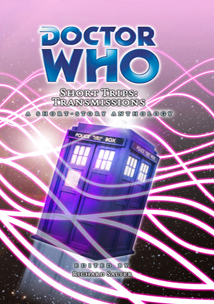
Doctor Who and the Adaptation of Death (Short Trips: Transmissions)

Prose  Delightful.  Graeme Burk wrote one of my favourite tales in the original BBC anthologies, Turnabout Is Fair Play from Short Trips and Side Steps and he brings the same kind of Adamsian humour to this story of a screenwriter put on trial by a race of aliens for their portrayal in his movie adaptation of an alien invasion.  They're annoyed with the dumbing down of one of their heroes and the Doctor's omission from events.  

Cross cutting between parts of the script (to represent the film) and prose for the actual events (as drawn from the Doctor's own mind), Burke is discussing our predilection for nit-picking drama which allows excitement to make way for facts.  Burk knows his stuff (having authored several non-fiction books about Who)  There's an immensely funny joke about film studies based on a deeeep cut.

But there are many funny jokes.  Across its dozen or so pages, there more wit and excitement than a lot of Doctor Who and it's a real shame Burk hasn't had the opportunity to write something longer, assuming he has the interest. 

Placement:  Burk mentions the Doctor and Charley have been travelling together for years so I'm minded to place this between Embrace The Darkness and Time of the Daleks - any later than that and it's after the Divergent Universe and the tone doesn't feel right for then.

They Fell (Short Trips: The Ghosts of Christmas)

Prose   Absolutely lovely.  A Christmas chiller about a little girl who's family is acting strangely this has everything you'd want from an Eighth Doctor story, from entertaining clattering about in TARDIS console room, funny banter between him and Charley, the genuine sense that he's enjoying himself and that kind of indefinable magic and brief following that reliable writer like Scott Handcock brings time and again.  

This is from 2007, which would have been early in his Who career, but it's all there and redolent of a number of episodes in the Moffat era a few years later, Zoe sometimes coming across as a proto-Amelia and all the talk of Angels.  When he's caught correctly, the Eighth Doctor on the page comes across as Tenth without the "Weeellll...." and that's what you get here.

Placement: In the gap between seasons.  The Doctor and Charley are comfortable with one another and there isn't any angst.  They're described as laughing and giggling with one another.

Nettles (Short Trips: Transmissions)

Prose  Sigh, they can't all be great and my suspicion is a few of these stories don't work well outside of their anthology position where they become swept up with the other tales creating an overall mood.  After reading this Short Trip it took a look at the TARDIS Data Core page to work out what Nettles was about.  It seemed to be a relitigating of the virus scene from Genesis of the Daleks, "Davros if you had created a virus in your laboratory something contagious and infectious that killed on contact a virus that would destroy all other forms of life would you allow its use?" that sort of thing.  But the wiki actually explains that its about Eighth creating a silent revolution by convincing a geneticist to engage in eugenics so that eventually the people will be physically strong enough to overthrow the government.  To be honest, I hate that idea even more.  Only reflection it is in there, but honesty I don't think it's clear enough.  Either way it feels more like something the Seventh Doctor would do.  Eighth is more prone to direct action, life's champion and all that.

Placement: Early.  Between The Eight Doctors and The Dying Days when he's still cooking, trying to discover what kind of man he is.

The Star Trek: The Next Generation episode you will have missed.


TV Find above this week's TechMoan video which is all about the 2-XL, a toy in the shape of a robot which utilised 8-track tapes to offer quizzes and games. Even though it was released in the late 70s, I was probably too young to be contact with them, let alone own one, but it's a fascinating look at how ingenious engineers were in the pre-digital era in utilising analogue technology to create the illusion of futuristic toys. Now of course you can call up such quizzes through a so-called smart speaker. Try saying "Alexa, play Pointless..."

Later in the video, channel creator Matt mentions that the idea was recycled in the early nineties for compact cassette by Tiger Electronics.  As per the Wikipedia page, these weren't too dissimilar to the 8-track versions, in that they utilised the four channels across the tape to create the various options, in the original's case questions and answers, in the remake, options in a "choose your own adventure type story" which used licenses from the likes of MARVEL, DC, Saban Entertainment and Paramount Television.

And thanks to this emulation page (also via Techmoan) you can play them all, old and new.  After trying a few it's clear that even in the licensed tapes, for the most part the voices were supplied by the same few actors.  Chaos in Jurassic Park has those performers offering some pretty good impressions of Bob Peck, Laura Dern and Sam Neil in a rewrite of the film's story.  But working through a few more it becomes apparent that in some cases, like the Power Rangers, original cast members do make an appearance.

The one I actually bothered to play all the way through is Star Trek: The Next Generation's Blinded By The Light assuming that, like the old Peter Pan story singles, it would feature at best sound alikes.  So imagine my surprise when up pops your actual LeVar Burton in a solo adventure for Geordi Le Forge which is "official" enough to have its own Memory Alpha page.  It's the early 90s and here's a real cast member recording spin-off material.  I've tweeted him for more details, because of course I have and I'll update if he replies.

The adventure itself is fine, as Geordi investigates Romulan skullduggery on Fenrac III.  Even though none of the original music has been licensed, it very much has the atmosphere of the series, as the engineer meets an old school friend who he completely failed to get off with and also ties in to The Mind's Eye episode and depending on your choices sees him trying to shoot said friend thanks to him being reprogrammed again.  Whoever wrote this was clearly enough of a fan to be steep in the mythology and everything is authentic enough.

The adventure takes about half an hour and isn't too tedious, although the requirements of the technology mean that the script is unnecessarily wordy so that the various story choices can be synched together on the various audio channels.  It's also interrupted now and then by the voice of the robot, played by the creator Michael Freeman and his weird pronounciations, with space related questions and if you manage to get these correct, you're given a field promotion to acting ensign.  I did not reach this distinction.

Anyway, you can play the adventure yourself here and like Charlie Brooker's Bandersnatch, perhaps its most recent equivalent, there are enough story branches that it bares repeat playing, more than perhaps a simple quiz would in the 8-track version of this technology.  I managed to fail the mission although I'm not sure how.   Perhaps I pressed the wrong button.  You could always just listen through each of the four channels in turn I suppose but what would be the fun in that?  

Mordieu (Short Trips: The Muses)

Prose  Set during the BBC Books Earth arc, once  series editor Steve Cole writing under his Tara Samms pen name, Mordieu places the Doctor in the middle of Hollywood during the TV boom of the late 1950s as a TV writer who worked on the likes of the "Westinghouse Desilu Playhouse" and Alfred Hitchcock Presents.  It's told from the point of view of a fellow writer who finds himself in the midst of some local mayhem related to a strange epidemic of stigmata.  

There's some useful religious debate in here about why the affliction mimics the paintings rather than the actuality of what Christ may or may not have experienced (with a section which lists the various biblical contradiction with verse references).  The descriptions of the affliction are also suitably gory.  Published in 2003 but presumably commissioned earlier, the weirdness of the wilderness years had fully matured.

Written in noirish tones, we're given an insight into where this particular amnesiac Eighth is psychologically through his own first person inserts.  We discover that he's using writing jobs as a way of expressing the various memory fragments which are surfacing, the plots of Inferno and the TV Movie are proposed but dismissed.  We're reminded that he's not really himself in this period, disinclined to become involved.

Placement:  Between the novels Endgame and The Stranger.  Yes, really.

Lady of the Snows (Short Trips: Destination Prague).

Prose  Some Doctor Who stories, especially about the Eighth Doctor, which are just so weird that you can't quite believe what you've just read.  Part of an anthology of stories all set in the capital of the Czech Republic (which in and of itself is an interesting choice - did someone at Big Finish have a stake in their tourism?) this follows Yan, a local artist who saves the life of a amnesiac young woman who becomes his muse and changes his career fortune before the actual reality of his situation revealed to him.  

Stop here if you want avoid spoilers.  

Gone?  No?  On your head.  What we discover is that the city is actually a reproduction produced by aliens a trillion years in the future as part of an exhibition in a space which probably resembles the tesseract in Interstellar.  This futuristic version of Prague only exists in a snow globe and Yan and the rest of the citizens are echoes of real people in the distant past and that the Doctor accidentally dropped Charley in the middle of that which is how she lost her memory.  She's the girl.

Here's where it gets tricky.  Yan isn't keen to give her up.  So he all but keeps her prisoner in his house and they have a relationship and so now we discover that some time late in the second season of her audio adventures with the Doctor, Charley spent nearly a year in sharing a bed with a gaslighting failed artist, only remembering fragments of her life in the TARDIS.  Then off she pops into another adventure and it's never mentioned again.  Like I said, some Doctor Who stories are weird.

Placement:  Throughout the story its revealed that Yan is creating artworks based on her memories of earlier audio stories.  The latest mentioned is Face of Grail so I'm going to put this between Seasons of Fear and Embrace the Darkness.  After that the story arc asserts itself and things get messy.

Second Chances (Short Trips: How the Doctor Changed My Life).

Prose  What happens to a megalomaniac after their dastardly scheme's been defeated by the Doctor?  How do they pick up the pieces once the Time Lord and his plus one have left the scene?  Where do they go?  In Krellig's case, it's back to live with his parents and find a job.  There are lots of lovely writing in Bernard O'Toole's story, like the scene featuring the villain's emotionally staccato pigeon fancying father and how the thrilling details of the Doctor Who portion of the story crash against the mundanity of the job centre.  The Eighth Doctor and Charley are present and correct although most other combination would have done the trick.  But it's not about them.  It's about the aftershocks of their presence on this one man's life, the kind of story for which the short form is perfect.

Placement:  In the gap between With Charley Seasons One and Two I should think.

Alistair Cooke's Letter From America: A Chronology.


Radio  Letter From America was a weekly series on Radio 4 which ran from the mid-1940 to the mid-2000s in which the broadcaster and journalist Alistair Cooke commented on the week's news from the United States in a fifteen minute essay.  Documenting the history of the country over the past five decades, every episode of filled with contemporary details often glossed over in hindsight.

Across its 58 year history, 2869 episodes were broadcast of which about 1,550 survive, 900 in the BBC's own archives and another 650 previously thought lost until they were revealed by two listeners who'd been diligently recording ever episode for decades.  Home taping might have been killing music but it was saving this precious speech radio.  

Every extant episode is now available on the BBC website.  Unfortunately, like In Our Time, they're locked into a programme page format which isn't easily navigable when that many episodes are involved and so I decided to create the following chronology to make them more accessible and create the ability to easily skip to a particular year and re-experience that history through the words of Alistair Cooke.

To that end, I've also augmented the radio episodes with transcripts of lost episodes from elsewhere as well as Cooke's US-related journalism from other outlets, notably The Guardian where he was a foreign correspondent from 1947 to 1972 and which led him to be on the ground during these historic moments, like the Montgomery bus boycott and RFK's assassination.  Those entries will be marked with their source and in italics.  Enjoy.


Navigating Glastonbury 2022.


Music  Hope you've all been enjoying Glastonbury this weekend, even from your armchair.  Having come to terms with not seeing the Sugababes set in clips longer than 20 seconds via Twitter, I've been diving into some sets on the iPlayer.  Except the navigation isn't particularly ideal.  Unlike previous years when the line-up was structured around stages, this year, there are some murky "genre" headings like "pop perfection" and "top of your lungs".

There is a line-up page on the BBC Glastonbury site with does break the acts down into stages but it requires at least a couple of clicks to get anywhere and even then, it's not to the iPlayer, it's to an extended clip which is embedded into the BBC Music website rather than the iPlayer, which doesn't matter exactly, but it's still a lot of effort.  Plus it's sometimes difficult on the iPlayer to see the difference between a broadcast highlights show and a full set.

So during BBC Four's repeat of the JARV IS set tonight, I've created a breakdown of Glastonbury by stage with links to the full sets (give or take a Fuck You).  Most stages it's every act apart from the first few (sorry fans of The Libertines).  The links below should be valid for a month so you have until the end of July to catch up.  Obviously this is only helpful if you're watching things on a tablet or PC.  You could always try casting them I suppose.  Anyway, on with the show.

PYRAMID STAGE

LORDE
ELBOW
DIANA ROSS
HERBIE HANCOCK
DAKHABRAKHA
BLACK DYKE BAND


OTHER STAGE

FRIDAY
FOALS

WEST HOLTS STAGE

SUNDAY
BICEP
ANGELIQUE KIDJO
KOFFEE
SNARKY PUPPY
NUBYA GARCIA
NIGHTMARES ON WAX
EMMA-JEAN THACKRAY
ISHMAEL ENSEMBLE


JOHN PEEL STAGE


THE PARK STAGE

Inevitable Sugababes post.


Music Find above the Sugababes on This Morning on the occasion of the announcement of their UK tour. It's a lovely interview. Doesn't cover much new ground but the fact that it's the three of them on a sofa on morning television doing this sort of thing and looking so relaxed with one another, well, it's lovely. 

They will be playing Liverpool, the 02 Academy just off London Road. Will I go? I don't know. You would think, but it depends on the price of the ticket and whether I feel like I can stand in a large crowd amid my anxiety. It's over ten years since I've been to any concert. 

One mitigating factor might be that the BBC aren't televising their Glastonbury set because it's on the Avalon stage and it's not one of the five venues they'll be covering so I'll be unable to see whether they do an acoustic version of Get Sexy or have a less dodgy recording than this of Siobhan singing Heidi's bits from Push The Button.

On the upside, MKS's Flatline has been uploaded to the official Sugababes YouTube channel after ten years which is also kind of wonderful.


Classical Hollywood and where to watch it (in the UK).

Film  We're constantly being warned now about the death of physical media and it's true that a swathe of new films are no longer receiving timely shiny disc releases if at all.  MARVEL have already announced that none of their Disney+ shows are going to disc (which means our MCU collections will be forever incomplete).  But it's fine, we're told, streaming services have such depth of content it won't matter.

Except, that's not true, at least in the UK and especially for those of us who're interested in Hollywood cinema made in the classical era during the first wave of vertical integration, when the "content stream" went from sound stage to studio owned theatres rather than streaming services because what are Disney+, Paramount+ and Netflix if not that?

As you'll see below from the survey I've made, the back catalogue or archive of the major studios during the studio era is all but absent from the major subscription streaming services apart from the most popular titles.  There isn't a streaming equivalent of the 20th Century Fox Studio Classics collection and the Criterion Channel hasn't launched here.

Which isn't to say there aren't ways of seeing these films.  As I advertise every day on Twitter, Cinema Paradiso has in its collection every dvd or blu-ray released in this country going right back to the early noughties (you can sign up here and get a free month to try it out).  Pretty much the whole of Cary Grant's career is available for example.

If you just want to watch the occasional thing you can also rent most titles through Amazon Video although at up to £3.50 a pop that could get expensive if you're on a Ginger Rogers binge, for example.  There are also nefarious uploads to YouTube or the Internet Archive which in some cases is the only way of getting hold of some material in the UK.

British cinema on the other hand is pretty well served by boutique UK streamers.  Between Britbox, the BFI Player and TPTV EncoreNetwork on Air is also slowly coming on stream.  Between them there's probably a couple of hundred titles which is remarkable in comparison to what's elsewhere.  Between the BFI Player and MUBI, European cinema is also impressively covered.

But in the main, no matter who has the rights to this stuff, none of the UK streaming services with the exception of Disney are interested in exploiting pre-60s US film.  Perhaps they're afraid of cannibalising the dvd back listings.  If only films were treated in the same way as Spotify and there was a single place you could go to watch everything in film history for a single subscription price.

Columbia Pictures

In deep archive terms in the UK, Columbia Pictures doesn't exist.  At time of writing has two films from the studio era, Amazon Prime has another two and All4 has a couple for catch-up purposes.  Plex has a smattering of westerns.

20th Century Fox

Disney don't seem to have any interest in exploiting the Fox catalogue before the 1970s and even then only films "of note".  The only two studio area films on Disney+ are An Affair to Remember and Journey to the Centre of the Earth and they're both from the late 50s.

MGM

Nothing.  Much like Fox, when Amazon took control of MGM's assets it seemed as though uploading MGM's back catalogue would be one of the priorities, especially from the studio system era, but nope.

Paramount

Before the UK launch of Paramount+ I was salivating at the sheer amount of classic Hollywood material available on the US version.  But sadly none of that has transferred over.  Yet.  As it stands we find the contents of the Audrey Hepburn boxed set which always seems to be perpetually on sale at Fopp and a couple of westerns.  There's also the weirdness of seeing Miramax films in the mix here instead of Disney+, the parent company Viacom having bought the company recently but that's a discussion for another time.

RKO Radio Pictures

Back in the mid-50s, the BBC signed an incredible deal which means they have the rights to show a core set about about a hundred RKO titles in perpetuity.  This still seems to be in abeyance and so we find forty-odd movies on the BBC iPlayer.  Plex GB has another dozen.

Samuel Goldwyn Productions

Due to the slightly chaotic approach to how films appear on its service it's impossible to know if this is due to rights or an uploader, but thirty-eight films from the Sam Goldwyn Company are on Amazon Prime with prints of varying quality.  Compared to the output list on Wikipedia, its by no means everything there's a fair spread across the United Artists and RKO distribution eras.

United Artists

Twenty films on Amazon Prime.  Sixteen on Plex GB.  Four on Pluto GB.  Although this is one of the messier studios to investigate because they were mainly a distributor for productions from major studios and minors.  Often "United Artists" films were actually produced by a much smaller company then branded as such.  The Netflix of their day.

Universal Pictures

Nope.  Even assets like the monsters sequence.

Walt Disney Studios

Disney+ of course.  Although the studio's entire history isn't quite available, all of the important releases are, across animated and live action.  The standard.

Warner Brothers

Nothing from the studio era on any service.  Perhaps that will change when HBO Max launches in (checks notes) 2025.