Visiting all of the London Underground stations in the order that they opened. Day One.

Life Now that my monthly trips to London have gone through the "all the places I've always wanted to visit" phase to the "it feels as much a part of life as any other city" period, I thought it would be fun to try and explore all parts of that city.  One of my favourite elements of any London visit has been using the tube getting from there to here, I thought it would be an interesting occasional project to, as the title says, visit all two hundred and seventy of in the order they opened.  Fortunately the Wikipedia makes this extremely easy with its big, long chronologically sortable list.

There aren't any particular rules exactly.  On arrival I'm going to try and sit on the platform and read the Wikipedia page for each station (unless someone can recommend a guide book), then have a good look around at the various features including signage and artwork then have a glance at the forward travel map and see if there's anything interesting in the area.  That said, I think it's probably best if I research a bit more ahead of time so as not to pointlessly walk to a place only discover that it isn't open as I did at Farringdon yesterday.  Just because something is famous doesn't mean it's still there.

Fortunately Farringdon has my favourite artwork of the day which also acted as a perfect prelude for the project.  Fraser Muggeridge's Memorial to Edward Johnston (2017), the calligrapher who designed the typeface which appears throughout the London tube.  This is a large, long wooden replica of a printing block, an alphabet of his famous characters carved backwards, with each character repeated concentrically around the edge to indicate their flexibility, how they can increase and decrease in size depending on what's required.  The TfL YouTube channel has a video all about its creation.

The rest of the day is a blur of images and experiences.  The derelict Smithfield Market currently being turned into "Museum of Londoners".  The jar of pickled moles at UCL's Museum of Zoology.  A Japanese tourist on Baker Street wearing a deerstalker sideways.  The shop filled with Paddington merchandise at the eponymous station.  Finally eating at a Five Guys and finding the "small" chips underestimates the size of the portion.  The rain, the constant, unceasing rain which washed out the final hour or so of the day, as you can see from the photographic evidence below.

Farringdon
(Opened 10 January 1863)

King's Cross St Pancras 
(Opened 10 January 1863)

Euston Square
(Opened 10 January 1863)

Great Portland Street
(Opened 10 January 1863))

Baker Street
(Opened 10 January 1863)

Paddington
(Opened 10 January 1863)

Edgware Road
(Opened 1 October 1863)

Ludgate Hill
(Opened 13 June 1864)

Purists will already be jumping into the comments to point out that some of these stations are actually in a re-sited position and renamed or both and that there are two Paddingtons and that isn't the main entrance to Baker Street.  Yes, yes, all of that.  But this is as much about the opportunity for me to explore London than the resulting photographs and blog posts.  Shepherd's Bush Market and Hammersmith are next on the list, places I really have been curious about.  Unless the coronovirus has led to everyone being quarantined and this is was my last visit to London for a while.

Frenzied Poets and Sober Men.

Books Although I chose his as one of my books of the 2010s there was always a chapter outstanding, "Frenzied Poets and Sober Men" a pub crawl, which for someone who doesn't drink and can only have decaff coffee anyway was always going to be a bit useless. Bereft of company in the end and not wanting to leave a project uncompleted, yesterday morning I crisscrossed the city centre visiting all of the drinking houses chosen by the author.  Incredibly he ignores the Ship and Mitre, The Excelsior and The Cavern.

Only a couple were open.  About half way through I stopped into The Poste House on Stanley Street which was one of my Dad's haunts back when he was working, mostly famous for apparently being Hitler's local when he was reputedly in the city.  There's a photo of him on the wall to commemorate this under which I nursed a blackcurrant soda.  Later on, I stepped into the Globe near Clayton Square briefly (no Shakespeare connection as far as I can tell).  For once, no one was singing, which is rare.  I did not stay.

We Didn't Start The Time Lords.

TV No, it was one of the Shabogans apparently.  I've seen a few people on social media wondering who all of the people who were in the Doctor's memory blipvert in The Timeless Children so as a public service, here they all are.

The Eleventh Book I've Read This Year.

Books If Black Panther was a window into how colonialism obliterated the artistic and scientific achievements of a whole continent (and indeed the world), Don't Touch My Hair is the whole house.  As a middle aged white man I'm well aware of my privilege and also the guilt of being part of a cultural group which subjugated others for centuries.  But at no point did I consider just how pervasive it is that society expects non-white races to conform to our cultural norms and expectations and how in appropriating elements of black culture, rather than celebrating we're further suppressing it.  Consciousness raising.

The Coffee Collection:
Leaf Smithdown, Smithdown Road, Liverpool.

The Chibnall Masterplan.


TV Evening. Well, that was, as the teenagers say these days, a lot, wasn't it?  The social medias are currently split between those of us who thought that was one of the best episodes in years, those who're angry about the revelations and those who say they didn't understand a word of it (which is frankly bizarre).  That is absolutely fine and how it should be.  It's rare that an episode stacked up with more retcon than Gwen Cooper after visiting the Torchwood Hub for the first time isn't going to be divisive especially when it's designed as this is to be a continuity generating machine.  But I'm in danger of writing a review here so I'd best move on.

With tonight's episode, Chris Chibnall finally seemed like he'd realised why he wanted to be show runner in the first place.  In this franchise of multitudes, Doctor Who is at its best when its allowing its authors to transform it into whatever they want it to be or what they think it should be, for better or worse.  Up until now, one of the problems with his version of the show is that it's lacked an identity beyond not being what the other fellas have done.  It's lacked a proper authorial voice and although we've had hints of it this series (which has led to an upturn in quality overall) it's not until tonight that it finally reached its apogee.

The Brain of Morbius would have been broadcast when ickle Chris was about five or six.  Perhaps he watched it and if he did perhaps the famous scene of the Doctor seeing his earlier incarnations imprinted on his own brain.  Or perhaps he caught up with it later on VHS or DVD, at the forefront of his mind even when he was facing down Pip and Jane and Patty Caldwell.  The lack of a satisfactory explanation which didn't contravene established continuity gnawed at him, the notion that these were in fact earlier incarnations of the Gallifreyan war criminal for one thing not matching the intentions of the production team under Hinchcliffe.

Let's face it, given the choice, what else would you do if you were made show runner of your favourite TV show than use your power to tie up a continuity loose end from forty-four years ago?  Not only that, not just to imply it, but to actually have sodding footage of the event in all of its upscaled standard definition videotape glory splattered across your super high definition frame as part of a montage sequence that blipverts all of the show's history in seconds and frames which are sure to be poured over for the days and weeks to come?  Of everything CC has offered up in this past couple of series, this feels like the work of someone who's finally let themselves off the leash for better or worse.

All of which said, I really didn't think that while Chibnall was freebasing in Doctor Who's history that so much of what was put up on screen tonight would match my own doodlings from a few weeks ago.  That the Doctor had indeed been sent on missions and at the end of all that her memory had been wiped and she'd been turned back into a Time Tot.  Of course, with my limited imagination I assumed she'd had a whole previous single regenerative cycle although I reserve judgement on why the Jo Martin incarnation had a police box.  I'm still quite attached to the idea that it was the machine trying to get her to remember these past lives, perhaps attempting to ease her into the trauma.

Where does The Timeless Children leave us now in terms of what we know about the Doctor?  To summarise the episode:  The Doctor is an entity which appeared in the Whoniverse (or whatever we're calling it) through a dimensional barrier who became a genetic source for the Time Lords and their ability to regenerate.  She worked for a time in a forerunner to the Celestial Intervention Agency.  Unlike what are now her adopted people, she apparently has an infinite number of regenerations, dozens of which happened before what she and us thought was her first incarnation.  For some reason the past thirteen have been blokes but she had the capability to be either gender before that.

Like I said, a lot.  Surprisingly none of this breaks canon, especially in the spin-off media where there have been multiple proposed origins anyway all of which has been explained in novels like Unnatural History and The Blue Angel as being a result of the Doctor's "biodata" having been manipulated by the likes of Omega and the Faction Paradox.  Chibnall's new burst of incarnations also potentially explains the extra photographs inserted onto the walls of  Clive's shed in Russell T Davies's Target adaptation of Rose featuring the likes of "a tall, black female Doctor who used a flaming sword and a young Doctor of indeterminate gender in a hi-tech wheelchair."  If we want.

There's also the business of "the Other" although again nothing in the episode contracts that, with Chibnall's script carefully glossing over the invention of time travel, apparently accomplished (according to the penultimate Virgin New Adventure Lungbarrow) by this entity along with Rassilon and Omega (before he lost his head) (and the rest of his body).  Lord know what Andrew Cartmel made of tonight's episode, although I do have a suspicion that both Steven and especially Russell are having a right old giggle about all of this, given that one of them inserted a new incarnation of the Doctor between some old ones and the other irrevocably destroyed Gallifrey for a second time.

Some breaking news.  "The Brain of Morbius" is trending on Twitter.  Having confirmed all of those guys into the canon, who else can we add?  Sadly, the memory montage didn't go too far off-piste.  But what's to say the Shalka Doctor isn't pre-Hartnell, especially since he was apparently being sent on missions?  How about Merlin?  The version who appears in Jim Mortimer's From Eternity?  Big Finish now has scope to fill boxed sets with new incarnations of the Doctor played by whichever actor they please, with the Audio Visuals version also up for grabs not to mention whatever Bill Baggs was doing.  Mr Magorium might as well be canon now.  Not to mention the Cushing version.  For goodness sake.

There's more to be said here, but I want to get back to feeding my Arrowverse addiction.  As is right, apart from the Doctor being trapped in a prison on an asteroid, some things have been left hanging.  It's suggested that she now remembers some of her pre-Hartnell life, but is it all of it?  Does she know now who The Division was and the kinds of work she did for it?  How much will these revelations impact on her going forward?  Will she now want to discover what her actual origins are, try and find her true home planet?  Will she ironically discover that she's the loan survivor of that too?

Y Kant Stuey Read?: My Latest Strategy To Finish More Books.

Books As we've established, I'm a very slow reader. While others seems to work through two or three books a week and hold down a full time job (probably because they read books for a living), in most circumstances it takes me ages to finish a book. After a while I find it difficult to concentrate on the words or when I can concentrate, it takes me at least a minute to read each page (or at least that's how it feels).  God knows how I managed this.

Ever on the look out for new ways of trying to speed up my reading capacity, or at least make it more palatable I've tried a few things over the years.  Reading on a Kindle did help for a while, but the cost of books on that platform is incredibly expensive.  Audiobooks help, but not everything is available, sometimes the reader's voice is so soothing it's easy to blank on what they're actually saying and again, it's expensive even with the Audible trick.

One of my more successful attempts was to read fifty pages a day which was fine for shorter books but lemon difficult for literature or anything with even a hint of complexity.  I was pretty proud of the amount of literature I read in 2013 (including the Bible) but eventually came unstuck trying to conquer The Mysteries of Udolpho and got lost amid the tiny text and obtuse phraseology.  My propensity for non-fiction hasn't helped over the years either.

Here's my latest trick which I'm calling the Ten Chunk Rule.  That probably needs some work.  Essentially, it's to look at the page count of the main text and then separate the book into sections of 10% each (ignoring chapters and headings) and so ten chunks.  My current read, Emma Dabiri's Don't Touch My Hair is about 230 pages, so each chunk is 23 pages long.  Next on the pile is Susan Sontag's On Photography which is 207 so ten sections of twenty pages.

Then the rule is to only read 10% of the book in each session and stopping and having a break even if I feel like I can read more.  At the moment, two sessions a day feels about right, one in the morning, one in the evening, which means I can get through a book in five days, which is a big achievement for me.  My plan is to try and read fifty books this year, not a huge amount by some standards but it's nice to have a goal.  We'll see.

How does this work with books which are longer than the average length?  I recently bought the Dwarsligger edition of John Green's Paper Town which is 607 pages and so about 60 pages a day, but that is modern fiction and the page count seems to be dictated by the format.  Perhaps if it's very long, I'll break it into 5% sections or very short, 20% sections.  Either way, my long unread signed copy of Simon Garfield's The Last Journey of William Huskisson looks far less onerous now.

What has happened to The Silver Turk?


TV As you know, I'm not reviewing Doctor Who any more so I can't say whether I thought Sunday's episode, The Haunting of Villa Diodati, was any good or not.  But it did open a canister full of giant maggots for us McGann fans since it takes place on exactly same night, in the same isolated house as when the Eighth Doctor met one of his greatest companion, Mary Shelley.  Which as ever with such things leaves us to ponder - how can two stories happen in the same place at the same time from different eras?

For the initiated, for about ten years in the Big Finish audios, there was a running gag about the Doctor having traveled in time with the actual Mary Shelley.  In 2009, a portmanteau release, A Company of Friends, featured companions from other media (Bernice Summerfield, Izzy Sinclair from the comics and Fritz from the books) and a story about Shelley.  Soon afterwards we were gifted with three stories, The Silver Turk (featuring a Cyberman), The Witch From The Well and Army of Death which were fondly received.  What happens now?

Few other franchises have this problem.  The likes of Star Trek and Star Wars are pretty clear on their canonicity rules.  The former that essentially anything filmed is canon (even The Animated Series these days) and anything else is a fun read.  The latter I've covered at length somewhat elsewhere (although that piece was speculation on what would happen to the EU after Disney took over and in fact they dumped anything which wasn't filmed and started again).  Let's not even get started on the Buffyverse.

Doctor Who's a special case (and stop me if I'm repeating myself) (like you can on this non-interactive page) because canonicity is in the eye of the viewer.  Some take the Star Trek approach.  Others anything performed (so TV and Big Finish).  Some, like the writers of AHistory, include anything which fits neatly into the television continuity.  Others like me consider everything canonical, including the TV Comic strips, whatever was going on in the World annuals in the seventies, the Cushing films and especially Dimensions in Time.

The fact that the Eighth Doctor directly references some of his Big Finish companions on screen during his regeneration scene (all hail Steven Moffat for that) pretty much puts those audios into the canon even if you're one of the conservative ones.  He doesn't mention Mary, but then he doesn't mention the Griffins or anyone who turned up after that episode was filmed like Liv, Bliss or poor old Helen Sinclair.  Nevertheless given that Mary was mentioned in a story featuring one of the regeneration mentions, she counts too.

So how do we square the fact that the Thirteenth Doctor and the fam turned up and had an adventure on the same night as the Eighth Doctor did in the Mary's Story audio before scooping her up and heading off into an adventure and with a slightly different characterisation to the one we saw on screen?  The obvious answer would be the Time War, which is how AHistory ultimately rationalises there being two stories called Human Nature which have roughly the same narratives featuring two different Doctors.

Except, frankly, wiping the Eighth Doctor's Mary Shelley stories from the timeline is unacceptable.  Utilizing the Time War or Faction Paradox or the crack on Amy Pond's wall when she was seven years old always feels like a cop out especially if the idea is that it erases the adventure completely to the extent that the Doctor himself doesn't even remember it for reasons other than living two thousand years and having to take a second or long enough to create some jeopardy in a flagging story line to recollect it.

In which case it's perfectly fine for the Thirteenth Doctor to not remember the earlier adventure.  There's been a lot of hydrogen floating through the Crab Nebulas since then.  Plus there's whole sections of my own life I haven't the foggiest about.  Some people seem to be able to remember their childhood with total clarity.  I can barely remember the 70s and I lived there for six whole years and the early 80s are almost completely gone too these days.  So I can sympathise with the Doctor in this regard.

Interestingly (within a certain narrow bandwidth) the multiple authors of the Tardis Databank page for Mary Shelley ignores The Haunting of Villa Diodati almost completely apart from for some biographical material, preferring to the keep the Eighth Doctor adventures as its orthodoxy.  Almost the first thing the page for the latter story does is suggest its an "alternate account" and history is "unusually flexible around that night".  A lot of Eighth Doctor fans at the Databank.  The war around his biography page is legendary.

But how did both stories happen and in what order?  Twitter user @fantasticalicef offers the following utterly brilliant suggestion:


Not only does this explain the whole business of having two Eighth Doctors land during Mary's Story, but also why Thirteenth doesn't remember, for the reason which is often the case when various incarnations bump into each other, as per Day of the Doctor.

Except the people in the house, notably Mary Shelley fail to mention the events of the night before to the early or late era Eighth Doctors.  At the beginning of the series, the Doctor gave the people she'd met along the way some of the old Donna Noble treatment and erased their memories (something hasn't oddly done since).  So it's entirely possible that some time between this shot:


And this shot:


She popped back and gave everyone the whammy so they wouldn't remember the events of that day (and wonder what happened to the help) ready for Eighth to turn up and throw them back into another similarly terrifying adventure with Mary eventually receiving her Frankenstein inspiration from a different Cyberman.  But of course there's nothing in the episode to suggest that's what she did so perhaps we could stick with the idea that the storm fried their brains too.

None of this is perfect, because of course it isn't, but I'm certainly not part of the crowd which Paul Kirkley mentions in his superb Guardian piece about fickle fandom who are apparently using the discrepancy as another excuse to slam a show which has much improved in its second season with only one properly duff episode and there's always at least one of those in every season, the drama equivalent of your tonsils, absorbing the infection of poor quality writing from elsewhere.

Ultimately it's all about stories, it's all just one long fairy tale and to an extent if you start to try to make everything fit together you're taking away some of the magic (even if it is a fascinating intellectual exercise for those of us who want to add to the fiction without having any talent).  The Doctor says history is swirling around her and in a season which looks to be in the process of making huge changes to the overall premise of the franchise again (will it be looms?) how these two stories fit together should be the least of our fanxiety.

The Fault In My Stars.

Film For the past few years I've been keeping a Letterboxd account, which due to the volume of films I watch (usually every night after dinner) has been invaluable as an aid memoir. Recently I wasn't sure which of the films I'd seen about Operation Anthropoid (a mission to assassinate some prominent Nazis), Anthropoid or The Man With The Iron Heart. Turns out it's both, but images and elements from the two have merged in my memory to such a degree I assumed that it all must have been from one or the other.

Today's entries are For Sama, Waad Al-Kateab's Bafta award winning memoir of the siege of Aleppo and John McEnroe: In the Realm of Perfection, Julien Faraut's meditation on film making and the tennis player's erratic behaviour.  Both are incredible in their own way, but like similar film review websites Letterboxd forces the user to apply a star-rating, a process which is fraught with anomalies in this polarized society because each user will have their own measure as to what constitutes a five star film down the one star.

To check in with the professionals, Empire Magazine explain how their star ratings are measured at the front of their review section:
✮✮✮✮✮ Excellent
✮✮✮✮ Good
✮✮✮ Okay
✮✮ Poor
✮ Awful
Which lacks a certain nuance.  This has changed over the years.  A 2007 issue suggests:
✮✮✮✮✮ Classic
✮✮✮✮ Excellent
✮✮✮ Good
✮✮ Fair
✮ Tragic
As you can see, Classic has been removed and the rest of the rating descriptions have been given an upgrade (Fair and Okay meaning arguably pretty much the same thing).  This rather makes a mess of their online review archive because older ✮✮✮ films are deemed Good but viewed through a contemporary lens they're now only Okay.

None of which has been of much help to me, and neither has this short Wikipedia article about the star ratings used by other publications, with the later Roger Ebert utilizing a 0-star to 4-star rating and Leonard Maltin sticking between 1-4 which always looks a bit inconsistent on film posters when other publications have ✮✮✮✮✮ which carries an identical weight.  As with Letterboxd users there isn't a standard rule, which doesn't really matter for the masterpieces but puts the only ok movie in a fraught position.

Here is the scale I've worked towards:
✮✮✮✮✮
Amazing.  Would watch again and again and recommend to everyone.  Will probably buy it.

✮✮✮✮
Amazing.  Don't need to watch it again soon but would still recommend to everyone.

✮✮✮
It's fine.  Could have been amazing but has a fatal flaw in there somewhere which turned me against it.

✮✮
Shrug.

✮
Shite.
Here are the films I've watched so far this year and my ratings from Letterboxd:
✮✮✮✮✮
Ready or Not
Hustlers
Sunset
Booksmart
John Wick: Chapter 3 – Parabellum

✮✮✮✮
For Sama
John McEnroe: In the Realm of Perfection
Toy Story 4
Varda by Agnès
Little Monsters
Birds of Prey (and the Fantabulous Emancipation of One Harley Quinn)
Dora and the Lost City of Gold
Anna and the Apocalypse
Fast & Furious Presents: Hobbs & Shaw
Scary Stories to Tell in the Dark
Late Night
Long Shot
Miss Americana
Bait
Pain and Glory
Instant Family
Animals
The King
Earthquake Bird
The Two Popes
Mrs Patterson
Fast Color

✮✮✮
Mystify: Michael Hutchence
To All the Boys: P.S. I Still Love You
Making Waves: The Art of Cinematic Sound
Ad Astra
Crawl
Anna
The Man Who Killed Don Quixote
Hail Stan?

✮✮
The Hustle
Brightburn

As you can see the scale forces me to be more generous with my ratings than professional reviewers. No one star reviews here. For the record my one-star films since joining Letterboxd are:

Alice In Wonderland (1933)
Song of the South
The Image Book
Winchester
Fan4stic
Kidnap

There are twenty-five two-star reviews, the most controversial of which is probably The Irishman which for all of its technical marvels I found incredibly tedious.  Casino is still the only good Scorsese directed gangster film.

Except I've forced myself into these boxes.  For the most part people tend to have two ratings for films, just as they have for everything:
Liked it.

Didn't like it.
There'll be a certain amount of squirrelly searching for a middle ground. People will talk about the things they liked in The Rise of Skywalker or some other offering from a favourite franchise but ultimately you either liked it or you didn't. I didn't and gave it ✮✮✮ matching Empire's assessment (which must have been difficult after dedicating four or five covers to its release over the past year or so).

Which is why a thumbs up or down rating, while lacking in nuance is probably the most honest of all the potential ratings systems.  It's just a pity that services like Netflix tend to use it as a measure of taste rather than criticism.  Just because I don't like The Rise of Skywalker doesn't mean I don't still love The Last Jedi, one of the best films of the last decade.  But that's a discussion for another time.

Ultraviolet codes and where to use them.

Film Anyone who's bought a DVD or BD from certain film studios over the past decade will know about the Ultraviolet (UV) codes which appear in the case so that the films you've bought can be streamed on other devices without the need for the actual disc. I've never completely understood why this was useful, but I can see why it might be if you're on holiday or can't be bothered walking to a shelf, pulling the DVD out and putting into the player or don't have access to them anyway through a streaming service.

About six months ago, Ultraviolet closed, and users were given the option to migrate their purchases to Google Play via a system which effectively meant you could purchase them on that service for free.  After some initial teething problems to do with not every film being available on Google Play so couldn't be shifted over, the system worked well and has ultimately been more convenient than any of the earlier options with the titles showing up both on the Movies apps and YouTube.

What isn't generally known is that most of those Ultraviolet codes don't expire.  Although the packaging will often give a redemption date, for whatever reason, it was never implemented.  So earlier this evening I was able to register a UV code which was supposed to expire at the end of 2015.  But it was fine.  Same for another that should have been out at the end of 2016.  And notice that I was still able to use those codes even though UV is dead (The Conjuring and Elysium in case you were wondering).

This is where for once it looks like someone's had a thought about this.  On the UV inserts there's a redemption website were one is able to redeem the code and although these have usually been scrubbed of UV branding they still work.  Entering the code punts you to the Google Play story were you can "purchase" it for free. 

There are some discs which still suggest a visit to Flixster which used to be key streaming service for the titles.  That now redirects to the migration page for collections.  But those codes can still be traded in if you visit the given redemption page for the film company instead.  So for The Conjuring that was Warner Bros.    If you still have any old Flixter codes, a Google Play purchase awaits instead. 

For convenience, I thought I'd provide a list of some of the redemption pages for all of the major studios, some googling around might reveal others.

Apple

20th Century Fox

Disney

Paramount

Sony

Universal

Warner Bros

Liongate seems a bit hinkey.  The old UV page has a link back to Flixter which Google Chrome doesn't like.  Or else there's another page which looks more like a phishing exercise, despite the Lionsgate copyright at the bottom.  Also there's something about forcing customers to use a new proprietary streaming app.  Ugh.  Googling for The Weinstein Company (ugh) leads to the Sony redemption page. 

Final note.  Now that DVDs are going for pence in some charity shops this can be a good way of building up a digital collection, assuming that the code haven't already been redeemed.  But how they're redeemed at Google Play seems to change from release to release.  In some cases, DVDs become HD streams, BD become SD streams or they match.  There doesn't seem to be a particular rule.  But it is also true that an SD stream of a film still looks better than its shiny disc counterpart.

Can You Hear Me?


TV Apologies if the following rambles like an Oscar acceptance speech, but I was up last night watching the 92nd Academy Awards and feel something akin to jet lag. In order to prepare for the festivities, I slept through the evening including Doctor Who so didn't catch up with the episode until just before midnight, which does at least mean my viewing on the iPlayer will actually be counted into the ratings rather than just nebulously implied due to my proximity to someone who has a BARB box (or however that works).

Although this isn't a review, there is something I wanted to address about Can You Here Me? on which there's been some discussion since broadcast, the short scene in the console room towards the end when Graham describes his background fear of a recurrence of his cancer.  It's economically written and played by Bradley Walsh which makes it all the more heartbreaking in an episode which has a ton of similar moments that do much to flesh out the background of the fam, notably Yasmin after numerous episodes.

The controversy (because everything is controversy these days) stems from the Doctor's response to Graham's confession which is to point out that she's socially awkward and so essentially unable to offer any words of wisdom.  Anger has ranged from the notion that the scene is making fun of cancer (it isn't) and that the Doctor comes across as heartless in her response which is out of character (tiny sigh for those of us who lived through season eight) and reflects badly on her as a role model for children.

All of which is nonsense.  For the most part, the Doctor has always been a socially awkward entity, rarely able to deal with the tragedy of humans on an interpersonal level which is often makes such incidents all the more poignant.  Everyone sobs at the regeneration scene in Logopolis, but few mention when the Doctor comforts Tegan on the death of her aunt, Tom faltering through his apology, knowing full well that it isn't enough.

Perhaps people were expecting a Tomb or chops and gravy.  But both of those conversations are somewhat practical, about keeping someone together within a crisis.  The Doctor's often been good at that because it's part of her overall calculation about working towards a goal, keeping the human spirits up so that they're not hopeless in the face of whatever danger is about to befall them.  But that's osculated over time depending on the situation.  Tenth fails that test in Midnight.

Not mention that it's not that kind of scene.  The crisis is over.  This is general existential angst and the Doctor's never been very good at that.  She doesn't do domestic and even in her most benevolent incarnations often misunderstands or switches out of the conversation.  It's precisely because of this that numerous companions have left the TARDIS voluntarily.  Although this Time Lady is very good and physically saving his companions, baring odd examples, she's usually been rubbish at maintaining their emotional well being.

In other words, she's entirely in character here, both for this incarnation and the Doctor in general, the exception being that she reminds Graham that she is socially awkward which is why she doesn't know what to say to him.  Her way of consoling him is to visit the console and let him into the secret of why she sometimes stands over it, she doesn't know what to say straight away but is waiting for something useful to bubble up to the top of the raging volcano of ideas in her head.

Plus even though she is a Time Lady and I'm decidedly not, I can relate to the notion of being socially awkward and so consequently dumbstruck in the face of difficult conversations.  Sometimes I've found myself on the other side of just these sorts of confessionals and have little to no idea what to say, because what can you say which isn't pre-programmed or faux reassurance?  It's one of the reasons I was also reluctant to tell people about my anxiety at the beginning, not wanting to put them in the same situation.

Thinking about it now, my strategies tend to be misdirection, distraction or listening, to change the subject, ask them about something else or to just just allow them to talk at me until they've said everything they need to.  If I'm really stuck, I'll actually make an excuse about needing to be somewhere else or being in the middle of something.  That could equally be construed as heartless, but when you're an awkward one or have self esteem issues, you're also afraid of saying something which might make it worse.

In other words, don't judge the Doctor too harshly here.  Apart from anything else, she's dealing with her own personal apocalypse and trying not to show it and unable to really talk about it herself.  But we also forget too easily that no matter what she looks like on the outside, she's an alien and although she's one of the more benevolent and compassionate examples of her species it doesn't necessarily mean that those emotional states will manifest themselves as they would for us humans.  Or some of us at least.

The Tenth Book I've Read in 2020.

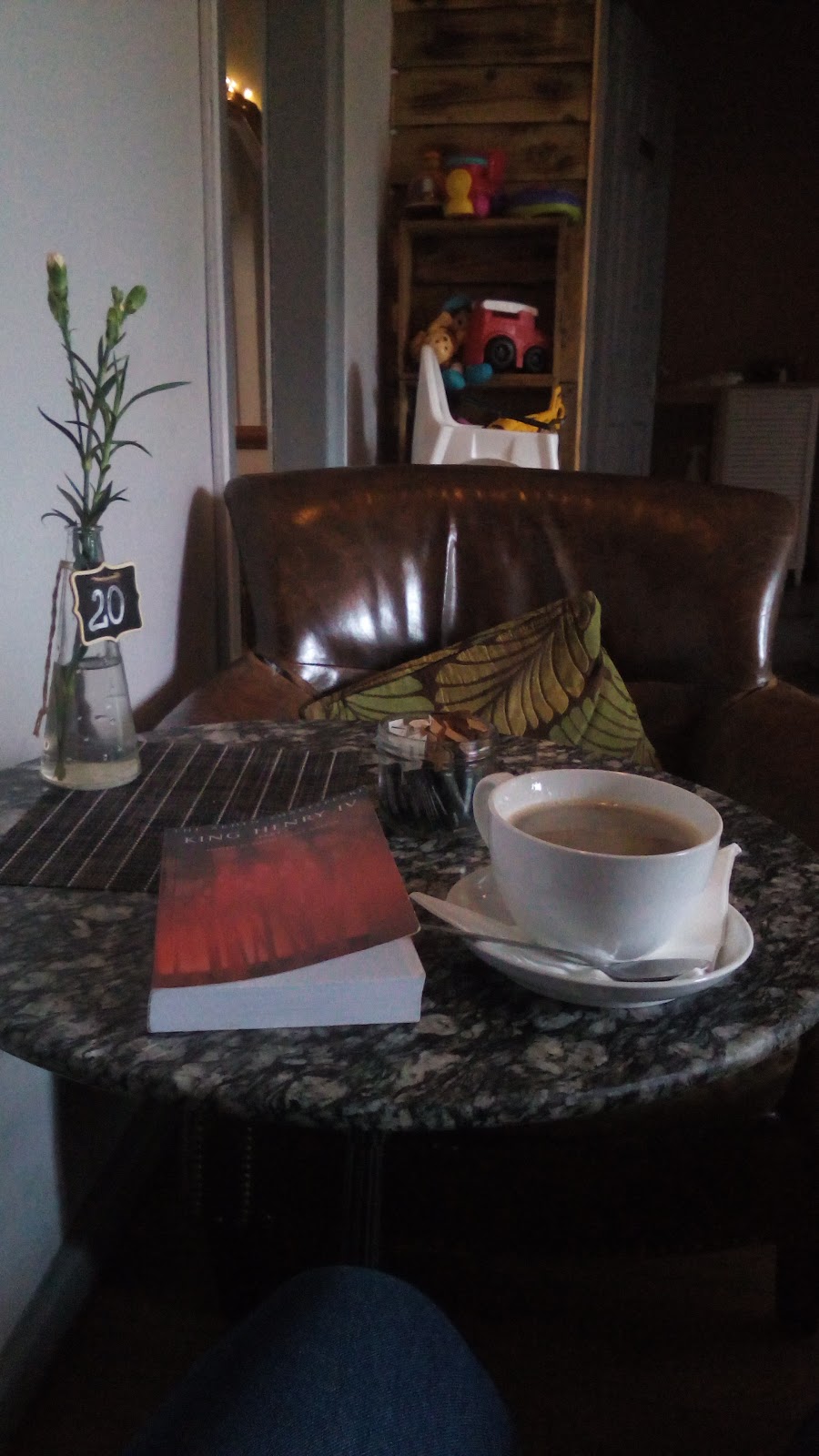
Books   Sometimes the editors in these Arden Shakespeare either rebel against the typical format or at least offer an alternative to orthodoxy.  In the appendix bout sources, David Scott Kastan notices "many serious editions of Shakespeare, like the Arden series, have lengthy discussions devoted to the sources of the plays, and often reprint substantial sections of Plutarch or Holinshed or other texts that Shakespeare clearly read and transformed into drama" before heading off into a few pages of essentially saying there's actually little point because no one can be really sure beyond the obvious examples.

The editor could as well be commenting on this volume's narrative predecessor Richard II which does all those things.  Kastan on the other hand, assumes that we know these other books exist and will probably already have access if we're studying the play.  So rather than simply regurgitating their arguments at length instead investigates the topics he's most interested in.  That makes this one of the more readable Ardens as it keeps the purer lit-crit to a minimum and instead delves into the history of the play and how it fits within the context of theatrical and literary history.

He notes, for example, how the focus of the play has developed over time, from Henry Percy as the heroic figure, to Falstaff as the comedic headliner to the present moment when, thanks to the play usually being presented with the various other sections of this Henriad it's about the tortured relationship between father and son and the fight for legitimacy of both Henrys after the deposition of Richard.  Which is one of the things I love about Shakespeare.  Historically, for the most part, the texts haven't changed and yet they have the capacity to fuel our current interest in having drama with an emotional and intellectual depth.

The Coffee Collection:
92 Degrees, Hardman Street, Liverpool.

How I deal with anxiety.

Life It's been a while. Yes, I still have anxiety but at the moment it isn't running my life. Lord knows, I have enough things to be worried about but between the drugs and other things, I'm feeling pretty solid.  I've been added to the waiting list for a therapist so there's that to look forward to.

Earlier this evening, someone who isn't, a complete stranger who suffered an attack last night was asking mental health author Matt Haig for help and he threw the question open to his followers.  In a dash, I sent her a flurry of tweets of the things which have helped me, so I thought I'd memorialize them here for my own future memory and in case you need some help too.
  • Go see a Doctor, get drugs. I began in Sertraline about three years ago and while I do still have attacks, they're rarely with the impact or regularity.

  • When an attack is happening talk to someone you love even if just by phone. Tell them. Take the sympathy and don't be too proud about it.

  • Get a gravity/weighted blanket and sleep under it every night preferable on top of a sprung mattress. It's like sleeping in a hug. I used to have terrible anxiety dreams and wake up each morning with a pain in my chest. Not any more.

  • Drink decaf, remove caffeine from your life. It's hard at first and you will get depressed about how limited the choice is, but eventually you'll accept that your mental health is more important.

  • Exercise even if it's just walk places as much as possible.  Depending on you mood, listen to a podcast or some music, but sometimes its good to do without and just go with the sounds of the life around you and pay attention to your environment.  Try not to get inside your own head.

  • Anxiety attacks rarely have a reason and although you might think that trying to rationalise them helps, you're probably just going to end up thinking about reasons why you should be having an attack which only increases the intensity.

The Coffee Collection:
Costa Coffee, Smithdown Road, Liverpool.

The Ninth Book I've Read in 2020.

Books The above image isn't quite accurate. The Arden imprint has passed through numerous publishers over the years and my copy is from the Thomson days with their ultra conspicuous blue box on the spine. It's also a demonstration of how the third series has developed since they began publication in the 90s. The introductions generally complete within about a hundred or so pages and often don't bother with appendices. This begins with a hundred and seventy page introduction with a thirty five page textual discussion. The footnotes in the main text are often so extensive there's only room for a couple of lines of the actual text at the top of the page with another twenty pages of "longer notes" afterwards.

Is it possible to say I've read these books if I'm skipping the more overt literary criticism?  My key interests are in the production and publication history, dating of the play and textual notes, so in this case the section on language went unread as did the pages about characterisation which seemed to head way off point.  In the introduction, the author almost apologises for being an expert in their field having studied Richard II for decades but it's good that all of that knowledge has a place somewhere for those who're following in his footsteps.  But I'm reading for pleasure as an adjunct to listening to the plays so perhaps I shouldn't feel too guilting about not wanting to read the line-by-line description of Shakespeare's deviations from Holinshead.

Who is the new Doctor and where does she come from?


TV As both Russell T Davies and Steven Moffat illustrated, the best way to get people talking about Doctor Who is to present the viewer with a huge mystery then leave them hanging. It's a version of the JJ Abrams mystery box, except with a pretty good idea that there's a plan which will result in something debouching towards an explanation.

The reception for the Chibnall era so far within the wider discourse once everyone became used to the idea of someone from Skelmanthorpe playing the Doctor has been pretty lukewarm.  But this year has offered the one-two punch of the return of the Master and now a whole new Doctor, the first who's also played a neurosurgeon on Holby City.

Since Sunday night, there's been a definite shift back to the Bad Wolf days.  We've all become Vroomfondel and Majikthise, the philosophers awaiting Deep Thought's ultimate answer in The Hitchhikers Guide to the Galaxy but with just a few weeks or months to wait rather than seven and half million years.  Many, many websites are however cleaning up in the prediction business.

Ahem.  Well, here my fan theory.  Having already posted this on the bird based social media account, it's probably worth immortalizing here (depending on how your definition of "worth" goes).  I should mention that this is based partially on versions of theories I've heard from a few people now (including @JayStringer).  So this is an embellishment.

Where did the Jo Martin incarnation come from?

The Doctor was loomed/born and happily living on Gallifrey, regenerating now and then when a body is wearing a bit thin.  But eventually the Doctor is called up for service to do a mission, possibly go back in time and decimate the Cybermen.

It goes badly, or at least so badly that the Time Lords want to cover it up.  Post-mission he or she is at the end of a regenerative cycle, or indeed not but the Time Lords force the issue by getting he or she there artificially and the Doctor is given and starts a whole new regenerative cycle ("!").

As part of the process, he's regenerated into a Time Tot and his memory is either wiped or suppressed.  So as far as he can tell and indeed anyone else, he's a fresh new Gallifreyan, his first life (which includes Jo Martin) completely forgotten.  A timeless child.

All of which could explain why the Doctor loses her memory or senses after each regeneration even though most other Time Lords take it in their stride.  It's a side effect of what was done to her - her mind and body has to recover its sense of self.

It's also why various interventions like the Watcher have been used along the way.  Extra support is often needed to aid the regenerative process and even then, something often goes wrong and a mental cascade ensues (The Twin Dilemma, Pudsey Cutaway).

Why does she seem so different?

As for why the Jo Martin Doctor seems a bit more ambiguous and chippy, it's because unlike Hartnell and Capaldi who's connection to humanity eventually domesticates them, this Doctor only spends her time around Time Lords.  You could almost say that she's more ruthless.  Which in her case is literally true because she's gone from being Ruth to Ruth-less.

But why her TARDIS already a police box?

Assuming this wasn't a glaring continuity error, the earlier Doctor could already have been to London in the 50s or 60s so the TARDIS already has that shape embedded in its memory. It's confiscated and reconditioned when The Doctor is rebooted. The Clara fragment on Gallifrey somehow knows that which is why she points him towards it.  Either that of the TARDIS's telepathic circuits subconsciously suggest it to her and she suggests it to the Doctor.

The box then eventually returns him to London via Quinnis so that it can inconspicuously turn back into a Police Box perhaps in an attempt to jog his memory - the telepathic connection indicate that there is something wrong with her thief.  It then remains a police box not because the chameleon circuit is broken but because the TARDIS keeps that shape in constant hope that the Doctor will eventually remember their earlier life together.

Why doesn't she remember all this come The Doctor's Wife?  Well, the TARDIS has been through a fair few traumas by then and so she's "forgotten" that he had a whole earlier history with the Doctor so as far as she can remember, Hartnell was the first.

But what about?

Yes, I know.  If the earlier Doctor's been travelling somewhat too, how come "our" Doctor hasn't bumped into them before?  Why isn't it The Eighteen Doctors?  Well how about, what if the earlier regenerative cycle is "time locked" like the Time War to stop that happening, but when the Master destroyed Gallifrey he unpicked this time lock, causing these these two Doctors to meet.

The Eighth Book I've Read in 2020.

Books King John has been a favourite of mine since listening to ArkAngel's blistering audio recording which runs with the embryonic farce elements in the text and the satirical nature of the melodrama. Act four in particular surrounding the execution of the child and John's reaction thereof are pure Blackadder, as the confluences of coincidences work against him.

This Arden 3 ignores all of that (which to be fair could all be in my mind) and concentrates on the play's sources, linguists, varying fortunes in production and textual state.  The text is incredibly readable, not least because acknowledges pop culture exists with references to Darth Vader and Stephen Colbert among others as points of comparison.

Generally thought of as one of Shakespeare's obscurities along with the likes of Timon of Athens, it nevertheless has the distinction of being the first to be put on film.  The surviving minute and a quarter can be watched here.  But it's a shame that the production analysis doesn't stretch to the BBC Shakespeare version.  Casting Leonard Rossiter in the title role feels like a statement of intent.