TV Inside of You is a podcast in which Michael Rosenbaum interviews actors and actresses who've tended to appear in cult television and film about their time on the shows and the business. Some of the chats are remarkably raw and candid. Rosenbaum is an attentive interviewer who speaks from a position of know having been Lex Luthor on Smallville for many, many years. The Mark Shepherd interview (in full here) goes into some detail about his time on Supernatural and why he left, but for a few minutes he talks about the casting process for Doctor Who which is clipped above.

Stranded 4.

If I've a prescription for Doctor Who: The Eighth Doctor Adventures 2022A Title TBA (which I notice from the Big Finish website sees a reduction in the number of discs to three per release for a slightly cheaper price, it's for a series of very stand alone stories punctuated by the odd connection ala the Lucie Miller era. One of the problems is, I suppose, that unlike other corners of the Whoniverse, the Eighth Doctor's adventures lack a particular identity, which is their charm but can also cause it to become somewhat creatively untethered. Too often the creators are trying to force him into stories which they wouldn't do with other Doctors, when actually the more interesting idea is to put him into a more traditional Doctor Who story and see how he responds.
Crossed Lines
All of which said, there are some tremendous stories in this boxed set starting with this script from Matt Fitton in which the Doctor has reached moment in Seasons of Fear when he decides to visit Sebastian Grayle earlier in his timeline in an attempt to steer him in a better, or at least a direction which isn't quite so lethal for the human race. The best moment is clearly when the Doctor and the Curator (sounding like Colin Baker this time) tell the story of K'anpo Rimpoche and the Untempered Schism and how you can't save everybody and that's OK, just do the best you can. There's also a scene somewhat like Avengers: Endgame in which the Doctor realises that on this occasion, everything he thought about time travel, the rules are wrong, at least in that moment.
Get Andy
Taking his story about the hermit to heart, the Doctor decides to use the current fungibility of space time to save one life and essentially do for Andy was he refused to do for Adric. The Sergeant is at his most serious and realistic here as points out that the Doctor has a habit of picking of strays who're effectively trained to make sacrifices when required because as a space-time incident too important to the web of time to actually die he needs a human shield (it's not quite that blunt, I'm paraphrases). Andy asks if the Doctor has some kind of ability to override his companions natural survival instincts, which makes you wonder about the supporting characters in recent TV episodes who literally sacrifice themselves for the benefit of a total stranger.
The Keys of Baker Street
It's TNG's Remember Me or Doctor Who's The Big Bang. What to make of the Curator now? The TARDIS Datacore page is a riot on this subject with the revelation, which surely must have been on the minds of Big Finish that in a spin-off from the Nest Cottage audios, Baker's End, the central figure "Tom Baker" dies and regenerates into "Colin Baker" and that Paul Magrs has since suggested that the character who appears in the Nest Cottage Stories is the Curator anyway (which would make *a lot* of sense of those mad old stories). It's also implied in here that the version who gave Tania the keys to the house is an older version of the Eleventh Doctor and that the Curator is a kind of notional future for the Doctor who almost exists outside established continuity. Absolutely bonkers.
Best Year Ever
Sorry, but no, too soon. Clearly the intention was the capture some of the energy and experiences of the cast and crew during the making of Stranded. But with the trauma still continuing, I'm not sure we're ready for what amounts to an old school historical set during the start of the COVID-19 pandemic, oscillating between jokes about toilet roll shortages and well established characters dying from the virus, especially since for story reasons the Doctor is rendered powerless, unable to interfere so as not to further disrupt the timeline. Eventually Best Year Ever becomes so akin to a Radio 4 Afternoon Drama about grief during the pandemic, the Doctor sods off back to the TARDIS for months, effectively absenting himself from the series which has his name on the cover.
Clearly this has been done with the best of intentions but the timing is horrendous. Throughout I kept thinking about fans you've recently lost relatives to COVID or suffering from the disease themselves who might be listening to Stranded as a brief distraction or an escape only to find themselves and finding their favourite franchise going over the broad strokes. I'm not sure how you could introduce a trigger warning without also spoiling the main plot, but perhaps that's the problem. The synopsis for episode simply says "What happens if the world is actually fixed? There are times when even the Doctor cannot help" and although it was cagily mentioned on their website, the socials suggested "You may want to stay off the internet if you'd like to listen to the Stranded climax completely unspoilered."
Stranded 3.

Patience
Structured similarly to The Long Way Round (from Stranded 2) as a series of two handers, this purposefully brings together characters who haven't otherwise spent time alone together, revealing previously neglected dynamics. So we have Liv and Andy, Helen and Tania supporting each other, as they wait for the Doctor to convince his Judoon pursuer to change his ways. The big draw here is the huge piece of spin-off continuity which Eighth recounts to the talking Rhino, of the Doctor's sometimes wife, the titular Patience who first appeared in the classic DWM comic The Tides of Time, before surfacing again in Lance Parkin's novel Cold Fusion (recently adapted by Big Finish and The Infinity Doctors. That's a big swing and works wonderfully.
Twisted Folklore
Another of Doctor Who's periodic metafictional discussions on the subject of its own narrative, Lizzie Hopley's script underscores one of the strengths of Big Finish - that it assumes the listener actually has a working knowledge of the franchise, its characters and how its structured and trusts us with the intelligence to play catch up when an episode effectively begins a situation in the middle. Like a less batshit The Natural History of Fear, we find the TARDIS crew embedded in a society, sometimes in roles which seem out of character and listen diligently as the various strands focus. A timely story of how autocratic regimes attempt to control the narrative in order to remain in power.
Snow
The gang visit the alternative 2035 in an attempt to see if they can gauge when things went wrong. The TARDIS Datacore says that in 2035 "the First Doctor, John and Gillian defeated the Caterpillar Men who had captured Earth scientists to help them conquer the planet" (as seen in the TV Comic Annual 1966) and I can't say I wouldn't have preferred something tonally closer to that. James Kettle's Snow is beautifully written and acted, has some poignant revelations, but still eighth months after Mum's death this is still a bit raw (I sobbed over some of the things she liked in M&S earlier), some of the elements too close to home. At least there's a brilliant retcon that Sergeant Andy might once have worked crowd control for Amy Pond in her modelling days.
What Just Happened?
How many listeners like me thought there was something wrong with their download when they heard Hattie Morahan reading the production credits at the start of the episode? Telling any story in reverse order on audio is a hugely bold idea but unfortunately I'm not sure it quite works because it's not attached to the story being told. Most of the revelations have either been in other episodes or at the start of this and so much of the duration is spent listening to exposition which is already redundant. A McGann voiceover interjecting with the time changes also has a Brechtian distancing effect. The cast were apparently given a version of the script in which the action appears in chronological order and I can't say I wouldn't have preferred to listen to this more straightforward version.
Placement: After Stranded 2.
Stranded 2.

Audio First some housekeeping. As you may have gathered from elsewhere, I've had the COVID which left me pretty devastated for about three weeks so this old blog thing went dark for an actual reason this time. All my plans to have a massive Eighth Doctor catch-up were set to one side while I grumped about the flat eating ham sandwiches and watched endless YouTube video essays about topics I barely care about. Now that I'm back to my usual 70% so expect a few more updates.
Having endured it now at least once and fortunately two years on from when it could have been absolutely devastating, there's something even more poignant listening to the talent in the making-of sections of Stranded talking about how this whole thing was recorded in people's homes, actors sitting in their child's closets or under duvets in a spare room. Everyone is pretty uncertain about the future. I wonder how they're feeling now that we're two years into it.
A few also notice the irony of recording a series like Stranded at a time when that's how they themselves felt. But in this second instalment, the Doctor finally has the ability to travel in time if not space. His arc in the first chunk of the series was about accepting his situation and his tenants. Now we have him treating them like real friends, companions, taking them to the past and future, somewhat recklessly and on occasion risking their very existence. You'd think he'd be a bit more careful.
Dead Time
When RTD created PC, sorry, Sergeant Andy as a foil for Gwen on Torchwood, could he have ever imagined that fifteen years later, he'd be time travelling with the Eighth Doctor at Big Finish? But here he is, Tom Price somehow managing to retain the bobby's naivety about spooky-doos while simultaneously portraying weariness of a man who endured Torchwood's Miracle Day (and we all know how that feels). Despite all of that it makes complete sense that his first trip in the TARDIS would lead to some queasiness. Dead Time is pretty generic stuff, silly computers, potential destruction of an eco-system, companions walking off and getting themselves in trouble and a far future setting.
UNIT Dating
I'll admit to an initial weariness about Jon Culshaw playing Brigadier, but having heard him on a few plays now, his studious performance is a tribute to Nick Courtney, simply stepping in for an absent friend. He's utterly delightful in his scenes with Eighth which through Roy Gill's script offer a re-assessment of the slightly parodic figure who emerged in the latter years of the Pertwee era. Otherwise this is Big Finish doing a more thematically substantial Eve of the Daleks a couple of years early, sensitively exploring being able to love the one you want to love in various times and coping when that person's personality and memory keep changing and there's nothing you can do about it.
Baker Street Irregulars
Good old fashioned historical romp with the Doctor putting right what he's accidentally managed to put wrong (as is so, so often the case). Fans of Larry Miles's Interference will enjoy the sophistry deployed here in order to explain why the Doctor doesn't simply wade into World War II despite having stopped even more substantial wars on other planets. If anything the B-plot in which Liv and Tania diffusing a bomb with the potential to freeze time in just one section of London is the more interesting and could have merited a whole episode and still could on television. Imagine the visual possibilities of having a TARDIS crew trapped in a frozen pocket of reality as history continues around them.
The Long Way Round
Another masterpiece from one of the Eighth Doctor's audio auteurs John Dorney. The writer was inspired to write something which would be easier to record in lockdown, a series of two handers telling one story. But he builds that story superbly, crosscutting between playing to Tom Baker's strengths and having his Curator enjoying a charming conversation with a child (which includes an actual namecheck for Gemma Griffin!) and a series of interrogation sessions as the antagonist Houlbrooke speaks to each of the Doctor's friends in order of their closeness to him. slowly building our anticipation for the antagonist's final encounter with the Time Lord which doesn't disappoint. Essential.
Placement: After Stranded 1.
Evergreen (Short Trips: A Christmas Treasury)

Prose This is lovely. The Eighth Doctor is lodging at a farm offering assistance to its recently widowed inhabitant, Connie, who's become an outcast to the superstitious villagers who live nearby. As deaths begin to mount up, he finds himself drawn to investigating the cause. Having recently experienced my first Christmas after a bereavement, I can appreciate Connie's loss although unlike her, we wanted to keep up some of the traditions which were most important to us, especially decorations, tree and presents. The story is mostly from her point of view, although that also means it resolves itself off page with the Doctor providing a lengthy explanation as to what's happened which is a bit anti-dramatic.
Placement: It's an example of those stories which slowly reveal when in this Doctor's life we're greeting him revealed when he talks about having lost his memory and travelling to make new ones. There's no mention of the TARDIS or his companions, so we have to conclude it's a rare visit to the Earth arc, perhaps not long after The Burning?
Gazing Void (Short Trips: A Universe of Terrors)

Prose "I became a monster to fight monsters." This key line spoken by the deposed genocidal dictator whom the Doctor has been tasked with psychiatric care in this Huw Wilkins story is incredibly sinister. How many powerful maniacs whose behaviour we've had to, and still endure, are entirely aware of that horrors they're perpetrating make them somehow inhuman but perpetrate them anyway because they assume it's for some spectral greater good?
Part of anthology with a pretty self explanatory title, Wilkins's story doesn't really have an answer outside the outrage machine at the heart of the story. The brevity of the text means the atrocities are pretty generic and nothing is really resolved. This was written ten years before Eighth's regeneration so he's able to say "Violence isn't the answer" with a straight face. He'd later become just the sort of figure he absolutely deplores, yet is oddly sympathetic to here.
It's fine, reading mostly like a three handed short play. The writer also implies the Time Lord spent a couple of years in this war zone, a whole era of Eighth Doctor stories hidden within a few sentences. Not sure how many writers would be brave enough to do that now. But this does feel like a story which couldn't necessarily be told with any of the other earlier incarnation. Even Seventh doesn't feel ruthless enough to think this dictator would be put to death and not have anything to say about it.
Placement: Just before Blood of the Daleks. He's in a chippy mood.
A Public Service Announcement for viewers of the fourth episode of Picard Season Two.
TV Just a short note for those of us a bit confused about what looks like a massive fucking continuity error in this week's Picard. I wouldn't read this if you haven't watched it yet.
Throughout, for various reasons, I kept shouting "Time's Arrow" at the screen and waving my arms around.
Then I took to Twitter, did a quick search and then felt like a total idiot as I read through this Screen Rant click bait.
The future has been changed. Which means everything past 2024 is different which means many of the time travel episodes I listed here, including Time Arrow never actually "happened".
This Picard, or at least the body that his mind from the proper timeline now inhabits, didn't go back in time and meet Guinan at the earlier date and so when she meets him in Ten Forward, it's for the first time from her point of view.
No continuity error here folks. Sigh.
Here's a longer quote from one of the show runners and an interview with nuGuinan, Ito Aghayere, at Variety (in which she talks about watching Guinan's previous appearances and how that fed into her acting choices).
Perhaps, though, when he mentions his name, she has one of those moments when memories of that timeline brush against hers which is what leads her to take him to see the Watcher. She doesn't have details. Like Yesterday's Enterprise, she knows that something is wrong but can't put her finger on exactly what that is.
If the show understands continuity enough to refer to Sanctuary areas as per DS9's Past Tense (another story which hasn't now happened), it'll be completely aware of Time's Arrow and working around it.
Why didn't Picard just bring it up anyway? Why add an extra level of confusion for the casuals?
Aha, but what about the Kirk Thatcher cameo? The whales presumably became extinct even in the alternative 23rd century, so the probe still arrived and almost destroyed Earth so nasty Kirk and Spock still had to go back in time to capture the whales, still met Kirk Thatcher, Spock still gave him a nerve pinch and well, there we are.
Perhaps next week, they'll explain how Picard doesn't seem to know what a Watcher is, despite having met one on numerous occasions.
Star Trek's pre-history. A watch list.
TV There are many, many lists online offering tips on how to watch Star Trek in chronological order. This is my favourite because of the way it weaves the episodes in and out, especially around the Maquis storyline which kicks off Voyager. But there many others, so there would be little point in me trying to do another in the style of my Doctor Who list.
But something I've often wondered is if it would be possible to create a watchable pre-history for Star Trek, collecting together all of the time travel and flashback episodes from across the franchise pre-Enterprise and dropping them into chronological order. Turns out that yes, you can, but there aren't as many as you would think.
Much of the time when Star Trek does time travel its within the window of the show's own history from Enterprise through to Discovery 2.0, it doesn't travel much further back very often and when it does, it's sometimes into alternative timelines in which aliens are pretending to be Nazi and that sort of thing. Or it's a dream sequence as per DS9's Far Beyond The Stars.
So the rule here is that the episode has to feature events which take place in the Prime timeline before the Enterprise opener Broken Bow. I did consider interpolating material from other sources based on that show's epic opening title sequence and I may still do that, but just for now let's keep this as clean as possible. So here's an excuse to watch some more Star Trek.
1863
"An engineering team finds evidence of an alien presence on Earth in 19th century San Francisco: Data's severed head, buried five hundred years ago."
1930
"Suffering from an accidental overdose of cordrazine, Doctor Leonard McCoy goes back to 1930s Earth, forcing Kirk and Spock to go after him and prevent the Enterprise and the Federation from being erased from history."
1947
"A malfunction on Quark's new ship causes Quark, Rom, and Nog to crash in the year 1947 in Roswell, New Mexico."
1958
"T'Pol tells Archer and Tucker a story about her great-grandmother and two other Vulcans, who crash landed in a small Pennsylvania town in the year 1957."
1968
"The Enterprise travels back in time to 1968, where the crew encounters the mysterious Gary Seven who claims to be sent by advanced beings trying to help Earth."
1986
"Admiral James T. Kirk is prepared to take the consequences for rescuing Spock and stealing and then losing the starship Enterprise, but a new danger has put Earth itself in jeopardy. Kirk and his crew must travel back in time in an old Klingon Bird-of-Prey to right an ancient wrong, in the hopes of saving Earth – and the Federation – from certain doom."
1996
"After encountering a Federation timeship from the future, Voyager is sent back to 20th century Earth."
2000
"Kathryn Janeway discovers the truth about one of her famed ancestors, Shannon O'Donnel, realizing that who Shannon was differs vastly from what Janeway had believed all her life."
2004
"Archer and T'Pol travel back in time to stop the Xindi-Reptilians in 21st century Detroit."
2024
"Trapped three hundred years in the past, Sisko, Bashir, and Dax find themselves confronting one of the darkest hours in Earth's history…"
2037
"An accident during an attempt to use a Xindi subspace corridor places the Enterprise in a bizarre confrontation… with itself."
2063
"Six years have passed since Captain Jean-Luc Picard was captured and assimilated by the Borg. Now, the Borg make a second attempt to conquer the Federation. Starfleet believes that Picard's experience makes him an "unstable element to a critical situation" and orders him to stay behind. But, when Starfleet's fight does not go well, Picard and the crew of the new USS Enterprise disobey orders to join the fight, following the Borg three hundred years into the past just as Zefram Cochrane prepares to launch Humanity's first warp-capable engine, the Phoenix, and make first contact with an alien race."
2143
"When he is told of the death of an old rival, Archer reflects on his days in the NX test program."
Annotations:
Radio Control.
TV In this month's Doctor Who Magazine, Eddie Robson's written a brilliant survey of the kinds of radio programmes available on BBC Sounds related to our favourite franchise. Of course the problem is printed pages don't have hyperlinks, so I thought I'd do everyone a favour and present a list of the programmes he mentions with links to where you can listen to them. You should of course buy a copy of the magazine because his text provides a lot more structure.
Some notes: I've separated them out into alphabetical order by programme title then episode, apart from Desert Island Discs which puts the Doctors first. Jon Perwtee also appeared on DID, but his episode is missing from the archive, but I've included a link so at least you can see his choices. Also, The Sound of TV has already dropped off BBC Sounds, but I've put a link in anyway just in case its repeated.
Afternoon Concert
Archive on 4
BBC Proms
Chain Reaction
The Classical Life
Desert Island Discs
Documentaries
The Film Programme
Free Thinking
Front Row
Great Lives
The Infinite Monkey Cage
In Touch
Megamix
Meridian
Night Waves
On Screen
Profile
The Reunion
Saturday Live
Susan Calman's Mrs Brightside
Thinking Allowed
The Verb
Waveguide
Woman's Hour
waitrose liverpool
Web As I've mentioned previously I have a Google Alert set up for the words waitrose AND liverpool in the hopes that one say it'll feature an article for the shop opening its doors somewhere closer to me than Formby. Still no news, but I did learn recently about a salmonella scare in relation to their Green Pesto with Basil. Products have been recalled.
Casey Cep of The New Yorker writes here about the serendipity of Google Alerts and it has to be said her discoveries, especially about herself, are far more interesting than potentially dangerous pecan nuts:
"Google Alerts exercise no judgment, so, in addition to sending you to your ex-boyfriend’s blog alongside The New York Review of Books, they fail to warn you the former is complaining that you got tenure before he did, while the latter is praising your academic research. As a result, they are not for the squeamish, since the good, the bad, and the unreadable appear together without any warning; the service promises content that is new, not content that is useful or desirable."
As she says, it seems to work best with topics that are either incredibly niche or very broad. This also reminds me I need to sort of my inbox.
The Mary Whitehouse Experience.
TV Sorry, I couldn't come up with a better title for this post. You probably clicked expecting something about the "you could do a lot better" sketch or Ray or "that's you that is" but this is actually about Doctor Who again. I was thinking about the exhibitions in Cardiff and London and thought inserting the name of the late censorious nonagenarian would be funny before realising it suggested something else which is how we ended up in this opening paragraph length disclaimer.
This Saturday's instalment of BBC Radio 4's Archive on 4 strand is Disgusted, Mary Whitehouse in which Samira Ahmed talks about the life and work of the person who's complaint about Doctor Who led to them physically vandalising and transmission tape after spending months reading through her diaries at the Bodleian Library (not all heroes wear capes).
On his blog, in a post with with a much better title than this, one of the producers Simon Gurrier talks about the production and in greater depth about Whitehouse's enmity with the Time Lord and the extent to which her criticism had some foundation:
"Right from the beginning of Doctor Who, there had been questions about how suitable it was for children. Opinion on this was “strongly divided” at the executive meeting of the BBC’s Television Programme Planning Committee on 4 December 1963 - after just two episodes of the series had been broadcast. The following week it looked like the programme might be moved to a later time in the schedule, though this was over-ruled by Head of Drama (and co-creator of Doctor Who) Sydney Newman."
Whitehouse will be voiced in the documentary by Lisa "Bernice Summerfield" Bowerman if you need any more incentive to tune in.
Romola on her career.
Film As part of the BFI's Future Film Festival 2022, future Doctor Who Romola Garai gives some perspective on her career for anyone keen to follow in her footsteps, from her shaky first steps into acting school to diversifying her creativity beyond performing into writing and directing.
Why are all streaming services rubbish?
Film Like most film fans, I'm subscribed to a lot of streaming services and in terms of the television versions of their apps, they're all an absolute mess to use. With each utilising a different interface, most are more interested in pushing new content than making it easy to get back to the films and television we've already been enjoying. Watchlists are often hidden away or take several clicks. The iPlayer's the absolute worst example with its "your added programmes" section at the very bottom of the page.
Much of this has to do with a lack of standardisation between the apps. When streaming was first introduced, for the most part, the app producers had to the follow a template which was baked into the technology. So on my first "smart" DVD player, the Amazon and Netflix apps worked pretty much identically. But with more powerful technology, that's no longer the case and that freedom has come with a usability cost. The user has to learn how to use each streaming service separately which as I found with my elderly parents creates a barrier between the user and the content.
Hypercritical suggests here a standard spec for streaming apps to adhere to and it all seems eminently sensible.
"There must be a way for the user to manually create a list of media. In the common case, this is a list of media that the user intends to watch (eventually), but it can be used for any purpose. The important part is that the user makes the list intentionally. Nothing gets added to this list automatically."At a minimum, the list must accept top-level items in the hierarchy (e.g., TV shows, movies). The list could also accept more granular items, like individual TV episodes." [via]
My solution has been to largely abandon smart apps altogether. Instead, I have my TV set up as the third screen on my PC with a very long HDMI cable around the room to the television with the mouse positioned within hands length of the armchair. Many streaming services have Windows apps and although they're somewhat like their TV counterparts, are much easier to navigate with a mouse and keyboard. Plus it allows access to streaming services which don't yet have a workable tv app and remain stubbornly in the browser.
As for watchlists, my LetterBoxd Pro subscription allows me to tell it the services to which I'm subscribed and the free streamers which means I can have a unified list of films things I'd like to see which acts as a kind of off-site (honestly ITV Player and 4od are significantly less shit in a browser). The list can also be sorted chronologically by release date and date added, filtered by decade or genre and shuffled so that if you have a list as long as mine, some of the more unusual stuff will surface.
Cataloguing BBC Radio 4's In Our Time using Dewey Decimal Classification.
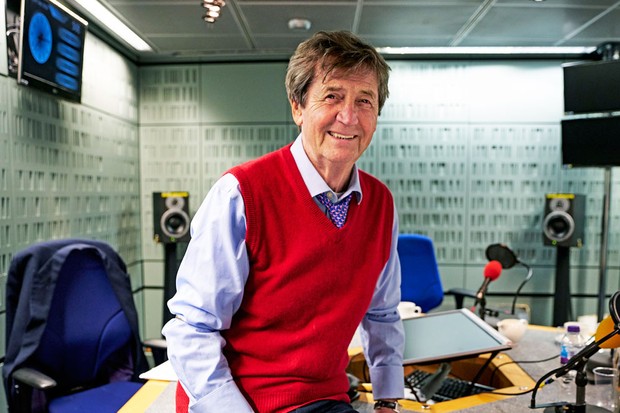
Radio In Our Time is a weekly live BBC radio discussion programme in which the broadcaster Melvyn Bragg and several academics elucidate a topic of a philosophical, historical, cultural or scientific nature. It's been on air since October 1998 and its format has changed little in that time, a moment in the week to listen to a group of very clever people saying some very clever things for forty-five minutes.
The series has clocked up nearly a thousand episodes and its inevitable with an archive that rich that a listener is more likely to catch-up on instalments which cover subjects with which they might casually be interested or being studying at school or university. Except the website only sorts the episodes into very broad topics, culture, history, philosophy, religion and science so someone wanting to hear about mathematics or theatre has to wade through many pages of other topics.
Which is why, with my librarian's brain, I hit upon the idea of sorting the episodes using a library classification system and after the comparing a few decided Dewey Decimal Classification system (DDC) would suit the purpose because it's less complicated to work through than others and will be most familiar to readers due to its prevalence in public libraries. Also Library of Congress can be astonishingly obtuse with all of its letters AND numbers.
Find below the results of my free time this past week and a half. As you can see it's pretty logically ordered, a combination of following an abridged copy of DDC designed for small libraries originally published in 1979, Classify (an experimental classification site which aggregates the choices of thousands of librarians across the planet) and this Wikipedia page which has the most recent names for class names and hierarchical divisions.
Classification is automatically a compromise. You're applying a numerical label to an object which it wasn't really designed for, so on some occasions, especially with something like In Our Time which revels in obtuse topics, there isn't a perfect place for the episode to go. Also I've only used the a heading when it pertains to an episode which is why it looks like there are gaps in the sequence. Melvyn and the gang haven't covered every sub-division in the DDC.
Every title below links to the episode's page on the Radio 4 website.
You'll notice that if you're on a PC and you hover over many of the links have what would be the original shelf number which was part of the initial iteration to show I'd done the work. But it became too fiddly to update since so I've left them out and some of the items have moved around since then too. There are too many of them to remove so we're stuck with them, but this paragraph was by way of explanation.
You might also like to hear, Melvyn talk to Mishal Husain on the Today programme to mark the 1000th episode.
Anyway, I hope this is of some use to you and if it is, please consider leaving a Ko-Fi donation. The most recent episodes are here and I'll try to keep this list updated as much as possible.
The Hamlet Gamble.
Theatre The last Hamlet I reviewed was from Shakespeare's Globe in April 2020, which I was fortunate enough to see via YouTube during lockdown. Their latest production, from the Sam Wannamaker Playhouse was due to be streamed this month, but they cancelled sighting the cost. Now the professional reviews are out, I should be pleased. It sounds horrendous:
But I shiver to think about the people for whom this could be their first introduction to the play and Shakespeare in general. Will any of this make any sense? Isn't adding in lines from Romeo and Juliet simply confusing? Not to mention my usual annoyance that you wouldn't do this sort of thing to other artforms, so why must Shakespeare's writing continually endure this desecration? [via]
"I can just about understand why Holmes introduces a speech from Romeo and Juliet, but not why he replaces the gravediggers’ dialogue with a rambling contemporary improv routine and a singalong of Kenny Rogers’ The Gambler, all performed by the show’s composer/musician Ed Gaughan. This is the most misguided interpretation of the scene since I saw it done in the mid-90s as a rap that ended with the words “now I’m gonna neck Ophelia”."Here's the key problem with this - it's for people who already know the play. I'm still curious to see it, because any variation from norm is always interesting especially if there's a particular intellectual underpinning. Lord knows, after seeing the play forty-one times in different versions, it's the variations on the main theme which keep it interesting. It sounds brilliantly awful.
But I shiver to think about the people for whom this could be their first introduction to the play and Shakespeare in general. Will any of this make any sense? Isn't adding in lines from Romeo and Juliet simply confusing? Not to mention my usual annoyance that you wouldn't do this sort of thing to other artforms, so why must Shakespeare's writing continually endure this desecration? [via]
Annotations:
An Editor's Burial: Journals and Journalism from The New Yorker and Other Magazines.

Books An Editor's Burial: Journals and Journalism from The New Yorker and Other Magazines is a companion volume to director Wes Anderson's The French Dispatch which presents the voices, stories and people who influenced the fictionalised journalists and their tales as they appear in the film. Each chapter has the density and intensity of reading a whole book, which is why its taken me nearly a week to reach the halfway point.
But throughout I wondered, did I need to buy this? Given that they're mostly articles from The New Yorker, could I not simply have looked at the website instead? Comparing the contents page to the available texts and the answer is both yes and no. While there are plenty of New Yorker articles and many are free to read, many of the chapters about working at the magazine are excerpted from books and other articles are behind a paywall.
My finds are below for your edification. If you have the money, I'd certainly recommend the book, especially if you're a fan of the film. The chapter on Paris alone is worth the money, especially consider the current price for the full volume. If the title's in bold, it's a link to the complete article free to read on The New Yorker website. If it's in italics, it's a link to the complete article behind the paywall on The New Yorker website. If it's underlined, it's a link to the source book on Amazon.
The Pilot Light
A conversation between Wes Anderson and Susan Morrison.
A conversation between Wes Anderson and Susan Morrison.
James Thurber
Brendan Gill
Luc Sante
Joseph Mitchell
Lillian Ross
Ved Mehta
S. M. Behrman
Calvin Tomkins
Mavis Gallant
Janet Flanner
James Baldwin
A.J. Liebling
A.J. Liebling
E.B. White
S.M. Behrman
E.B. White
Hearts of Darkness (The War Master).

Audio Spoilers ahead, warning, spoilers ahead. If you've not listened to Hearts of Darkness, stop reading here. That caution proffered, the fact I'm reviewing all four episodes should be a strong indication that this is a bit more than the cover suggests except to say, within this pre-amble, that what we have here is essentially a bonus Eighth Doctor Time War box set under a different guise and so therefore essential to anyone at all interested in this incarnation (assuming printing McGann's face on the box wasn't enough already).
The Edge of Redemption
Not having really followed The War Master series unless McGann's face is printed on the box, the changes to the renegade Time Lord's personality seemed to be a character choice made by the writers in order to sustain him as a protagonist over many episodes. Even the lightened shades of Jacobi's performance seemed to be a choice to indicate that they're working towards Professor Yana or some ethical re-engineering in a boxed set I'd missed. He's very specifically not attempting a McGann impression but rather what a Jacobi incarnation of the Doctor might be like.
The Scaramancer
Why doesn't the Doctor reveal his identity earlier, especially when The Scaramancer obviously has cause to have the body he's currently inhabiting? The more obvious answer is to delay the end of the episode surprise but the in-story explanation could be that he sees the Master's identity as a way of opening doors and taking steps that he'd find morally dubious in his own skin. My tired old brain did later wonder why the Doctor didn't recognise her from their old Doom Coalition days, until I remember that it's a different character. She was the The Sonomancer, completely different 'mancer.
The Castle of Kurnos 5
Finally the big reveal that the Master is essentially a supporting player in his own series and that the character we've been listening to for the past couple of hours is the Eighth Doctor with a different face, the no guns rules now making perfect sense. The Castle of Kurnos 5 offers us some prime Eighth Doctor shenanigans in the flashback with a witty one-off companion, a host of fantasy tropes and walking straight into a trap. I know it's his job, but I'm always impressed with how McGann modulates his performance to reflect were the Eighth Doctor is on his timeline, at least in terms of the audios.
Cognition Shift
Which makes his portrayal of the Master even more sinister, especially when he says "the line". Like Jacobi, he's proposing what his incarnation of the Master might be like, which is to say just as charming and in such a way that you can believe that he'd become a Kurtzian figure leading a population of dupes. It's unfortunate his plan isn't allowed to succeed before its foiled. Having the Master's consciousness consume the entire Dalek fleet is an epic, horrific prospect along the lines of the entirety of humanity having John Simms's face and on television would surely be the stuff of an RTD cliffhanger, the Dalek Emperor booming "I am the Master and you will obey me. Or I will exterminate you ..."
Placement: The Doctor talks about becoming more involved so just before The Time War boxsets.
Short Trips and Side Steps.
TV Find above an absolutely adorable short trip to herald the release of Season 22 to BD. When I watched these again in situ (gods) nearly ten years ago, I found them to be pretty middling, mostly because the approach to producing forty-five minutes episodes amounted to stretching the content of a half hour instalment to fill the time rather than increase the richness of the story or incident which leads to moments like the one in Timelash were the Doctor and Peri are parked in a green room uncomfortably waiting for the next bit of plot to arrive.
This release includes A Fix With Sontarans which should be quite controversial if it features as is could be a source of controversy. The chance are, as Martin Belam says, it'll be topped and tailed somehow, perhaps fading out just as Tegan shouts "Doctor, look at the screen ..." providing a cliffhanger. The "story" was also mentioned in a documentary on the special features about the hiatus. Will they keep that in or will we lose Colin's intriguing line, "J---- S------ is much more frightening than the Sontarans, much more. I will leave it at that." Oh.
Blue Monday Links.
[Editor's Note: This will be the last of the daily link posts. I was going to try for the year, but without a particular focus it's taking too much of the day to do and stopped being fun. Hope you've enjoyed it and be assured, if I'm still here, Christmas Links will be back in December.]
Radio 4 and Radio 3 explore the legacy of Modernism:
BBC Media Centre: "Marking 100 years since the publication of Ulysses, Radio 4 and Radio 3 explore Modernism’s big bang - and its aftershocks - in a season of programmes."
BBC Media Centre: "Marking 100 years since the publication of Ulysses, Radio 4 and Radio 3 explore Modernism’s big bang - and its aftershocks - in a season of programmes."
Lee Grimsditch: "The rare object is a reminder of one of the biggest scandals of the 20th Century."
Madison Dapcevich: "The actor said he was sick of the crap coverage."
EJ Dickson: "The ‘Yellowjackets’ star has gone from character actor to leading lady thanks to her singular ability to project simmering rage beneath a placid exterior."
Jay Rayner: "Give us over-50s a menu we can read, grownup waiters and the chance to hold a conversation. It’s not too much to ask – and it makes business sense too."
Sunday Links
Nola Pfau: "The 2021 MCU entry is finally streaming on Disney+. Here’s what you need to know before hitting play."
Southport Lifeboat: £1.4m station opens after three-year construction:
BBC News: "The £1.4m building has been paid for entirely by public donations on behalf of the Southport Offshore Rescue Trust."
BBC News: "The £1.4m building has been paid for entirely by public donations on behalf of the Southport Offshore Rescue Trust."
Dylan Moriarty and Joe Fox: "Politicians in all but a few states have something urgent to quarrel about these days: maps! Control of the U.S. House is on the line — or within the lines. Here’s the deal: The once-a-decade census determines how many people from each state go to Washington, D.C. And states get to fiddle with the boundaries of those congressional districts. How the maps are drawn can make a big difference in which party winds up on top."
John Hoare: "At the end of last year, we talked a little about how some sitcoms were shot far closer to transmission than I ever expected. But sometimes, such stories just seem a little too unbelievable. Take Are You Being Served? – or, specifically, Wikipedia’s episode guide for the show. If you scan your eyes down that list until you reach Series 5, you will come across something rather odd."
Daniel Drake: “I sometimes imagine a future in which Shakespeare’s plays have lost their edge, no longer speak to us. That won’t be in my lifetime.”
Leah Greenblatt: "The actor-director has seen fame from both sides now — and he's ready to talk (with Matt Damon, and us) about it."
Kate Dwyer: "Why does this image keep resurfacing on social media?"
James Tapper: "She began creating them as an outlet during the first lockdown, now the actress’s spoof sketches are a massive internet hit."
Meredith Jacobs: "Jeremy Sisto, now in his fourth season as Assist. Special Agent in Charge Jubal Valentine on FBI, was no stranger to Dick Wolf‘s (ever-growing) TV universe before he joined the CBS procedural. In fact, Law & Order, on which he played Detective Cyrus Lupo from 2008 to 2010, is coming back for its 21st (!) season on February 24 on NBC."
Laurie Penny: "Yes, we're going to Talk About Bruno."
Subscribe to:
Posts (Atom)