When the Rain Comes.

Music  Hello. Listen to that! Just listen to it! Twenty-three years on from the release of One Touch, ten years since the release of anything by this line-up and here they are with more new music released near the time of its recording and it's amazing

Their voices have matured and deepened but that harmony which slowly ebbed away with each line-up change across the ensuing decade is back and just as glorious and unique as ever. Not to mention it sounds like a Sugababes song that meld of pop and R'n'B which other bands attempted but couldn't recreate the alchemy. This sound is steadfast. 

But so are the people. In 2009, Sioghan gave a semi-notorious interview in which she talked about her time with the Sugababes in less than glorious terms.  I'm putting this here to just to demonstrate just how broken everything was in the late-00s:

Was it your decision to leave?
SD: Hell, yes. Though there was no doubt that I was pushed out. It was clear that there was someone in that band who never wanted me in it and that’s Keisha. She never wanted me in that band and made my life a living hell. It’s funny... all these years on, I’ve grown up and I’ve left it all behind me and I’m not bothered by it. I think a lot of the memories, I have just blocked out because I don’t really like to think of the nasty stuff. I like to think about the good things in life, always focus on the positive, and Zen and all that shit. But I’ll never forgive her. Though no-one forgives that first bully in their lives, do they? No-one does. Even when you’re fifty. Though, on the other hand, it doesn’t matter. You meet so many people in the world. Why would I need to reconcile with that person? I don’t even know if she would want to.
Well, Siobhan did forgive her and as she's since said, it was a situation in which they were all manipulated by their management and whoever. Perhaps Keisha saw this and reached out?  Nevertheless, they're back it is indeed about time and again in a Doctor Who anniversary year.  Let me put it this way.  If Flatline was the TV Movie, this song and apparent album are the 2005 revival.  Hopefully they won't regenerate this time.

What about Breakfast At Tiffany's?

Film  Tonight I had the privilege of watching the version of Breakfast at Tiffany's broadcast on Boxing Day last year on Channel 5 at 9:05 in the morning. Yes, 5 broadcast a PG rated romance between a call girl and gigolo at breakfast time with these sponsorship buffers no less:


But what was interesting about this broadcast was that Channel 5 took the decision to remove all the scenes featuring Mickey Rooney's yellow faced turn as Holly's neighbour Yunioshi. As expected, the usual people were quite cross about this.  Apologies for this Daily Mail link.

In the thorough retelling of the making of the film, "Fifth Avenue, 5 A.M.: Audrey Hepburn, Breakfast at Tiffany's, and the Dawn of the Modern Woman", author Sam Wasson interviews the producers of the film who talk about how they pleased with director Blake Edwards to remove the scenes.

But they were in New York, he was in LA and the director who'd been friends with Rooney for years was adamant that they stay in, despite test screenings indicating that audiences found those scenes uncomfortable and didn't laugh at all. 

The producers did get Edwards to shoot two versions of the one scene in which Holly and Yunioshi properly interact, one with Rooney, one without with a view to cutting him out completely from the finished film. He was not, which Edwards later regretted. 

Rooney for his part said just before he died that he shouldn't have done it. 

So what's Tiffany's like without the yellow face? Blissful and if you were showing this version of the film to someone as their first go around they would not have known that anything was missing. Whoever prepared this was immensely sympathetic. 

Mostly the removals are achieved through dissolves as in the opening scenes when Yunioshi complains about Holly pushing his buzzer to let him in and she's followed by one of her clients from the evening. Instead of her placating him, it dissolves to Paul arriving in the taxi. 

Of course, this does have the knock on effect of removing Holly's first proper appearance so the first chance we really get to see her is when Paul calls on her as he arrives in the building to use the telephone. He's much more of a viewpoint character into her world. 

Yunoshi is still a ghostly presence. He's mentioned a few times, notably when he calls the police at the party. When Paul goes to answer the phone, we see him hear the ring, cut to eyepatch joke, then cut back to him putting the phone down. No information is lost. 

In the drunk staircase scene, we cut directly from the moment Holly falls onto Paul's shoulders to her complaining about being interrupted and it simply looks like she means by herself rather than the cutaway to her upstairs neighbour from above. It works just as well. 

Tiffany's has always been an uncomfortable watch for me because of these scenes. Much as I loved the film, and I do love the film, I've said before I would give anything to be Holly Golightly in those opening scenes, I haven't gone back to it because of them. 

So what you lose from some of Holly's jokes, you gain from not having to deal with this racist stereotype stinking up the place, whose presence disrupting the tone of the film, outweighs actually how much screen time he has. Removing him matters not a jot. 

Ethically, of course, all of this is quite dodgy. Few of the original creators are still around to sign off on it and if should never replace the theatrical cut, which is an artefact of its time and beloved by many as is. 

But as an alternative version for those of us who're pulled out of the atmosphere of the story whenever Rooney's bucktooth caricature blunders through, it's dynamite. 

And if this was how some kids were introduced to the film that Boxing Day morning, well fine. 

Barbenheimer logistics.

Life  Usually I'm not one to not avoid taking part in a collective meme, but having an excuse to see two films by a pair of our greatest filmmakers isn't something to not be embraced.  Spending the day at the cinema was something I used to do a lot but as the cost of tickets rose, even for day showings, and the variety of films at multiplexes reduced, I got out of the habit.  Having had too many bad audience and/or projection experiences, I just stopped going to the cinema except for spoiler-sensitive franchise features.

Lately, my cinemas of choice have been the Vue in Birkenhead, Picturehouse at FACT and the Cineworld in Speke.  My calculation for where to see a film is usually based on screen size and price and although the largest screen at FACT is big enough, I've been travelling out to Cineworld when a new release has been relegated to the smaller screens, which also has the benefit of being pretty quiet during the day, especially in the morning.  The downside is it's also pretty expensive even during the day, and I have free member tickets for the cinema on Wood Street.

For Barbenheimer, I immediately looked at the logistics for Cineworld and sure enough they were very good, especially for Monday - 10:30am for Barbie (10:50 after adverts) then a 13:15 for Oppenheimer (more like 13:30) - so plenty for time for a sandwich in the middle.  But the price - £9.99 (during the day) still feels steep to someone who used to see three movies for that price at the Showcase on the East Lancs Road (admittedly when he used to have a student card).  I'd have to nibble the fission bomb if I wanted to take part in a cultural moment (TM) which already has a thoroughly referenced Wikipedia page.

Then I took a step back, a longer look at the Cineworld website, did some sums and signed up for one of their Unlimited cards.  £16.99 a month for a minimum of three months and as they say for the price of less than two tickets.  I quicky booked for Monday and last Thursday to sneak in a showing of M:I Dead Reckoning Part One, something which would otherwise have waited until the BD or streaming upload which ever was the quickest.  It is a film which should be seen on a big screen, although I don't know that it needs to be that long (unlike Oppenheimer).

Of course, £16.99 per month is incredible value if you plan to see everything which turns up at the multiplex in comparison to the price of a single ticket and much quicker than a home release which you won't see in nearly the quality of presentation (which has so far been excellent at this particular place).  But unlike streaming services which charge a lot less than this, it has a much smaller selection of films available in a geographically less convenient place than a chair in the house in front of a screen (or as has been the case here for about six months a projection on a wall).

But what this means I have to take advantage of the offer, I need to visit the cinema more and so at least once a week for the foreseeable, I'll be travelling out to my original home of Speke to see one or two films (maybe three), which makes it a homecoming in numerous ways.  Next week I have Indiana Jones and the Dial of Destiny pencilled in (which would be good to see before it disappears from cinemas) and perhaps the film about the actually teenaged mutant ninja turtles.  Not everything will be good but it'll be fun not having to wait three months to see what everyone has been talking about.

18 Dulwich College Library


Literature  Folio 400 is a series of events and exhibitions to mark the four hundredth anniversary of the first Folio of Shakespeare's play.  The majority of the displays were on the weekend of his birthday and pretty difficult to get to from Liverpool in a day (even if I hadn't been working), but the book owned by the Dulwich College Library is on display at the National Maritime Museum in Greenwich until the 24th September and having already booked a day trip last Friday because the tickets were surprisingly cheap (£60 all in), I decided it was the ideal opportunity to cross an otherwise pretty inaccessible copy off the list.  

The Folio's on show in the Maritime London section of the museum, an intimate exhibition space on the ground floor of an outer atrium which is otherwise spacious and on that day busy with school groups on the usual end of term visits making memories.  As you can see from the photograph, there's the usual hushed lighting and contextual text which creates the impression that the visitor is seeing something extra-special.  No matter how many of these items I've seen and even touched over the years, it's almost always with a sense of awe.

The Dulwich is also unusual because Eric Rasmussen says in his concordance The Shakespeare First Folio, "the fragmented copy exists in two bound volumes, Comedies and Histories".  The comedies aren't even complete with only nine of the fourteen plays and six pages from Romeo and Juliet grafted on.  If there was also a volume for the tragedies, it's become lost somewhere along the way, presumably before it became part of the library's collection.  This is a rare occasion when its possible for a display to include two sets of pages from a Folio.

The accompanying text does a good job of summarising the provenance from the Rasmussen book, describing how Dulwich College was founded by 1619 by Edward Alleyn, the Elizabethan tragedian portrayed by Ben Affleck in Shakespeare in Love, son-in-law of Philip Henslowe, the owner of the Rose Theatre (Geoffrey Rush).  This copy was owned by William Cartwright the son of a friend of Alleyn who seems to have bequeathed it to the library on his death in 1686.  This is not a Folio which has travelled much., although the damage listed in Rasmussen indicates it has been well used.

One volume is open on the title page of The Tempest the other on Richard III, Act 1, Scene 4 in which Clarence dreams of falling from a ship bound for Burgundy witnessing the wrecks of other ships have gone before:

Methought I saw a thousand fearful wrecks;
Ten thousand men that fishes gnaw'd upon;
Wedges of gold, great anchors, heaps of pearl,
Inestimable stones, unvalued jewels,
All scatter'd in the bottom of the sea:
Some lay in dead men's skulls; and, in those holes
Where eyes did once inhabit, there were crept,
As 'twere in scorn of eyes, reflecting gems,
Which woo'd the slimy bottom of the deep,
And mock'd the dead bones that lay scatter'd by.

As the text label suggests, this captures "the contradictory attitudes of the time towards the sea - on the one hand they represent economic opportunity, on the other a vast, wild and dangerous space."  Later in the scene he talks of "the tempest in my soul".

You can read more about the Folio 400 celebrations here.

The Little Book of Fate (Warriors' Gate and Beyond).

Books  It would be quite disagreeable for the anniversary year to pass by without some new Eighth Doctor prose but it is a surprise to find it at the back of Stephen Gallagher's expanded TARGET novelisation of Warrior's Gate.  The Doctor is called to Cumbria by an interstellar distress call which leads him to a travelling carnival (not that one) and some familiar faces which bring the story of Warrior's Gate full circle (sorry) (I'll leave the spoilers in the "Placement" section below).  We're in the territory of a Brief Encounter or Short Trip in which a later Doctor becomes embroiled in elements from an early tv adventure.  Gallagher captures this Doctor very well in the tiny wordage within which he's working and the final few lines have a big emotional punch.  In an ideal timeline, Gallagher would already have a commission for a full Eighth Doctor novel that follows on from this.

Placement:  Hoo-kay.  The Doctor's travelling alone and with the mention of where he'd found his frock coat and despite its shabbiness we could assume its in during the Greenpeace gap.  But then we find that this is supposed to be Romana's first encounter with the Doctor in this incarnation and also that she's recently regenerated.  Even taking into account the idea that they're meeting in the wrong order, I'm having a braingasm as to how this fits with Shadows of Avalon, Happy Endings, The Apocalypse Element, the Shada rerun and a whole bunch of other things, especially since the description suggests she's now in the Trey incarnation played by Juliet Landau (berets are cool).  

In the end none of this matters, probably.  As with anything related to continuity in Doctor Who there'll be a perfectly logical explanation which happens off page/speaker/screen.  As the TARDIS wikia says, "there were multiple contradictory accounts of how Romana became the President" and that's true of most of the key moments established outside the television series (and indeed within the television series).  It's heavily suggested here that it's also supposed to be this Doctor's first encounter with the results of the Time War and implies at the end that he's going to be become involved (helping out where he can) even though he's wearing the wrong clothes.  So let's just squint and put it at the start of the Time War section on the checklist and assume that has something to do with it (unless I hear otherwise!).

Navigating Glastonbury 2023.


Music  Hope you're all enjoying Glastonbury this weekend, even from your armchair.  After a similar post proved popular last year, I've decided to repeat the exercise for 2023.  As I explained last year, the navigation of the various stages and sets isn't particularly ideal.  Unlike previous years when the line-up was structured around stages, this year, there are some murky "genre" headings like "pop perfection" and "Glasto Dance Party".

There is a line-up page on the BBC Glastonbury site which does break the acts down into stages but it requires at least a couple of clicks to get anywhere and even then, it's not to the iPlayer, it's to an extended clip which is embedded into the BBC Music website rather than the iPlayer, which doesn't matter exactly, but it's still a lot of effort.  Plus it's sometimes difficult on the iPlayer to see the difference between a broadcast highlights show and a full set.

So  I've created a breakdown of Glastonbury by stage with links to the full sets - most of Friday is already there and I'll keep updating this over the weekend.  Most stages it's every act apart from the first few (sorry fans of Beth Orton).  The links below should be valid for a month so you have until near the end of July to catch up.  Obviously this is only helpful if you're watching things on a tablet or PC.  You could always try casting them I suppose.  Anyway, on with the show.


Pyramid Stage


Other Stage


Friday
The Hives
Ben Howard

Saturday
Lana Del Rey
The Unthanks

Sunday
Japanese Breakfast
The Joy


West Holts Stage


Woodsies


Friday

Warner Brothers are destroying film history.


Film  It's Warner Brothers 100th anniversary so I decided to celebrate by watching a selection of films from this grand old studio.  Except with over three thousand titles to choose from, or at least a quarter of that available on home media or streaming, I needed to find a limit.  I needed to find a list.  

In 2013, Warner Home Video released the "Best of Warner Bros 100 Film Collection" which looks suitably impressive from the list available on Amazon and although I've seen a few of them recently would offer enough ideas to work through over the next couple of months.

Except, I very quickly began to notice some discrepancies in that Gone With The Wind,  Citizen Kane and Seven certainly weren't originally Warner Bros films, hailing from MGM, RKO and New Line respectively.  What's going on?

Over the years, through a series of complicated purchases, mergers and licensing deals, Warners has acquired the film libraries of those studios plus dozens more including the pre-1982 Orion Pictures library, Lorimar productions, United Artists and post-1987 Cannon films.

In other words what they claim on the box to be the "Best of Warner Bros" is actually the "best" of Warners, MGM, RKO and a few others.  Here is a break down of the films in the set by the originating film studio:

Best of Warner Bros
Warner Bros. Pictures (59) 300, 42nd Street, A Clockwork Orange, A Face in the Crowd, A Star is Born, All the President's Men, Batman, Blazing Saddles, Bullitt, Caddyshack, Casablanca, Cool Hand Luke, Dark Victory, Dirty Harry, Dog Day Afternoon, Driving Miss Daisy, East of Eden, Enter the Dragon, Full Metal Jacket, Giant, Goodfellas, Harry Potter and the Sorcerer's Stone, Interview With the Vampire, L.A. Confidential, Lethal Weapon, Mildred Pierce, Million Dollar Baby, National Lampoon's Vacation, Natural Born Killers, Rebel Without a Cause, Risky Business, Sherlock Holmes, Superman: The Movie, The Adventures of Robin Hood, The Big Sleep, The Blind Side, The Bodyguard, The Color Purple, The Dark Knight, The Departed, The Exorcist, The Fugitive, The Goonies, The Hangover, The Jazz Singer, The Life of Emile Zola, The Maltese Falcon, The Matrix, The Outsiders, The Public Enemy, The Right Stuff, The Searchers, The Shining, The Treasure of the Sierra Madre, The Wild Bunch, Unforgiven, What Ever Happened to Baby Jane?, Who's Afraid of Virginia Woolf? and Yankee Doodle Dandy.

Metro-Goldwyn-Mayer (24) Broadway Melody of 1929, Grand Hotel, Mutiny on the Bounty, A Night at the Opera, The Great Ziegfeld, Gone With the Wind, Wizard of Oz, The Philadelphia Story, Mrs. Miniver, Gaslight, Anchors Aweigh, An American in Paris, A Streetcar Named Desire, Singin' in the Rain, Seven Brides for Seven Brothers, Cat on a Hot Tin Roof, Gigi, North by Northwest, How the West Was Won, Viva Las Vegas, Doctor Zhivago, The Dirty Dozen, 2001: a Space Odyssey and Clash of the Titans.

New Line Cinema (4) Lord of the Rings: the Fellowship of the Ring, Lord of the Rings: the Two Towers, Lord of the Rings: the Return of the King and Seven.

RKO Pictures (3) Best Years of Our Lives, Cimarron and Citizen Kane.

United Artists  Around the World in 80 Days and One Flew Over the Cuckoo's Nest.

Paramount Pictures Willy Wonka & the Chocolate Factory

Allied Artists Cabaret

Allied Stars Ltd / 20th Century Fox Chariots of Fire (Note: Distributed in the US by WB through The Ladd Company)

Orion Pictures   Amadeus

Columbia Pictures The Shawshank Redemption

A few notes.  The studio now owns New Line but when those films were produced it was a separate company.  Warners acquired Willa Wonka and Shawshank when the distribution rights lapsed at those originating financing companies.  

Nevertheless, of the 100 films in the set, only 59 are full blood Warner Brothers films.  The rest originated with other studios.  If you were someone who's not really interested in such things, this was excellent value with a great number of canonical films included.

Why does this matter?  Because it erases film history.  Warner Bros now owns the film libraries of two of its rivals in the original "big five", MGM and RKO and in this set are acting like the victors in many similar conflicts and passing those assets off as their own.

It would be like Disney producing a boxed set celebrating their hundred years and including the Fox musicals from the 1950s, Planet of the Apes, The French Connection and Independence Day.  Except they keep everything separate.  When Heat was released on 4K last year, the Fox logo was on the spine.

That was at the 90th anniversary.  What about ten years later?  Warners have release a number of boxed sets in various configurations and I've itemised those too.  Although the results are somewhat better - different Warner titles have been introduced, some are still hanging around.

There are fifteen films included the three "5 film collection" released in the UK.  Here they are amalgamated together:


5 Film Collection
Warner Brothers (10) Casablanca, Rebel Without A Cause, The Goonies, Gremlins, Enter The Dragon, The Lost Boys, Goodfellas, Unforgiven, Elvis and Training Day.

MGM The Wizard of Oz and Singin in the Rain.

RKO Citizen Kane

Paramount Willy Wonka & the Chocolate Factory

Columbia The Shawshank Redemption (Columbia)

There is also a 30 film collection, "100th Anniversary Studio Collection" which promotes itself as being the first time many of these titles have appeared in 4K


100th Anniversary Studio Collection
Warner Bros. Pictures (23)  A Star is Born, Argo, Batman, Beetlejuice, Blade Runner, Casablanca, Cool Hand Luke, East of Eden, Elvis, Enter the Dragon, Goodfellas, IT, Mad Max: Fury Road, Rebel Without a Cause, Rio Bravo, Superman: The Movie, The Exorcist, The Goonies, The Maltese Falcon, The Matrix, The Shining, Training Day, Unforgiven,

Metro-Goldwyn-Mayer (4) 2001: A Space Odyssey, A Clockwork Orange, Singin’ in the Rain and The Wizard of Oz.

RKO Pictures Citizen Kane

Paramount Willy Wonka & The Chocolate Factory

Columbia Pictures The Shawshank Redemption

Now the big kahoona, this anniversary's equivalent of the 100 DVD boxset, four sets of 25 films separated across "genres" - Award Winners, Comedies, Dramas & Musicals, Fantasy, Action & Adventure and Thrillers, Sci-Fi & Horror.


WB 100th 25-Film Collection
Warner Bros (74) 300, A Clockwork Orange, A Star is Born, A Streetcar Named Desire (the Original Restored Version), All the President's Men, Annabelle, Aquaman, Argo, Batman, Birds of Prey, Black Adam, Blade Runner: the Final Cut, Bonnie and Clyde, Bullitt, Casablanca, Constantine, Cool Hand Luke, Crazy Rich Asians, Dune, Empire of the Sun, Fantastic Beasts and Where to Find Them, Full Metal Jacket, Goodfellas, Gravity, Gremlins, Harry Potter and the Sorcerer's Stone, Her, Inception, Interview With the Vampire, Invictus, It, Joker, Judas and the Black Messiah, Justice League, Key Largo, Lethal Weapon, Little Shop of Horrors, Man of Steel, Million Dollar Baby, Mystic River, Natural Born Killers (the Director’s Cut), Ocean's Eleven, Pan's Labyrinth, Practical Magic, Purple Rain, Rebel Without a Cause, Risky Business, Selena, Shazam!, Supergirl *, Superman: The Movie, The Adventures of Robin Hood, The Bodyguard, The Color Purple, The Conjuring, The Dark Knight, The Departed, The Exorcist (Extended Director’s Cut), The Goonies, The Green Mile, The Hangover, The Iron Giant, The Maltese Falcon, The Matrix, The Neverending Story, The Outsiders (the Complete Novel), The Shining, The Suicide Squad, Twister, Unforgiven, V for Vendetta, What Ever Happened to Baby Jane?, Who's Afraid of Virginia Woolf? and Wonder Woman.

MGM (11)  2001: A Space Odyssey, 42nd Street, A Star is Born, Ben-Hur, Children of the Damned, Doctor Zhivago, Grand Hotel, Mrs. Miniver, Mutiny on the Bounty, Singin' in the Rain and The Wizard of Oz.

United Artists  One Flew Over the Cuckoo's Nest

New Line Cinema (10)  A Nightmare on Elm Street, Boogie Nights, Dumb and Dumber, Elf, Friday, Hairspray, The Lord of the Rings: Fellowship of the Ring, The Lord of the Rings: the Two Towers, The Lord of the Rings: the Return of the King and Seven.

RKO  Citizen Kane and King Kong

Columbia Pictures  The Shawshank Redemption

* Although Supergirl was produced by Warner Bros, the Salkinds fell out with them after the underperformance of Superman III and they ultimately gave the distribution rights to Tri-Star.

As you can see, this isn't as negligent as 2013 list,  although it leans heavily on recent releases, particularly from the DCU.  Including Dune in there, which is effectively half a film is pretty ridiculous and either of the Justice Leagues are noticeable by their absence. 

But they're still pretending they originated the Lord of the Ring films, and King Kong now too.  The whole thing seems based on the premise of having a bunch of good films even if it doesn't accurately represent the history of the Warner Brothers studio.

None of which would matter if the text on the box didn't include the phrase "join us in celebrating 100 years of Warner Bros" which should more accurately says "join us in celebrating 100 years of Warner Bros along with the other film libraries we've acquired".

With everything which is happening at the company right now, film history seems like its the least of their worries.  I'd be fascinated to know how the accompanying booklet squares all of this, although I'm not prepared to shell out the hundreds of pounds to find out.

Steven Soderbergh on the MCU

Film  Steven Soderbergh sidesteps a landmine with all the grace you'd expect from him at Variety.  My guess is if MARVEL offered him something, the Richard Lester fan in him would probably take a second look:

There’s an interesting article in the New Yorker that argues that the Marvel Cinematic Universe ate the movie business. Do you agree?

If that’s true, it’s not really relevant to me. The bottom line is people go see what they want to go to see. I’ve got to figure out how to integrate that reality into how I work. I have two choices. I either find something that I love and that has enough in it to potentially attract an audience at a scale that would make the prospect worthwhile to a studio, or I stick to a medium in which those concerns aren’t primary like television or streaming. I’ve got two movie projects that I’m preparing that I’m very excited about that have enough in them to justify coming out theatrically in a normal wide release and not as an arthouse film.

Whenever this question comes up, rather than asking if the MCU has been the death of cinema, the more interesting question would be if the director/actor/whoever would consider making a film if the right project came along. 

Dear god, I'm glad Soderbergh's retirement didn't stick.  He continues to be one of those directors who can make films which say important things and are also great genre pieces.  Hopefully he'll take a crack at the western soon.  

Incidentally The New Yorker piece is more even handed than the title or the interviewer above suggests: its an in-depth history of the studio with plenty nuggets about the Sony deal.  I had no idea that the third Garfield film was going to be a desperate time travel adventure featuring dinosaurs.

Also, there's no point blaming a studio which turns out two-four films a year for "ruining cinema" as though the audience is a sheep like mass.  Hollywood has had its own hand in this by producing so many average films which strain for mass appeal to the extent they don't appeal to anyone.

Other Timelines are available.

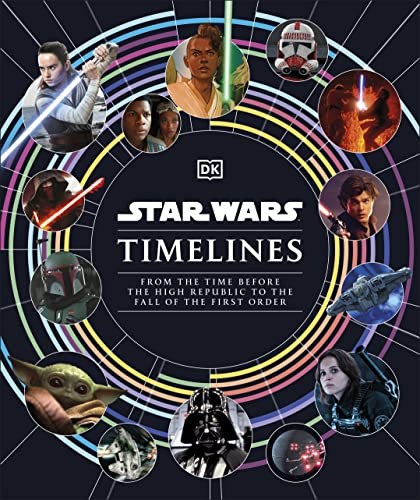
Books  Star Wars: Timelines puts the existing "canon" of that franchise in chronological order.  It's a coffee table book equivalent of these innumerable online lists but with the comics and books included across glossy pages filled with illustrations.  There have been similar books in the past, but this is the first to bring together everything amassed narratively in the new canon, post Disney take over.  Finally the Wookieepedia can put actual dates to things rather than having to speculate based on evidence found elsewhere.

Sadly the  continuity errors section of the Wookieepedia for the book is a more interesting read.  Unlike similar efforts, the Star Trek Chronology, Doctor Who's AHistory, it fillets all the stories into the smallest events so we're told things like "Padme and Anakin visit her family on Naboo before heading for an isolated retreat in the beautiful Lake Country" or "Leia helps the Ghost steal ships for the rebellion" but we're never told directly in which stories these incidents took place or why the writers have chosen to place them in this order (beyond Holocron mandate).

Perhaps I've been spoilt by AHistory, which has footnotes justifying every single placement and puts the title of the story at the top of each entry, but Timelines instead turns Star Wars into a flowchart running across the middle of the pages which on the one hand fits the epic sweep of the franchise but on the other means we don't know if these events happened in a comic, novel, Star Wars Insider short story, animation or film.  Even hardcore fans won't know the sources for all of these adventures.

A text based format would not necessarily be required.  A short code, similar to the ones I used in this list could have been put in brackets at the end of each storybite with a key/glossary/list printed in the back before the index pointing to the source.  Instead its up to the reader to try some lucky searches online which doesn't seem like a particularly useful way of selling merchandise.  Although because the Timeline describes how every story plays out, in most cases there's no point.

You should probably save your money and just look through the Timeline of Galactic History on the Wookieepedia, which lists all the major and a ton of minor events with references and also has the Legends version alongside so you can compare and contrast the deviations in story.  The "notes and references" section underneath reads just like AHistory's footnotes with lots of uses of the words "state" and "occurs".  Or read this person's spreadsheet which does the author's job for them.

The Truth of Peladon (Peladon)

Audio  Ah Peladon!  One time allegory for the UK flirting with the Common Market now in this new boxed set a thematic soup about the exploitation of a country's wealth while the ruling classes stand idly by and watch it happen, and specifically the effects it has on the local water supply.  As is mentioned in the extras, despite only appearing in two stories on screen, Peladon has evoked a curiosity from fans, I think partly because it has the Doctor visit a planet other than Earth on a couple of occasions and offers window on its generational changes.

It's that idea these four stories exploit as we see Peladon at various points in its history, between the two television stories, then at three other undated points in its future history with River Song, then Sixy and Doctor Number Eigth making gradual then huge inroads in turning the planet from an absolute monarchy towards socialism, with the various Time Lords gradually becoming wary of the Royal chamber and more interested in what's happening on the fringes of Pel society, the parts which largely go undepicted in the Curse and the Monster.

Of the first three stories, The Poison of Peladon is probably the easily consumed due to the stunning decision to give River and Alpha Centuri the on-audio pairing we didn't know we needed but should now be very pleased that we have.  Alpha's a far stronger character here than on screen, and River becomes very protective of her during this hour, rightly correcting others on their pronouns.  The Ordeal of Peladon is perhaps an attempt at what a Peladon series might look like without a Time Lord present and The Death of Peladon shows how far the Doctor has shifted from the man who bowed to royalty on TV.

The Truth of Peladon

But it's the final episode which makes the boxed set essential, with an Eighth Doctor classic by Tim Foley.  The Doctor introduces himself to the seamstress, Arla Decanto, who will be making the cloak for an upcoming coronation, wins her confidence, shatters it, then wins it back using a Dickensian approach of showing the three tiers of Peladon society we've already witnessed in the previous three stories which are also subtly part of her own past, present and potential future.  Meera Syal's multi-layered performance as Decanto also takes us on a journey through the various layers of apathy and self-delusion through which the seamstress has justified her own actions or indeed inactions.

The big narrative swing is that Eighth comes and goes in her story.  We're offered hints of the Time Lord's wider plans along the way, with behaviour not unlike the Scottish manipulator who came before.  He has friends and collaborators but their participation is largely only hinted at.  It's refreshing to "see" what it's like when the Doctor liberates a people from the point of view of someone who's right at the heart of the problem and part of the solution.  This is aided by Jason Watkins as the villainous Peladonian Chancellor, a man fooled into thinking he can gain his planet's independence by inviting another in as an "ally" who just wants to take control.

Placement:  The cover suggests that this story takes place during the “Dark Eyes” era of the Eighth Doctor, but there is no clear gap for it. Since Time Lord Victorious has him in his Time War outfit, I’m placing this just before Echoes of Extinction, assuming that there are other stories in between that explain his change of appearance.

All The Doom's Day stories And Where To Buy Them.


TV  With this being an anniversary year for Doctor Who but without an actual television programme until November, much as they did in 2020, BBC Studios are co-ordinating another multi-merchandising platform storyline.  Doom's Day is somewhat less expansive (and expensive!) than Time Lord Victorious and has a much clearer chronology in that we follow Doom, a single protagonist across a whole day on the trail of the Doctor.

The official website is here and has a few problems.  For one thing, whoever created it ironically doesn't know how the 24 hour clock works, so when faced with a list of times like 1600, 1700, 1800 and 1900 (each is the given start time for a particular adventure from BBC Audio) says that the story "takes place between 1600 and 1900 in Doom's Day" which would mean the final chapter has zero duration (it does this a couple of times).

But there also isn't a simply way of seeing all of the adventures in a simple chronological list so that you can see how all the comics, the novel and various audios slot together.  Find below a simple chronological list so that you can see how all the comics, the novel and various audios slot together.  They've kept this pretty simply in comparison to last time with the various types media clustered together, the DWM comic into Titan comics, BBC Audio into Big Finish (which is where the story ends obviously).


Where possible I've offered to the cheapest options.  The main site links to the BBC Audio story on vinyl (£29.99) but it will be available on a much cheaper CD release (£13) and I've also included the Kindle editions of the Titan comics.  Anything linked to Amazon has an affiliate link too, which should not be taken in any way as the reason for this exercise, at all.  Anyway, congratulations Sooz on all of this.  I'm really looking forward to it.

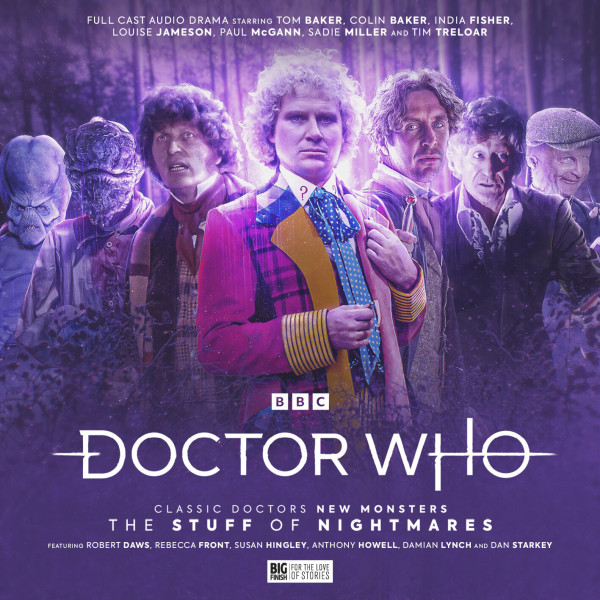
If I Should Die Before I Wake (Classic Doctors, New Monsters: The Stuff of Nightmares)

Audio  Marvellous, just marvellous, as good as an Eighth and Charley has ever been.  John Dorney's script (from a story by Jac Rayner) runs with Big Finish current tagline "for the love of stories" as the cue for a meditation on myths, narrative structure and the connection between dreams and imagination.  The Doctor's reading a series of Greek myths to Charley which she's apparently experiencing in the first person and frustrates him by giving her "character" easy ways to survive.  But there are other random elements in the console room and it slowly becomes apparent that the Dream Crabs from TV's Last Christmas have their claws into one or both of them.

As I said about The End of the Beginning recently, it's incredible that after all these years as soon as Paul and India are interacting with one another again, twenty odd years disappear from both their voices and we're right back in that first exciting week when most of the first series was recorded and the chemistry between them returns.  In the extras, both are clearly delighted to be working together again, albeit in lockdown in bedrooms and cupboards unable to even see each other.  There's an electricity which you just don't get when one or the other isn't present (although to be fair that was the case for large sections of the 8th+Lucie stories and I didn't notice.

Although he's not mentioned, I wonder how much of this was influenced by Lionel Fanthorpe.  Although I knew him best for Fortean TV back in the 90s, my science fiction writing tutor spoke warmly of his many hundreds of novels in which he'd often write an abrupt ending because he'd reached his word count, "one leap and he was free".  That's often how Doctor Who stories end, plenty of build up then a quick squeeze of the sonic screwdriver or whatever.  Fanthorpe also incorporated ancient mythology including Greece into his stories as he crafted a novel based on a cover which had already been selected, kind of like the "shopping lists" which Who writers often have to work from.

It's also a companion piece to Rob Shearman's Scherzo, which was also a two hander and which also featured a fair amount of body horror.  Like that story the Doctor and Charley are trying to escape a place were the laws of time and reality no longer exist but whereas there they had to overcome a fractured friendship, here its their closeness which is almost their undoing.  Although the Doctor becomes increasingly frustrated with Charley's attempts at preserving her own life, for various reasons, its so that she can save him.  In Scherzo, they were forced into working together as their bodies literally began to merge.

Placement: After Solitaire.

Bounty (Earth and Beyond)

Audio 
Bounty has many firsts.  Beyond the TV Movie and The Eight Doctors, here's his first trip in the TARDIS with Sam Jones, a side step to the Seychelles and an encounter with some alien bounty hunters.  It's also his first original audio adventure nestling alongside two recordings of previously published Short Trips.  It's also the first original story read by Paul McGann, the first time we would have heard him say new dialogue in character (he'd previous read an abridged audiobook of the TV Movie).  This was published so long ago, it was a cassette release.  The version I listened to was from the re-re-release of the MP3-CD anthology Tales from the TARDIS, downloaded from Audible.  Eighth Doctor stories don't get much earlier than this.

Is it a taste of paradise?  Oh God yes.  It's taken me (does maths) twenty-five years to get around to listening to this  (although to be fair I didn't become a fan until a couple of years after its publication date) and it's a nostalgic delight to hear Paul reading a story about Sam Jones, with writer Peter Anghelides (who offers some background on this website) managing to fit in some of Eighth's early signature elements like the way he repeats his new companion's name "Sam, Sam, Sam ...", his purple Volkswagen Beetle, waistcoat business and how he somehow (telepathically?) knows facts about the people he encounters not long after he's encountered them.  How much did he know about where these tales came from?  Did he expect to be reading more or was this a one off?

The story itself is pretty straightforward but that in and of itself is refreshing.  The tendency with Short Trips and Short Trips about the Eighth Doctor in particular is to take a more experimental approach but there's also something to be said for a well executed adventure with a couple of character through lines and an explosive conclusion.  Bounty isn't long, just over half an hour in mp3 duration, but there's enough here to explain how this TARDIS team bonded between The Eight Doctors and Vampire Science, even if the Doctor dropped Sam off at a Greenpeace Rally soon afterwards and spent three years mentally getting his shit together before scooping her up again.

Placement:  Just after The Eight Doctors.

One Fateful Knight (Short Trips: The Quality of Leadership)

Prose  In his introduction, anthology editor Keith R A Candido offers some amazement at the names he's been able to coax into writing their first Doctor Who stories for his book.  One Fateful Knight written by Peter Freaking David, who's writing has touched on almost all of the major and minor franchises across comics and novels, not to mention his own IP.  In his single (so far) entry for the Whoniverse, David (presumably on the assumption it would be his only chance) decides to do nothing less than provide a prequel and sequel to Battlefield, attempting to explain the references to the Doctor being Merlin.

Was he aware of what's come before?  It's been pretty well established via numerous other spin-off sources that the Merlin in Battlefield is a future incarnation of the Doctor, although given the number of different explanations offered elsewhere over the years, having him be both the eighth Doctor and another Monkish renegade pretending to be the eighth Doctor, popping in and out of Arthur's life is as good as any especially since as late as 2021, Jac Raynor wrote a novel in which the Tenth Doctor inherited the mantle.

What does matter is that this is a thrilling entertaining story which packs a lot into its twenty or so pages as the author also offers his own take on what a post regeneration Eighth Doctor would be like - he even refers to still relearning how to fly the TARDIS.    Was this simply so he didn't have to deal with over a decades continuity?  Did he choose to write for the Eight?  Either way. his face offs with "Merlin" and Morgaine are as amusing as they should be and there's plenty of fun to be had seeing how David ties it into the television adventure.  

He's still experiencing ongoing health issues amid the US system, so if you want to contribute, the GoFundMe is here.

Placement:  After all these years this is the last of the Big Finish Short Trips anthologies I've had to catch-up on, so its a wild coincidence that it should be the first chronologically.  Much like Model Train Set and Totem, this is Eighth dealing with some of the more questionable choices of his previous incarnation, so lets drop it just after them.  Onwards to the rest of the audios.

From Little Acorns/Epilogue (Short Trips: The Quality of Leadership)

Prose  The Quality of Leadership's theme is baked into the title, the Time Lord interacts with numerous heads of state in his various incarnations.  From Little Acorns and the Epilogue offer a framing device in which Eighth, having successfully helped the rightful heir to the throne fight off a coup, spends and even recounting these tales in order to offer some insight into successful governance and bolster a new King who is unsure of his experience or talent.  In the epilogue he returns to see how the premiership went and if his guidance helped as we discover that to some extent the Doctor is salving his own conscience having somewhat failed in similar efforts before.  Eighth gets a few rare sonic screwdriver moments in here and after recently reading so many small scale stories recently, it's fun to have something on a more epic scale with higher stakes.

Placement:  As with so many of these Short Trips, early.  But not as early as the other story in this anthology.

The End (Life Sciences)

Prose  As the title suggest, this is supposed to portray the Eighth Doctor sensing the end of his current incarnation and thinking about unfinished business and legacy.  Along with some fellow time travellers, he's set up a kind of waystation out of time in the event horizon of a black hole, where they can meet, exchange ideas and feel a kinship, the Doctor motivated by his estrangement from the other Time Lords.  As you might expect, it does not go well.  Although this was written in 2004, this version of Eighth feels akin to the broken mess who bothered River and Bernice in The Legacy of Time's Lies in Ruins and the "future" version we heard in the Mary Shelley portion of A Company of Friends (if slightly more coherent), the living embodiment of chronological existentialism.

Placement:  This old chronology puts it just before The Night of the Doctor and I can't disagree.

Jonah (Life Sciences).

Prose  Who knows (other than the author) how the Doctor stumbles into stories like this?  Did he just happen to be in the area and stumble upon young Jonah randomly or was he already on the trail of some medical malfeasance?  Either way, this the kind of "low key" adventure about the Doctor taking an "ethical and moral" stand and choosing to save one life over another even though, given that he has access to "all of time and space, everywhere and anywhere, every star that ever was" he could probably find a way to medically save both (justice for Abigail).  Of course, if the Doctor would be breaking some kind of temporal prime directive if he went around curing all diseases,  but at least he'd be living up to his name.  A framing device tries to explain his choice is justified but there's still something inherently unDoctorish about his solution.

Placement:  Let's give him the benefit of the doubt and put it early, in the moments when he's still trying to work what kind of man he is. 

Syntax (Short Trips: Life Sciences)

Prose  Another "with Izzy" exploit from David Bailey and like his later Illumination from Christmas Around The World, he captures this particular Doctor/companion relationship perfectly.  There's a moment when Izzy recounts one of the Doctor's lectures back to him and you can imagine a couple of frames in the comic in which the speech bubble almost crowds out her head.  The story itself, about a sentient pheromone which enslaves the population of a planet would work as a two or three part strip with plenty of scope for outlandish artwork, especially when Izzy is under the influence of the atmosphere.  Unless something changes, this will be last of the stories I'll be reading featuring this most important of characters and I'm really going to miss her adventures.  I'll certainly be having another look at the comics once I'm all caught up with the Eighth Doctor's other adventures.

Placement: Tucked in between TV Action! and Illumination.

DS Al Fine (Time Signature)

Prose  Thematically, the Time Signature anthology seems akin to the Ashildr from the television series, in which one of the Doctor's choices has ramifications which on and on.  Unlike that story, here the Doctor is able to have do-over and large sections of his own personal history are re-established so that a decision he made in good faith doesn't destroy half the universe after all.  Of all Short Trips books, this seems to be one which works best when read cover to cover, which I'm sure you'll be unsurprised to hear, I haven't done (yet).  So not a lot of this story made much sense without a glance at the TDC.  So consider this paragraph a placeholder until I've had a chance to experience the whole story.

Placement: Between Shada and Mary, I guess.

Second Contact (Time Signature)

Prose  To what extent has any Doctor Who story "happened"?  If time can be rewritten and the whole timeline is changes anyway every time a TARDIS lands and someone steps out of the doors, any continuity errors or Time Lord memory lapses across the franchise can be excused because fixed points in time only exist when the Doctor (or whoever) knows or remembers what was supposed to "happen" and his big alien brain can't really keep everything on track.  Thanks to Genesis of the Daleks, the first Doctor's encounters with Davros's creations become malleable to such a degree that some versions of AHistory have to account for there being two different continuities before and after.

Although it appears earlier in the anthology, the events of Second Contact are rewritten by something which happens in a later story, so does that mean the Doctor was never in place to mediate this encounter between the native peoples of a continent and a doomed Viking colony and was there even greater loss of life as a consequence?  The TARDIS Datacore suggests this story happens in an "alternative timeline" but Doctor Who has rarely gone in for that sort of thing.  But its also undeniable that the Doctor shouldn't be in this place because his future self changes his past.  Honestly, Blinovitch would have a fit.

Placement:  Given the mess this has made on the carpet, I'm banishing it to the "almost" section.