the AFoundation in the Batlic Triangle has closed

Afoundation

Art I'm disappointed to see that one of my old employers and one of Liverpool's main art venues, the AFoundation in the Batlic Triangle has closed. I can only concur with everything Ella and Seven Streets have to say on the subject -- this leaves the Biennial with a huge gap in its exhibition space.

Part of the problem, I suppose, was the location. Though, with the help of Novas, the Jamaica Street area has been gaining in prominance over this past couple of years, it hasn't yet entered the city's popular consciousness (some taxi drivers are oblivious) even with its proximity to and accessibility from Liverpool One.

At least it went out with some crowd pleasing work at the last Biennial.  It's just a pity that more hasn't been made of the closure, an opportunity for those of us with an interest to visit for one last time.  I wonder what happened to the sandwich board.

Update! There's now confirmation that AFoundation has closed, Mark Waugh posted a press release on Seven Streets earlier and Ian's popped it up on Art In Liverpool. It is a money issue -- a funding application to the Arts Council was rejecting which meant the project was no longer sustainable. I just hope the staff will be ok.

I'm now listening to Iain Forsyth and Jane Pollard's Silent Sound (which was hosted when I worked there in 2006 and I listened to for many, many hours at the end of a corridor) as a mark of respect.

My blood ran cold. It's Cameron's Big Society.

Politics The Big Society is back in the news again today with David Cameron's speech this morning which seemed designed to clarify matters but from the reports I've read (here's one) just succeded to make it appear as nebulous and unfocused as when we first heard about it in the election campaign in such places as this party election broadcast:


Anyone who's watched the final episode of Adam Curtis's excellent series The Living Dead will recognise elements of what Cameron is saying. In that, Curtis demonstrates how Thatcher was attempting to manufacture in actuality the fictional version of Britain Churchill suggested in his speeches in order to create the partriotism required to win the second world war. Cameron's big society in many way is a slightly degraded facsmile, a third generation copy if you like. Except ...

... that's what I thought until I watched the BBC series The Amazing Mrs Pritchard a few months back. For the unititiated, this was the Capraesque story of a supermarket manager becoming prime minister and really rather good due to some sharp writing by Sally Wainright and nuanced central performance by Jane Horrocks (Carey Mulligan plays her daughter). The whole thing is on YouTube.

At the beginning of the second episode, after her Pink Alliance has won the election, she appears at Number 10 to give her first big speech. Keep in mind that she's entered government on a wave of discontentment with the Westminster system, a kind of popular political uprising within a democratic process. It starts at 4:16 below (or clip here to go straight there):


My blood ran cold. It's Cameron's Big Society. As she says late into the speech she's going "to put legislation in place to empower the citizen to have more control over their own lives ..." Luckily, the rest of the series is essentially about how this unworkable; too many voices with too many ideas. There's even a storyline which predicts the failure of initiatives like the ePetitions.

Nevertheless, ever since watching that, I've had the inescapable feeling that in fact Cameron's promoting something which was put down on paper at three in the morning by a desperate researcher with no ideas of their own but a long memory for the history of political drama, who might even have had a recording of the programme to hand.  Scarier things have happened.

"Others can’t be bothered."

That Day Adrianna Tan describes the chaos of her relationship which exists in a variety of timezones:
"Some can’t spare the time or the effort. Others can’t be bothered. Some refuse because they think of the potential heartbreak the distance will cause: the time difference will compound the distance, the new social environment will open up possibilities that exclude you, or worse, what if they cheat — as we’re told they will, since that’s happened to all our friends who’ve tried?

Or in the words of male friends, in characteristic male bluntness: “What do you mean you need to travel hundreds of kilometres just to fuck?”

(Some people are worth it.)"
Sounds exhausting.

its greatest expression, Beowulf

Books One of the few ironies that the various nationalists groups and political parties which have frighteningly gained in popularity over the past few years is that the very language which they use to pass on their hateful messages and which they often suggest they’re defending is a product of the very things that they’re apparently fighting against. Even the words within the names of the organisations find their roots in old French and before that Latin, albeit modified through other influences across the years.

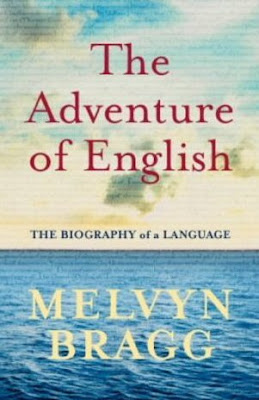
It’s just that intermingling that Melvyn Bragg investigates in his book, The Adventures of English: The Biography of a Language, the three hour abridged audiobook version of which I’ve lately listened too. Beginning at the point that old English arguably found its greatest expression, Beowulf, Bragg traces its development through invasion and immigration as it imported words from across the world gaining in complexity before the British Empire sent it back into the world were it developed and modified again.

The book covers much of the ground you might expect from the many hundreds of new words and new word usages Shakespeare dumped into the language to the endeavours of Dr Johnson to put all of that into alphabetical order (not the first dictionary it turns out - schoolteacher Robert Cawdrey offered a small volume in 1604). The whole epic sweep continues through to 2003 with texting abbreviations and a wink towards how English might not dominate now in the face of likes of Cantonese but remains a central interface in matters of politics and finance.

If nothing else, the book has increased my admiration for people for whom English is a second language, simply because of the idiosyncrasies they have to cope with. As Bragg asks, why is it one sheep but not many sheeps? Why one foot and two feet? And that’s just messing about with plurals. We also apparently, within our compressed landmass, have a much wider selection of dialects and accents than most countries especially the US, demonstrated in the excellent moment when Bragg recreates the Cumbrian language of his youth.

Actually, Bragg’s idiosyncratic reading is a definite reason to listen. Much of these three hours are delivered in the same brusque tone he employs to introduce the subject under discussion on Radio 4’s In Our Time, and we’re forever waiting for him to trail off into cueing in his guests “With me to discuss this is Jonathan Bate …” He’s also not one to take a breath – sometimes there’s barely a gap between what sounds like a chapter ending and the introduction of the next subject – but you sense its because he’s enjoying the chance to communicate his subject again on something other than the page.

In other words, there's more than enough verbal ammunition here, should you be in the misfortune of speaking to someone represenenting one of the hateful groups mentioned or just a garden-variety racist and unable to take the usual option of simply walking away. Tell them every word that comes out of their mouth is to some extent foreign and hope that an existential crisis ensues. Though given what their belief system is based on a very narrow view of the world, it's unlikely they'll be that self aware to begin with.

a very proffessional way

Games Miranda July's activity cards for children:
Tap each dot in a very proffessional way and when you get to the bottom say "Everything is in order, thank you very much."
The formating on the site is a bit off so you might need to open each one in a tab to get the full experience. And in case you're wondering, it's her spelling not my typo.

“No, I saw a lot, even with you talkin’ there.”

TV Commentary Tracks of the Damned pokes its finger in the open wound of the Heroes series finale
"Fawning back-and-forth. Knepper (who played season four’s big villain, Samuel, a carnie with the power to move dirt and rocks with his mind) hadn’t seen the season finale before doing the commentary track with Kring, so he claims to be “like a little boy” as he gushes about the cool title card, the cool camerawork (“We used a swinging tilt lens,” Kring says), and the cool special effects. Nevertheless, at the end of the episode, when Kring suggests that Knepper go back and watch it again without the commentary, Knepper demurs. “No, I saw a lot, even with you talkin’ there.”
Heroes received the cliffhanger ending it deserved with said heroes going public. If only we could have seen the results.

two Ballardian motifs

Books Rick Poynor considers whether what we understand to be Ballardian has as much to do with the book covers and other designs related to J.G. Ballard as his actual writing:
"Four covers published by Penguin in 1974 are among the most purely Ballardian images to be found on any of his books. David Pelham, art director of Penguin in the 1970s, designed them and created the airbrush illustrations. The Terminal Beach (first published in 1964), the strongest of the quartet in my view, unites two Ballardian motifs, the sand fused by weapons tests in the title story and the Fat Man bomb dropped on Nagasaki, standing here for all atomic weapons. Graphic design is a form of rhetoric and one reason this image works so well is that it has been realized so perfectly. Pelham’s illustration is grounded, like Ballard’s prose, in meticulously precise observation, but he has given this scene of becalmed destructive power an intensified, hyper-real quality, most obviously in the use of color."
The most interesting point is that as Ballard became an increasingly mainstream figure (due to the popular success of film adaptations and whatnot) the level of surrealism on his book covers decreased. As ever the very interesting and original is blanded in a desperate attempt to appeal to as wide an audience as possible.

Counselling sessions for BBC producers and casting directors begin as The Hobbit enters rehearsal period.

"You vicious mole of nature!"

Neatorama's new Shakespearean Insult Gum includes Hamlet:


"If thy breath stinks with eating toasted cheese and thy wit as thick as Tewkesbury mustard, then thou needest this: Shakespearean Insult Gum.

Get not one, nay, two fruit flavored gum balls inside each box, along with an eloquent Shakespearean Insult printed on the inside. Sure to offend the intellectuals and confuse the dimwitted."
There are plenty of options to chose from.

the things which interest her

Blog! I know it's unfashionable, but I still really like Goop, Gwyneth Paltrow's lifestyle newsletter which is considered by many, including the commenters under The Guardian article where this first appeared, to be a bit of a folly. Perhaps I'm easily pleased but I've even attempted a few of the recipes.

Part of the problem is the format. Paltrow is effectively blogging. She's writing about the things which interest her in the hopes that we'll be interested too the only difference is she writes about aspects of her life which granted isn't our life and her social circle which granted is other celebrities.

On that level it does that thing which personal blogging is very good at -- offering an insight into lives which aren't ours. I don't properly know anyone who lives in New York, but I wouldn't accuse them of being out of touch if they suggested some excellent restaurants in the area or nanny agencies.

I also like that, as often happens with bloggers who have the odd anonymous bully in their comments (and hello to the anonymous bully who seeds my comments who the rest of you don't see thanks to moderation) or again her version of it, after a slight existential crisis, she's decided to keep going.

Well done you.  Me too.

The List:
17. Walk like a ninja.


Life Tonight was another instalment of Social Media Week, this time the latest Social Media Café again held at John Moores University’s art academy. @petemc launched his new project #rezz a kind of Google Street View gathering the breadth of humanity rather than buildings, @mcknut took us through the process of creating an iPhone app, this iPhone app gathering information about the Social Media Café, @donmcallister interviewed @leolaporte about his podcast network and @wimpyking interviewed @Documentally via Skype (pictured above) all of whom are terribly creative.

The latter, Christian Payne, made a good point which confirmed something I’ve always thought – that your username, if you have a username, is your online brand – that it represents you online. My first, in the late nineties, was groovejet42 which is basically meaningless apart from the Sophie Ellis-Bexter/Douglas Adams reference. After I named this blog however (for reasons I last explained in detail here) it seemed only natural that I should adopt the same name when I signed up to Metafilter and I’ve continued using it through discussion boards and social media apparatus since. It’s my twitter name.

That was more than apparent when I got back home tonight. Because tonight I rather did the kind of thing I usually do. I finished work at 7pm on Thursday, the event began at 6(ish) so I was running later. When I reached the building and entered through the big glass doors the first thing I noticed was how quiet it was. The next was the sound of my shoes across the wooden floor. Clop, clop, clop. Given that they’re Rockstorm "Revolt" Men's Slip On Casuals, or slippers with delusions of grandeur, this was a bit surprising. Down the stairs they clopped, across the floor of the echoey basement towards the lecture theatre too. Clop, clop, clop, bloody clop.

Knowing how nervous I was when I gave my talk the other month and now not wanting to interrupt whoever it was speaking, I decided the best thing for it would be to take advantage of the main selling point of the Rockstorm "Revolt" Men's Slip On Casuals and slipped them off so that could enter silently in my stocking feet. In I came through the doors only then remembering that the only way to approach the stadium seating from this angle was to walk the length of them from the side, out in front and then up the stairs. I breathed deeply and began the journey.

@petemc was at the front with a volunteer in the midst of a demonstration. The assembled crowd were talking amongst themselves. I smiled at a couple of people then grabbed a seat half way up the stairs on the end of the isle. Pete's demonstration continued. I put my shoes back on and that was that. Until some time late in the Everyman afterwards when it became apparent, after it was explained to me, that for all my chivalrous intent, I’d still managed to draw attention to myself. Because though I hadn’t made much noise I’d entered the hall carrying my shoes this not being something that could really be missed.

Returning home I find the following tweets waiting for me (edited below for retweeted content):

@amcewen: @feelinglistless creeps into @smcliv like a ninja (so @MethodDan says anyway :-)

@Defnetmedia: No shoes on either

@clairelsutton: A NINJA WITH NO SHOES!!!

And after I offered a two hundred and eighty character long version of this blog post:

@rosiebunny: I heard about this. Quite a fuss you caused.

Well at least I can do this:

17. Walk like a ninja.

I love @feelinglistless sometimes.

yes, even Dan In Real Life

Technology In my ongoing mission to stay behind the rest of you interweb delegates for as long as I possibly can whilst still confirm my luddite credentials but before ceasing to exist, I finally have a touch screen mobile telephone, replacing my still relatively new but terribly old Samsung B130.

The Orange Vegas was released a couple of years ago to tap into the tappable market and as this rather detailed review explains, it has most of the mod cons -- camera, mp3 player, that kind of thing -- but with a much lower spec than most hipsters could countenance with a price to match.

Example:  it can barely access the web. There is no wi-fi, no 3G.  It's 2G all the way.

So when the accompanying literature suggests that it's good for social networking, what it actually means is if you can get online and if you can load the relevant mobile version of whichever website it is.

It's still faster to text my tweets, especially since the "quick" link on the Orange World front page still lists Bebo instead.

It was, as so many of these things are, an impulse buy via this offer at the Argos outlet on eBay, at just £16.99.  Which with all its features, however neutered seemed a good price to me.

Follow that link.  Look carefully at the phone.

Yes, it's pink, which amazingly, even in this metrosexual age, is apparently still a curious choice (according to family and friends) for this hetrosexual whose currently working through every available film Juliette Binoche has appeared in via Lovefilm (yes, even Dan In Real Life).

Someone last night even asked why I have "Barbie's phone".  Personally, I think it's more of a Paris Hilton (assuming she doesn't still have a Sidekick) (can you believe that happened in 2005?).

Not being a fashion intelligible person like Hadley Freeman whose always on the side of function over aesthetics (I knew it was off-pink when I bought it) I don't know how the colour of one's mobile reflects on their personality.  Does it make me seem sensitive or even a budding Dave Lizewski without the Kick-Ass costume or deathwish?

Either way, I'm content and it means I can take pictures when I'm out and about again without having to remember to carry my camera.  Which is good for this blog and you too I guess.  You wouldn't believe the things you've missed.

"He asked us to call him Jerry"

Books Blair Fuller recounts an evening with J.D. Salinger:
"Dinner was eaten from my parents’ best plates balanced on the guests’ knees. Wine glasses were filled and refilled. Book gossip was exchanged. Conversational companions changed often with the changing of dishes and drinks. For a considerable time Jill and Joe and Salinger and I were all sitting on the living room’s carpet. He asked us to call him Jerry, then asked some routine questions about what we were doing and why, but with a pleasing sympathetic intensity. He made several comments that put him on our side, the side of people starting out rather than the people settled in to lifelong careers. The conversation warmed, and we found that we could make each other laugh."
Keep reading.

within its inards

Liverpool Life This being Ignite Week or Social Media Week or whatever this collective online sharing of ideas across five or so days is called, tonight was Ignite Liverpool 5, this time held at John Moores University's shiny new Art and Design Academy, which I was excited to discover has a Tate Gallery Cafe within its inards.

As ever there was a wide variety of topics covered by a wide variety of speakers, but rather than simply regurgitating the content of their talks (which will be available to view online in due course) I thought I'd simply pull an enigmatic phrase or fact from each which I think best sums up said content.

Claire Sutton -- Swine Flu Epidemic -- "We should probably listen to mathematicians."
Siobhan Farmer -- Public Health -- Dr William Henry Duncan was born above the Blue Angel Club
Joe McNulty -- Universal Theory of Everything -- "Best not worry about these things, eh?"
Maria Barrett -- Working Class Experience of Theatre -- cultural habits are passed down
John McKerrell -- Open Source Software -- "Open source everything you do."
Christina McDermott -- Food Blogging -- "What we say matters."
John O'Shea -- Open Source Swan Pedalo -- "Now it's out in the world."
Neil McDonald -- Sci-fi pub crawl -- "Doctor on call."

With apologies if you sense that some of that only makes sense if you were there.

Afterwards we adjourned to the Everyman Bistro were, after discovering that the scones had sold out in the cafe decided on humus and bread instead.  I've never tasted humus before, not even from one of those platsic supermarket multipacks, a fact which made a few eyes around the table boggle rather and led to a moment of intense scrutiny as my reaction was read.  It was filling, tasty and I would again.  I'm now posthumus.

Shakespeare: A Pictoral Biography by F.E. Halliday


Despite having read a few biographies of Shakespeare over the past few years, for some reason I never quite tire of them because like productions of his plays, they all seem to contain at least one memorable element which separates it from the rest, be it some new discovery or stylistic decision or approach to the material. Turn to the dedication page of F. E. Halliday’s Shakespeare: a pictorial biography and we find “To: BARBARA HEPWORTH in Friendship And Admiration”. As well as a Shakespeare scholar, he was a close friend of the St Ives circle after spending a year there during the second world war, a residency he later made permanent.

So the book is perhaps as interesting now for the biography of the author as the contents. But originally published in 1956 (this is a later book club reprint) it’s still nonetheless a fascinating read, not least because it’s less interested in the writing of the actual plays (which can be a speculation frenzy in the wrong hands) and spends much of its pagination offering a detailed context of the world in which the plays were written and performed. Viewing the canon in isolation, it’s easy to forget that Shakespeare’s career began at just the moment Mary Queen of Scots lost her head and the Spanish Armada.

Halliday also lucidly explains how the form of theatre Shakespeare employed developed from the first definable comedy (Ralph Roister Doister) and first definable tragedy (Gorboduc), both originally written to be performed by the boys of Eton. He argues that the reason Shakespeare gained such notoriety was because at his peak, no one else was writing with his quality and that it wasn’t until he reached semi-retirement that other playwrights found their voice. He also explains with clarity why the Globe is the shape it is: a mix of the traditional circular auditorium used previously for religious plays and the yards at the back of inns with their balcony viewing.

What kept me reading though was the obvious enthusiasm Halliday has for his subject (which isn’t always the case with some scholars). “No other writer has ever created a comparable company of men and women, humble and exalted, grave and gay, comic and tragic, noble and ignoble” he says before filling out the rest of that paragraph with a list of names (which fails to include anyone from Measure for Measure but I’ll forgive him that). On a few occasions his textual analysis amounts to printing a chunk of verse and pointing a lot in the way that some DJs offer their favourite tune with little to no explanation because, as is so often with Shakespeare, none is necessary.

probably the most representative

Music I'm sometimes asked what kind of music I listened to as a teenager. In the process of having a clearout I found a 12" vinyl reminder. Accepting the Debbie Gibson thing and the Amy Grant thing (and the Kylie thing before that), this is probably the most representative:


Amazing how well adjusted I am now, isn't it? I have their Thicker Than Water album somewhere too. It peaked at an amazing no. 125 on the US album chart.

I've had a reply

About You might remember the email I posted to the British Library asking if they'd consider hosting the elements of the BBC's website that are being shut down and/or taken offline. I've had a reply, which I've posted at the bottom of the original post.

"so that it could be translated into English"

Film Something which has always slightly annoyed me about some film criticism is when what's quite obviously a choice by the film maker is assumed to be a failure due to perhaps their nationality, age or gender not fitting their vision of the material. Nicholas Roeg recounts a typical example of this from when he worked as cinematographer on Truffaut's Farenheit 451:
"I remember there was a lot of criticism of Fahrenheit to do with François’ knowledge of English. The critics complained that it was so stilted. But that had all been quite deliberate. He hadn’t even wanted to place it as an English film, or to suggest that the language was necessarily English. The script was written first in French, deliberately, so that it could be translated into English, then translated back into French, because he wanted to lose the English idiom completely, then finally translated back into English. He wanted it set- and I thought this was a marvellously futuristic idea – in a time when people had lost the use of language. After all, the whole premise of the film was to do with losing a literary background. And that was completely missed by the critics."
If only Roeg had worked on M Night's The Happening so that he could later explain what was going on with the script, the acting and the direction in that film.  "Central Park?  That's odd."

Pineapple.

"Mr. Gick or Mr. Jick"

Language For those who still miss Balderdash and Piffle. What is the correct pronunciation of .gif?:
"It's embarrassing because you don't know if it's Mr. Gick or Mr. Jick," lamented William Labov, a linguistics professor at the University of Pennsylvania. As Dr. Labov explained, in modern English, no hard and fast rule exists for the 'gi' combination. Some words take the hard sound, others take the soft sound -- it depends on the word's specific history. Compare gift and gin, for example -- same 'gi' combination, different 'gi' sound."
For me it's always been Mr. Gick without question. But I did meet someone who always prosaically spelt out these pronounceable file formats anyway. J-P-G, D-O-C and yes, G-I-F and to be fair to them it was at least consistent. R-S-S makes my jaw hurt.