Film The trailer for Woody's next film, Midnight in Paris, the one with Carla Bruni, is online:
Some notes:
(1) There aren't a lot of laughs which suggests that either it really isn't a comedy and the trailer producers are pretending it is, or there aren't a lot of laughs.
(2) Owen Wilson is playing Woody. Rachel McAdams is playing Mia. Michael Sheen is playing Tony Roberts.
(3) Michael Sheen's beard. Michael Sheen's accent.
(4) Like Vicki Cristina Barcelona and Scoop, he's wisely decided to tackle Paris from an outsider's perspective. If only all the London films had been that way.
(5) Whatever Wilson is up to late at night must be the one important surprise in the film, so congratulations to the trailer editor for not being gratuitous and just showing glimpses.
(6) Marion Cottilard will presumably be the manic pixie dream girl.
(7) Despite the colour it also has a Shadows and Fog vibe, of mysterious excitement after dark. Kathy Bates is back from that earlier film.
(8) Unusually his 2012 film isn't listed as being in preproduction on the imdb yet - I remember Midnight in Paris having a title by this time last year. Hmm.

William Shakespeare (Usborne Young Reading Series 3) by Rosie Dickens.

The challenge of producing biographies of complex figures to younger audiences is demonstrated when writer Rosie Dickens has to tackle subject of William’s marriage to Anne. Dickens mentions that he seemed rather young to be married and that many thought she wasn’t the right match, but that they were in love, so much so that she might have inspired one of the sonnets. We’re then told that six months after the marriage, she gave birth, which is factually correct but of course, unavoidably might suggest to the reader that young Suzanna was born prematurely.
An inquisitive child, a Fred Savage in The Princess Bride type, would have all sorts of questions. But perhaps that’s fitting considering how much of Shakespeare’s life is a mystery, how a man whose grammar school education was curtailed managed to write himself and collaborate on over forty plays. The book is also relatively ambiguous on that point too with a suggestion William joined some travelling players who were passing through (having seen a similar group with his father as a child) but a note in the back to explain that no one really knows.
Having offered readers the chance to discover the stories behind the plays in series two, Usborne's series three presents “readers who are ready for longer stories” with a fictionalised account of Shakespeare’s life from schoolboy to oblivion, covering all the main points, the theatres, the career, playing for the queen, the plagues and quite surprisingly Essex’s protest production of Richard II and the destruction of the Globe. Throughout the book is sumptuously illustrated with photographs and paintings by Christa Unzner who brings a characatured Roald Dahl element to the story.
Mostly Dickens's work reads like a Target novelisation of John Mortimer’s Will Shakespeare with the homoerotic tension removed. Like that tv series, once William reaches London, there’s a real sense of the camaraderie amongst the plays, mainly Burbage and Kemp as they sit about like Enid Blyton characters trying to decide what they should do when life's knocks come their way, including the ingenious plan to dismantle the theatre and ship it across the Thames to become the Globe. Dickens also doesn’t shy away the darker elements of the period, the traitors heads piked on the entrance to the capital.
The book closes with a summary of William’s life, the aforementioned note about the omissions, a list of his works, or at least what the author considers the highlights (not Love’s Labour’s Lost apparently) and an index which is a useful addition even if important figures are included using their christian name rather than surname (Anne Hathaway appearing first). But all of that is to churlishly criticise a remarkable achievement in, like the Templar book, bringing a version of the life of Shakespeare to a young audience, who should be eager to learn more.
Young Reading Series 3: William Shakespeare (illustated by Christa Unzner) is published by Usborne. £4.99. ISBN: 9780746090022. Review copy supplied.
a junior Target novelisation of John Mortimer’s Will Shakespeare
Books The challenge of producing biographies of complex figures to younger audiences is demonstrated when writer Rosie Dickens has to tackle subject of William’s marriage to Anne. Dickens mentions that he seemed rather young to be married and that many thought she wasn’t the right match, but that they were in love, so much so that she might have inspired one of the sonnets. We’re then told that six months after the marriage, she gave birth, which is factually correct but of course, unavoidably might suggest to the reader that young Suzanna was born prematurely.
An inquisitive child, a Fred Savage in The Princess Bride type, would have all sorts of questions. But perhaps that’s fitting considering how much of Shakespeare’s life is a mystery, how a man whose grammar school education was curtailed managed to write himself and collaborate on over forty plays. The book is also relatively ambiguous on that point too with a suggestion William joined some travelling players who were passing through (having seen a similar group with his father as a child) but a note in the back to explain that no one really knows.
Having offered readers the chance to discover the stories behind the plays in series two, Usborne's series three presents “readers who are ready for longer stories” with a fictionalised account of Shakespeare’s life from schoolboy to oblivion, covering all the main points, the theatres, the career, playing for the queen, the plagues and quite surprisingly Essex’s protest production of Richard II and the destruction of the Globe. Throughout the book is sumptuously illustrated with photographs and paintings by Christa Unzner who brings a characatured Roald Dahl element to the story.
Mostly Dickens's work reads like a junior Target novelisation of John Mortimer’s Will Shakespeare with the homoerotic tension removed. Like that tv series, once William reaches London, there’s a real sense of the camaraderie amongst the plays, mainly Burbage and Kemp as they sit about like Enid Blyton characters trying to decide what they should do when life's knocks come their way, including the ingenious plan to dismantle the theatre and ship it across the Thames to become the Globe. Dickens also doesn’t shy away the darker elements of the period, the traitors heads piked on the entrance to the capital.
The book closes with a summary of William’s life, the aforementioned note about the omissions, a list of his works, or at least what the author considers the highlights (not Love’s Labour’s Lost apparently) and an index which is a useful addition even if important figures are included using their christian name rather than surname (Anne Hathaway appearing first). But all of that is to churlishly criticise a remarkable achievement in, like the Templar book, bringing a version of the life of Shakespeare to a young audience, who should be eager to learn more.
Young Reading Series 3: William Shakespeare (illustated by Christa Unzner) is published by Usborne. £4.99. ISBN: 9780746090022. Review copy supplied.
Any Douglas Adams fans reading should sit down now.
Radio Another Ariel article surveys the soft launch of BBC Four Extra with Mary Kalemkerian, head of programmes. Any Douglas Adams fans reading should sit down now. Oh, you already are:
"I would love to broadcast Lord of the Rings, [run on Radio 4 in 1981] but there are rights issues. We keep plugging away, and hope the situation changes. I'd love to re-run Hitchhikers Guide to the Galaxy, but Disney holds the rights."Wait, so when Disney bought the rights to Hitchhikers and made the mostly rubbish film they also tied up ownership of the radio series, which "we" paid for through the license fee, so that it couldn't be rebroadcast on the originating network?
"getting more food out"
Radio I can't remember when I began reading the BBC's internal magazine Ariel online, but its letters page is a marvel which demonstrates that whatever we're moaning about, they're moaning about too. Today's column includes consternation at the treatment of music in programmes and a complaint from a studio manager about the lack of black pudding in his early morning breakfast:
"This omission offended me on two counts: 1) I like it; 2) It's a product that actually makes use of a waste product, thus getting more food out of the death of one animal and therefore (in a way) making it less repulsive and barbaric than people would have you believe."The Daily Mail's already writing the headline isn't it?
keep track of who’s who


Books All attempts to reproduce the plays in prose for a younger audience owe a debt to Lamb’s Tales from Shakespeare. Somewhat archaic now, they still led the way in demonstrating that it was possible to present these stories without losing any of their thematic resonance and still retain some of the poetry. Their version of Hamlet begins from Gertude’s perspective underscoring the possible truth of her hasty marriage to Claudius before introducing her son and his suspicions in a style which is closer to the mythic tradition.
In writing for a much younger audience still, the writers of this Usborne Young Reading series have decided to pack their versions with dialogue and incident and work much closer to a more traditional picture book approach allowing the illustrations to tell part of the story with dynamic action scenes and abstract imagery. The results are enchanting and more than commemorate their sources. Reading these is to think back nostalgically to the Ladybird Books of my youth, which is where I first visited the fairy tales of Hans Christian Anderson.
The opening page of Louie Stowell’s Hamlet perfectly captures the cold spookiness of the battlements just before the Ghost appears, Christina Unzner’s illustration showing the two guards and Horatio “huddled together” just as the text suggests, the tension palpable. When Macbeth greets the three witches for the first time, they’re the same despicable hags you’d find in the Brothers Grimm giving the reader a familiar image they can immediately relate to, Conrad Mason’s words allowing the picture to tell the story. These characters are hemmed in by bare walls and battlements.
Serena Rigiletti’s brighter images for A Midsummer Night’s Dream underscore the complexity of the farce adapter Lesley Sims is wrestling with and though her designs pick up the similarities between the royal characters, they’re distinctive enough for the reader to keep track of who’s who as the confusion between the lovers takes hold. That’s aided by the extra pages at the front which introduce all of the characters and helpfully gives phonetic pronunciations for their challenging multi-syllabic names (I’ve been mispronouncing Egeus (E-geeus for years).
Part of me is disappointed that more of Shakespeare verse hasn’t sneaked through, Hamlet’s soliloquies barely rendered, no To Be Or Not To Be. But this is somewhat made up for by the clever way some of the motivational uncertainty is kept. When Hamlet tells Horatio that he’s going to pretend to be mad so that his uncle won’t know what he’s thinking, we’re told “Horatio saw a strange look in his friend’s eye. He wasn’t sure if Hamlet would have to pretend” which puts children firmly in the midst of that lengthy debate, leaving the reader to decide as the story continues.
The books have been written in consultation with Alison Kelly, a senior lecturer in the English Eduction (Primary) department at Roehampton University who has helped to develop the whole of the Usborne Young Reading series, someone attuned to the sensibilities of the young judging by her CV. Perhaps I’m just too old now to really understand how well a child would deal with Macbeth’s moral ambiguity though they’re sure to find funny Flute’s realisation on being cast as Thisbe that he’ll “have to kiss Bottom” because some humour works no matter the age of the reader.
A Midsummer Night's Dream adapted by Lesley Sims (illustrated by Serena Rigiletti), Hamlet adapted by Louie Stowell, Macbeth retold by Donald Mason (both illustated by Christa Unzner) are published by Usborne. £4.99 each. ISBNs and other publications in the series available at Usborne's website. Review copy supplied.
A Midsummer Night's Dream, Hamlet and Macbeth (Usborne Young Reading: Series Two)
All attempts to reproduce the plays in prose for a younger audience owe a debt to Lamb’s Tales from Shakespeare. Somewhat archaic now, they still led the way in demonstrating that it was possible to present these stories without losing any of their thematic resonance and still retain some of the poetry. Their version of Hamlet begins from Gertude’s perspective underscoring the possible truth of her hasty marriage to Claudius before introducing her son and his suspicions in a style which is closer to the mythic tradition.
In writing for a much younger audience still, the writers of this Usborne Young Reading series have decided to pack their versions with dialogue and incident and work much closer to a more traditional picture book approach allowing the illustrations to tell part of the story with dynamic action scenes and abstract imagery. The results are enchanting and more than commemorate their sources. Reading these is to think back nostalgically to the Ladybird Books of my youth, which is where I first visited the fairy tales of Hans Christian Anderson.
The opening page of Louie Stowell’s Hamlet perfectly captures the cold spookiness of the battlements just before the Ghost appears, Christina Unzner’s illustration showing the two guards and Horatio “huddled together” just as the text suggests, the tension palpable. When Macbeth greets the three witches for the first time, they’re the same despicable hags you’d find in the Brothers Grimm giving the reader a familiar image they can immediately relate to, Conrad Mason’s words allowing the picture to tell the story. These characters are hemmed in by bare walls and battlements.
Serena Rigiletti’s brighter images for A Midsummer Night’s Dream underscore the complexity of the farce adapter Lesley Sims is wrestling with and though her designs pick up the similarities between the royal characters, they’re distinctive enough for the reader to keep track of who’s who as the confusion between the lovers takes hold. That’s aided by the extra pages at the front which introduce all of the characters and helpfully gives phonetic pronunciations for their challenging multi-syllabic names (I’ve been mispronouncing Egeus (E-geeus for years).
Part of me is disappointed that more of Shakespeare verse hasn’t sneaked through, Hamlet’s soliloquies barely rendered, no To Be Or Not To Be. But this is somewhat made up for by the clever way some of the motivational uncertainty is kept. When Hamlet tells Horatio that he’s going to pretend to be mad so that his uncle won’t know what he’s thinking, we’re told “Horatio saw a strange look in his friend’s eye. He wasn’t sure if Hamlet would have to pretend” which puts children firmly in the midst of that lengthy debate, leaving the reader to decide as the story continues.
The books have been written in consultation with Alison Kelly, a senior lecturer in the English Eduction (Primary) department at Roehampton University who has helped to develop the whole of the Usborne Young Reading series, someone attuned to the sensibilities of the young judging by her CV. Perhaps I’m just too old now to really understand how well a child would deal with Macbeth’s moral ambiguity though they’re sure to find funny Flute’s realisation on being cast as Thisbe that he’ll “have to kiss Bottom” because some humour works no matter the age of the reader.
A Midsummer Night's Dream adapted by Lesley Sims (illustrated by Serena Rigiletti), Hamlet adapted by Louie Stowell, Macbeth retold by Donald Mason (both illustated by Christa Unzner) are published by Usborne. £4.99 each. ISBNs and other publications in the series available at Usborne's website. Review copy supplied.
stomach curdling recipes
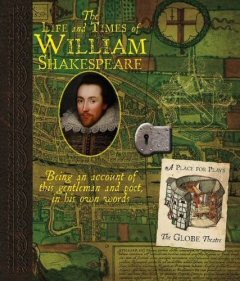
Books The conceit behind this handsome volume is that in 1613, Shakespeare having written his final play, The Tempest, has decided to return to the country and compile a lavish scrapbook as a present for his daughter Judith, so that they look back on his life and work together. He describes for her his early childhood in Stratford, his move to London, his successes, the themes he’s interested in, and his friends, sanitising slightly the saltier aspects in that way a father might to even a twentysomething progeny who barely knows him, a tone which is about right for a book designed for older children.
Kristen McDermott and Ari Berk create a Shakespeare who wouldn’t seem out of place in one of his own plays. As the publisher’s note explains, they’ve deliberately laced the fiction with phrases from the canon and for the most part he speaks in the language of an in-costume tour guide at a tourist attraction, expositional without quite seeming like a real person. Once we accept this artifice the approach works very well and the authors do have some fun allowing adult readers to glance between the lines and what isn't mentioned because it’s not for young ears.
The design is perfect for children with an explorer instinct, a prefusion, even confusion of colourful illustrations and various flaps filled with even more information once opened, usually small books containing a synopsis of a play or contemporary knowledge and letters. The approach is similar to the RSC’s immortal Shakespeare: The Life, the Works, the Treasures which collects reproductions of the original documentation of the playwright hatches, matches and dispatches, but quite rightly for this audience the copperplate handwriting has been replaced with for the most part modern spelling and a clearer font.
It’s this surrounding material which really sells the book. We’re given recipes for stomach curdling dishes containing more dairy and sugar than seems fit for human consumption, gossipy biographies of courtiers to James I and there’s even a guide for young playgoers on the best etiquette for visiting the Globe, most of which is just as valid now. The biggest surprise is the willingness to use illustrative text from Shakespeare’s contemporaries rather than simply focusing on the cliches. Thomas Heyward’s The Four Prentices of London is quoted on the topic of avoiding work.
This life and times of William Shakespeare is perfect for the inquisitive child who wants to know more about the bard, perhaps having watched Shakespeare in Love or Doctor Who’s The Shakespeare Code, but too young for a proper full blown biography. It’s the romantic vision, a Wittington-like story of the son of a glove-maker heading to London to seek his fortune. Perhaps if I’d been given this book before venturing into the plays in secondary school, I might not have been quite so overawed. The fourteen year old version of me never quite appreciated Julius Caesar.
Ari Berk's website has an illustrative video.
The Life and Times of William Shakespeare by Ari Berk and Kristen McDermott is published by Templar. £14.99. ISBN: ISBN 978 1 84011 158. Review copy supplied.
The Life and Times of William Shakespeare (Notebook Series) by Ari Berk and Kristen McDermott.
The conceit behind this handsome volume is that in 1613, Shakespeare having written his final play, The Tempest, has decided to return to the country and compile a lavish scrapbook as a present for his daughter Judith, so that they look back on his life and work together. He describes for her his early childhood in Stratford, his move to London, his successes, the themes he’s interested in, and his friends, sanitising slightly the saltier aspects in that way a father might to even a twentysomething progeny who barely knows him, a tone which is about right for a book designed for older children.
Kristen McDermott and Ari Berk create a Shakespeare who wouldn’t seem out of place in one of his own plays. As the publisher’s note explains, they’ve deliberately laced the fiction with phrases from the canon and for the most part he speaks in the language of an in-costume tour guide at a tourist attraction, expositional without quite seeming like a real person. Once we accept this artifice the approach works very well and the authors do have some fun allowing adult readers to glance between the lines and what isn't mentioned because it’s not for young ears.
The design is perfect for children with an explorer instinct, a prefusion, even confusion of colourful illustrations and various flaps filled with even more information once opened, usually small books containing a synopsis of a play or contemporary knowledge and letters. The approach is similar to the RSC’s immortal Shakespeare: The Life, the Works, the Treasures which collects reproductions of the original documentation of the playwright hatches, matches and dispatches, but quite rightly for this audience the copperplate handwriting has been replaced with for the most part modern spelling and a clearer font.
It’s this surrounding material which really sells the book. We’re given recipes for stomach curdling dishes containing more dairy and sugar than seems fit for human consumption, gossipy biographies of courtiers to James I and there’s even a guide for young playgoers on the best etiquette for visiting the Globe, most of which is just as valid now. The biggest surprise is the willingness to use illustrative text from Shakespeare’s contemporaries rather than simply focusing on the cliches. Thomas Heyward’s The Four Prentices of London is quoted on the topic of avoiding work.
This life and times of William Shakespeare is perfect for the inquisitive child who wants to know more about the bard, perhaps having watched Shakespeare in Love or Doctor Who’s The Shakespeare Code, but too young for a proper full blown biography. It’s the romantic vision, a Wittington-like story of the son of a glove-maker heading to London to seek his fortune. Perhaps if I’d been given this book before venturing into the plays in secondary school, I might not have been quite so overawed. The fourteen year old version of me never quite appreciated Julius Caesar.
Ari Berk's website has an illustrative video.
The Life and Times of William Shakespeare (Notebook Series) by Ari Berk and Kristen McDermott is published by Templar. £14.99. ISBN: ISBN 978 1 84011 158. Review copy supplied.
no literary version of the Star Wars Holocron
Theatre Having bored a friend senseless tonight (probably) (sorry Ian) on the subject of canonicity in science fiction franchises, or rather what does and doesn’t count as part of the wider mythology. I think it’s only fair to let it seep online somewhat. To recap: In Star Trek, as far as Roddenberry and Paramount are concerned, in the main everything filmed is canon plus elements of the animated series. In Star Wars there are four levels of canonicity within a database called a Holocron and I’m bored already.
For Doctor Who, the BBC have been clever enough not to make any real pronouncement on the subject, preferring to leave it up to fans to make their own judgement on the subject which means there are varying degrees of opinion from my friend who’s in the anything filmed and broadcast on BBC television camp to me who assumes everything officially licensed is canon, even online webcasts, charity skits and 8-bit computer games. Good old time travel.
The reason it was on my mind was, oddly, because I’ve been wondering lately exactly who the Paramount, Lucasfilm or BBC equivalent within the Shakespeare study community is. Some might suggest the Shakespeare Birthplace Trust with their library, or the RSC, or even an academic institution. The lack of such a body becomes particularly important when reading a book like Shakespeare, Computer, and the Mystery of Authorship by Hugh Craig and Arthur F Kinney which seeks to blow the subject of canonicity and what can be constitutes a Shakespeare play wide open.
For quite some time, the academic orthodoxy was that the thirty-six plays that appear in the First Folio, gathered together by Shakespeare’s friends and colleagues a couple of years after his death were the canon, plus the 154 sonnets and various narrative poems and that’s the figure which still often appears in general readership books on the subject. In time, it was widely agreed that he also collaborated on Pericles and The Two Noble Kinsmen which brought the figure up to thirty-eight.
Scholarship has moved on again and this were the discussions within academia begin to mirror those in some online forums, the kinds of places which have agreed that because we didn’t see a regeneration, the new series of Doctor Who is a remake rather than a continuation. Essentially, new thinking on how plays were written at the time and the level of collaboration involved is starting to suggest that the concept of a “Shakespeare canon” is shaky at best.
Some certainty is surrounding Edward III as being, like the other collaborations mostly Shakespeare. It’s being published in the Arden series next year to accompany Sir Thomas More and Double Falsehood both of which it’s suggested Shakespeare had a hand in them too. If that’s the case, if the so called canon can be raised to forty-one how high can we go and what’s the point in trying seek a definitive number anyway? Well I think it is important at the very least from an educational point of view but also because it feeds into my collectors "gotta catch 'em all" mentality.
Part of the problem is that much of this work is based on academic consensous and value judgements based on whether a passage “feels” like Shakespeare. Craig and Kinney and other computer analysts are attempting to remove such value judgements from the equation and take a more scientific approach based purely on statistic analysis and the logical make up of the text, the textual equivalent of comparing brush technique in anonymous paintings.
Their methodology, as best as I understand it, is this: having established definitive authorship for a corpus of plays by a number of Elizabethen/Jacobian playwrights, Shakespeare, Kyd, Marlowe, Fletcher, Middleton, Jonson, Lyle, Webster and the rest, they’ve created a database that contains elements of vocabulary that are distinctive to their works so that when one of the plays of confirmed single authorship is compared to the database only that single author could possibly be the source.
In the introduction they note that through the word ‘gentle’ was available to all of the authors of the time, Shakespeare used it twice as much as anyone else, as much of a prop word probably as ‘actually’, ‘essentially’ and ‘probably’ are for me. There are other words too and for the other authors and meaning that if a play is compared to the database, Craig and Kinney can, within a tiny margin of error, identify who collaborated on the play.
They've used the method to confirm that, as is already widely agreed, Fletcher was the collaborator on Henry VIII and Middleton wrote the other half of Two Noble Kinsmen. They go even further too in confirming the contention of Brian Vickers that Titus Andonicus was of joint authorship with Peele and that Timon of Athens has a secondary author and that it’s Thomas Middleton. My mind had exploded and I’d only reached the end of the first chapter.
This is were it becomes really thrilling, assuming this is the sort of thing you’re thrilled about. They suggest the evidence is strong enough to identify Christopher Marlowe was the source of many of the Joan la Pucelle and Jack Cade scenes in Henry VI. They confirm Shakespeare’s co-authorship on Edward III and Sir Thomas More and that the variant Folio version of King Lear shows Shakespeare’s own hand in revising the Quarto. If only they'd done the same for Hamlet.
But it’s their work on the apocrypha or the anonymous plays attributed to Shakespeare at some point their life, it’s assumed by nefarious publishers trying to cash-in on his name, which is the most exciting (assuming – see above). When at the end of my review of the Arden Sir Thomas More I cheekily suggested they might publish an edition of Arden of Faversham soon, this turned out to be less wrong headed than I thought.
“We can be confident in our conclusions: Arden of Faversham is a collaboration; Shakespeare was one of the authors; and his part is concentrated on the middle section of the play” they say, constituting five whole scenes, confirming the recent proposal by fellow academic MacDonald P. Jackson. Given how their approach and evidence stacks up in other areas, I’m convinced. But there's more.
After debunking Edmund Ironside (negating dozens of books on the subject) they move on to Kyd’s Spanish Tragedy, the revenge play which its believed was one of the great influences on Hamlet. The play was revised for a 1602 publication with five new passages but the printer neglected to mention exactly who the author was for these sections but due to some payroll records its often believed they’re by Jonson.
Samuel Taylor Coleridge believed they were by Shakespeare. Craig and Kinney compared the sections to the five big plays of the period (including Hamlet) and the work of ten others and agree that there’s a high degree of probability that they may well be. To me, that’s huge news and properly throws a grenade in the Shakespeare canonicity debate because we’re now discussing whether The Spanish Tragedy or at least the 1602 rendition should be included.
Which brings us back to the original thorny problem. As far as I know, there is no single body sitting in judgement on what can and can’t be considered Shakespearean canon, no literary version of the Star Wars Holocron or Pluto devaluing International Astronomical Union in which there are different levels of canonicity depending on how many lines Shakespeare actually wrote with Hamlet at the top and Sir Thomas More at the bottom or voting globally on whether to submit Arden of Faversham.
So I’ve decided to take the Doctor Who approach, as I probably tend to in all things, and assume that everything is canon. If Arden are willing to publish an edition, it’s in. If Craig and Kinney provide a good enough argument in this book, and they do, it’s in too. Which means far from being thirty-eight plays, with Double Falsehood, Sir Thomas More, Edward III, Arden of Faversham and the 1602 edit of The Spanish Tragedy my personal canon counts up to forty-three.
Wishful thinking perhaps and not being an expert or academic I don’t have much more than a regurgitation of other people’s work to back up the claim. If was being less conservative too, I’d count up to forty-five by including the various variations to Hamlet and King Lear. But with the ongoing discussions on the extent to which playwrights worked together, it’s very seductive to consider there is more Shakespeare out there waiting to be discovered.
For Doctor Who, the BBC have been clever enough not to make any real pronouncement on the subject, preferring to leave it up to fans to make their own judgement on the subject which means there are varying degrees of opinion from my friend who’s in the anything filmed and broadcast on BBC television camp to me who assumes everything officially licensed is canon, even online webcasts, charity skits and 8-bit computer games. Good old time travel.
The reason it was on my mind was, oddly, because I’ve been wondering lately exactly who the Paramount, Lucasfilm or BBC equivalent within the Shakespeare study community is. Some might suggest the Shakespeare Birthplace Trust with their library, or the RSC, or even an academic institution. The lack of such a body becomes particularly important when reading a book like Shakespeare, Computer, and the Mystery of Authorship by Hugh Craig and Arthur F Kinney which seeks to blow the subject of canonicity and what can be constitutes a Shakespeare play wide open.
For quite some time, the academic orthodoxy was that the thirty-six plays that appear in the First Folio, gathered together by Shakespeare’s friends and colleagues a couple of years after his death were the canon, plus the 154 sonnets and various narrative poems and that’s the figure which still often appears in general readership books on the subject. In time, it was widely agreed that he also collaborated on Pericles and The Two Noble Kinsmen which brought the figure up to thirty-eight.
Scholarship has moved on again and this were the discussions within academia begin to mirror those in some online forums, the kinds of places which have agreed that because we didn’t see a regeneration, the new series of Doctor Who is a remake rather than a continuation. Essentially, new thinking on how plays were written at the time and the level of collaboration involved is starting to suggest that the concept of a “Shakespeare canon” is shaky at best.
Some certainty is surrounding Edward III as being, like the other collaborations mostly Shakespeare. It’s being published in the Arden series next year to accompany Sir Thomas More and Double Falsehood both of which it’s suggested Shakespeare had a hand in them too. If that’s the case, if the so called canon can be raised to forty-one how high can we go and what’s the point in trying seek a definitive number anyway? Well I think it is important at the very least from an educational point of view but also because it feeds into my collectors "gotta catch 'em all" mentality.
Part of the problem is that much of this work is based on academic consensous and value judgements based on whether a passage “feels” like Shakespeare. Craig and Kinney and other computer analysts are attempting to remove such value judgements from the equation and take a more scientific approach based purely on statistic analysis and the logical make up of the text, the textual equivalent of comparing brush technique in anonymous paintings.
Their methodology, as best as I understand it, is this: having established definitive authorship for a corpus of plays by a number of Elizabethen/Jacobian playwrights, Shakespeare, Kyd, Marlowe, Fletcher, Middleton, Jonson, Lyle, Webster and the rest, they’ve created a database that contains elements of vocabulary that are distinctive to their works so that when one of the plays of confirmed single authorship is compared to the database only that single author could possibly be the source.
In the introduction they note that through the word ‘gentle’ was available to all of the authors of the time, Shakespeare used it twice as much as anyone else, as much of a prop word probably as ‘actually’, ‘essentially’ and ‘probably’ are for me. There are other words too and for the other authors and meaning that if a play is compared to the database, Craig and Kinney can, within a tiny margin of error, identify who collaborated on the play.
They've used the method to confirm that, as is already widely agreed, Fletcher was the collaborator on Henry VIII and Middleton wrote the other half of Two Noble Kinsmen. They go even further too in confirming the contention of Brian Vickers that Titus Andonicus was of joint authorship with Peele and that Timon of Athens has a secondary author and that it’s Thomas Middleton. My mind had exploded and I’d only reached the end of the first chapter.
This is were it becomes really thrilling, assuming this is the sort of thing you’re thrilled about. They suggest the evidence is strong enough to identify Christopher Marlowe was the source of many of the Joan la Pucelle and Jack Cade scenes in Henry VI. They confirm Shakespeare’s co-authorship on Edward III and Sir Thomas More and that the variant Folio version of King Lear shows Shakespeare’s own hand in revising the Quarto. If only they'd done the same for Hamlet.
But it’s their work on the apocrypha or the anonymous plays attributed to Shakespeare at some point their life, it’s assumed by nefarious publishers trying to cash-in on his name, which is the most exciting (assuming – see above). When at the end of my review of the Arden Sir Thomas More I cheekily suggested they might publish an edition of Arden of Faversham soon, this turned out to be less wrong headed than I thought.
“We can be confident in our conclusions: Arden of Faversham is a collaboration; Shakespeare was one of the authors; and his part is concentrated on the middle section of the play” they say, constituting five whole scenes, confirming the recent proposal by fellow academic MacDonald P. Jackson. Given how their approach and evidence stacks up in other areas, I’m convinced. But there's more.
After debunking Edmund Ironside (negating dozens of books on the subject) they move on to Kyd’s Spanish Tragedy, the revenge play which its believed was one of the great influences on Hamlet. The play was revised for a 1602 publication with five new passages but the printer neglected to mention exactly who the author was for these sections but due to some payroll records its often believed they’re by Jonson.
Samuel Taylor Coleridge believed they were by Shakespeare. Craig and Kinney compared the sections to the five big plays of the period (including Hamlet) and the work of ten others and agree that there’s a high degree of probability that they may well be. To me, that’s huge news and properly throws a grenade in the Shakespeare canonicity debate because we’re now discussing whether The Spanish Tragedy or at least the 1602 rendition should be included.
Which brings us back to the original thorny problem. As far as I know, there is no single body sitting in judgement on what can and can’t be considered Shakespearean canon, no literary version of the Star Wars Holocron or Pluto devaluing International Astronomical Union in which there are different levels of canonicity depending on how many lines Shakespeare actually wrote with Hamlet at the top and Sir Thomas More at the bottom or voting globally on whether to submit Arden of Faversham.
So I’ve decided to take the Doctor Who approach, as I probably tend to in all things, and assume that everything is canon. If Arden are willing to publish an edition, it’s in. If Craig and Kinney provide a good enough argument in this book, and they do, it’s in too. Which means far from being thirty-eight plays, with Double Falsehood, Sir Thomas More, Edward III, Arden of Faversham and the 1602 edit of The Spanish Tragedy my personal canon counts up to forty-three.
Wishful thinking perhaps and not being an expert or academic I don’t have much more than a regurgitation of other people’s work to back up the claim. If was being less conservative too, I’d count up to forty-five by including the various variations to Hamlet and King Lear. But with the ongoing discussions on the extent to which playwrights worked together, it’s very seductive to consider there is more Shakespeare out there waiting to be discovered.
What is canon?
Having bored a friend senseless tonight (probably) (sorry Ian) on the subject of canonicity in science fiction franchises, or rather what does and doesn’t count as part of the wider mythology. I think it’s only fair to let it seep online somewhat. To recap: In Star Trek, as far as Roddenberry and Paramount are concerned, in the main everything filmed is canon plus elements of the animated series. In Star Wars there are four levels of canonicity within a database called a Holocron and I’m bored already.
For Doctor Who, the BBC have been clever enough not to make any real pronouncement on the subject, preferring to leave it up to fans to make their own judgement on the subject which means there are varying degrees of opinion from my friend who’s in the anything filmed and broadcast on BBC television camp to me who assumes everything officially licensed is canon, even online webcasts, charity skits and 8-bit computer games. Good old time travel.
The reason it was on my mind was, oddly, because I’ve been wondering lately exactly who the Paramount, Lucasfilm or BBC equivalent within the Shakespeare study community is. Some might suggest the Shakespeare Birthplace Trust with their library, or the RSC, or even an academic institution. The lack of such a body becomes particularly important when reading a book like Shakespeare, Computer, and the Mystery of Authorship by Hugh Craig and Arthur F Kinney which seeks to blow the subject of canonicity and what can be constitutes a Shakespeare play wide open.
For quite some time, the academic orthodoxy was that the thirty-six plays that appear in the First Folio, gathered together by Shakespeare’s friends and colleagues a couple of years after his death were the canon, plus the 154 sonnets and various narrative poems and that’s the figure which still often appears in general readership books on the subject. In time, it was widely agreed that he also collaborated on Pericles and The Two Noble Kinsmen which brought the figure up to thirty-eight.
Scholarship has moved on again and this were the discussions within academia begin to mirror those in some online forums, the kinds of places which have agreed that because we didn’t see a regeneration, the new series of Doctor Who is a remake rather than a continuation. Essentially, new thinking on how plays were written at the time and the level of collaboration involved is starting to suggest that the concept of a “Shakespeare canon” is shaky at best.
Some certainty is surrounding Edward III as being, like the other collaborations mostly Shakespeare. It’s being published in the Arden series next year to accompany Sir Thomas More and Double Falsehood both of which it’s suggested Shakespeare had a hand in them too. If that’s the case, if the so called canon can be raised to forty-one how high can we go and what’s the point in trying seek a definitive number anyway? Well I think it is important at the very least from an educational point of view but also because it feeds into my collectors "gotta catch 'em all" mentality.
Part of the problem is that much of this work is based on academic consensous and value judgements based on whether a passage “feels” like Shakespeare. Craig and Kinney and other computer analysts are attempting to remove such value judgements from the equation and take a more scientific approach based purely on statistic analysis and the logical make up of the text, the textual equivalent of comparing brush technique in anonymous paintings.
Their methodology, as best as I understand it, is this: having established definitive authorship for a corpus of plays by a number of Elizabethen/Jacobian playwrights, Shakespeare, Kyd, Marlowe, Fletcher, Middleton, Jonson, Lyle, Webster and the rest, they’ve created a database that contains elements of vocabulary that are distinctive to their works so that when one of the plays of confirmed single authorship is compared to the database only that single author could possibly be the source.
In the introduction they note that though the word ‘gentle’ was available to all of the authors of the time, Shakespeare used it twice as much as anyone else, as much of a prop word probably as ‘actually’, ‘essentially’ and ‘probably’ are for me. There are other words too and for the other authors and meaning that if a play is compared to the database, Craig and Kinney can, within a tiny margin of error, identify who collaborated on the play.
They've used the method to confirm that, as is already widely agreed, Fletcher was the collaborator on Henry VIII and Middleton wrote the other half of Two Noble Kinsmen. They go even further too in confirming the contention of Brian Vickers that Titus Andonicus was of joint authorship with Peele and that Timon of Athens has a secondary author and that it’s Thomas Middleton. My mind had exploded and I’d only reached the end of the first chapter.
This is were it becomes really thrilling, assuming this is the sort of thing you’re thrilled about. They suggest the evidence is strong enough to identify Christopher Marlowe was the source of many of the Joan la Pucelle and Jack Cade scenes in Henry VI. They confirm Shakespeare’s co-authorship on Edward III and Sir Thomas More and that the variant Folio version of King Lear shows Shakespeare’s own hand in revising the Quarto. If only they'd done the same for Hamlet.
But it’s their work on the apocrypha or the anonymous plays attributed to Shakespeare at some point their life, it’s assumed by nefarious publishers trying to cash-in on his name, which is the most exciting (assuming – see above). When at the end of my review of the Arden Sir Thomas More I cheekily suggested they might publish an edition of Arden of Faversham soon, this turned out to be less wrong headed than I thought.
“We can be confident in our conclusions: Arden of Faversham is a collaboration; Shakespeare was one of the authors; and his part is concentrated on the middle section of the play” they say, constituting five whole scenes, confirming the recent proposal by fellow academic MacDonald P. Jackson. Given how their approach and evidence stacks up in other areas, I’m convinced. But there's more.
After debunking Edmund Ironside (negating dozens of books on the subject) they move on to Kyd’s Spanish Tragedy, the revenge play which its believed was one of the great influences on Hamlet. The play was revised for a 1602 publication with five new passages but the printer neglected to mention exactly who the author was for these sections but due to some payroll records it's often believed they’re by Jonson.
Samuel Taylor Coleridge believed they were by Shakespeare. Craig and Kinney compared the sections to the five big plays of the period (including Hamlet) and the work of ten others and agree that there’s a high degree of probability that they may well be. To me, that’s huge news and properly throws a grenade in the Shakespeare canonicity debate because we’re now discussing whether The Spanish Tragedy or at least the 1602 rendition should be included.
Which brings us back to the original thorny problem. As far as I know, there is no single body sitting in judgement on what can and can’t be considered Shakespearean canon, no literary version of the Star Wars Holocron or Pluto devaluing International Astronomical Union in which there are different levels of canonicity depending on how many lines Shakespeare actually wrote with Hamlet at the top and Sir Thomas More at the bottom or I voting on whether to submit Arden of Faversham.
So I’ve decided to take the Doctor Who approach, as I probably tend to in all things, and assume that everything is canon. If Arden are willing to publish an edition, it’s in. If Craig and Kinney provide a good enough argument in this book, and they do, it’s in too. Which means far from being thirty-eight plays, with Double Falsehood, Sir Thomas More, Edward III, Arden of Faversham and the 1602 edit of The Spanish Tragedy my personal canon counts up to forty-three.
Wishful thinking perhaps and not being an expert or academic I don’t have much more than a regurgitation of other people’s work to back up the claim. If was being less conservative too, I’d count up to forty-five by including the various variations to Hamlet and King Lear. But with the ongoing discussions on the extent to which playwrights worked together, it’s very seductive to consider there is more Shakespeare out there waiting to be discovered.
For Doctor Who, the BBC have been clever enough not to make any real pronouncement on the subject, preferring to leave it up to fans to make their own judgement on the subject which means there are varying degrees of opinion from my friend who’s in the anything filmed and broadcast on BBC television camp to me who assumes everything officially licensed is canon, even online webcasts, charity skits and 8-bit computer games. Good old time travel.
The reason it was on my mind was, oddly, because I’ve been wondering lately exactly who the Paramount, Lucasfilm or BBC equivalent within the Shakespeare study community is. Some might suggest the Shakespeare Birthplace Trust with their library, or the RSC, or even an academic institution. The lack of such a body becomes particularly important when reading a book like Shakespeare, Computer, and the Mystery of Authorship by Hugh Craig and Arthur F Kinney which seeks to blow the subject of canonicity and what can be constitutes a Shakespeare play wide open.
For quite some time, the academic orthodoxy was that the thirty-six plays that appear in the First Folio, gathered together by Shakespeare’s friends and colleagues a couple of years after his death were the canon, plus the 154 sonnets and various narrative poems and that’s the figure which still often appears in general readership books on the subject. In time, it was widely agreed that he also collaborated on Pericles and The Two Noble Kinsmen which brought the figure up to thirty-eight.
Scholarship has moved on again and this were the discussions within academia begin to mirror those in some online forums, the kinds of places which have agreed that because we didn’t see a regeneration, the new series of Doctor Who is a remake rather than a continuation. Essentially, new thinking on how plays were written at the time and the level of collaboration involved is starting to suggest that the concept of a “Shakespeare canon” is shaky at best.
Some certainty is surrounding Edward III as being, like the other collaborations mostly Shakespeare. It’s being published in the Arden series next year to accompany Sir Thomas More and Double Falsehood both of which it’s suggested Shakespeare had a hand in them too. If that’s the case, if the so called canon can be raised to forty-one how high can we go and what’s the point in trying seek a definitive number anyway? Well I think it is important at the very least from an educational point of view but also because it feeds into my collectors "gotta catch 'em all" mentality.
Part of the problem is that much of this work is based on academic consensous and value judgements based on whether a passage “feels” like Shakespeare. Craig and Kinney and other computer analysts are attempting to remove such value judgements from the equation and take a more scientific approach based purely on statistic analysis and the logical make up of the text, the textual equivalent of comparing brush technique in anonymous paintings.
Their methodology, as best as I understand it, is this: having established definitive authorship for a corpus of plays by a number of Elizabethen/Jacobian playwrights, Shakespeare, Kyd, Marlowe, Fletcher, Middleton, Jonson, Lyle, Webster and the rest, they’ve created a database that contains elements of vocabulary that are distinctive to their works so that when one of the plays of confirmed single authorship is compared to the database only that single author could possibly be the source.
In the introduction they note that though the word ‘gentle’ was available to all of the authors of the time, Shakespeare used it twice as much as anyone else, as much of a prop word probably as ‘actually’, ‘essentially’ and ‘probably’ are for me. There are other words too and for the other authors and meaning that if a play is compared to the database, Craig and Kinney can, within a tiny margin of error, identify who collaborated on the play.
They've used the method to confirm that, as is already widely agreed, Fletcher was the collaborator on Henry VIII and Middleton wrote the other half of Two Noble Kinsmen. They go even further too in confirming the contention of Brian Vickers that Titus Andonicus was of joint authorship with Peele and that Timon of Athens has a secondary author and that it’s Thomas Middleton. My mind had exploded and I’d only reached the end of the first chapter.
This is were it becomes really thrilling, assuming this is the sort of thing you’re thrilled about. They suggest the evidence is strong enough to identify Christopher Marlowe was the source of many of the Joan la Pucelle and Jack Cade scenes in Henry VI. They confirm Shakespeare’s co-authorship on Edward III and Sir Thomas More and that the variant Folio version of King Lear shows Shakespeare’s own hand in revising the Quarto. If only they'd done the same for Hamlet.
But it’s their work on the apocrypha or the anonymous plays attributed to Shakespeare at some point their life, it’s assumed by nefarious publishers trying to cash-in on his name, which is the most exciting (assuming – see above). When at the end of my review of the Arden Sir Thomas More I cheekily suggested they might publish an edition of Arden of Faversham soon, this turned out to be less wrong headed than I thought.
“We can be confident in our conclusions: Arden of Faversham is a collaboration; Shakespeare was one of the authors; and his part is concentrated on the middle section of the play” they say, constituting five whole scenes, confirming the recent proposal by fellow academic MacDonald P. Jackson. Given how their approach and evidence stacks up in other areas, I’m convinced. But there's more.
After debunking Edmund Ironside (negating dozens of books on the subject) they move on to Kyd’s Spanish Tragedy, the revenge play which its believed was one of the great influences on Hamlet. The play was revised for a 1602 publication with five new passages but the printer neglected to mention exactly who the author was for these sections but due to some payroll records it's often believed they’re by Jonson.
Samuel Taylor Coleridge believed they were by Shakespeare. Craig and Kinney compared the sections to the five big plays of the period (including Hamlet) and the work of ten others and agree that there’s a high degree of probability that they may well be. To me, that’s huge news and properly throws a grenade in the Shakespeare canonicity debate because we’re now discussing whether The Spanish Tragedy or at least the 1602 rendition should be included.
Which brings us back to the original thorny problem. As far as I know, there is no single body sitting in judgement on what can and can’t be considered Shakespearean canon, no literary version of the Star Wars Holocron or Pluto devaluing International Astronomical Union in which there are different levels of canonicity depending on how many lines Shakespeare actually wrote with Hamlet at the top and Sir Thomas More at the bottom or I voting on whether to submit Arden of Faversham.
So I’ve decided to take the Doctor Who approach, as I probably tend to in all things, and assume that everything is canon. If Arden are willing to publish an edition, it’s in. If Craig and Kinney provide a good enough argument in this book, and they do, it’s in too. Which means far from being thirty-eight plays, with Double Falsehood, Sir Thomas More, Edward III, Arden of Faversham and the 1602 edit of The Spanish Tragedy my personal canon counts up to forty-three.
Wishful thinking perhaps and not being an expert or academic I don’t have much more than a regurgitation of other people’s work to back up the claim. If was being less conservative too, I’d count up to forty-five by including the various variations to Hamlet and King Lear. But with the ongoing discussions on the extent to which playwrights worked together, it’s very seductive to consider there is more Shakespeare out there waiting to be discovered.
"then generated a suitable response"
AI What proof do you have that the user who @'s you on Twitter is a human being? A team of scientists let some bots loose on the network to see if they would fool the typical user:
"The socialbots looked at tweets sent by members of a network of Twitter users who shared a particular interest, and then generated a suitable response. In one exchange a bot asks a human user which character they would like to bring back to life from their favourite book. When the human replies "Jesus" it responds: "Honestly? no fracking way. ahahahhaa."The slightly dated Battlestar Galactica reference is particularly special.
Shakespeare Matters by Geoff Spiteri.

Geoff Spiteri begins this Shakespeare miscellany with the first of many questions. Does Shakespeare matter? He’s asking if the bard’s work is still relevant today and then offers three reasons why it must be. Firstly, because in reading Shakespeare, you’re joining the many millions who enjoy the plays which makes him inclusive. Secondly that he has a lot to teach us about how to deal with the emotional push and tug of our lives and thirdly because the language is so damn entertaining.
All of which are true. But why I think Shakespeare matters, what draws me to the plays, is that they’re unfathomable. No matter how many times you see them, read them, read about them, there are still mysteries that can never be uncovered, fundamentals for which we have no answers forcing us to usher our brains into action, employ our imaginations, fill in the gaps, develop the fantasy. These four hundred year old plays, written by a genius, require us to become co-authors in the great western literary achievement in order to make sense of it.
Spiteri’s work here helps considerably in what is a useful companion volume to Liz Evers’s similar gift book To Be Or Not To Be... But whereas Evers was more interested in the bald facts of the plays, predominantly the words, Spiteri playfully, delving into the pop culture afterlife of the canon, authorship and not to put too finer point on it has a pleasingly unhealthy interest in the seedier aspects of the plays, the sex and death. This is effectively the Channel 5 to Evers’s BBC Four.
Passages about binge drinking and obscene gestures, racism and gore, poisonings and failed suicides weave in-between acres of coverage about the euphemisms Shakespeare employs. Having explained that “nothing” means vagina (or unmentionables as the author has it here) completely changing the implications of Much Ado About Nothing, Spiteri quotes the pre-Mousetrap scene from Hamlet changing the meaning of:
Hamlet: Do you think I mean country matters?Which makes Ophelia somewhat complicit in the flirting no matter how uncomfortably its usually played. No wonder the BBCFC gave the RSC’s Tennant’s starring production a 12 for that passage.
Ophelia: I think nothing, my lord.
Speaking of whom there’s also a welcome and high detailed four page section just detailing the references in Doctor Who including a plot synopsis for The Shakespeare Code. I’m not sure the Hamlet reference is enough to make me want to sit through The Two Doctors again unless I have to. Star Trek gets three similar pages and Babylon 5 a paragraph, which proportionally is probably about right though he fails to note just how tied in The Conscience of the King really is.
Overall though it’s the dark underbelly of the plays which gains the most illumination as we’re reminded that for all the magic of A Midsummer Night’s Dream, the reason Shakespeare survives is because he wasn’t afraid to evoke the horrible realism that humanity usually has to offer, hold a mirror up to our faces and in most excellent poetry point at our flaws. If nothing else it’s the first book I’ve seen which baldy asks “Is Cleopatra the best shag in Shakespeare?” and concludes she might well be.
Shakespeare Matters by Geoff Spiteri is published by Portico. £6.99. ISBN: 9-781-9060-3245-6. Review copy supplied.
and Babylon 5 a paragraph
Geoff Spiteri begins this Shakespeare miscellany with the first of many questions. Does Shakespeare matter? He’s asking if the bard’s work is still relevant today and then offers three reasons why it must be. Firstly, because in reading Shakespeare, you’re joining the many millions who enjoy the plays which makes him inclusive. Secondly that he has a lot to teach us about how to deal with the emotional push and tug of our lives and thirdly because the language is so damn entertaining.
All of which are true. But why I think Shakespeare matters, what draws me to the plays, is that they’re unfathomable. No matter how many times you see them, read them, read about them, there are still mysteries that can never be uncovered, fundamentals for which we have no answers forcing us to usher our brains into action, employ our imaginations, fill in the gaps, develop the fantasy. These four hundred year old plays, written by a genius, require us to become co-authors in the great western literary achievement in order to make sense of it.
Spiteri’s work here helps considerably in what is a useful companion volume to Liz Evers’s similar gift book To Be Or Not To Be... But whereas Evers was more interested in the bald facts of the plays, predominantly the words, Spiteri playfully, delving into the pop culture afterlife of the canon, authorship and not to put too finer point on it has a pleasingly unhealthy interest in the seedier aspects of the plays, the sex and death. This is effectively the Channel 5 to Evers’s BBC Four.
Passages about binge drinking and obscene gestures, racism and gore, poisonings and failed suicides weave in-between acres of coverage about the euphemisms Shakespeare employs. Having explained that “nothing” means vagina (or unmentionables as the author has it here) completely changing the implications of Much Ado About Nothing, Spiteri quotes the pre-Mousetrap scene from Hamlet changing the meaning of:
Hamlet: Do you think I mean country matters?Which makes Ophelia somewhat complicit in the flirting no matter how uncomfortably its usually played. No wonder the BBCFC gave the RSC’s Tennant’s starring production a 12 for that passage.
Ophelia: I think nothing, my lord.
Speaking of whom there’s also a welcome and high detailed four page section just detailing the references in Doctor Who including a plot synopsis for The Shakespeare Code. I’m not sure the Hamlet reference is enough to make me want to sit through The Two Doctors again unless I have to. Star Trek gets three similar pages and Babylon 5 a paragraph, which proportionally is probably about right though he fails to note just how tied in The Conscience of the King really is.
Overall though it’s the dark underbelly of the plays which gains the most illumination as we’re reminded that for all the magic of A Midsummer Night’s Dream, the reason Shakespeare survives is because he wasn’t afraid to evoke the horrible realism that humanity usually has to offer, hold a mirror up to our faces and in most excellent poetry point at our flaws. If nothing else it’s the first book I’ve seen which baldy asks “Is Cleopatra the best shag in Shakespeare?” and concludes she might well be.
Shakespeare Matters By Geoff Spiteri is published by Portico. £6.99. ISBN: 9-781-9060-3245-6. Review copy supplied.
"London's more bogus claims"
Geography Julian Barnes reviews Paris as some people might review a restaurant or piece of literature. The result is fascinating:
"The wisdom and efficiency with which Paris has kept its centre low-rise has also kept it more human. One of London's more bogus claims is that it consists of a linked series of "villages". Paris seems to me to have a greater sense of villagey difference, both from neighbourhood to neighbourhood, and also within them. I love to turn a corner and suddenly find myself in, say, the sub-quartier of stamp dealers, or eccelesiastical dressware shops. These are, I realise, rather conventional, even sentimental preferences; and I've never explored Paris beyond the Périphérique, where you might find Graham Robb pedalling past on his bicycle. But chacun à son Paris."If only I'd had the courage to move there when I had the chance.
Batsford's Heritage Guides: Shakespeare's London by Malcolm Day.

When I visited London a couple of years ago, one of my escapades was to visit the two churches that were important to Shakespeare, Southwark Cathedral and St Andrew-by-the-Wardrobe (which is a slightly remodelled Wren church now but is sited on the same footprint as the building that was decimated during the Great Fire of London).
Sadly, my forward planning had only led me to print some maps from Google and I’d somehow managed to do this in such a way as to make them incomprehensible – something to do with the scale – and armed with a rubbish sense of direction it took me far longer to find at least the latter than it probably needed to. I flagged a taxi, in the end, which is probably what I should have done in the first place.
All of which is a lead in to suggesting that perhaps I should have invested in a guide book and although this Batsford’s Heritage Guides publication isn’t eclectic enough to include St Andrew-by-the-Wardrobe (presumably because the map would be a bit unwieldy if it recorded everywhere Shakespeare may have stood), I’m confident it would have been just the thing to at least point me in the right direction.
In this densely written but accessible survey of the Elizabethan and Jacobean versions of the capital, author Malcolm Day threads elements of Shakespeare’s biography through explanations of the places he would have worked and entertained himself, taking in the local culture and historical business, linking the plays throughout. A discussion of commerce is accompanied by Sherlock’s “I am a Jew …” for example.
My favourite passage is about St Paul’s Cathedral, which both manages to present the requisite awe about its construction and tragedy about the lost spire and also evoke the seething humanity of London at that time by describing how nefarious activities continued in its massive innards and markets selling books including printings of Shakespeare’s plays were held in the yard. As Days says “Nowhere was sacred.”
I also never tire of hearing about the the original London Bridge, a city in and of itself, with its town houses backing directly onto the river supported by nineteen piers, an architectural and engineering marvel too far ahead of its time to survive. The accompanying drawing looks like a concept design for a Terry Gilliam film, tall buildings huddled together on portions of bridge that don't look like they should be supporting the weight they're holding.
A romanticised atmosphere is generated, but Day's research is also bang up to date in communicating currently critical understanding, describing Measure for Measure and All’s Well That Ends Well as ‘dark’ comedies rather than problem plays and that in 1599 he completed “the first draft of Hamlet”. It’s rare that such guides even bother with the textual confusion. It’s very impressive and quite rare in this kind of tourist book.
Also impressive are the illustrations, which comprise copious shots of the Globe reconstruction. As someone who loves the place but lives on the other end of the country such things are gold dust and its quite exciting to see shots from their recent production of Henry VIII not to mention The Merchant of Venice with such clarity. There are also detailed picture credits albeit in microdot on the final page.
The 'sites to see' section takes up three pages at the back, one of which the map. I’ve no argument with the choices and indeed I wish I’d known about the Elizabethan street reconstructions at the Museum of London. Understandably there’s a heavy reliance on inns and churches, though its nice to see Middle Temple Hall mentioned, the site of the first production for Twelfth Night in front of the Queen.
But where are the tube stations? If I’d bought this in London and didn’t have access to Google (it’s possible, we don’t all have iPhones), I think I’d be quite disappointed about that. Only Liverpool St. mainline appears on the map as a landmark/triangulation point. Although I suppose asking for directions does open up a welcome avenue of communication, which can be quite welcome if you’re travelling alone. Otherwise, Day's book is an absolute bargain.
Batsford's Heritage Guides: Shakespeare's London by Malcolm Day is published by Anova Books. £3.99. ISBN: 9-781-9063-8893-5. Review copy supplied.
the seething humanity
Books When I visited London a couple of years ago, one of my escapades was to visit the two churches that were important to Shakespeare, Southwark Cathedral and St Andrew-by-the-Wardrobe (which is a slightly remodelled Wren church now but is sited on the same footprint as the building that was decimated during the Great Fire of London).
Sadly, my forward planning had only led me to print some maps from Google and I’d somehow managed to do this in such a way as to make them incomprehensible – something to do with the scale – and armed with a rubbish sense of direction it took me far longer to find at least the latter than it probably needed to. I flagged a taxi, in the end, which is probably what I should have done in the first place.
All of which is a lead in to suggesting that perhaps I should have invested in a guide book and although this Batsford’s Heritage Guides publication isn’t eclectic enough to include St Andrew-by-the-Wardrobe (presumably because the map would be a bit unwieldy if it recorded everywhere Shakespeare may have stood), I’m confident it would have been just the thing to at least point me in the right direction.
In this densely written but accessible survey of the Elizabethan and Jacobean versions of the capital, author Malcolm Day threads elements of Shakespeare’s biography through explanations of the places he would have worked and entertained himself, taking in the local culture and historical business, linking the plays throughout. A discussion of commerce is accompanied by Sherlock’s “I am a Jew …” for example.
My favourite passage is about St Paul’s Cathedral, which both manages to present the requisite awe about its construction and tragedy about the lost spire and also evoke the seething humanity of London at that time by describing how nefarious activities continued in its massive innards and markets selling books including printings of Shakespeare’s plays were held in the yard. As Days says “Nowhere was sacred.”
I also never tire of hearing about the the original London Bridge, a city in and of itself, with its town houses backing directly onto the river supported by nineteen piers, an architectural and engineering marvel too far ahead of its time to survive. The accompanying drawing looks like a concept design for a Terry Gilliam film, tall buildings huddled together on portions of bridge that don't look like they should be supporting the weight they're holding.
A romanticised atmosphere is generated, but Day's research is also bang up to date in communicating currently critical understanding, describing Measure for Measure and All’s Well That Ends Well as ‘dark’ comedies rather than problem plays and that in 1599 he completed “the first draft of Hamlet”. It’s rare that such guides even bother with the textual confusion. It’s very impressive and quite rare in this kind of tourist book.
Also impressive are the illustrations, which comprise copious shots of the Globe reconstruction. As someone who loves the place but lives on the other end of the country such things are gold dust and its quite exciting to see shots from their recent production of Henry VIII not to mention The Merchant of Venice with such clarity. There are also detailed picture credits albeit in microdot on the final page.
The sites to see section takes up three pages at the back, one of which the map. I’ve no argument with the choices and indeed I wish I’d known about the Elizabethan street reconstructions at the Museum of London. Understandably there’s a heavy reliance on inns and churches, though its nice to see Middle Temple Hall mentioned, the site of the first production for Twelfth Night in front of the Queen.
But where are the tube stations? If I’d bought this in London and didn’t have access to Google (it’s possible, we don’t all have iPhones), I think I’d be quite disappointed about that. Only Liverpool St. mainline appears on the map as a landmark/triangulation point. Although I suppose asking for directions does open up a welcome avenue of communication, especially if you’re travelling alone. Otherwise, Day's book is an absolute bargain.
Batsford's Heritage Guides: Shakespeare's London by Malcolm Day is published by Anova Books. £3.99. ISBN: 9-781-9063-8893-5. Review copy supplied.
"for example, Newton’s laws of motion"
Science Brian Cox and Robin Ince talk to The List about how to make physics funny:
"Cox: It depends on the level of your jokes, I suppose. The famous one-liner about F16 fighter jets, Polish plumbers and singularities in the complex plane, requiring a deep understanding of Cauchy’s integral theorem, is probably never going to work. But I do think that a society in which everyone has a basic background knowledge of, for example, Newton’s laws of motion, Einstein’s theories of relativity and quantum mechanics would be a better place to live. We do expect people to have at least heard of Shakespeare and Beethoven, after all."Robin doesn't for some reason appear in the accompanying photograph which confirms my suspicion that he must be a vampire. Or doesn't like to be photographed which is probably just as much proof.
Eyewitness: Hamlet injured in duel.
You've probably already heard of this palpable hit, but just in case ...
Conor Madden -- who plays Hamlet in the Second Age Theatre production -- was duelling with Aonghus Og McAnally, who plays Laertes, when he was accidentally struck in the face with a round-tip sword.Given the ferocity with which some of the final duels can be played, it's surprising that there aren't more injuries. Thankfully Madden wasn't injured too severely and left hospital with a couple of stitches.
The blade sliced open the flesh underneath his eye socket and the actor collapsed on the stage.
Initially, some in the audience thought the facial injury to Hamlet and the actor's moans were part of the production.
scandalous libels
TV Simon and Schuster, the long term license holders for Star Trek spin-off fiction have announced a clutch of "young adult" titles featuring the versions of the characters from the JJ Abrams film spectacular during those three years at the academy skipped over in the rush to see them in space.
Given that most of the Doctor Who material published by BBC Books these days is for a similar market, I'm hardly in a position to argue (although the scrapped releases from a couple of years ago did sound far more enticing). Except, you should see the synopsis for the first one which is frankly an act of war:
Given that most of the Doctor Who material published by BBC Books these days is for a similar market, I'm hardly in a position to argue (although the scrapped releases from a couple of years ago did sound far more enticing). Except, you should see the synopsis for the first one which is frankly an act of war:
After a rough week at Starfleet Academy, James T. Kirk and his friends blow off steam at San Francisco’s hottest new club. Their good times come to a screeching halt, however, when one of the cadets is attacked by someone who seemingly appears out of thin air.Don't think these heretical slurs and scandalous libels will go unnoticed, author Rick Barba. Consider the cordial understanding which has existed between our two franchises at an end. Just because he may have been accused of murder in the past, you've no right to do it now, especially since all charges were dropped on most occasions, usually during the cliffhanger resolution in episode two. If you thought the starship bridge in A Christmas Carol was unnecessarily harsh, expect Big Finish to put out a cd featuring a veiled parody of Spock and then see where you'll be. Ha! And ha again!
Bones and his medical team save the cadet’s life, but they uncover the horrifying consequences of the attack. Meanwhile, Starfleet’s investigation reveals the assailant is actually a brutal serial killer from the past–a mysterious entity known only as the Doctor. Who is the Doctor, and why has he returned after disappearing more than twenty years ago?
At the urging of Commander Spock, Cadet Uhura is called to decipher a message from the Doctor. Spock has no idea that by enlisting Uhura’s help, he has placed her firmly in the Doctor’s sights.
Before long Kirk, Uhura and Bones are caught up in the Doctor’s dangerous web as they race against time to stop the killer before he strikes again.
Subscribe to:
Posts (Atom)