the teaser for Doctor Who's Aliens of London


TV For all the criticism it has received and it has received a lot of criticism in the years since it was broadcast, what’s often overlooked is how innovative the teaser for Doctor Who's Aliens of London is. This is a story about an alien invasion, and the natural assumption would be for an opening shot of a space ship crashing into the Westminster Clock, the rest of the adventure spilling on from there. Instead, writer Russell T Davies begins as he always does with character and the effect the Doctor has on his human friend, in this case shifting her world on twelve months while she’s just been away for a few hours.

Even if the main story is a tonal mess, jokes about farting mixed with the Harriet Jones horrified reaction, the very human fall out of the TARDIS landing just a single chronometer digit higher than expected keeps us interested and it’s perfectly paced too, the aftershocks threaded throughout the episode from Jackie bopping the Doctor to the revelation that Mickey was accused of his girlfriend’s murder. In previous years it was left to spin-off fiction to discuss the effects the Doctor subsequently had on his companions, but Davies works it into his series.

But it goes further than that still, because this teaser shocker would go on to effect the whole of the rest of his tenure and all three of the series he would run set in the Whoniverse. Putting together the chronology, it’s surprising how, with the exception of a single special (damn you, Planet of the Dead), everything fits together despite the discrepancy barely rating another mention on screen bar on-screen displays and spoken dates, even when in his final year Davies decided to pull it back again, The End of Time very definitely happening at the close of 2010.

At what point is it too late for the Doctor to do anything about it? When the TARDIS lands? When Rose meets her Mum? When he sees the missing poster? My assumption is that as soon as the time ship lands it becomes part of the events. But then if the TARDIS has landed at the correct time, would the Doctor have been changing events back again, creating a new timeline in which Rose returns quickly rather than the one we saw which would be deleted? Certainly we know the Doctor has the power to change history (cf, PM Jones).

With Aliens of London, the effects of time travel were confirmed as being relevant again in the televised Doctor Who, the TARDIS no longer just a space taxi (despite the logo), the first hint perhaps of what was to happen later in the Moffat stories and now the Moffat era in which wibbly-wobbly has become everything, the point of the story, a Saturday night audience subliminally having to deal with simplified versions of massively complicated elements of quantum physics, pre-destination paradoxes and the like. At least much of it is explainable I suppose, certainly more so than Bad Wolf.

Perhaps the Moffat version of Aliens of London would have discussed all of these implications in greater detail, but bar the conversation on the very fake looking roof (the more things change etc.), Davies is all about the human reaction. Rose doesn’t ask why the Doctor can’t simply take her back a year to save her mother the heartache of twelve months not knowing. Instead, the A-plot gets into full swing, as those of us looking forward to a massive invasion of Earth type story find ourselves eye to eye with a space pig.

the reason it’s The End of the World


TV Who would have thought that six years ago Russell T Davies produced for Doctor Who the ultimate metaphor for the swinging cuts which will gradually sap the joy out the country over the coming three years. Something often overlooked (well alright I’ve previously overlooked) is that the reason it’s The End of the World, is because the future version of the National Trust lost it’s funding. As the Doctor explains it, before their visit the reason the planet retains its shape and environment despite Sol having already gone critical are a series of gravity satellites ringing the planets keeping it in place. But they’re being turned off because the National Trust can’t afford to maintain them anymore. In this case, a loss of funding literally is the end of the world.

Of course you could argue that if he really cared, the Doctor could jump back into his space and time ship and have them win the lottery which is his usual approach to giving someone a windfall should the need requires it. But this is early in the new series and his emotional compass is spinning like a Wow Stuff Doctor Who Timelord Spinning Tardis, naked brutal grief and anger just resting below the surface. Even with knowledge of the ensuing mythology, the appearance of that tear, the first tear, I think, the Doctor’s shed on television (we can’t quite see his face in The Green Death), is devastating and is the tragic flip side to “Lots of planets have a north.” This new show also isn’t afraid to properly show us how the Doctor feels.

But the reason for that tear is yet to come and before it overwhelms yet another discussion of the episode, let’s talk about the rest of the episode because this is a great episode not least because apparently features the first appearance of Captain Jack, his big Boe face no doubt wondering if this is the right moment to tell the Doctor that he isn’t alone saving the timelord from another couple of seasons worth of heartache (“That’s not Martha Jones, that’s Rose, I’m too early, damnit, hmm, Cassandra’s looking flexible today…”). Russell offers up a story which on the one hand introduces new viewers to the concept of a base under siege and on the other that it’s a show that isn’t happy to be just about that any more.

The monster, in this case the metal spiders bugging their way into the vital systems quietly murdering the staff. Simon Day’s Steward, the put upon service industry managerial drone attempting to keep a professional atmosphere amongst the clients even as everything is falling apart around him. The passengers, a proper carnival of monsters is magical particularly since with a couple of notable exceptions, and taking into account the need to fill the pages of Battles in Time, none of these aliens have returned, no episode set amongst the Forest of Cheem, so they retain that element of mystery. The quintessential corridor scene as the Doctor and Jabe race to look at a vdu screen, hunch forward into the lens as acres of exposition spill out of then.

Jabe, of course, is the first of a number of characters in which Davies breaks his own rule that viewers aren’t interested in stories about aliens from the planet zog, his way of explaining why the Doctor won’t often or ever land in situations featuring no human characters. True, she is basically a human character, albeit having involved from vegetable rather than animal, but it's these differences that ultimately put her in jeopardy and lead her to sacrifice herself to save the people on the platform. There’s something of the River Song in her relationship with the Doctor, the way she’s able to say things to him that his companion would never, a regality that Yasmin Bannerman beautifully captures wearing one of the series most beautiful prosthetics.

The early ambition on the show in their willingness to experiment with an all digital character, albeit in the mostly static form of Cassandra. Apparently one of the most expensive CGI effects the show ever produced, it's a credit to the script and Zoe Wannamaker's voice work that she's also one of the new show's most loathsome villains. Previously I'd assumed that later second season opener New Earth spoiled the horror of her death, drying to a husk as the Doctor watches on. But on reflection the tenth Doctor's later kindness is used to demonstrate how the man changed with his regeneration. Despite him saying that he's the kind of man who doesn't agree with second chances, this is an occasion when he needs to make an exception.

But Rose’s scenes are arguably the most memorable, just as they should be since they’re designed to make the viewer love her, make us understand why the Doctor would want her as a passenger. In later episodes, the script was bold enough to have the Doctor or his companion just tell us (“You need someone to stop you”). But in The End of the World, we watch her almost accept the differently shaped, differently coloured people, facing up to the Doctor when he implies her racism. Watch her deal with the homesickness inherent in being ripped from everything she knows and seeing everything she knows boil away into space. Watch her develop the Doctorish quality of treating everyone as an equal even the plumbers on the station.

The moment when I fell for Rose as a character is in that final revelatory dialogue which has since threatened to overwhelm everyone’s memory of the episode. There are plot reasons why the Doctor doesn’t answer her when she asks who the enemy was in the time war, but I love the little pause she makes, the flicker of understanding that flashes across Rose’s face that shows she understands that the Doctor isn’t ready to give her all the answers so she simply offers a different enquiry. Like every other companion before and since, she’s a function of the story, a intermediary between the audience; but unlike most she’s complex enough to know when to simply leave it alone. Even if it’s a decision that would have tragic consequences come episode six.

"Lots of planets have norths..."


TV The new series of Doctor Who begins on the 23rd April, Easter Saturday, and after some thought I've decided that despite the parking of Behind The Sofa, I will carry on writing reviews here instead, because after six years, reviewing every newly broadcast television episode has become as much of a project as the Hamlet thing, and the museums thing and all the other things, as much a part of the process of watching Doctor Who as watching Doctor Who and I frankly wouldn't know what to do with myself for the rest of the night.

That being the case, there's a rather big itch to scratch, a niggle.  When I began writing for Behind The Sofa, it wasn't with any great intention to write about everything.  That would come later with the start of the second series.  Which means there are some episodes in that first year which were missed and I've always promised myself I would return to, fill in the gaps.  So here we are, or rather I am, being a completist, reposting the reviews from that first year and filling in the gaps.

It says a lot about how excited I was with the first episode that I managed to misquote perhaps its most iconic lines of dialogue when deciding on a title for that first post which I've replicated above.  "Lots of planets have a north..." would go on to define the Ninth Doctor and that short era, of breaking with the past with its (perceived) Edwardian frock coats and posh accents yet prepared to make fun of itself.  Besides, Sylverster McCoy was Scottish. 

Despite that, there's not much to disagree with the below assessment; even Noel Clarke would say later his first performance was wrong.  Murray Gold was still finding his feet in terms of the sound of the show and didn't yet have the BBC National Orchestra of Wales at his disposal.  We still await the unvarnished anecdotes about exactly what happened behind the scenes (what the production team euphamistically describe as "the challenges") and exactly what happened between Eccleston and Boak.

If I was writing this review now, I'd probably include some speculation as to how Clive is able to have all those pictures of Ninth when in other places he seems to have only recently regenerated.  My theory is that all of those trips happened between the moment when Rose refuses to go with the Doctor at the end and the TARDIS dematerialises and he returns to boast that it travels in time.  After jaunting alone for a bit, visiting some of Earth's disasters, he's decided he still needs someone to share it all with.

Anyway, after all of that overwritten preamble, here's the original review ...


The downloadable screensaver on the official website which until seven o'clock tonight has been counting down until the start of the new series of Doctor Who now simply says 'The Invasion Begins...' Somehow I don't think it means the brief sound bleed of Graham Norton creeping in from BBC3 just as new companion Rose was being menaced for the first time by the Autons (who oddly weren't named this time out). It was an own goal from the BBC on what is one of the most important broadcasting nights of the year. But you know what I'm willing to forgive them.

Because he's back. He's bloody back. Bless him.

To be honest considering how much has been written about the new series off and online, all the tv and radio documentaries, the actual first episode, Rose, felt beside the point. As the busy new title sequence swished by, part of my brain wondered if I was actually watching another trailer. But as Billie Piper strolled into view, and camera overcranking in Trafalgar Square during her lunch date with her boyfriend, my attention snapped back into view as I realised that it had started, I was there and nine years of wait were over.

Actually I think the plotting would have come as something of a shock for anyone who hasn't been catching the Doctor's adventures off screen in the gap. Atypically, the timelord already knew what the problem was and how to solve it even before the episode began (it was a bit like turning up for the last episode of a six parter in the old series). The Nestene Consciousness was using a transmitter (the London Eye) to control all the plastic in London in preparation for invading the Earth, with the help of shop dummies. The Doctor had a vile of anti-plastic, which he could use to destroy the Consciousness if needed to. It's exactly the sort of thing you'd find in one of the many short story anthologies (Short Trips etc) which been published in the interim.

This was clever move number one. Because just like best of the classic series, we were seeing him through the eyes of the companion, Rose Tyler -- she became our eyes and ears during the mad adventure. We needn't understand what it all meant, because she didn't really -- for her it was about going with the flow, enjoying the spectacle and the adventure -- much as it was for us. Like a prologue or opening act, it's about introducing the concepts and ideas to a new audience and reintroducing them to the old, and show what's changed to those who've never gone away. The was absolutely nothing in here which could alienate fans, well not this fan anyway.

The next clever idea was casting Christopher Eccleston. I think it was Tom Baker who said that the series is actor proof, that anyone could play it. That may be true, but its playing it well, and in a way which carries on the tradition. Eccleston's playing was just spooky; look into his eyes and you can see the other eight incarnations looking out at you. The moment on the bridge when he explains to Rose about the TARDIS moving around and says that she 'wouldn't understand' was just like grumpy old Hartnell. At the other end of the scale, as he fought the ships control panel as it melted the fake Mickey's head, McGann was back with us briefly. He's energetic, funny, sober, philosophical yet authorative when he needs to be. Standing over the the Nestene Consciousness trying to negotiate a truce using galactic law was just amazing.

Also amazing was Billie Piper. I don't think I was quite prepared for how much charisma she has, having not seen her in any of her previous acting roles. There is a real spark to her, an instant likeability. There is an edge of vulnerability in there, that kind of Alyson Hannigan (Willow in Buffy) huggability -- you really care if she gets hurt and I imagine they'll be playing that card somewhat as the series progresses. As a character, Rose Tyler is absolutely the right choice. Everything will be new to her, and there is that sense of wonder which was missing too much from in previous companions.

The tone was also just right. Some will no doubt knock on about the humour, especially in the scene when the Auton arms comes to life and attacks the Doctor without Rose noticing, or the wheelie bin burp, but that's not much better or worse than John Pertwee's cleaning lady, or any number of Jelly Baby scenes. It's an important part of the series and in the Whedon age, vital other it would all look a bit ernest and silly.

The episode's director Keith Boak hasn't 'done' sci-fi before (depending on your opinion of NY-LON) and was no doubt chosen because this is a story very much grounded on Earth, and these elements, felt quite rightly like they were intruding on the setting.

Photographer Ernest Vincze, comes from a film background and that showed. At no point did the visuals fall flat; the moment when the London Eye created a halo around The Doctor, as well as feeling like a sneaky Second Coming reference (in that Russell T Davies series Eccleston played the new Christ) offered a perspective you don't often see on tv.

And yet. It wasn't perfect. Murray Gold's music was annoying. Considering how good his work has been in Casanova, here it just feels misjudged. Some sections felt desperately late Eighties. Every now and them there would an excellent spot effect, then a drum beat would clatter in and ruin it for everyone. We can't all be Alistair Locke or Dudley Simpson (both great incidental musicians from different eras of the show), but it just felt out of place somehow. That said, his mix of the theme is very good, but Delia Derbyshire's version was perfectly fine no matter what he and Russell might say about it seeming 'a bit sad'.

Also, and I hate to single out any actor like this, but what did Noel Clarke think he was doing with that performance as Mickey. Yes, the character's a sap, he needs to be, otherwise Rose would shack up with The Doctor in the TARDIS, but why did he feel the need to play every scene as though he was auditioning to replace Craig Charles aboard Red Dwarf? Perhaps he settle down as the series progresses -- we'll be seeing more of him in later weeks as there are more re-occurring characters this time around ... oh yes ...

But if that's all I can think of then something must be very right. This isn't another Phantom Menace. I keeping asking myself why I'm so excited about a new television series when there is still lots of other really good Doctor Who going around. It's about hope. It's about the fact that if enough of the right people care about something, and enough of those people are in the right position to doing something about it, wonderful things can happen. If that doesn't make you choke up, you must be an Auton.

Does Hamlet blow a rasberry?

In Act II, scene ii, lines 388–391 are the following lines:

POLONIUS: The actors are come hither, my lord.
HAMLET: Buzz, buzz.
POLONIUS: Upon mine honour—
HAMLET: Then came each actor on his ass.

As far as I can remember (but there have been so many), every actor I've seen or heard says the words "buzz, buzz", the noise a child makes when they're copying the sound of bees, often with a pause between each buzz. But the Shakesyear blog proposes another option: he's making fart noises:
"Partridge flatly said so in Shakespeare’s Bawdy: the editors I’ve consulted venture that it’s “a sound expressing contempt,” which could well be periphrastic for “raspberry,” but they’re not saying in so many words. It would be extremely effective to play the line that way, as a perfect expression of Hamlet’s contempt for Polonius; that Hamlet’s next line is blatantly anal can only support this reading. But this cinches my point."
I'm convinced too. Though my attempt at making the requisite sound leads to the noise a child makes when they're copying the sound of failure on Family Fortunes [via].

new desktop PC

Life I have (another) new desktop PC. This time it's this Compaq SG3-350UK Desktop PC, AMD Athlon II, 2.9GHz, 4GB RAM with 750GB HD and frankly it's frightening the life out of me. Windows 7 is an imposing, oppressive operating system, it's in a large black monolithic box whose hard disk light is at eye level and blinking on and off whenever I do anything.

I feel watched. Every now and then I'll glance over and I think it's judging me. Judging the software I'm installing, judging the fact I've kept the Dell keyboard because I'm used to it, judging the right time to fail because it knows that every new peace of technology I've ever purchased has developed a fault sooner rather than later. 

At least it has a substantial on button at the top.  Even if it glows angry green when pressed.

Kevin Kline says: "I would do Hamlet again."

Not be too ungracious about an actor's age, but Kevin Kline is sixty-three. Where did those years go too? This probably isn't entirely serious, but he's looking in Elsinore's direction again:
“The French film was a challenge,” he says. “Certainly doing Lear a few years back. Cyrano, that was a challenge. Not a man of few words, and we decided to do that play only a few months before we opened. I would do Hamlet again, you know. Maximilian Schell called me a while back, he said, ‘Ve should do Hamlet, both of us!’ I said, ‘No, I’m too old,’ but he said, ‘You can do dat part at any age!’ You used to be able to, too. I was actually trying to talk Meryl into doing ‘Romeo and Juliet,’ a couple of years ago. She thought I was crazy. Maybe, but in the old days, you could play those roles into your 60s. Of course, in the really old days, doing ‘Romeo and Juliet,’ I would have played the nurse!”

"Are you listening?"

Architecture 

Mr. McGuire: I want to say one word to you. Just one word.
Benjamin: Yes, sir.
Mr. McGuire: Are you listening?
Benjamin: Yes, I am.
Mr. McGuire: Plastics.
Benjamin: Just how do you mean that, sir?

-- From The Graduate.  Seemed apt.

"There have been some cultural adjustments."

People Has it really been five years since Claire Danes graced the cover of The Guardian? Then she was publicising The Family Stone and Shop Girl, but since then she's not been particularly visible, mostly publicising paint, that sort of thing.  She's back in The Guardian today talking about what happened and it seems to amount to marrying Hugh Dancy (something which I missed entirely):
"Dancy is from a family of academics which, Danes says, she felt instantly comfortable with – she did two years at Yale before dropping out to return to acting. (The most valuable lesson she learned while there was "how to hang out with kids my age, which I had not been able to do in high school".) There have been some cultural adjustments. Like a lot of Americans, when Danes went to London she struggled with the drinking culture. "It took me a while to build my tolerance. It was a little startling at first. I was like, wow, you just sit in one place and drink, for seven consecutive hours, without doing anything else – you don't even eat."
... or something.  The spirit of Angela Chase won't ever leave her will it?

“Would you say that to Tom Petty?”

Music Definitely not Film.


The AV Club highlights some notoriously difficult interviewees introducing me to this clip of Billy Bob Thornton who it turns out isn't a morning person:
in an infamous 2009 Canadian radio round-table with the other members of his band, The Boxmasters, he eclipsed his previous reputation as a weird, random interview subject in favor of a rep as a spiteful, egocentric, childish one. Irked that interviewer Jian Ghomeshi mentioned Thornton’s acting career in the introduction, Thornton stonewalled him on basic questions like “When did the band form?” and “You didn’t love music when you were a kid?,” offering belligerent refusals, profanity, and deliberate irrelevancies, then abruptly asking, “Would you say that to Tom Petty?”
Personally, I'm thrown by the fact one of the band members is called Danny Baker. Ahoy and indeed ahoy.

Shakespeare: Upstart Crow to Sweet Swan: The Evolution of His Image: 1592-1623 (Arden Shakespeare Library) by Katherine Duncan-Jones.


Ask any musician, author, artist or producer of a television science fiction franchise and they’ll tell you that some of their biggest fans are also their harshest critics who'll venerate them in the best of times but topple them when the work falls below expected standards, able to even more viciously highlight the flaws because of their volumous background knowledge. As Katherine Duncan-Jones’s enthralling page turner proves, this is not a new phenomena and even though Shakespeare has now risen to become a literary messiah, during his own lifetime, the man was just as much part of the theatrical rivalry that threaded throughout his peer group and beyond as some of the lesser known figures. As she says he had a “huge fan club” “out there”.

A prime example is John Weever, the poet and antiquary who on the one hand wrote sonnets venerating Shakespeare’s literary output but on the other heavily criticised his portrayal of Sir John Oldcastle (or Falstaff as the character’s name was later changed to after objections from the real person’s family and supporters). Duncan-Jones suggests Weever’s “responses to Shakespeare’s writings appear conflicted”. But his behaviour is entirely “fannish” in the modern sense, especially considering he also created Faunus and Melliflora, a lengthy poetic homage to Shakespeare’s own Venus and Adonis. The internet is now littered with similar endeavours. The book even includes an engraved portrait of Weever with his hand wresting on a skull.

By those standards, Henry Chettle could be considered an “uberfan”. Playwright and printer, Chettle was the alleged author of the “upstart crow” passage from Robert Greene's Groats-Worth of Wit (and the author provides ample evidence). He would go on to produce unauthorised copies of the plays, sometimes inserting his own passages (to the horror of later critics), like the (to quote Duncan-Jones) “charming scene 9, mostly in rhyming couplets, in which the lovers meet and plight their troth in Friar Lawrence’s cell”, before still later attaining a-list status by gaining Shakespeare’s aid in writing Sir Thomas More. Fans of television science fiction franchises will see some obvious parallels in Chettle’s rise.

The achievement of Duncan-Jones’s book is in choosing to focus on these lesser known figures and glancing at the “upstart crow” from their point of view rather than simply as supporting characters in the greater narrative of Shakespeare’s life. While her motive is to tease out parcels of information about his life story that have previously been overlooked, there are no biographies of Weaver available at Amazon, Bill Bryson isn’t beavering away on couple of hundred pages charting Chettle’s existence. The light shines on Shakespeare so brightly now that unlike similar literary figures the shadow he casts is long enough to blot out almost everyone else. Chettle rarely rates a few mentions in a typical biography of the bard.

To be fair to Bryson, Ackroyd et al, they’re working also within in a relatively populist field whereas, as part of the Arden series, Duncan-Jones’s is a very scholarly endevour. As the author warns in the preface, “some of this material is explored in rather minute detail, since it has not been much explored before” and a plentitude of research has clearly been undertaken, with allusions to historical events and other texts wrung out of single lines. The prologue spends twenty-six pages scrutinising an anecdote about a young boy killing a calf, arguing that it may be about young Shakespeare by amongst other effects listing all of the allusions to butchery in the plays. This is an intimidatingly dense text.

But what your left with is the sense that somehow Shakespeare was an even more complex figure than many writers give him credit for. Duncan-Jones convincingly demonstrates, even through the words of his critics, that far from simply writing the plays with acting as a sideline (simply?), an image that still persists, the “sweet swan” was as central a part of the performance end of the company as Burbage or Kemp and may even have played Prospero in the premiere performance of The Tempest, giving his final lines extra poignancy. That’s why it was the initial play in the first folio: it was the work that was still close to the public conscience at the time of his death. Even in 1623, publishers understood the importance of fan service.

Shakespeare: Upstart Crow to Sweet Swan: The Evolution of His Image: 1592-1623 (Arden Shakespeare Library) by Katherine Duncan-Jones is published by Methuen Drama. £55.00 hardback. ISBN: 9781408130148. Review copy supplied.

who

TV Well, it's beginning: here's the first long trailer for the next series of Doctor Who. As ever, there's probably a wide variance in meaning between the words and pictures but blimey it's exciting:


I still think River Song will turn out to be someone we already know. The question will just be, as ever, who. Not to mention what she's doing in the DIY TARDIS from The Lodger, and what looks like a regeneration in the Tenth Doctor's TARDIS. You're watching it again now aren't you?

Rachel McAdams is playing Mia.

Film The trailer for Woody's next film, Midnight in Paris, the one with Carla Bruni, is online:


Some notes:

(1) There aren't a lot of laughs which suggests that either it really isn't a comedy and the trailer producers are pretending it is, or there aren't a lot of laughs.
(2) Owen Wilson is playing Woody. Rachel McAdams is playing Mia. Michael Sheen is playing Tony Roberts.
(3) Michael Sheen's beard. Michael Sheen's accent.
(4) Like Vicki Cristina Barcelona and Scoop, he's wisely decided to tackle Paris from an outsider's perspective. If only all the London films had been that way.
(5) Whatever Wilson is up to late at night must be the one important surprise in the film, so congratulations to the trailer editor for not being gratuitous and just showing glimpses.
(6) Marion Cottilard will presumably be the manic pixie dream girl.
(7) Despite the colour it also has a Shadows and Fog vibe, of mysterious excitement after dark. Kathy Bates is back from that earlier film.
(8) Unusually his 2012 film isn't listed as being in preproduction on the imdb yet - I remember Midnight in Paris having a title by this time last year. Hmm.

William Shakespeare (Usborne Young Reading Series 3) by Rosie Dickens.


The challenge of producing biographies of complex figures to younger audiences is demonstrated when writer Rosie Dickens has to tackle subject of William’s marriage to Anne. Dickens mentions that he seemed rather young to be married and that many thought she wasn’t the right match, but that they were in love, so much so that she might have inspired one of the sonnets. We’re then told that six months after the marriage, she gave birth, which is factually correct but of course, unavoidably might suggest to the reader that young Suzanna was born prematurely.

An inquisitive child, a Fred Savage in The Princess Bride type, would have all sorts of questions. But perhaps that’s fitting considering how much of Shakespeare’s life is a mystery, how a man whose grammar school education was curtailed managed to write himself and collaborate on over forty plays. The book is also relatively ambiguous on that point too with a suggestion William joined some travelling players who were passing through (having seen a similar group with his father as a child) but a note in the back to explain that no one really knows.

Having offered readers the chance to discover the stories behind the plays in series two, Usborne's series three presents “readers who are ready for longer stories” with a fictionalised account of Shakespeare’s life from schoolboy to oblivion, covering all the main points, the theatres, the career, playing for the queen, the plagues and quite surprisingly Essex’s protest production of Richard II and the destruction of the Globe. Throughout the book is sumptuously illustrated with photographs and paintings by Christa Unzner who brings a characatured Roald Dahl element to the story.

Mostly Dickens's work reads like a Target novelisation of John Mortimer’s Will Shakespeare with the homoerotic tension removed. Like that tv series, once William reaches London, there’s a real sense of the camaraderie amongst the plays, mainly Burbage and Kemp as they sit about like Enid Blyton characters trying to decide what they should do when life's knocks come their way, including the ingenious plan to dismantle the theatre and ship it across the Thames to become the Globe. Dickens also doesn’t shy away the darker elements of the period, the traitors heads piked on the entrance to the capital.

The book closes with a summary of William’s life, the aforementioned note about the omissions, a list of his works, or at least what the author considers the highlights (not Love’s Labour’s Lost apparently) and an index which is a useful addition even if important figures are included using their christian name rather than surname (Anne Hathaway appearing first). But all of that is to churlishly criticise a remarkable achievement in, like the Templar book, bringing a version of the life of Shakespeare to a young audience, who should be eager to learn more.

Young Reading Series 3: William Shakespeare (illustated by Christa Unzner) is published by Usborne. £4.99. ISBN: 9780746090022. Review copy supplied.

a junior Target novelisation of John Mortimer’s Will Shakespeare


Books The challenge of producing biographies of complex figures to younger audiences is demonstrated when writer Rosie Dickens has to tackle subject of William’s marriage to Anne. Dickens mentions that he seemed rather young to be married and that many thought she wasn’t the right match, but that they were in love, so much so that she might have inspired one of the sonnets. We’re then told that six months after the marriage, she gave birth, which is factually correct but of course, unavoidably might suggest to the reader that young Suzanna was born prematurely.

An inquisitive child, a Fred Savage in The Princess Bride type, would have all sorts of questions. But perhaps that’s fitting considering how much of Shakespeare’s life is a mystery, how a man whose grammar school education was curtailed managed to write himself and collaborate on over forty plays. The book is also relatively ambiguous on that point too with a suggestion William joined some travelling players who were passing through (having seen a similar group with his father as a child) but a note in the back to explain that no one really knows.

Having offered readers the chance to discover the stories behind the plays in series two, Usborne's series three presents “readers who are ready for longer stories” with a fictionalised account of Shakespeare’s life from schoolboy to oblivion, covering all the main points, the theatres, the career, playing for the queen, the plagues and quite surprisingly Essex’s protest production of Richard II and the destruction of the Globe. Throughout the book is sumptuously illustrated with photographs and paintings by Christa Unzner who brings a characatured Roald Dahl element to the story.

Mostly Dickens's work reads like a junior Target novelisation of John Mortimer’s Will Shakespeare with the homoerotic tension removed. Like that tv series, once William reaches London, there’s a real sense of the camaraderie amongst the plays, mainly Burbage and Kemp as they sit about like Enid Blyton characters trying to decide what they should do when life's knocks come their way, including the ingenious plan to dismantle the theatre and ship it across the Thames to become the Globe. Dickens also doesn’t shy away the darker elements of the period, the traitors heads piked on the entrance to the capital.

The book closes with a summary of William’s life, the aforementioned note about the omissions, a list of his works, or at least what the author considers the highlights (not Love’s Labour’s Lost apparently) and an index which is a useful addition even if important figures are included using their christian name rather than surname (Anne Hathaway appearing first). But all of that is to churlishly criticise a remarkable achievement in, like the Templar book, bringing a version of the life of Shakespeare to a young audience, who should be eager to learn more.

Young Reading Series 3: William Shakespeare (illustated by Christa Unzner) is published by Usborne. £4.99. ISBN: 9780746090022. Review copy supplied.

Any Douglas Adams fans reading should sit down now.

Radio Another Ariel article surveys the soft launch of BBC Four Extra with Mary Kalemkerian, head of programmes. Any Douglas Adams fans reading should sit down now. Oh, you already are:
"I would love to broadcast Lord of the Rings, [run on Radio 4 in 1981] but there are rights issues. We keep plugging away, and hope the situation changes. I'd love to re-run Hitchhikers Guide to the Galaxy, but Disney holds the rights."
Wait, so when Disney bought the rights to Hitchhikers and made the mostly rubbish film they also tied up ownership of the radio series, which "we" paid for through the license fee, so that it couldn't be rebroadcast on the originating network?

"getting more food out"

Radio I can't remember when I began reading the BBC's internal magazine Ariel online, but its letters page is a marvel which demonstrates that whatever we're moaning about, they're moaning about too. Today's column includes consternation at the treatment of music in programmes and a complaint from a studio manager about the lack of black pudding in his early morning breakfast:
"This omission offended me on two counts: 1) I like it; 2) It's a product that actually makes use of a waste product, thus getting more food out of the death of one animal and therefore (in a way) making it less repulsive and barbaric than people would have you believe."
The Daily Mail's already writing the headline isn't it?

keep track of who’s who


Books All attempts to reproduce the plays in prose for a younger audience owe a debt to Lamb’s Tales from Shakespeare. Somewhat archaic now, they still led the way in demonstrating that it was possible to present these stories without losing any of their thematic resonance and still retain some of the poetry. Their version of Hamlet begins from Gertude’s perspective underscoring the possible truth of her hasty marriage to Claudius before introducing her son and his suspicions in a style which is closer to the mythic tradition.

In writing for a much younger audience still, the writers of this Usborne Young Reading series have decided to pack their versions with dialogue and incident and work much closer to a more traditional picture book approach allowing the illustrations to tell part of the story with dynamic action scenes and abstract imagery. The results are enchanting and more than commemorate their sources. Reading these is to think back nostalgically to the Ladybird Books of my youth, which is where I first visited the fairy tales of Hans Christian Anderson.

The opening page of Louie Stowell’s Hamlet perfectly captures the cold spookiness of the battlements just before the Ghost appears, Christina Unzner’s illustration showing the two guards and Horatio “huddled together” just as the text suggests, the tension palpable. When Macbeth greets the three witches for the first time, they’re the same despicable hags you’d find in the Brothers Grimm giving the reader a familiar image they can immediately relate to, Conrad Mason’s words allowing the picture to tell the story. These characters are hemmed in by bare walls and battlements.

Serena Rigiletti’s brighter images for A Midsummer Night’s Dream underscore the complexity of the farce adapter Lesley Sims is wrestling with and though her designs pick up the similarities between the royal characters, they’re distinctive enough for the reader to keep track of who’s who as the confusion between the lovers takes hold. That’s aided by the extra pages at the front which introduce all of the characters and helpfully gives phonetic pronunciations for their challenging multi-syllabic names (I’ve been mispronouncing Egeus (E-geeus for years).

Part of me is disappointed that more of Shakespeare verse hasn’t sneaked through, Hamlet’s soliloquies barely rendered, no To Be Or Not To Be. But this is somewhat made up for by the clever way some of the motivational uncertainty is kept. When Hamlet tells Horatio that he’s going to pretend to be mad so that his uncle won’t know what he’s thinking, we’re told “Horatio saw a strange look in his friend’s eye. He wasn’t sure if Hamlet would have to pretend” which puts children firmly in the midst of that lengthy debate, leaving the reader to decide as the story continues.

The books have been written in consultation with Alison Kelly, a senior lecturer in the English Eduction (Primary) department at Roehampton University who has helped to develop the whole of the Usborne Young Reading series, someone attuned to the sensibilities of the young judging by her CV. Perhaps I’m just too old now to really understand how well a child would deal with Macbeth’s moral ambiguity though they’re sure to find funny Flute’s realisation on being cast as Thisbe that he’ll “have to kiss Bottom” because some humour works no matter the age of the reader.

A Midsummer Night's Dream adapted by Lesley Sims (illustrated by Serena Rigiletti), Hamlet adapted by Louie Stowell, Macbeth retold by Donald Mason (both illustated by Christa Unzner) are published by Usborne. £4.99 each. ISBNs and other publications in the series available at Usborne's website. Review copy supplied.

A Midsummer Night's Dream, Hamlet and Macbeth (Usborne Young Reading: Series Two)


All attempts to reproduce the plays in prose for a younger audience owe a debt to Lamb’s Tales from Shakespeare. Somewhat archaic now, they still led the way in demonstrating that it was possible to present these stories without losing any of their thematic resonance and still retain some of the poetry. Their version of Hamlet begins from Gertude’s perspective underscoring the possible truth of her hasty marriage to Claudius before introducing her son and his suspicions in a style which is closer to the mythic tradition.

In writing for a much younger audience still, the writers of this Usborne Young Reading series have decided to pack their versions with dialogue and incident and work much closer to a more traditional picture book approach allowing the illustrations to tell part of the story with dynamic action scenes and abstract imagery. The results are enchanting and more than commemorate their sources. Reading these is to think back nostalgically to the Ladybird Books of my youth, which is where I first visited the fairy tales of Hans Christian Anderson.

The opening page of Louie Stowell’s Hamlet perfectly captures the cold spookiness of the battlements just before the Ghost appears, Christina Unzner’s illustration showing the two guards and Horatio “huddled together” just as the text suggests, the tension palpable. When Macbeth greets the three witches for the first time, they’re the same despicable hags you’d find in the Brothers Grimm giving the reader a familiar image they can immediately relate to, Conrad Mason’s words allowing the picture to tell the story. These characters are hemmed in by bare walls and battlements.

Serena Rigiletti’s brighter images for A Midsummer Night’s Dream underscore the complexity of the farce adapter Lesley Sims is wrestling with and though her designs pick up the similarities between the royal characters, they’re distinctive enough for the reader to keep track of who’s who as the confusion between the lovers takes hold. That’s aided by the extra pages at the front which introduce all of the characters and helpfully gives phonetic pronunciations for their challenging multi-syllabic names (I’ve been mispronouncing Egeus (E-geeus for years).

Part of me is disappointed that more of Shakespeare verse hasn’t sneaked through, Hamlet’s soliloquies barely rendered, no To Be Or Not To Be. But this is somewhat made up for by the clever way some of the motivational uncertainty is kept. When Hamlet tells Horatio that he’s going to pretend to be mad so that his uncle won’t know what he’s thinking, we’re told “Horatio saw a strange look in his friend’s eye. He wasn’t sure if Hamlet would have to pretend” which puts children firmly in the midst of that lengthy debate, leaving the reader to decide as the story continues.

The books have been written in consultation with Alison Kelly, a senior lecturer in the English Eduction (Primary) department at Roehampton University who has helped to develop the whole of the Usborne Young Reading series, someone attuned to the sensibilities of the young judging by her CV. Perhaps I’m just too old now to really understand how well a child would deal with Macbeth’s moral ambiguity though they’re sure to find funny Flute’s realisation on being cast as Thisbe that he’ll “have to kiss Bottom” because some humour works no matter the age of the reader.

A Midsummer Night's Dream adapted by Lesley Sims (illustrated by Serena Rigiletti), Hamlet adapted by Louie Stowell, Macbeth retold by Donald Mason (both illustated by Christa Unzner) are published by Usborne. £4.99 each. ISBNs and other publications in the series available at Usborne's website. Review copy supplied.

stomach curdling recipes


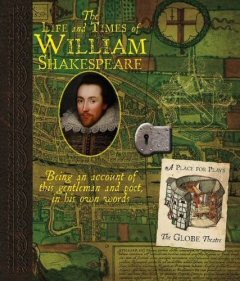
Books The conceit behind this handsome volume is that in 1613, Shakespeare having written his final play, The Tempest, has decided to return to the country and compile a lavish scrapbook as a present for his daughter Judith, so that they look back on his life and work together. He describes for her his early childhood in Stratford, his move to London, his successes, the themes he’s interested in, and his friends, sanitising slightly the saltier aspects in that way a father might to even a twentysomething progeny who barely knows him, a tone which is about right for a book designed for older children.

Kristen McDermott and Ari Berk create a Shakespeare who wouldn’t seem out of place in one of his own plays. As the publisher’s note explains, they’ve deliberately laced the fiction with phrases from the canon and for the most part he speaks in the language of an in-costume tour guide at a tourist attraction, expositional without quite seeming like a real person. Once we accept this artifice the approach works very well and the authors do have some fun allowing adult readers to glance between the lines and what isn't mentioned because it’s not for young ears.

The design is perfect for children with an explorer instinct, a prefusion, even confusion of colourful illustrations and various flaps filled with even more information once opened, usually small books containing a synopsis of a play or contemporary knowledge and letters. The approach is similar to the RSC’s immortal Shakespeare: The Life, the Works, the Treasures which collects reproductions of the original documentation of the playwright hatches, matches and dispatches, but quite rightly for this audience the copperplate handwriting has been replaced with for the most part modern spelling and a clearer font.

It’s this surrounding material which really sells the book. We’re given recipes for stomach curdling dishes containing more dairy and sugar than seems fit for human consumption, gossipy biographies of courtiers to James I and there’s even a guide for young playgoers on the best etiquette for visiting the Globe, most of which is just as valid now. The biggest surprise is the willingness to use illustrative text from Shakespeare’s contemporaries rather than simply focusing on the cliches. Thomas Heyward’s The Four Prentices of London is quoted on the topic of avoiding work.

This life and times of William Shakespeare is perfect for the inquisitive child who wants to know more about the bard, perhaps having watched Shakespeare in Love or Doctor Who’s The Shakespeare Code, but too young for a proper full blown biography. It’s the romantic vision, a Wittington-like story of the son of a glove-maker heading to London to seek his fortune. Perhaps if I’d been given this book before venturing into the plays in secondary school, I might not have been quite so overawed. The fourteen year old version of me never quite appreciated Julius Caesar.

Ari Berk's website has an illustrative video.

The Life and Times of William Shakespeare by Ari Berk and Kristen McDermott is published by Templar. £14.99. ISBN: ISBN 978 1 84011 158. Review copy supplied.

The Life and Times of William Shakespeare (Notebook Series) by Ari Berk and Kristen McDermott.


The conceit behind this handsome volume is that in 1613, Shakespeare having written his final play, The Tempest, has decided to return to the country and compile a lavish scrapbook as a present for his daughter Judith, so that they look back on his life and work together. He describes for her his early childhood in Stratford, his move to London, his successes, the themes he’s interested in, and his friends, sanitising slightly the saltier aspects in that way a father might to even a twentysomething progeny who barely knows him, a tone which is about right for a book designed for older children.

Kristen McDermott and Ari Berk create a Shakespeare who wouldn’t seem out of place in one of his own plays. As the publisher’s note explains, they’ve deliberately laced the fiction with phrases from the canon and for the most part he speaks in the language of an in-costume tour guide at a tourist attraction, expositional without quite seeming like a real person. Once we accept this artifice the approach works very well and the authors do have some fun allowing adult readers to glance between the lines and what isn't mentioned because it’s not for young ears.

The design is perfect for children with an explorer instinct, a prefusion, even confusion of colourful illustrations and various flaps filled with even more information once opened, usually small books containing a synopsis of a play or contemporary knowledge and letters. The approach is similar to the RSC’s immortal Shakespeare: The Life, the Works, the Treasures which collects reproductions of the original documentation of the playwright hatches, matches and dispatches, but quite rightly for this audience the copperplate handwriting has been replaced with for the most part modern spelling and a clearer font.

It’s this surrounding material which really sells the book. We’re given recipes for stomach curdling dishes containing more dairy and sugar than seems fit for human consumption, gossipy biographies of courtiers to James I and there’s even a guide for young playgoers on the best etiquette for visiting the Globe, most of which is just as valid now. The biggest surprise is the willingness to use illustrative text from Shakespeare’s contemporaries rather than simply focusing on the cliches. Thomas Heyward’s The Four Prentices of London is quoted on the topic of avoiding work.

This life and times of William Shakespeare is perfect for the inquisitive child who wants to know more about the bard, perhaps having watched Shakespeare in Love or Doctor Who’s The Shakespeare Code, but too young for a proper full blown biography. It’s the romantic vision, a Wittington-like story of the son of a glove-maker heading to London to seek his fortune. Perhaps if I’d been given this book before venturing into the plays in secondary school, I might not have been quite so overawed. The fourteen year old version of me never quite appreciated Julius Caesar.

Ari Berk's website has an illustrative video.

The Life and Times of William Shakespeare (Notebook Series) by Ari Berk and Kristen McDermott is published by Templar. £14.99. ISBN: ISBN 978 1 84011 158. Review copy supplied.