The Electric Banana.

Music  The surviving members of The Pretty Things continue to perform and in New Zealand last year, Dick Taylor gave this interview in which he lamented the bizarre publicity which misrepresented the bands music, the poor reception of some of their albums and the resurgence in interest. It's all so typically rock and roll:
Their subsequent career seemed filled with opportunities lost or innovation overlooked. Most famously was their ambitious but dark SF Sorrow album of late '68, the first rock opera beating the Who's Tommy by six months. 
"It needed to do well in America but by the time it came out it was through a dodgy dealing between EMI and Tamla Motown – the details of which I'm not legally allowed to talk about. But basically they had an inside deal with one another and it got released on Rare Earth which was a good attempt at Tamla to break into white rock . . . but they didn't market it properly.
“Apart from everything else they put it in a circular record cover and so you couldn't see it on the shelves, stupid little things like that.”

Future Shock.

Psychology Charlie Jane Anders on Future Shock:
"It's been four decades since futurists Alvin and Heidi Toffler predicted a wave of "future shock," the sensation of panic and unease that happens when people are "overwhelmed by change." And, depending on who you talk to you, we're either in the middle of a huge epidemic of future shock, with people struggling to adapt to a world of iPhones and climate change, or future shock is a totally passe concept. But one thing's for sure: A lot of people are uneasy these days."
This is a well researched, thoughtful io9 post on something I think we're all dealing with, that we live in a perpetual state of ignorance because we can never know everything which available to us. If I'm suffering from "future shock", it would explain why I feel this way.

Maggots.

Nature Published in 1908 by the U.S. Department of Agriculture, Bureau of Entomology, Root-maggots and how to control them is a handy guide to deal with one of nature's scariest pests listing ever more invasive procedures:
"Hand picking, although laborious, has the merit of being effective, and is practised with considerable success by extensive cabbage growers, although not practicable on radish and similar crops. It consists in pulling up the young cabbage or cauliflower plants, examining the roots for eggs and maggots, and either destroying the eggs and maggots by crushing with the hand or by washing the roots in a strong solution of soap and then replanting. In most cases the plants show no ill effects from this treatment after two or three weeks have elapsed. By looking closely, the minute white eggs may be seen about the stalks of young cabbages, and if the earth be raked away so as to expose the eggs to the sun these will dry up, thus preventing the maggots from hatching. Afterwards the plants should be hilled."
No. Just no.  Ick.

"The status quo"

Journalism The trouble with female celebrity profiles and the men who write them. Just because it happens, doesn't make it right:
"The status quo results in pieces such as Chuck Klosterman’s “The Pitfalls of Indie Fame” (Grantland), which mercurially identifies musician Merrill Garbus as “a somewhat androgynous American woman,” and Tom Junod’s “The State of the Female Singer” (Esquire), which describes Lana Del Rey’s lips in fanatical detail, and relegates Florence and the Machine’s 2011 album, Ceremonials,to “something our wives can pick up… at Starbucks while waiting for Adele to get out of the hospital.” The latter goes on to shame Lady Gaga, Rihanna, Ke$ha, and Beyoncé for adopting stage personas—as if Kanye West and Justin Bieber don’t lay it on thick."
It's reached the stage where I tend to skim most interviews and profiles in general trying to find the sections where the given subject is actually talking rather than having to wade through a given journalistic opinion, in which a person is being objectified.

Which isn't to say there isn't a skill and some profiles can be entertaining and illuminating and there are some very good writers (as ever Elizabeth Day, Emma Brockes or Hadley Freeman spring to mind).

But sometimes I wish it was simply some preamble then a Q&A format.  If a person has nothing to say they'll be laid bare and as such allow us to make our own impression of them.  Similar the really interesting people will shine like beacons.

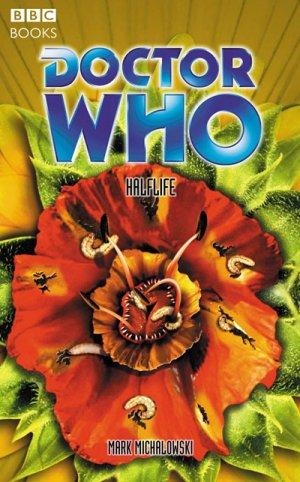
Halflife.

Books  Back in the day, all of 2003, BBC Books’s Doctor Who novels switched to a bimonthly schedule, an Eighth Doctor Adventure one month, the Past Doctors the next and ironically at around the time the new series had been commissioned and there could be a resurgence in interest and an uptick in sales.  Not reading either at the time, I didn’t have much of an sense of what that meant as a consumer.  Now having had to wait a couple of months for Mark Michalowski’s Halflife to be delivered through inter-library loan, I can entirely appreciate the frustration.  How could you stand it?  I could have bought it I expect, but with funds limited and second hand copies costing over a tenner and knowing I’d probably only ever read this once, I decided to wait.

Luckily, Halflife’s the first step in a new editorial policy of shifting towards a more stand alone format, only glancing towards extra-curricular mythology and finishing up a couple of niggling story elements from novels previous.  Which isn’t to say it ever really feels like a stand alone novel, not in the same way as a PDA, but by the close there’s a renewed sense of the Doctor and his pals having all of time and space in front of them rather than whatever bit of plot they’ve decided to investigate because Sabbath told them to and it is just one universe rather than several dozen or an infinite number depending upon how the author’s even interpreting the story arch.  Sorry, bear with me.  I’m a bit rusty.

As is the Doctor because as the novel opens he has amnesia.  Again.  Or rather he has more amnesia on top of the amnesia he already has.  Which is unfortunate.  He’s also not him really feeling himself, lost on the streets of the Terran colony world of Espero, smoking, drinking and swearing up the place, like, well, like Fitz.  Fitz meanwhile also has extra amnesia and finds himself wanting to get into the thick of oncoming mysteries and adventures, of night beasts roaming the colony, of a royal family with a touch of the Shakespeares (an aging ruler is being plotted against by his young wife and her son) and of apocalyptic disasters from all side.  Meanwhile Trix is stuck in the middle of it all enduring her own identity crisis not in control of all her faculties.

Halflife is Mark Michalowski’s only Eighth Doctor novel though his grasp on the mythology is exemplary and once again we marvel at how some authors are capable of treating characters and a storyline that exists only in prose on a page with the same order of research and observation as tie-in novels based the television version of the show.  If nothing else, Michalowski’s characterisation is right on the money in a way that some writers who produced several of these things never did quite manage and with the extra challenge of projecting, thanks to some in-story accidental genetics, elements of the Doctor’s personality and memories onto Fitz and vice-versa and still keep the integrity of both.

They’re certainly the strongest element of the novel.  Finally we’re talking about their memories in ways which should have been addressed trees worth of pages ago.  What can the Doctor remember?  What can Fitz?  Do they want to?  Thanks to an expert in memories (who the internet says may be his previous walking TARDIS companion Compassion though I didn’t get that at) and an organic ship from elsewhere, they’re forced to deal with their past.  The Doctor, it seems is happy not remember anything before he woke up on the train just prior to The Burning.  Fitz now remembers everything including that he’s a facsimile created by the Doctor about whom he now knows more than friend and is happy about that too because the shoe's on the other foot.

On the one hand this makes Fitz relevant again as something more than a companion.  For once they may be in a situation and it’ll be Fitz who’s allowed a modicum of exposition room rather than the Doctor simply pulling it from his memory and explaining it instead.  In narrative terms that should provide some interest for the final five.  You could argue that Fitz was a companion for far longer than he really should have been, but he’s been kept somewhat fresh through these subtle reimaginings, from real Fitz to Kode to faux Fitz to faux Fitz with a memory of some or all of his previous incarnations.  I notice as I’m writing about these books again I’m mucking up my tenses again too.  They were published in the past but they’re very present because I’m only reading them now.  It’s a brain jangler.

The Doctor’s choice is even more complex and I don’t know if it feels quite right.  He might be happy with who he is now, but given the choice to have his memories of everything else back, shouldn’t he take it?  Wouldn’t any of his other incarnations if it meant he could achieve his goals better?  It’s about the only element of the novel which feels like a story element being put to one side for later, or something which is being forced in to give this version of the Eighth Doctor a character trait lacking in his other incarnations as though a version with all of his pre-The Ancestor Cell memories wouldn’t be distinctive enough.  It doesn’t matter that much at this point – he’ll presumably get them all back in five novels, but it’s still a bit odd.

That said, it does allow Michalowski to put the audience in the same position as the Doctor in regards to one of the antagonists.  Throughout the Doctor keeps chiding himself for not being able to remember the Makers, the aliens who take control of Trix threatening to delete her personality and take control of her body, and throughout we’ve a nagging feeling that we should know who they are too as though they’re some returning presence from a previous novel or corner of the franchise.  They’re not, as the newly renamed TARDIS Datacore confirms, a website which exists because despite being fans not all of us can remember everything which happened in every story that we’ve read about the Doctor, just as he can’t remember every adventure he’s had.

The other strong element of the novel is the world, for once an entirely non-Caucasian mass of humanity through which our entirely Caucasion crew wander, another element of the shoe being on the other foot.  But for the most part there’s little Orientalism, they just happen to originally have travelled from the African subcontinent, the story isn’t about that, in a way that sci-fi and drama in general often has issues with (and yes, I mean you Star Trek The Next Generation’s Code of Honor).  The geography of the colony itself is pretty standard stuff, but in a way that’s also innovative; there’s a tendency in these novels to over develop the locale so that it becomes entirely unrealistic.  Sometimes space can be just as unremarkable as back down here on Earth with a few extra fantasy trappings.

If the EDAs had gone on a bit longer, perhaps Mark Michalowski would have become one of its strongest proponents and certainly the contemporary reviews I’ve seen are (were?) (damn) impressed with his writing if not necessarily some of the plot points.  With just five books to go, the series seems to be heading off with refreshed sense of purpose and of fun adventures ahead.  But on the Acknowledgements page Mark offers what I think is the first in print acknowledgement of the reason the series would be curtailed.  “And to Russell T Davies", he says, "for being lovely and for giving us all hope again.”  It’s just a pity that for fans of the Eighth Doctor novels that hope would have a slightly darker hue.  Five to go.

Blue Crystal.

Deceased directors.

Film In suitably majestic fashion, David Bordwell compares the work of two recently deceased directors, Tony Scott and Theo Angelopoulos:
"Both play games with narrative as well. As early as The Hunger (1983) Scott’s incessant crosscutting uses the soundtrack of one line of action to comment on another. The time looping of Domino (2005) and Déja Vu (2008) creates flashbacks, replays, revised outcomes, and jumping viewpoints. More sedately, Angelopoulos perfected the time-shifting long take. The camera movements of The Traveling Players (1975) glide among different eras. From scene to scene, Angelopoulos will provide few marks of tense. Scene B may follow A, or precede it by several years, and no Hollywoodish superimposed title will help us out. It may be several minutes before we realize that decades have passed.

"Yet the time-scrambling both directors enjoy isn’t wholly at the service of drama. Storytelling takes on a curiously subsidiary role in their work. Neither filmmaker, it seems to me, is centrally interested in probing what many of us take to be the core of narrative—character psychology. This isn’t to say there aren’t poignant moments and glimpses of inner lives. But each director also leaps beyond them."
Lately I've noticed the barriers between the mega-genres, between so-called mainstream and art house cinema to become less and less secure. Whilst its true that formally something like The Turin Horse and 2 Fast 2 Furious (to take two films I've seen recently at random) seem to have nothing in common, both share a narrative fracturing and require a very particular level of audience attention, though admittedly in the latter its because important exposition is either completely missing or being shouted through with such rapidity it's easy to miss.

The Postal Service in New Zealand.

Information Lately our postal deliveries have become inconsistent, with some deliveries not happening until the afternoon and none at all on days when a Lovefilm disc should be winging its way through. But I'm sparing a thought for New Zealanders, who're facing the possibility of their postal deliveries being cut to three times a week:
"The proposal, released today by Communications and Information Technology Minister Amy Adams, seeks to cut mail delivery days from six to three days a week to allow "greater flexibility" in its services.

"During the last 10 years mail volumes have dropped considerably, with 265 million fewer items being posted each year compared to 2002. Within five years, mail volumes are forecast to be nearly half what they were in 2002," Ms Adams said."
Of course, in the long run, once digital delivery is at its apogee and everyone has access to the web via a tablet (it's coming soon), postal deliveries will become an outmoded concept and may even be reduced further across the board. But not yet.

Welsh mining village.

History  The slow decline of the Welsh mining industry continues with the closure of the nation's largest drift mine, Aberpergwm Colliery, with the loss of three hundred jobs:
“I say it’s a tragedy for the Welsh coal industry because demand for energy world wide is huge and we have the skills and resources in Wales to provide top quality coal.

“It’s alarming that an investment in a coal producing area has come to a halt with plenty of coal still underground.

“I cannot comment on the what has happened at Aberpergwm because I simply don’t know what the conditions are there. But what is needed is a business plan and the will to make a success of the industry in a traditional coal mining area."
One of the few vivid memories I have of primary school is a lesson about natural resources, and a text book with painterly representations of the world's natural resources and how there was only a finite amount of coal, oil and gas.

This was the 80s, well before green energy became a mainstream topic.  Now it seems that clean energy and climate change may well be rendering the existence of those resources a moot point but also leading to more people without a hope of finding a different job.

Wholeweal?

Lifestyles TopTenz has a thoroughly interesting list of experimental towns and communes from around the world, including Scotland's Findhorn:
"Scotland’s Findhorn Ecovillage is perhaps the most notable example of a community founded on principles of environmental sustainability and renewable energy. The commune was started in the 1960s, but it didn’t take on its current form until 1982, when residents made a concerted effort to show that an environmentally unobtrusive community could flourish both socially and economically. The village still exists today, and has been noted as having the smallest environmental footprint of any town in the modern world. This is thanks to an ecologically friendly building code that encourages the use of found materials—several houses are built from recycled whiskey barrels— along with wind turbines and a water treatment apparatus called the “Living Machine,” which makes use of algae, snails, and plant life to purify the community’s water supply."
Findhorn's official website is here, and includes specifications for building your own eco-home.

WHO 50: 1973:
The Green Death.


TV For a split second, UNIT Captain Mike Yates gapes at the revelation of his colleague Jo's upcoming marriage, drops his head, pauses, then gazes towards the happy couple grinning.  At a time when we should really be sad to see the back of a popular companion, for a moment, just a moment, we think about someone other than the Doctor that she'll be leaving behind and someone she's entirely oblivious to.

Richard Franklin's performance is beautifully understated and it's interesting how few people have ever noticed it amid  The Green Death's bigger story issues of a companion leaving and the Doctor's silhouetted drive into the end credits, the Time Lord being replaced by Miss Grant with someone whose apparently a younger, hipper version of himself.

The actors continues his good work into the following scene, where the romance of Yate's loss is etched across his face, each new bit of exposition from the research grant onwards wounding him, a pat on the back from the Brigadier only helping a little bit.  Yates has been given a heart blow and he's showing it.  We've all been there, I think.  Me more than most.  Um.

After three years of apparent infatuation with Jo, she's grabbed out of his clutches at the last minute by some flash scientist with long hair who grows fungi. Typical. Meeting girls is probably one of the reasons Mike Yates gave on his application for joining the army. Then after presumably channelling all of his efforts into the Doctor's assistant, the one girl of his dreams, she goes into the jungle with some hippie. And unlike his army colleagues, he's inadvertently wearing a suit just to symbolically demonstrate how grey he is in comparison. Again, typical.

Before The Green Death, nowhere has Mike's love for Jo been signalled this brightly, and indeed before this moment in The Green Death he and Jo are barely in the same room together.  There's been no subplot, as might be the case in later decades, in which Mike watches the love of his life fall into the arms of another man.  Amid the mad computer and viruses and giant maggots this has been Jo's story, about her "flowering". Mike simply hasn't been in the frame.


That the Brigadier is the one to console him, revealing that behind the gruff, the cap and the moustache is a man who is actually paying attention to the lives and feelings of his officers also gives Lethbridge-Stewart a dimension that wouldn't be apparent again until Mawdryn Undead some years later. These are Mike's final scenes on screen embedded part of the UNIT family.  He's a traitor in Invasion of the Dinosaurs and in seclusion in Planet of the Spiders.  This would also be the last time we witness their mutual respect. From this moment on, everything would change.

Jagjit Chuhan, the new exhibition at the Victoria Gallery and Museum at Liverpool University

Art  Tonight, briefly, I attended the private view for the new exhibition at the Victoria Gallery and Museum at Liverpool University, a small retrospective of recent work by the artist Jagjit Chuhan.

Double Negative have interviewed her here.

She produces relatively abstract or impressionistic paintings of the female form filtered through preoccupations and influences as diverse as "Bacon and Manet, Indian artists like Ravinder Reddy, Marlene Dumas, Renaissance paintings" as well as Japanese art.

Much of the work is in reddish hues, though there are newer canvases which are multicoloured and almost sculptural in their layering of the paint.

Not everything is to my taste, but there are two pieces in which she applies her techniques to more conventional structures which I love.

A landscape in which a Japanese pagoda emerges after careful spectator study and a much more formal, but absolutely gorgeous portrait called Reverie, viewable here on the artist's own website.

A young woman reclines across a red coach surrounded by lilies her face enigmatic, though apparently content, happy.

Look closer and we realise she's underneath a duvet, her head across a pillow, this isn't perhaps her house, she a visitor though obviously not a strange.

Like the best portraits we're drawn in, we wonder and our mind wanders, so although it's perhaps the most formally obvious of the works in the exhibition, it's as complex as all the others.

Who is she?

Atlantis.

History If you watched the superb Bettany Hughes documentary posted here last week, you'll know that Plato's writings on Atlantis contain uncanny descriptions relating to physical places. On the BBC's website, Dr Iain Stewart is cautious in attributing a single place as a location:
"Today, the myriad of theories - many of them breathtakingly fantastic ('Atlantis was an exploded planet'!) - ensures that the true nature of Plato's story is as elusive as ever. For those committed Atlanteans that believe Atlantis existed much as Plato described, the possible locations of the lost city are becoming increasingly exotic. Recent candidates lie as far afield as the Caribbean, South America, Antarctica, Ireland and French Polynesia."
All of which said, in one of the pull quotes, Stewart is clear as to the priorities of the rest of the populace, "...ordinary Greeks probably didn't speculate on the origins of the mythical Atlantis; they were too busy surviving its reality."

The Minotaur.

Music A revival of Harrison Birtwistle’s 2005 opera The Minotaur opened at the Royal Opera House in Covent Garden last week. The Stage interviews the performer who originated the role Sir John Tomlinson, who judging by the photograph performed the piece in one of the most uncomfortable ways imaginable:
"Based on the Greek myth of a half-man, half-bull imprisoned in the labyrinth and fed sacrificial innocents, librettist David Harsent’s Minotaur is an emotionally tormented creature. “It’s all about the dichotomy between human and animal. Often the animal is the innocent part, with muscle and instincts; the human part can distort those things and is more often to blame for the rapes, murders and destruction the Minotaur reaps.” Tomlinson compares the text to his “benchmark English libretto”, EM Forster’s Billy Budd. “That’s great text to sing: pithy, economic, etched – you can almost chew the words. David is really in that tradition with The Minotaur.”"
The ROH has an introduction with copious clips, including this one which makes it look utterly barmy.

Fixing the X-Men movie universe again.

Film   Following on from my outlandish pronouncements and head-scratching the other day on the state of the X-Men film universe and the repair thereof,  Bryan Singer's given an interview to Empire which encounters this very topic. He says:
"I’m taking into account every movie – I’m not just grabbing my first two movies and First Class and smashing them together. I’m taking into account the entire universe as it’s been laid out so far on the screen, and really respecting it and trying to work with that. People took things in various directions, so there’s some clean-up. But ultimately I’m not just ignoring them either.""
Key phrase italicised.  Whatever could that mean.  How do you clean up something which has already been seen on screen?  Retcon.  Retcon.

Steven Soderbergh's exit interview.

Film  When Steven Soderbergh implied he'd stop making films at the age of fifty, it didn't seem like a realistic prospect.  He loves the medium too much to stop, it seemed, there'd always be an itch.  Well. it looks (unfortunately for us) that he's making good on his promise and has given what amounts to an exit interview to New York Magazine.  The interviewer's a bit obnoxious (Jennifer Lopez was also amazing in Antz, Jersey Girl and Selena) but that only seems to coax Soderbergh into doing all the things you can do in the best exit interviews in jobs: bitch about colleagues, the management, how you would do things better and what you plan to do in the future.  Which includes this awesome revelation:
"I’m overhauling Kafka completely. It’s funny—wrapping a movie 22 years later! But the rights had reverted back to me and Paul Rassam, an executive producer, and he said, “I know you were never really happy with it. Do you want to go back in and play around?” We shot some inserts while we were doing Side Effects. I’m also dubbing the whole thing into German so the accent issue goes away. And Lem and I have been working on recalibrating some of the dialogue and the storytelling. So it’s a completely different movie. The idea is to put them both out on disc. But for the most part, I’m a believer in your first impulse being the right one. And I certainly think that most of the seventies directors who have gone back in and tinkered with their movies have made them worse."
Of all Steven's films there's not a single one I haven't admired if not usually flat out loved, including Ocean's 12 and Full Frontal which are practically the same film or at least idea presented in different idioms.  But his other credits are just as intriguing.  He was a second unit director on The Hunger Games.  He was a producer on Rumour Has It...  He was a screenwriter on the film Criminal but asked for the credit Sam Lowry (presumably a Brazil reference).  I can feel another viewing project coming on.  But not soon.  I've the whole rest of Doctor Who to get through this year.  Perhaps in time for the dvd release of the new director's cut of Kafka, a sentence I never thought I'd type.

Moroccan burgundy.

Drink  The Morrocan wine industry has to exist as a kind of open secret due to its shaky status within the official life of the country due to prohibition.  But some growers are thriving reports SFGate:
"Inside the winery, Gribelin uncorked a bottle of wine. My heart leaped. For months, I'd been dreaming of how a good wine might pair with Morocco's hearty lamb tagines and fluffy couscous. In fact, wine's underground status had only increased its allure.

"He poured a glass. The wine, Volubilis gris, is named after the nearby Roman ruins. It was pinkish and sweet but not syrupy, and it paired perfectly with the Moroccan heat.

"Ten years ago, they drank pretty bad wine, but now there is good production and they are able to choose good quality," Gribelin said. Still, the old reputation is hard to shake in nearby Europe. Morocco is directing its exports to fresher markets such as the United States or China."

Why has a Doctor Who story never been set in the American Revolution?

Politics During the Inauguration last week, I had a vague Twitter chat (is there any other kind?) on the topic of Doctor Who and the American Revolution. Surprisingly considering the franchise's propensity to hoover up major periods of history for the purposes of monsters and running, the Doctor has rare visited the period and never for a full length story. I suggested this was weird, and Allyn indicated then and again in this blog post that ...
"The reason, I think, is basic. Doctor Who is a British program, made for a British audience, and an American Revolution story would cast Britons in the role of the story’s villains. I’m vastly oversimplifying here, I know. The point is, the Doctor’s interests in the American Revolution wouldn’t necessarily align with the Doctor Who audience’s interests."
Which is true, but I'd propose, only to an extent.  It is still weird.  As Allyn notes at a certain point in the show's history, producers simply lost interest in making this kind of story but in the 60s, when the television iteration of Doctor Who was its most flexible and experimental, it's surprising John Lucarotti wasn't tapped to write a four parter set in Boston during the tea party, the Doctor and his companions on the opposite ends of an argument ala The Aztecs.

But even if it was perhaps too much for television, it's still amazing to me that across the Virgin New Adventures and Missing Adventures, the BBC Books Eighth Doctor novels and Past Doctor books, the various comics series and the whole of Big Finish's output, not a single writer has gone with the wind and looked at the moral ambiguities inherent in this essentially "British" in attitude alien turning up in this scenario and how his companions who almost certainly are British might react to events.

At this point, Big Finish seems the most likely venue and any combination of Doctor and Companion would react differently and be equally interesting.  My taste would be for a pure historical, the moral ambiguities offering more than enough story material, but again pick a monster and wedge them in if you like.  All of which said, given the co-production money, for all we know one of the bottom eight of season seven might be on this very topic.  We'll see.

But if you are a writer on the franchise, I'd be interested to know why you think it's never happened.

See For Yourself.


TV Find above the first ten minutes of "See For Yourself", a 1989 programme in which the BBC went behind the scenes on itself, an end of year report on its achievements and failures. Sadly it is only the first ten minutes because as the YouTube uploader notes: "it was right at the end of a tape." Nevertheless there are some amazing scenes, like the producer on 1988's Children in Need losing his rag because Joanna Lumley's microphone's broken and the tour de force of presenter Sue Lawley walking through sets and past props from the successes of the two main channels (though there is notably one line which will make you die a little inside).

Imagine if the BBC put on a show like this now. To an extent it doesn't have to. With the website, twitter and everything else its successes can be championed in real time, its failures gaping like open wounds for the tabloids to poke their biros into. But suppose, just suppose, a version of this programme presented by Sophie Raworth at the end of last year, with behind the scenes material on the Olympics, a walk through the production centre in Cardiff and management strawpeople turning up to be shouted at by the public for the Jubilee coverage or Saville, but with a general tone that says "We're brilliant aren't we? Eh? Yeah." Either that or broadcast Mitch in prime time. That would do too.

TOMTIT.

Ornithology  The Tomtit is a robin-like bird native to New Zealand and important within Mauri culture:
"To Maori the miromiro is one of Maui’s birds and is a significant bird, being esteemed with the huia, the royal albatross and white heron. An observant person is spoken of as –“ he karu miromiro” - “having a tomtit eye” and the Maori called tomtits “scouts” or “torotoro” due to their habit of appearing from nowhere in the forest. He manu aroha te miromiro - “the miromiro is the lovebird” and it had a place in Maori rituals for birth, tohunga, and a new pa."
Their department of conservation has recordings of the bird's song available for download. Interestingly they're not actually tits.  The assumption is that migrants from the British Isles clocked them as being relatively similar and the name stuck.  I prefer miromiro anyway.